If you haven’t driven regularly in years, getting back behind the wheel can feel intimidating. Skills fade, confidence drops, and the road itself has changed since you last drove.
We at DriverEducators.com created our adult driver refresher course specifically for this moment. Our program rebuilds your abilities and restores your peace of mind on the road.
Why Skills Fade and Roads Change
How Muscle Memory Weakens Without Practice
Driving ability deteriorates faster than most people realize. Research from the Candrive cohort, which tracked older Canadian drivers with a mean age of 76 years, found that less than 30% of participants had ever taken a non-mandatory refresher course. Among those who did take one, fewer than half included an on-road component, leaving gaps in actual skill rebuilding. The longer you stay away from driving, the more your muscle memory weakens and your familiarity with current road conditions erodes.
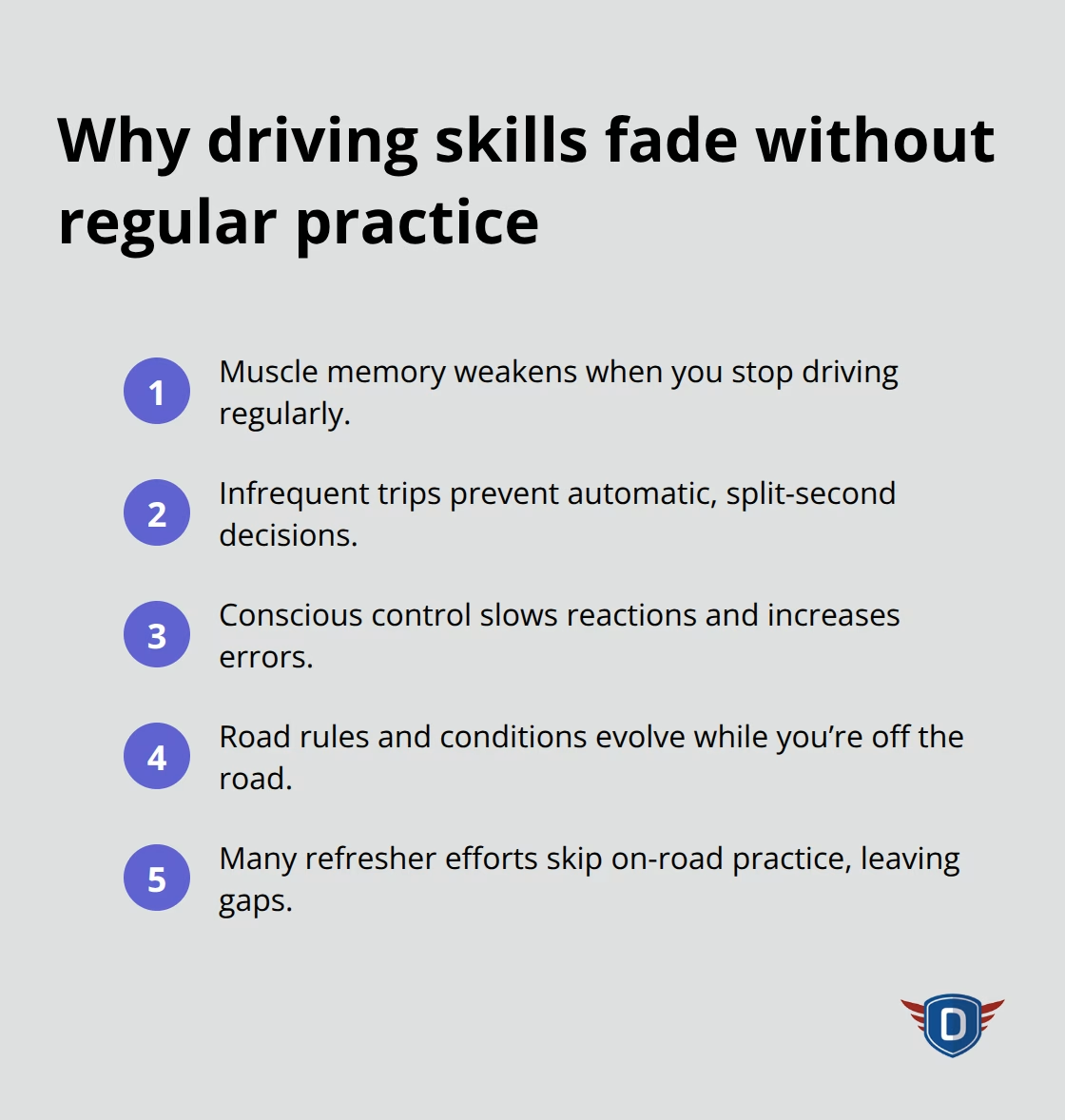
Inconsistent practice makes this problem worse. If you drive only occasionally, you never develop the automaticity that makes split-second decisions feel natural. Your brain has to consciously process movements that should be instinctive, which slows your reaction time and increases your error risk.
Florida’s traffic laws Have Shifted
Florida’s traffic laws have shifted significantly over the past decade. Section 316.305, Florida Statutes allows law enforcement to stop motor vehicles and issue citations to motorists that are texting and driving. If you learned to drive decades ago, you were taught techniques that no longer match how today’s cars respond or how current statutes expect you to behave.
Modern vehicles now come equipped with lane departure warnings, automatic emergency braking, and blind-spot detection systems that older drivers may not understand or trust. These safety features work differently than the mechanical systems drivers relied on in the past, and misunderstanding them can actually reduce their effectiveness.
Confidence Erodes When Knowledge Gaps Appear
Confidence erodes when skills fade and knowledge gaps appear. A driver who hasn’t navigated rush-hour traffic in five years will feel genuine anxiety returning to busy intersections. That anxiety is not irrational-it reflects a reasonable response to being out of practice. The fear itself becomes a barrier that prevents people from driving at all, limiting independence and forcing reliance on others for transportation.
Our Mature Driver Course addresses all three problems at once. Active training is a more effective strategy for increasing older drivers’ likelihood of looking for threats during a turn. This foundation prepares you to understand what skills you need to rebuild and how to approach them effectively.
What Skills Matter Most When You Return to Driving
Threat Recognition and Continuous Road Scanning
Defensive driving starts with threat recognition, and this is where most returning drivers struggle hardest. You need to scan the road continuously, checking mirrors every 5 to 8 seconds and identifying hazards before they become emergencies. The National Highway Traffic Safety Administration reports that drivers aged 70 and older have higher fatal crash rates per mile driven than middle-aged drivers, largely because they fail to anticipate threats early enough. When you refresh your skills, you learn to spot the drunk driver weaving between lanes three cars ahead, the pedestrian stepping into the crosswalk while looking at their phone, and the vehicle that has been riding your blind spot for the last mile. This active scanning becomes automatic again only through deliberate practice, not passive review.
Understanding Modern Vehicle Safety Systems
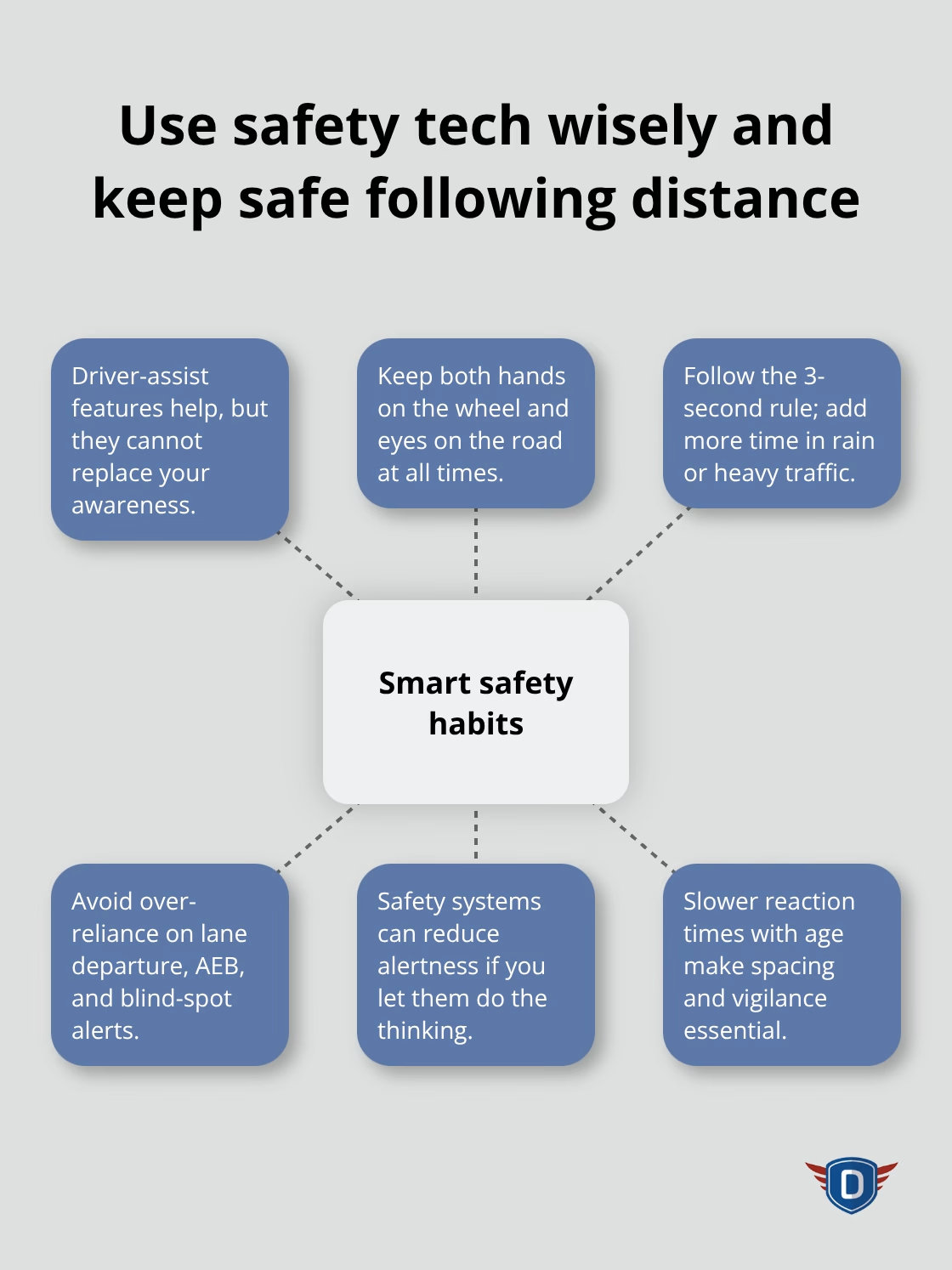
Modern vehicles complicate threat recognition because drivers often misunderstand or distrust their safety systems. Lane departure warnings, automatic emergency braking, and blind-spot detection can actually reduce your alertness if you rely on them instead of developing your own awareness. These features supplement your attention; they do not replace it. You still need to keep both hands on the wheel, maintain focus on the road, and understand that a safety system cannot compensate for poor decision-making.
Updated Traffic Laws and Road Design Changes
Right-of-way rules have not changed fundamentally, but enforcement and road design have shifted significantly. Florida Statute 316.305 introduced texting-while-driving penalties that did not exist when many returning drivers last studied the rules. Roundabouts now appear in areas where four-way stops used to stand, and many intersections have added protected left-turn signals that work differently than older traffic lights. Returning drivers often hesitate at these intersections because the rules feel unfamiliar, which creates dangerous delays and confusion. A refresher course walks you through these specific scenarios so you recognize them instantly on the road. Your confidence grows when you understand that the rules themselves are logical and consistent; the road just looks different now.
Lane Management and Blind Spot Awareness
Proper lane management means staying centered in your lane, signaling at least 3 seconds before turning or changing lanes, and checking your blind spot even when your mirror says it is clear. Mirrors have blind spots, and this is not theoretical-it is a physical fact that causes real collisions. The more you practice these habits in a structured refresher program, the faster they return to automatic behavior, which is where they need to be when you navigate complex traffic situations. These foundational skills form the basis for handling the specific challenges you will face on Florida roads, where traffic patterns and driver behavior demand constant attention and quick decision-making.
How a Structured Program Rebuilds Your Driving Foundation
Assessment and Personalized Focus
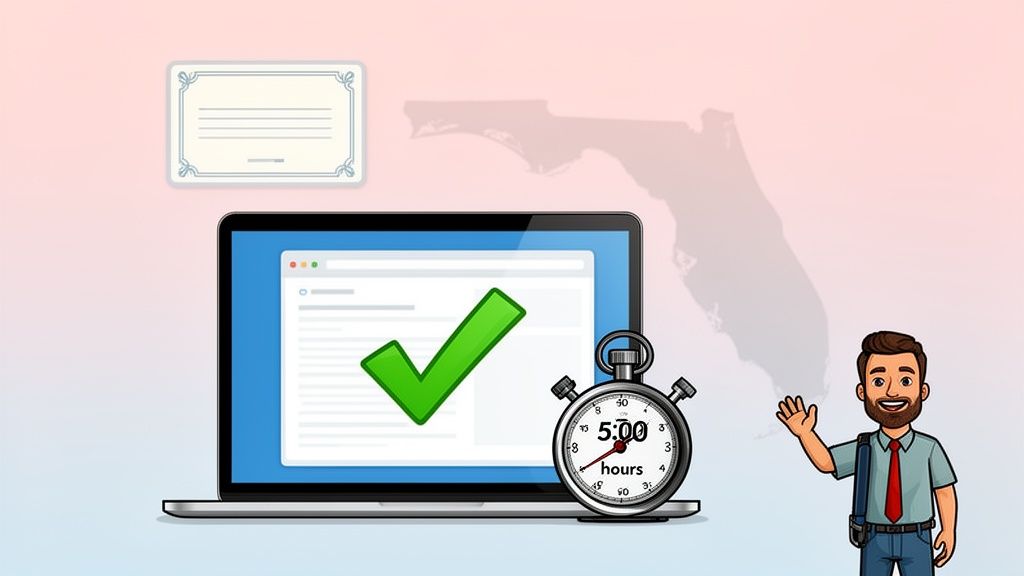
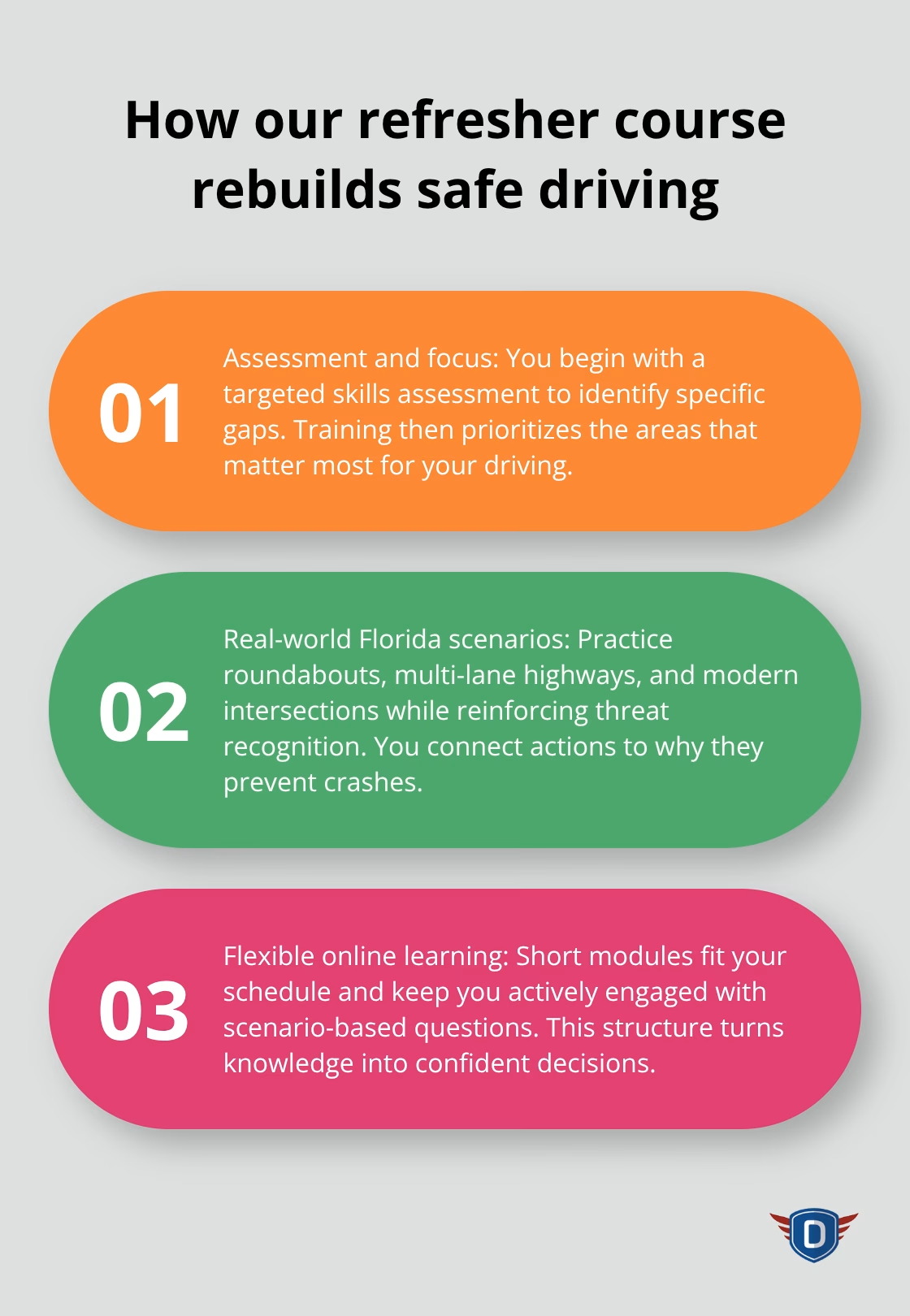
Our Mature Driver Course spans six hours and targets drivers aged 55 and older, though the principles apply to any adult returning to regular driving. The program is not generic-it addresses the specific gaps that emerge after years of inconsistent practice. You start with a skills assessment that identifies exactly which areas need work: some drivers struggle with mirror checking and blind-spot awareness, while others hesitate at modern intersections or feel anxious in heavy traffic. This diagnostic approach means you spend your time on what actually matters for your situation, not reviewing rules you already know.
Real-World Scenarios on Florida Roads
The course then moves into real-world scenarios you will encounter on Florida roads-navigating roundabouts, responding to aggressive drivers, managing multi-lane highways, and recognizing hazards before they escalate into emergencies. Each scenario teaches you not just what to do, but why the action matters and how it connects to the threat-recognition skills covered earlier. You practice the 3-second rule in different traffic conditions, learn how modern safety systems function without relying on them, and refresh your understanding of current Florida statutes like the texting-while-driving laws in Section 316.305.
Flexible Online Learning Structure
The flexibility of online modules means you complete the course at your pace-some drivers finish in two weeks, others spread it across a month-without pressure or rigid scheduling that conflicts with your life. You watch instructors demonstrate proper mirror checks, blind-spot scanning, and lane positioning, then you answer scenario-based questions that force you to think through your own decision-making. This active engagement proves far more effective than passive reading.
From Theory to Automatic Habit
Specific changes to the roadway and driver training strategies can bring the abilities of older drivers back into focus, directly reducing crash risk. After completing the course, many drivers qualify for insurance discounts for completing accredited driver refresher courses, which can offset the cost of the program within a year. You regain the automaticity you lost: the habits of scanning, signaling, spacing, and anticipating return to muscle memory through deliberate practice, not through hoping they come back naturally.
Final Thoughts
Returning to regular driving after years away carries real risks, but an adult driver refresher course eliminates most of them. When you rebuild your threat-recognition skills, understand modern vehicle safety systems, and refresh your knowledge of current Florida traffic laws, you protect yourself and everyone sharing the road with you. The habits you develop through structured practice become automatic again, which means you react correctly without hesitation when emergencies happen.
Insurance companies recognize this value and offer discounts to drivers who complete accredited refresher courses, with those savings often covering the cost of the program within a single year. More importantly, you gain something far more valuable: the confidence to drive independently without anxiety limiting where you go or what you do. That independence matters at every stage of life.
An adult driver refresher course designed specifically for drivers aged 55 and older combines real-world scenarios, flexible online learning, and personalized focus on the skills that matter most for your situation. You complete the course at your own pace and receive an electronic certificate reported directly to the Florida Department of Highway Safety and Motor Vehicles. Enroll in a refresher course today and take the first step toward safer, more independent driving on Florida roads.