New drivers face a steep learning curve on the road. Statistics show that drivers aged 16-19 have crash rates three times higher than drivers aged 20 and older, according to the CDC. Driver education traffic safety isn’t just about passing a test-it’s about developing habits that protect you for life.
At DriverEducators.com, we’ve seen firsthand how structured training transforms nervous beginners into confident, safe drivers. The right education makes all the difference.
What Mistakes Cost New Drivers Their Safety
Overconfidence Blinds Drivers to Real Hazards
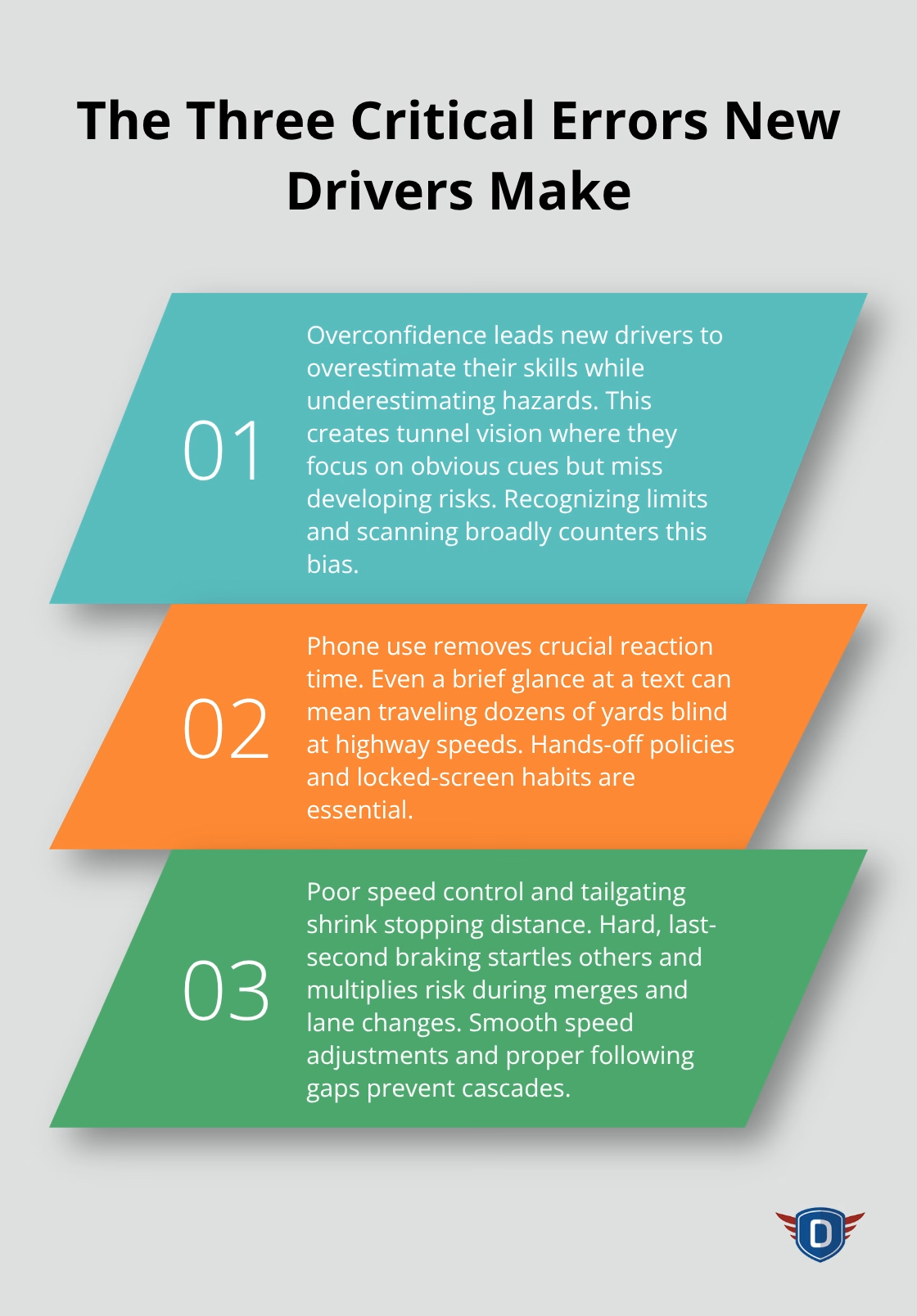
New drivers consistently make three critical errors that inflate their crash risk. The first mistake is overestimating their abilities while underestimating road hazards. A 2023 Insurance Institute for Highway Safety study found that 16-19 year-old drivers crash at rates nearly three times higher than experienced drivers, partly because they fail to recognize dangerous situations developing around them. They spot the car ahead but miss the pedestrian stepping between parked vehicles. They see the green light but don’t scan for red-light runners. This tunnel vision kills.
Phone Usage Eliminates Reaction Time
The second major mistake is phone usage while driving. The National Highway Traffic Safety Administration reports that distracted driving claimed 3,208 lives in 2024, with phones involved in countless incidents. A new driver checking a text message for just 5 seconds travels approximately 70 yards at highway speed without looking at the road-that’s a football field of blind driving. Young drivers treat their phones as extensions of their hands, believing they can glance down and still remain safe. They cannot.
Poor Speed Control Creates Cascading Dangers
The third mistake is poor speed management and inadequate following distance. New drivers often maintain speeds appropriate for clear conditions during rain or heavy traffic, then tailgate when they realize they’re too close. They brake harder than necessary, startling following drivers. They accelerate aggressively to merge, creating dangerous gaps. These three mistakes compound each other. Overconfident drivers use their phones more frequently because they believe they can handle it. Distracted drivers can’t adjust their speed appropriately when hazards appear. Poor speed control makes it harder to avoid obstacles when attention lapses.
How These Errors Interact and Escalate
The real danger emerges when these patterns overlap. A driver who overestimates their abilities checks their phone more often. That same driver then fails to notice a sudden slowdown ahead. When they finally look up, they’re traveling too fast and following too closely to stop safely. The solution isn’t lecturing about what not to do. It’s building muscle memory through realistic scenarios where new drivers practice recognizing hazards early, keeping their hands off their phones, and maintaining proper spacing under varying conditions. These habits, once formed, become automatic responses rather than conscious decisions.
Professional driver education programs address each of these patterns directly, showing new drivers exactly how these mistakes happen and what corrective actions stick. The structured approach transforms how young drivers respond to road situations.
What Safe Driving Actually Requires
Safe driving isn’t a collection of abstract rules new drivers memorize for a test and forget. It’s a set of practiced responses that become automatic when hazards appear. The habits that matter most involve recognizing threats before they materialize, controlling your vehicle with precision, and understanding the legal framework that keeps traffic flowing predictably. New drivers who master these three areas reduce their crash risk dramatically.
Spotting Danger Before It Strikes
Situational awareness means looking ten to twelve seconds ahead of the vehicle, depending on the traffic and available sight distance. New drivers typically focus on what’s directly in front of them, missing the pedestrian about to step into traffic or the vehicle drifting across lanes. The National Highway Traffic Safety Administration data shows that crashes involving young drivers often occur because they failed to notice hazards that were visible for several seconds before impact.
Scanning moves your eyes systematically across the road, checking mirrors every five to eight seconds, and identifying potential conflict points. When you see a car at an intersection ahead with its engine running, you scan for whether the driver is looking at you. When a vehicle ahead brakes suddenly, you’ve already checked your mirrors to know if someone’s tailgating you.
This scanning pattern prevents the tunnel vision that causes most new driver crashes. Defensive driving means assuming other drivers will make mistakes and positioning yourself to avoid their consequences. If someone’s drifting toward your lane, you create space rather than honking. If traffic ahead slows unexpectedly, you’ve already slowed because you were watching further ahead.
Controlling Your Vehicle When Seconds Matter
Vehicle control during emergencies separates safe drivers from those who panic. Hard braking, sharp steering, and accelerating while turning are skills that require practice to execute smoothly. Most new drivers have never experienced their vehicle’s actual braking limits or how it responds during evasive maneuvers.
When an unexpected obstacle appears, panic leads to jerky movements that destabilize the vehicle. Smooth steering inputs, even during emergency maneuvers, keep your tires gripping the road instead of skidding. Following distance directly affects your ability to stop safely.
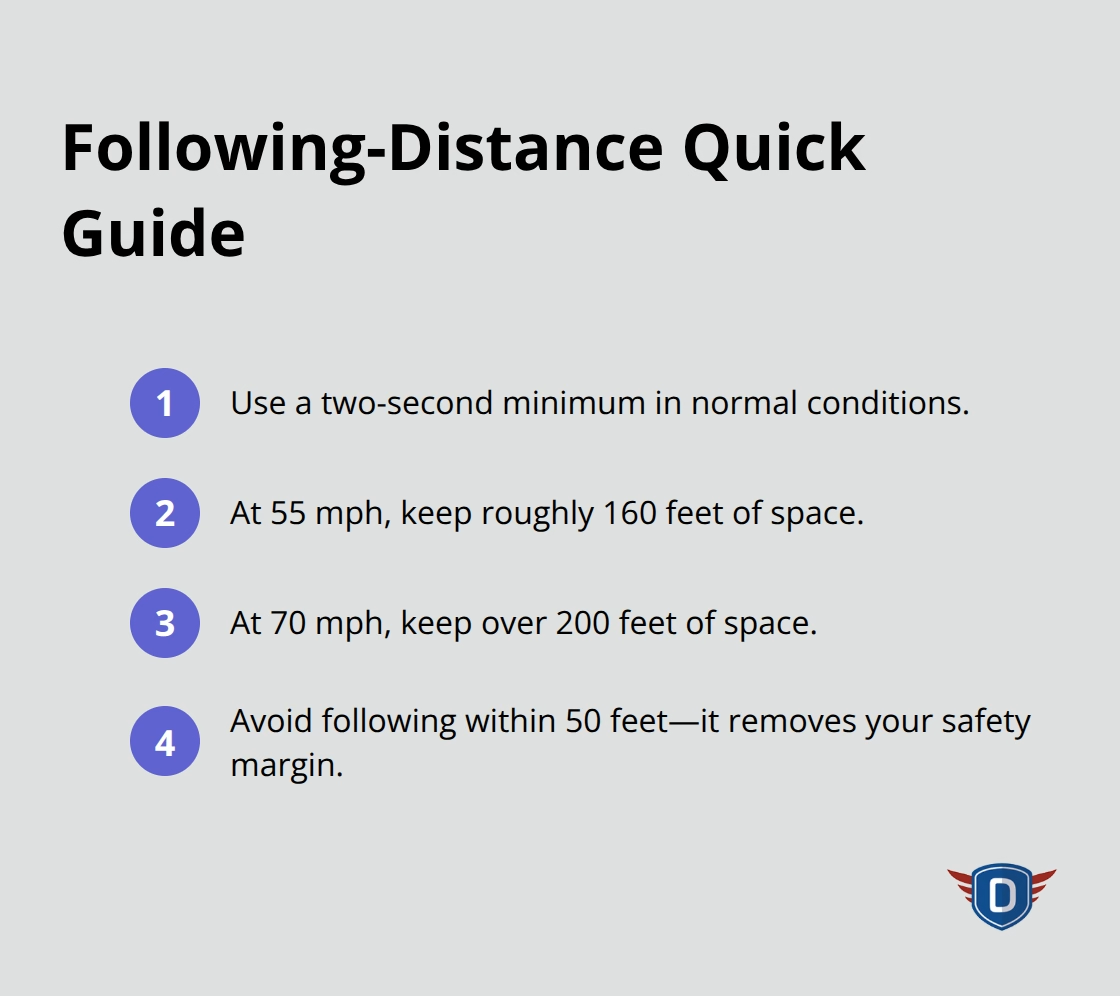
The two-second rule provides minimum spacing in normal conditions, but new drivers rarely maintain it. At 55 mph, two seconds equals roughly 160 feet. At 70 mph, it’s over 200 feet. Yet new drivers commonly follow within 50 feet of the vehicle ahead, eliminating any margin for error.
Understanding Right-of-Way and Traffic Laws
Clear knowledge of right-of-way rules prevents the confusion that causes intersection crashes. New drivers often hesitate at four-way stops because they’re unsure who goes first, creating awkward moments where two drivers proceed simultaneously. Understanding yield situations, turning rules, and pedestrian right-of-way eliminates these dangerous hesitations and makes your intentions predictable to other drivers.
Traffic laws exist to create predictability on the road. When every driver follows the same rules, others can anticipate what you’ll do next. New drivers who understand these rules gain confidence at intersections and during complex traffic situations. This knowledge transforms uncertainty into decisive action, which is exactly what professional driver education programs teach through realistic scenarios and hands-on practice.
Why Professional Training Transforms New Drivers into Safe Ones
Classroom Instruction Falls Short Without Real-World Practice
Classroom instruction alone does not build the automatic responses that keep new drivers safe when hazards appear suddenly. Real driver education programs combine structured lessons with actual road scenarios where instructors observe how students react to unexpected situations. When a pedestrian steps into traffic during a lesson, the instructor sees whether the student scans ahead or fixates on a single point. When traffic slows unexpectedly, the instructor evaluates whether the student maintains proper following distance or brakes reactively.
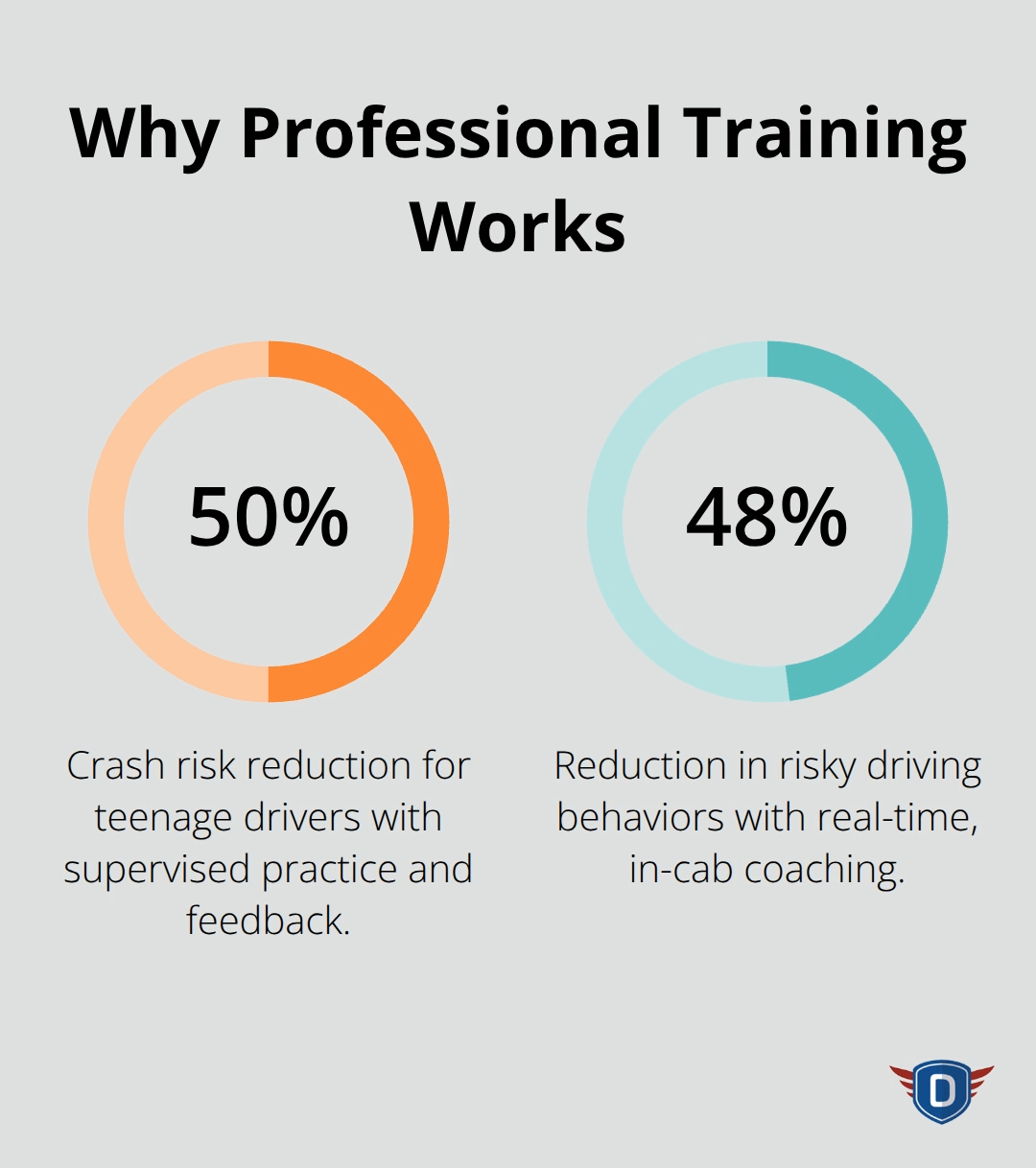
This direct observation reveals gaps between what new drivers understand intellectually and what they execute physically. The National Highway Traffic Safety Administration emphasizes that supervised practice with feedback can reduce crash risk by as much as 50% for teenage drivers.
Real-Time Correction Prevents Bad Habits from Taking Root
Certified instructors focus on correcting mistakes in real-time rather than waiting for errors to happen on unsupervised drives. A student who drifts toward the center line receives immediate coaching about mirror checks and lane positioning. A driver who accelerates aggressively during merges learns smoother throttle control before the habit becomes ingrained.
This personalized guidance targets each student’s specific weaknesses instead of delivering generic lessons that may not address their particular challenges. Real-time correction prevents bad habits by combining supervisory coaching with instant in-cab feedback to reduce risky driving behaviors by 48%.
Supervised Practice Creates Automatic Responses
Students who receive structured feedback during actual driving develop muscle memory that activates automatically when split-second decisions matter. A comprehensive training program does not just teach defensive driving concepts-it creates situations where new drivers practice recognizing hazards, controlling their vehicle smoothly, and making legal decisions repeatedly until these actions become instinctive.
The confidence that emerges from this repeated, supervised practice translates directly into safer driving on independent trips. When hazards appear suddenly, trained drivers respond with smooth steering inputs, appropriate braking, and proper spacing (rather than panic or hesitation). Their eyes scan ahead systematically, their hands control the wheel with precision, and their decisions follow traffic laws automatically.
Personalized Guidance Addresses Individual Weaknesses
Each new driver presents different challenges. One student may struggle with mirror checks while another fixates too long on potential hazards. Professional instructors identify these patterns and adjust their coaching accordingly. A driver who hesitates at intersections receives confidence-building practice in low-traffic areas before advancing to busier roads. A driver who maintains inadequate following distance practices the two-second rule repeatedly until proper spacing becomes habitual.
This individualized approach produces results that one-size-fits-all online courses cannot match. The instructor’s presence in the vehicle creates accountability and immediate feedback that shapes behavior far more effectively than passive video instruction.
Final Thoughts
New drivers who master defensive driving, vehicle control, and traffic laws reduce their crash risk dramatically. The statistics prove it: structured driver education traffic safety programs work, and drivers aged 16-19 who receive comprehensive training from certified instructors show measurably lower crash rates than those who rely on casual practice alone. Safe habits formed early become automatic responses that protect you for decades, and insurance companies recognize this reality by offering lower premiums to drivers who complete quality education programs.
Professional training means choosing a program that combines classroom instruction with real-world driving scenarios under certified instructor supervision. DriverEducators.com provides comprehensive driver education designed to build lasting safety skills through instructors who observe how you respond to actual road situations, correct mistakes in real-time, and personalize guidance to address your specific weaknesses. Whether you’re a new driver building foundational skills or an experienced driver refreshing your knowledge, structured professional training transforms how you approach every drive.
The road demands more than good intentions-it demands practiced responses, clear knowledge, and habits that activate automatically when hazards appear. Professional driver education delivers exactly that, and the long-term benefits extend far beyond passing a driving test into every drive you make for decades to come.