Picking the right driver safety training program can feel overwhelming with so many options available. You need instructors who know their stuff, courses that actually teach you something useful, and training that fits your schedule.
We at DriverEducators.com built this guide to cut through the noise. You’ll learn exactly what separates effective driver safety training programs from the rest.
What Makes an Instructor Worth Your Time
The instructor determines whether training clicks or falls flat. You want someone who has logged real hours behind the wheel and holds certifications that matter in your state. Our instructors at DriverEducators.com are certified and experienced, offering personalized guidance to help you master necessary skills. When evaluating any program, look for instructors who specialize in defensive driving or your specific needs-whether that’s teen driver training, mature driver refreshers, or professional fleet instruction. The National Safety Council has trained over 80 million drivers since 1964, signaling how much instructor quality shapes outcomes. Ask programs directly about their instructor training requirements and whether they employ Certified Driver Rehabilitation Instructors or equivalent credentials. A program that publishes instructor qualifications openly beats one that stays vague about who teaches you.
Content That Addresses Real Driving Challenges
The curriculum must tackle what actually kills drivers, not generic safety platitudes. Look for courses covering distracted driving, since 3,275 people died in distraction-affected crashes in 2023 according to NHTSA. Aggressive driving and road rage deserve dedicated modules, not a paragraph buried in lesson five. The program should teach you to maintain proper following distance, handle left turns correctly, and navigate roundabouts-specific techniques that prevent collisions. Real-world scenario practice matters far more than multiple-choice quizzes. Programs like the Smith System emphasize space cushion management and situational awareness through behind-the-wheel training paired with eLearning modules. Check whether the course updates regularly to reflect new state laws and emerging traffic technologies like adaptive cruise control and lane-keeping assistance.
Flexibility Without Sacrificing Quality
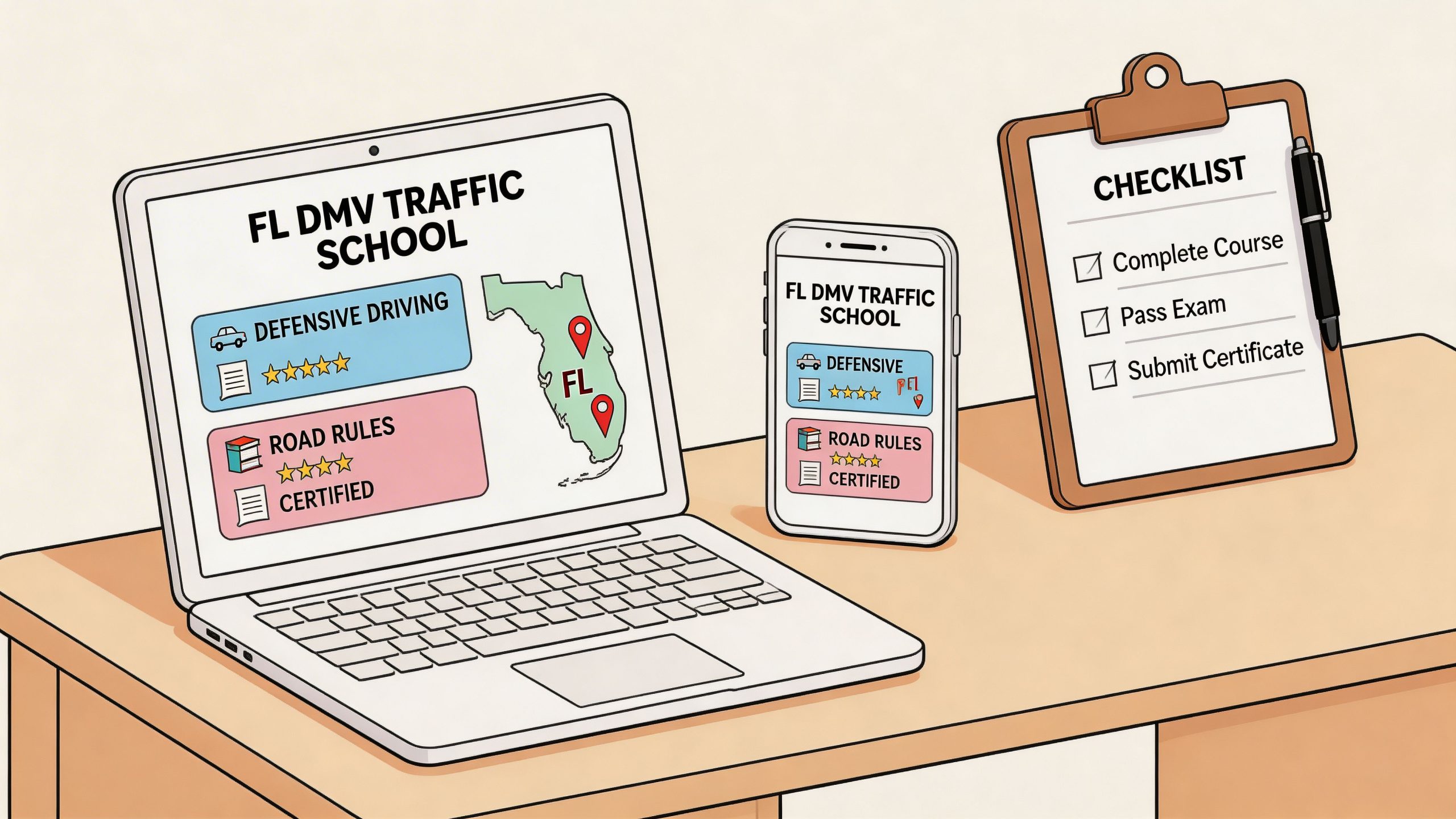
Online self-paced courses cost far less than in-person instruction, with defensive driving courses available for as low as $24.95, versus hundreds of dollars for classroom-based training. You need internet access and a quiet study space, but you control when you learn. In-person programs lock you into fixed schedules and group pacing, which works only if you thrive with live instructors and peer interaction. The best programs blend both: online modules for flexibility combined with optional behind-the-wheel instruction when hands-on practice matters. DriverEducators.com delivers fully online, self-paced courses available in English, Spanish, and Portuguese, letting you study from any device at your convenience. Verify the program issues certificates that your state actually recognizes-Florida-approved courses, for example, report directly to the Florida Department of Highway Safety and Motor Vehicles, eliminating paperwork headaches. If insurance discounts matter to you, confirm the program qualifies before enrolling; AARP’s Smart Driver course, completed by over 20 million drivers, qualifies you for multi-year discounts with many insurers (though exact savings vary by company).
What Separates Strong Programs From the Rest
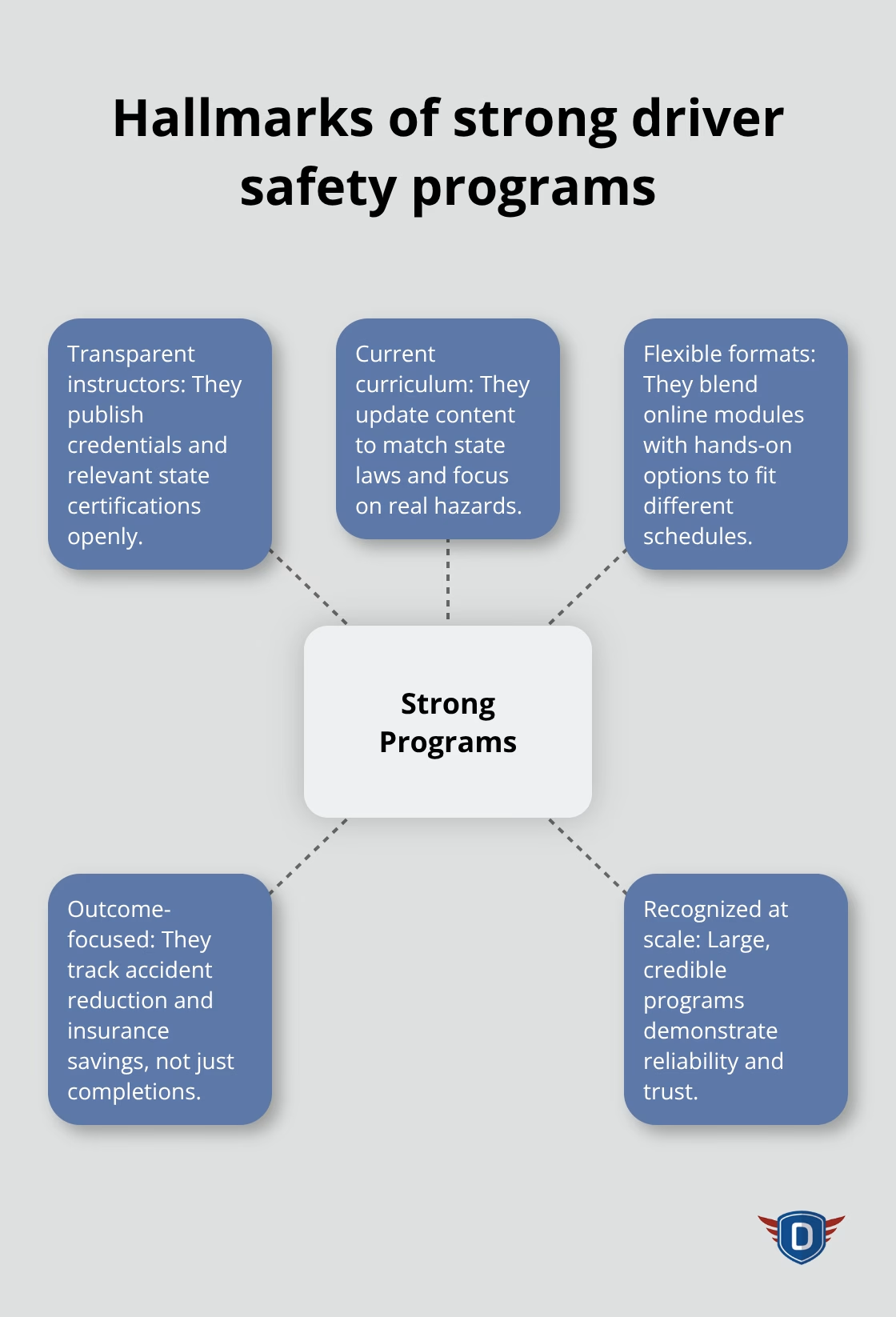
The programs that deliver real safety improvements share common traits. They publish instructor credentials openly, update curricula to match current state laws, and offer flexible formats that fit your life. They measure success through accident reduction rates and insurance savings, not just completion numbers. AARP’s 20 million course completions show what scale and credibility look like.
Your next step involves comparing specific programs against these standards to find the one that matches your needs and learning style.
Online or In-Person: Which Training Format Actually Works
Online and in-person driver safety training serve fundamentally different needs, and the choice depends less on preference and more on what your schedule and learning style demand.
Online Training: Flexibility and Affordability
Online courses let you study whenever you want from any device with internet access, which explains why a Georgia defensive driving course costs just $24.95 compared to hundreds of dollars for classroom instruction. You pause lessons, rewatch confusing sections, and fit training around work and family obligations. The AARP proves that online training works at scale when designed well. Online self-paced courses eliminate scheduling conflicts entirely but demand self-motivation to finish without external deadlines. Cost differences are stark and decisive: online defensive driving runs $24.95 to $50, while in-person instruction typically costs $200 to $500 depending on instructor rates and location.
In-Person Training: Real-Time Feedback and Hands-On Practice
In-person programs lock you into fixed class times and group pacing, which only works if you have rigid availability and learn better through live instructor feedback. The real advantage of in-person training emerges when you need behind-the-wheel instruction: a certified instructor sitting beside you catches bad habits in real time and corrects them immediately, something no video can replicate. In-person classroom courses demand you show up for scheduled blocks, often stretching across multiple weeks, which creates real friction if your schedule shifts.
Time Commitment: What Fits Your Life
Time commitment separates serious training from checkbox completion. A four-hour Basic Driver Improvement course fits into a Saturday, while an eight-hour Intermediate Driver Improvement program requires two sessions. The National Safety Council trained over 80 million drivers since 1964 through programs ranging from quick refreshers to comprehensive professional fleet training, showing that duration matters less than whether content sticks.
Hybrid Programs: The Best of Both Worlds
If your state requires hands-on driving evaluation or you struggle with self-discipline, hybrid programs that blend online modules with optional in-car sessions offer the best of both worlds. These programs combine the flexibility of online learning with the accountability and real-time correction that in-person instruction provides. You control most of your schedule while still accessing expert feedback when you need it most.
Making Your Final Decision
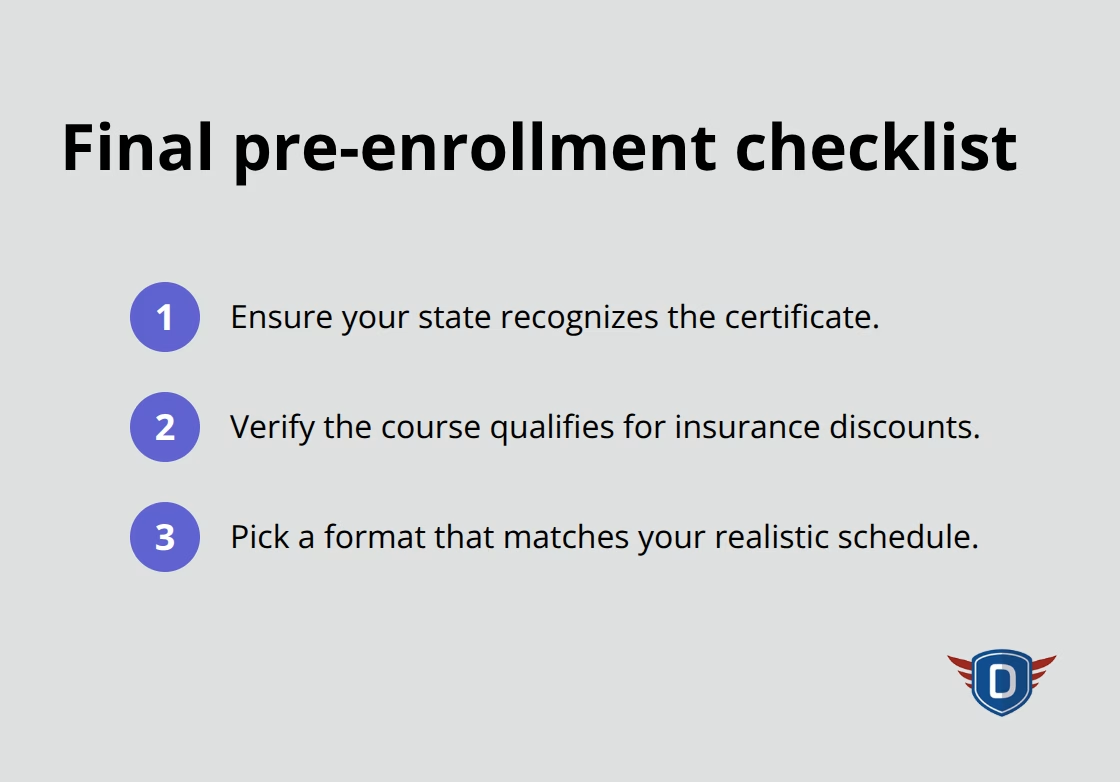
Insurance discounts matter significantly when comparing programs. Defensive Driver participants qualify for multi-year auto insurance discounts with many carriers, though exact savings vary by insurer and policy. Some states like Florida report course completion directly to the Department of Highway Safety and Motor Vehicles, eliminating paperwork entirely. Before enrolling anywhere, confirm three things: your state actually recognizes the certificate, the program qualifies for insurance discounts if that matters to you, and the format matches your realistic schedule, not your ideal schedule. Once you’ve narrowed your choice to a format that works, the next step involves evaluating what specific content each program covers and whether that curriculum addresses your actual driving challenges.
What Actually Separates Effective Training From Wasted Time
Most driver safety programs claim to teach something useful, but the gap between theory and reality is massive. The programs that genuinely reduce accidents share three non-negotiable features: they force you to practice real driving decisions under pressure, they keep you engaged rather than bored, and they meet your state’s strict requirements so your certificate actually counts.
Real-World Scenario Practice Delivers Results
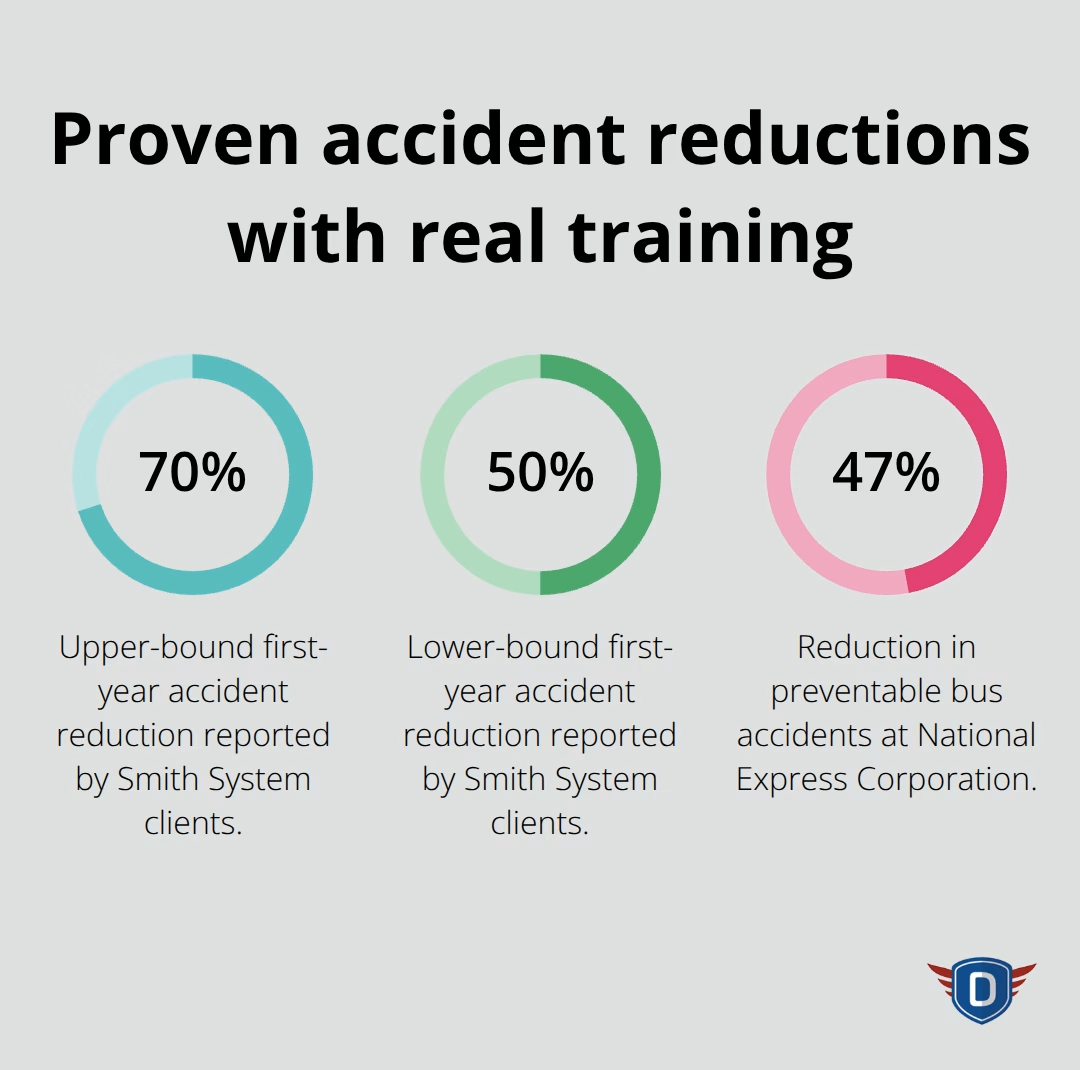
The Smith System, used by major fleets across trucking and logistics, reduced accidents by 50 to 70 percent in the first year for clients like Quickway Carriers and achieved a 47 percent reduction in preventable bus accidents for National Express Corporation. That kind of measurable improvement comes from behind-the-wheel training paired with eLearning modules that teach space cushion management and situational awareness, not from videos you can half-watch while checking your phone.
When you evaluate a program, demand specifics about how they teach scenario practice. Do they use video telematics and driver analytics to show you exactly where you made mistakes? Do they pair online lessons with optional in-car coaching where an instructor can correct bad habits in real time?
Strong programs integrate real-life scenarios into the curriculum so you learn how to handle left turns, navigate roundabouts, and manage following distances through practical application, not abstract lectures.
Engagement Separates Learning From Checkbox Completion
Programs that bore you fail to change behavior. The best training uses interactive methods-video scenarios, real-time feedback, and decision-making exercises-that keep your attention and force you to think critically about your choices on the road. Passive video lectures don’t stick; active participation does. Look for programs that incorporate driver analytics and mobile apps to track your progress and highlight specific areas where you need improvement.
State Compliance Determines Whether Your Certificate Counts
State compliance matters more than you think because an invalid certificate wastes your time and money. Eligibility for discounts may vary based upon a few factors, and insurance companies only recognize certificates from state-approved providers. Before enrolling anywhere, verify the program appears on your state’s approved list and confirm it qualifies for insurance discounts if that’s why you’re taking it. A cheap course that your state doesn’t recognize saves you nothing.
Final Thoughts
Choosing the right driver safety training program requires three non-negotiable standards: instructor qualifications that matter in your state, curriculum content addressing real driving hazards, and flexible formats that fit your actual schedule. Programs worth your time publish their instructor credentials openly, update courses to match current state laws, and measure success through accident reduction rates rather than completion numbers. State compliance determines whether your certificate counts, so verify your program appears on your state’s approved list before enrolling.
We at DriverEducators.com deliver fully online, self-paced courses available in English, Spanish, and Portuguese that meet every standard outlined in this guide. Our Florida-approved programs include options for moving violations, court-ordered drivers, habitual offenders, and drivers aged 55 and older, with curricula that blend clear explanations with real-life scenarios covering defensive driving techniques, safe following distances, and crash avoidance strategies. We update our courses regularly to reflect new Florida statutes and roadway technologies, and we issue certificates electronically and report them directly to the Florida Department of Highway Safety and Motor Vehicles.
Visit DriverEducators.com to review which course matches your situation and enroll in the program that fits your needs. You control when and where you study, and you’ll finish with a certificate your state recognizes and insurance companies respect.