Impaired driving kills someone every 39 minutes in the United States. At DriverEducators.com, we believe impaired driving education is the most direct path to preventing these tragedies on Florida roads. This guide covers the hard facts about impairment, how to spot dangerous drivers, and proven prevention strategies that work.
How Impaired Driving Affects Road Safety
Impaired driving crashes cost the U.S. economy approximately $68.9 billion annually, according to NHTSA data. About 32 people die every day in drunk-driving crashes, totaling 11,904 alcohol-impaired driving deaths in 2024 alone. These deaths are entirely preventable.
What Happens to Your Body and Brain
Alcohol reduces brain function, reasoning, and muscle coordination-the exact abilities required to navigate traffic safely. A driver with a BAC of 0.08 faces roughly four times the crash risk of a sober driver. At 0.15, the risk jumps to at least 12 times higher, with young male drivers experiencing even steeper increases. The speed at which
impairment sets in varies based on body weight, food consumption, sex, and drinking pace. Most people cannot accurately judge their own impairment level. Many drivers believe they are fine to drive despite consuming enough alcohol to significantly impair their judgment and reflexes.
Reaction Time Collapses First
Reaction time degradation is one of the first casualties of alcohol consumption. Even at low BAC levels, a driver’s ability to respond to sudden hazards deteriorates rapidly. A pedestrian stepping into the road, brake lights flashing ahead, or an unexpected lane change all demand split-second responses that impaired drivers cannot deliver. NHTSA research shows that 2,028 alcohol-related crash deaths in 2024 involved a BAC between 0.01 and 0.07-below the legal limit in most states but still deadly. This gap reveals a dangerous truth: drivers don’t need to be legally intoxicated to cause fatal crashes. The impairment begins immediately and compounds with every drink consumed.
Florida’s Penalties Are Severe
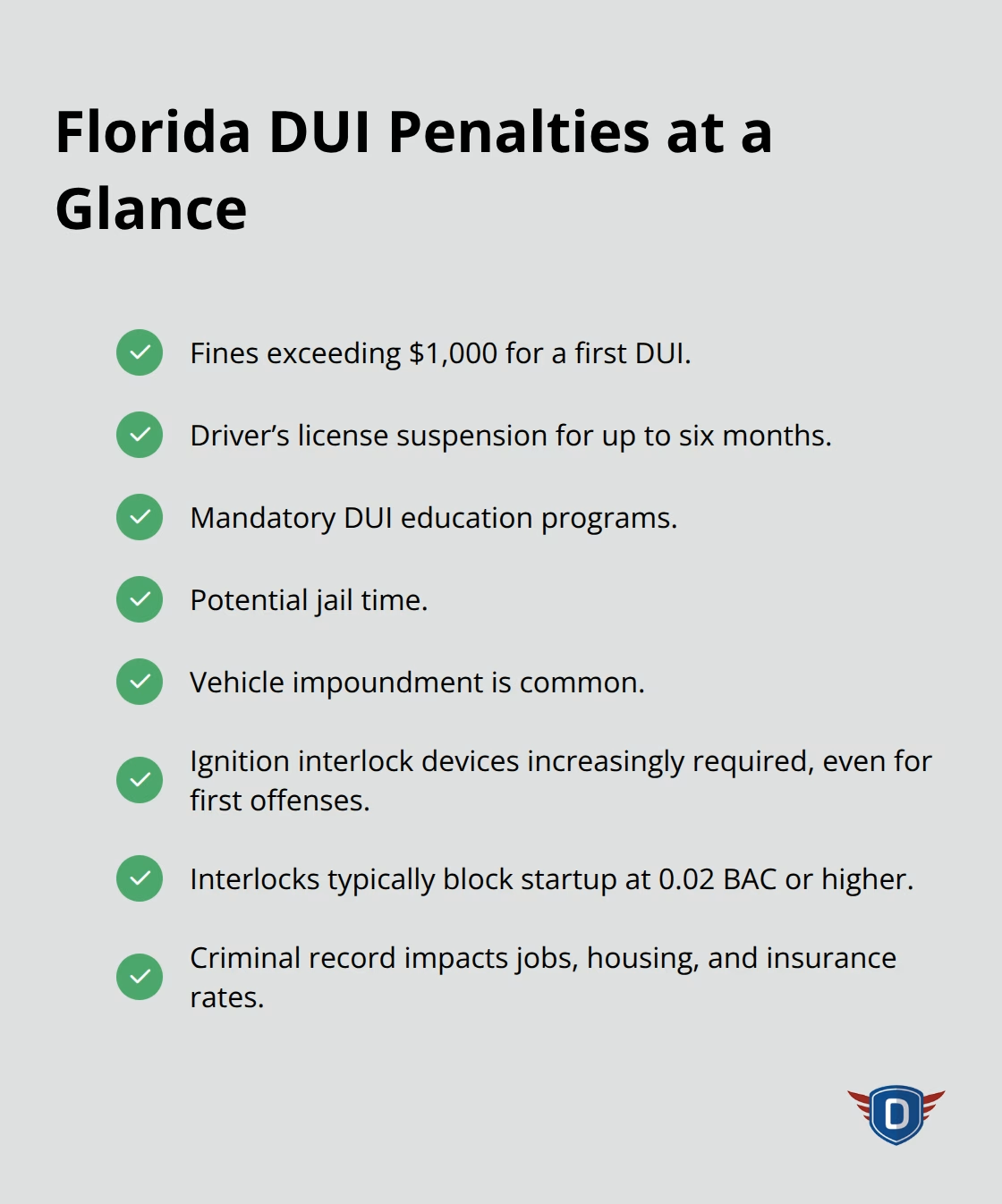
Florida treats impaired driving as a serious criminal offense with consequences that extend far beyond the courtroom. A first-time DUI conviction in Florida results in fines exceeding $1,000, driver’s license suspension for up to six months, mandatory DUI education programs, and potential jail time.
Repeat offenders face escalating penalties, including longer license suspensions, substantial fines, and possible imprisonment. Vehicle impoundment is common, and
ignition interlock devices-which prevent a vehicle from starting if alcohol is detected on the driver’s breath-are increasingly required even for first offenses. These devices typically trigger if BAC reaches 0.02 or higher. The criminal record itself carries lasting consequences: employment prospects decline, housing applications face scrutiny, and insurance rates skyrocket. Florida’s strict penalties exist because impaired driving destroys lives and communities. Understanding these
legal realities is the first step toward recognizing why spotting impaired drivers on the road matters so much.
Recognizing Impaired Driving Warning Signs
Spotting Dangerous Driving Patterns
Impaired drivers display predictable patterns that become obvious once you know what to watch for.
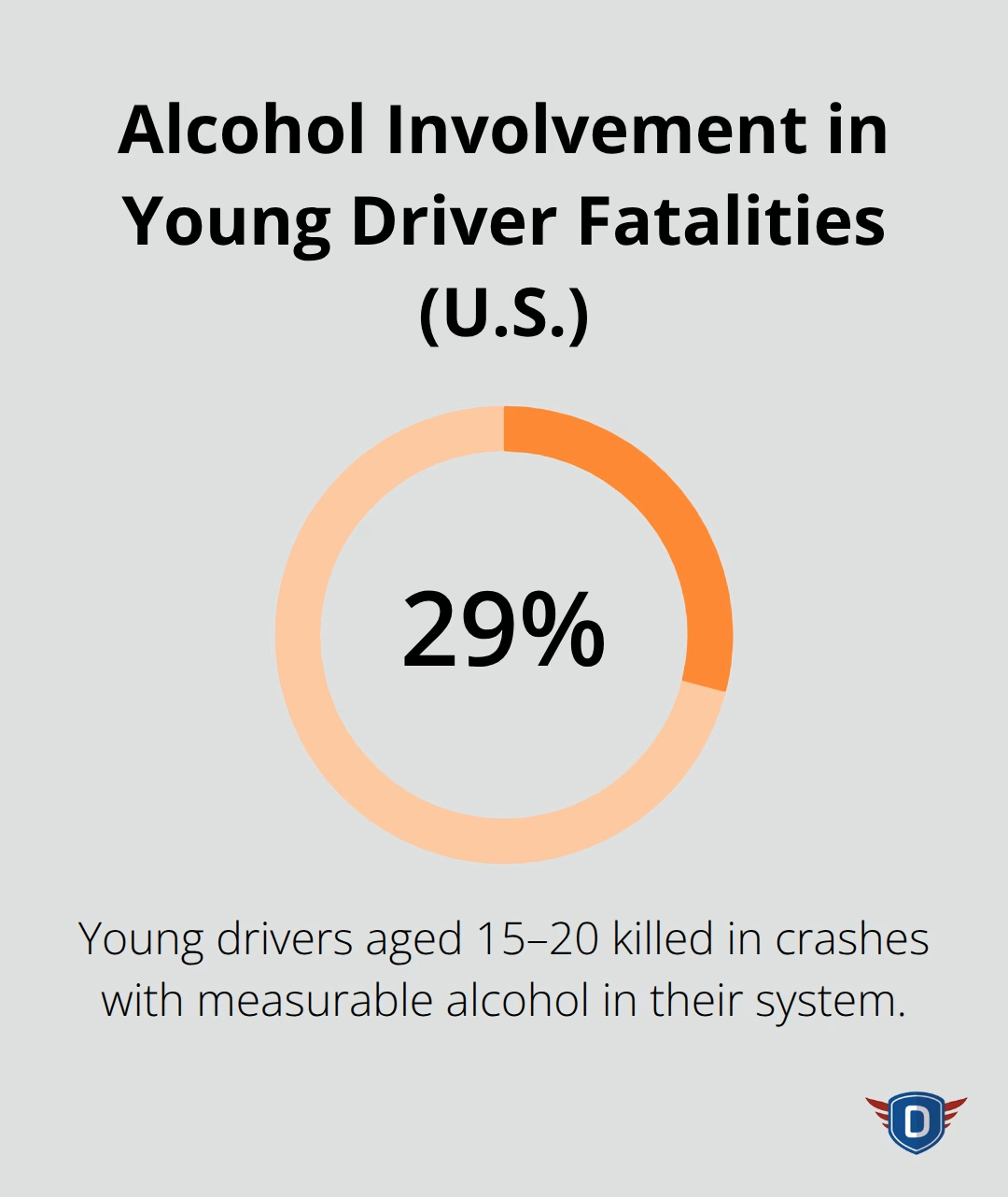
Weaving between lanes without signaling, maintaining inconsistent speeds, braking suddenly or too gently, and drifting across center lines signal someone whose coordination and judgment have deteriorated. A driver might accelerate aggressively then coast, turn without checking mirrors, or fail to respond to traffic signals. NHTSA research shows that 29% of young drivers aged 15–20 killed in crashes had measurable alcohol in their system, making younger drivers statistically more likely to drive impaired.
Physical Signs Behind the Wheel
The physical signs of impairment are equally telling. An impaired driver may grip the wheel too tightly, sit unusually close or far from it, or move their head in exaggerated motions to compensate for impaired vision. Some operate with their headlights off at night or their windows down in winter, unaware of these dangerous habits. These behaviors reveal someone whose reaction time has collapsed and whose decision-making has fractured-exactly the conditions that led to 11,904 deaths in 2024.
How to Report Suspected Impaired Drivers
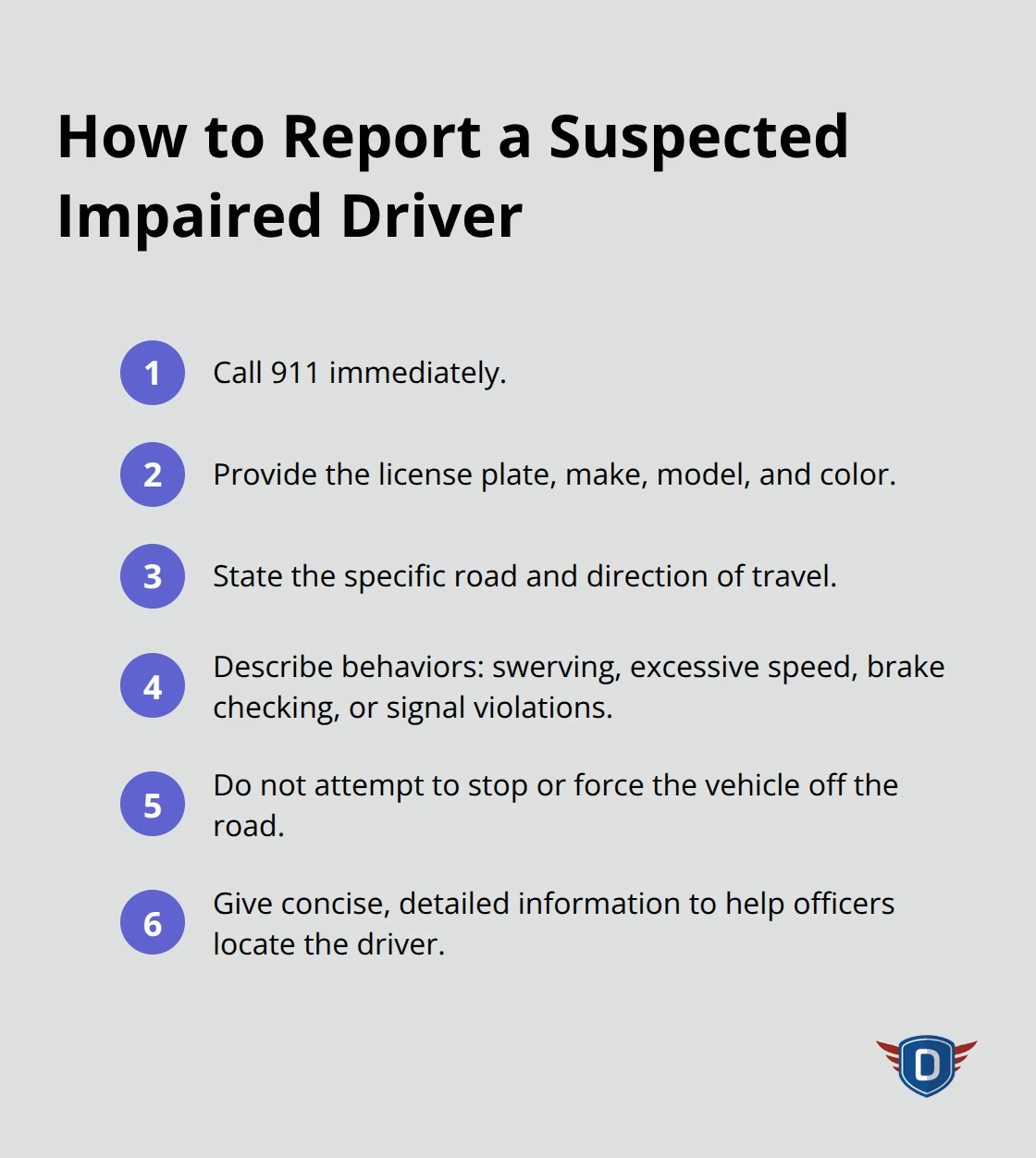
Reporting suspected impaired drivers requires specificity and speed. Call 911 and provide the vehicle’s license plate, make, model, and color, along with the specific road and direction of travel. Describe the driving behavior you observed: swerving, excessive speed, brake checking, or failure to obey traffic signals. Do not attempt to stop the vehicle yourself or force it off the road. Law enforcement agencies depend on detailed reports to locate and stop impaired drivers before they cause crashes.
Understanding Different Types of Impairment
Different types of impairment produce slightly different driving patterns. Alcohol primarily affects coordination and judgment, creating the weaving and inconsistent speed patterns most people recognize. Marijuana impairs concentration and reaction time, often causing overly cautious or erratic driving. Prescription medications and illegal drugs produce unpredictable effects depending on the substance, but drowsy or vacant behavior combined with slow reactions suggests chemical impairment. Fatigue mimics some impairment symptoms but typically shows as very slow reactions rather than swerving.
Why Every Report Matters
Any significant deviation from normal driving-sudden lane changes, ignoring traffic signals, or obvious difficulty controlling the vehicle-warrants a call to 911. You’re not making an accusation; you’re reporting dangerous behavior that endangers everyone on the road. These observations form the foundation for effective prevention strategies that reduce impaired driving incidents before they turn fatal.
Effective Prevention Strategies and Education
Master Defensive Driving Techniques
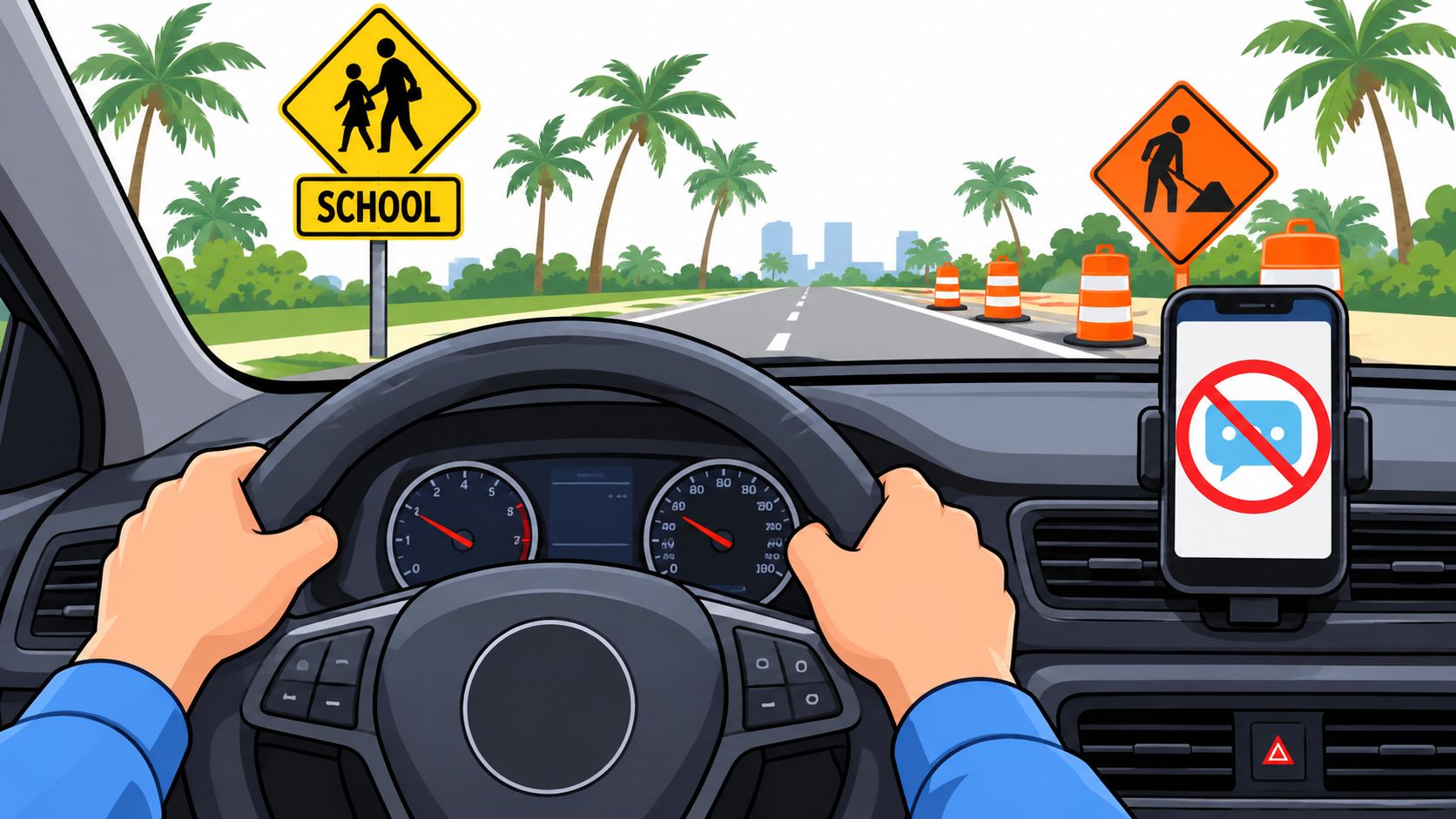
Defensive driving techniques transform how you interact with impaired drivers on the road. Maintain greater following distances, scan for warning signs ahead, and position yourself to escape dangerous situations. When you spot erratic driving, increase your distance behind that vehicle to give you time to react if the impaired driver swerves into your lane or brakes suddenly. Avoid passing impaired drivers whenever possible; instead, let them move ahead and create distance. Turn off distracting elements in your own vehicle-silence your phone, adjust climate controls before driving, and eliminate anything that diverts your attention. Your focus on the road is your primary defense against someone whose judgment has collapsed. NHTSA data shows that defensive positioning and early detection prevent crashes before they occur, making this the most practical skill Florida drivers can develop.
Choose Designated Drivers and Rideshare Services
Designated drivers and rideshare services eliminate impaired driving entirely, which is why they represent the only foolproof prevention strategy. If you drink, you do not drive-period. Arrange a sober driver before you consume alcohol, or use rideshare apps like Uber or Lyft, which cost far less than a DUI conviction. A first DUI in Florida exceeds $1,000 in fines plus license suspension, ignition interlock installation, and mandatory education programs.
Ignition interlocks are among the most effective interventions for preventing repeat offenses; these devices block vehicle startup if BAC reaches 0.02 or higher. Public transportation, taxi services, and designated driver programs at bars and restaurants all work when you plan ahead. Hosts who provide alcohol bear responsibility for guests’ safety-offer rides home, call a taxi, or arrange transportation before the event begins.
Education Programs Reduce Impaired Driving Incidents
Education programs address impaired driving prevention through multiple angles. They teach drivers the neuroscience of alcohol’s effects, the reality that impairment starts at low BAC levels, and the concrete steps to avoid driving impaired. These courses reach drivers already motivated to change-those court-ordered to complete them or seeking insurance discounts-making them highly effective at reducing repeat offenses. Community interventions that combine education with enforcement, like publicized sobriety checkpoints and high-visibility patrols, have reduced impaired driving fatalities significantly across states that implement them consistently. The Community Preventive Services Task Force found that multi-component approaches work better than single strategies, meaning education paired with enforcement and accessible alternatives to driving produces measurable results.
Final Thoughts
Impaired driving kills someone every 39 minutes in the United States, and Florida roads face this threat constantly. The facts demand attention: 11,904 alcohol-impaired deaths occurred in 2024, crashes cost the economy $68.9 billion annually, and a single DUI conviction in Florida triggers fines exceeding $1,000, license suspension, mandatory education programs, and potential jail time. A driver with a BAC of 0.08 faces four times the crash risk of a sober driver, while a BAC of 0.15 increases that risk to at least 12 times higher. Prevention strategies work when they combine multiple approaches. Designated drivers and rideshare services eliminate impaired driving entirely, while ignition interlocks prevent vehicles from starting if BAC reaches 0.02 or higher. Impaired driving education programs address the neuroscience of alcohol’s effects and teach drivers concrete steps to avoid driving impaired, making them highly effective at reducing repeat offenses. At DriverEducators.com, our Florida-approved traffic school courses integrate impaired driving education into comprehensive driver improvement programs that cover the dangers of impairment, defensive driving techniques, and how attitude and behavior affect decision-making behind the wheel. Our
Basic Driver Improvement, Intermediate Driver Improvement, and Aggressive Driver courses provide the knowledge to make safer choices on Florida roads, whether you complete a court requirement or seek an insurance discount. Safer roads require informed drivers who understand the real costs of impaired driving and commit to prevention.
 Repeat offenders face escalating penalties, including longer license suspensions, substantial fines, and possible imprisonment. Vehicle impoundment is common, and ignition interlock devices-which prevent a vehicle from starting if alcohol is detected on the driver’s breath-are increasingly required even for first offenses. These devices typically trigger if BAC reaches 0.02 or higher. The criminal record itself carries lasting consequences: employment prospects decline, housing applications face scrutiny, and insurance rates skyrocket. Florida’s strict penalties exist because impaired driving destroys lives and communities. Understanding these legal realities is the first step toward recognizing why spotting impaired drivers on the road matters so much.