Traffic laws shift constantly, and what worked five years ago might get you a ticket today. Vision changes, medication side effects, and reaction time slowdowns are real challenges that mature drivers face on modern roads.
At DriverEducators.com, we’ve created this guide to give you concrete mature driver safety reminders that actually matter. You’ll learn what’s changed legally, how your body affects your driving, and defensive techniques that keep you safer right now.
What Traffic Laws Changed and Why They Matter to You
Speed Limits and Automated Enforcement
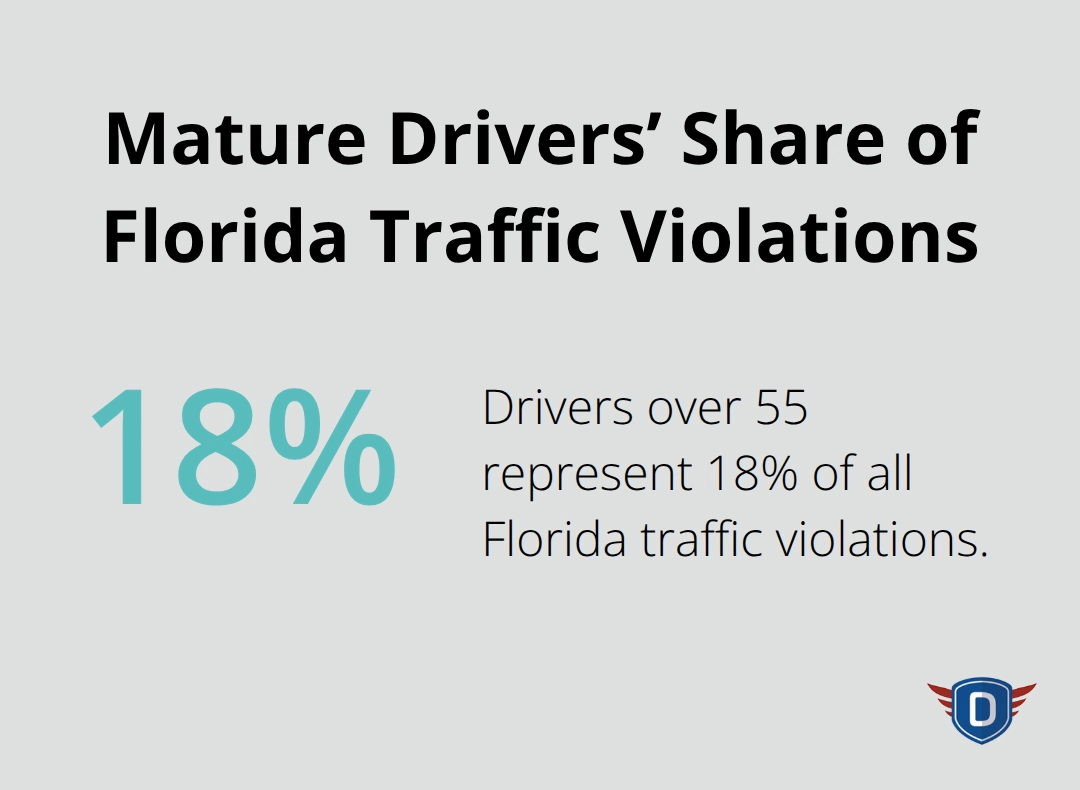
Traffic enforcement in Florida has shifted significantly over the past five years, and mature drivers need to know exactly what’s different. Speed limit enforcement now relies heavily on automated cameras in school zones and construction areas, with fines ranging from $100 to $275 depending on how far you exceed the limit. Florida’s Department of Highway Safety and Motor Vehicles reports that drivers over 55 represent 18% of all traffic violations, yet many of these citations stem from outdated knowledge rather than reckless behavior.
Right-of-Way Rules at Complex Intersections
The state has tightened right-of-way rules at complex intersections, particularly around roundabouts and multi-lane turning situations where older drivers often hesitate or misjudge other vehicles’ positions. If you’re unsure about right-of-way at an unfamiliar intersection, the safest choice is to yield and let other traffic proceed, even if you technically have the right. This approach prevents accidents far more effectively than asserting a legal advantage you’re uncertain about.
Distracted Driving Restrictions
Distracted driving laws have become far stricter since 2020, with Florida now prohibiting handheld phone use in school zones and work zones for all drivers, regardless of age. Hands-free technology doesn’t exempt you either-if you adjust GPS, check messages, or manage infotainment systems while driving, you risk a $30 base fine plus points on your license. These restrictions apply equally to mature drivers and younger motorists, with no exceptions for experience level.
Why Enforcement Hits Harder Now
What makes these changes particularly challenging for mature drivers is that enforcement happens faster and with less tolerance than it did a decade ago. Police officers and traffic cameras don’t distinguish between intentional violations and knowledge gaps. Your understanding of right-of-way rules, speed zone transitions, and technology restrictions may rest on information that’s now outdated (and costly to rely on).
Taking time to refresh your knowledge prevents expensive tickets, keeps your insurance rates stable, and most importantly, keeps you and others safer on Florida’s increasingly complex roadways. Your body’s natural changes-vision, reaction time, and medication effects-interact with these stricter enforcement patterns in ways that make current legal knowledge essential rather than optional.
How Your Body Changes Your Driving Ability
Vision Changes After 55
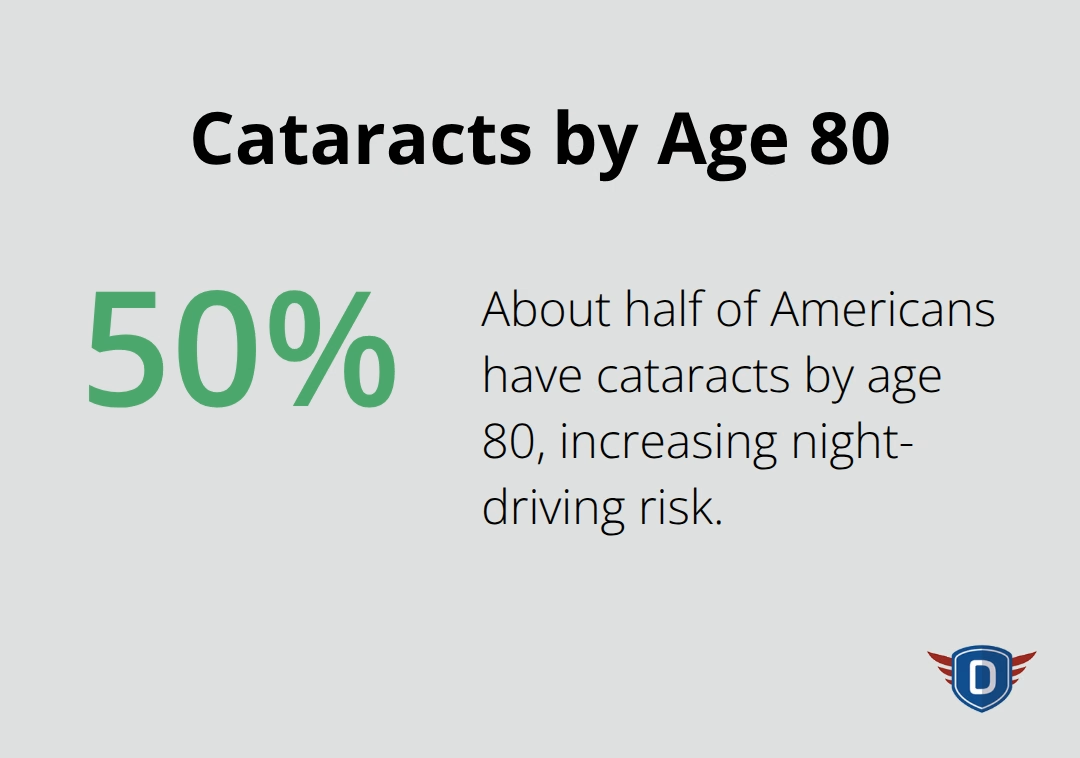
Vision deteriorates predictably after 55, and the numbers matter more than you might think. The American Academy of Ophthalmology reports that drivers over 60 need three times more light to see clearly than drivers in their 20s, and glare from oncoming headlights or wet road surfaces becomes genuinely dangerous rather than merely annoying. Cataracts, which affect roughly 50% of Americans by age 80, scatter light across your retina and make night driving substantially riskier.
If you experience halos around lights, difficulty seeing road signs until you’re very close, or need to slow down at dusk, your vision has already shifted enough to change how you should drive. Get your eyes checked annually instead of every other year, wear anti-glare coatings on your glasses, and avoid driving between sunset and two hours after dark when your eyes work hardest. Reducing night driving isn’t admitting defeat-it’s matching your driving patterns to your actual visual capability.
Medications and Reaction Time
Medications create a second layer of complexity that most mature drivers underestimate. Blood pressure medications, antihistamines, pain relievers, and sleep aids all slow reaction time, and many drivers take multiple medications simultaneously without understanding their combined effect. Research found that drivers taking five or more medications had twice the crash rate of those taking none, yet most people never discuss medication side effects with their doctors in the context of driving.
Talk with your pharmacist about how your specific medications affect alertness and reaction speed. Ask whether timing your doses differently could reduce afternoon drowsiness. Your pharmacist can identify dangerous drug combinations that amplify fatigue or impair judgment far better than you can on your own.
Fatigue and Daytime Drowsiness
Fatigue amplifies medication effects dramatically. Mature drivers often accept daytime drowsiness as normal aging, but it’s not-it’s frequently a medication side effect, sleep apnea, or dehydration that genuinely impairs your ability to react. If you feel alert in the morning but foggy by mid-afternoon, that’s your signal to check medication timing with your pharmacist, get a sleep study if you snore, or simply stop driving after 2 p.m. on days when fatigue hits.
This isn’t conservative; it’s the difference between a safe trip and a preventable crash. Knowing what your body can and cannot do on any given day, with any given medication combination, is the single most important safety tool you have. These physical realities-vision limits, medication effects, and fatigue patterns-directly shape how you should approach defensive driving techniques on modern roads.
Defensive Driving Techniques for Drivers 55 and Older
Safe following distance in modern traffic
Your reaction time matters more now than it did ten years ago, and modern traffic moves faster than most mature drivers anticipate. The average vehicle on Florida highways travels at 68 mph according to traffic flow studies, yet drivers over 55 often maintain speeds that worked fine in 2010. Following distance is where this gap becomes dangerous.
The standard advice of one car length per 10 mph of speed applies to younger drivers with sharp reflexes; you need significantly more space. Maintain at least a three-second following distance to help avoid dangerous situations. Test this yourself by noting when the car ahead passes a road sign, then count how long until you reach that same sign. If you count fewer than three seconds, you’re too close.
This matters because your slower reaction time to sudden braking combined with your longer stopping distance means that standard spacing leaves you vulnerable. Aggressive drivers exploit this gap constantly.
Handling Tailgaters and Aggressive Drivers
If someone tailgates you at 45 mph on a residential street or 65 mph on the highway, your instinct might be to speed up or brake suddenly; resist both. Instead, maintain your safe speed and increase your following distance from the vehicle ahead by another 2 seconds. This gives you more room to brake gradually without sudden movements that trigger road rage.
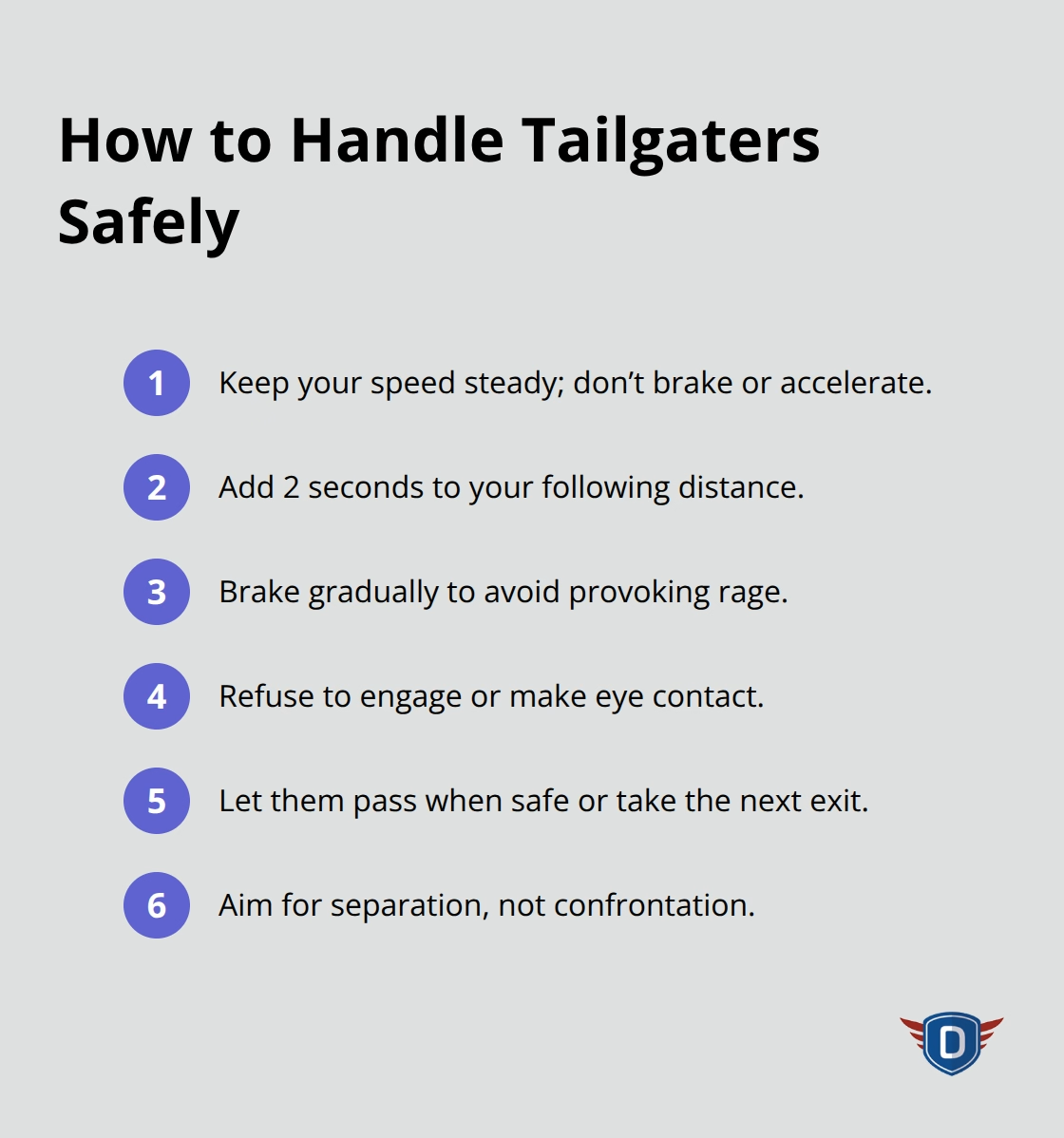
Aggressive drivers and road rage incidents escalate quickly when you respond emotionally rather than strategically. Someone honking, flashing lights, or making obscene gestures wants a reaction; refusing to provide one removes their power. If an aggressive driver tailgates, do not tap your brakes, do not make eye contact, and do not gesture back. Slow down gradually and predictably, allowing them to pass.
If they won’t pass, take the next exit or turn into a well-lit public area. Police stations, fire departments, and busy shopping centers work perfectly. Your goal is separation, not confrontation. Never engage in a honking exchange or attempt to teach an aggressive driver a lesson.
Road rage incidents involving firearms have increased 30% nationally since 2020, making every confrontation potentially deadly. Threats and aggressive honking are not worth your safety or your life. The moment you feel anger rising behind the wheel, that’s your signal to create distance between yourself and the triggering vehicle. Change lanes, slow down, or exit the highway. Emotional control is the single most effective defensive driving tool mature drivers possess.
Recognizing High-Risk Situations Before They Escalate
High-risk situations develop predictably on Florida roads, and recognizing them before they escalate prevents crashes entirely. Merging traffic on interstate ramps creates genuine hazards because younger drivers often underestimate your vehicle’s position and cut in front of you with minimal clearance. When approaching a merge point, reduce speed slightly and scan your mirrors constantly. Avoid the right lane where merges occur most frequently; shift left one lane earlier than necessary.
Intersections with multiple turn lanes confuse mature drivers regularly because the right-of-way rules shift based on arrow signals, turning traffic, and pedestrians. If you hesitate at an intersection, that hesitation itself is your answer: yield, wait for the next cycle, and let traffic clear. Your hesitation reveals genuine uncertainty about the situation, and acting on uncertainty causes crashes.
Construction zones demand different strategies entirely. Work zone traffic flows unpredictably, and younger drivers frequently change lanes without warning. Reduce your speed to 10 mph below the posted limit in construction zones, avoid lane changes, and accept that you’ll travel slower than surrounding traffic. This conservative approach prevents the rear-end collisions that happen constantly in work zones.
Final Thoughts
Refresher courses offer mature drivers practical protection that directly reduces crash risk and lowers insurance costs. Florida insurance companies offer discounts ranging from 5% to 15% for drivers who complete approved traffic safety courses, and those savings accumulate year after year. More importantly, the knowledge you gain from a current course prevents the expensive mistakes that outdated driving habits create.
Your mature driver safety reminders require three concrete actions. First, update your understanding of Florida’s current traffic laws, enforcement methods, and technology restrictions so you don’t accidentally violate rules that have changed since you last drove regularly. Second, honestly assess how your vision, medications, and fatigue patterns affect your driving ability on any given day, then adjust your driving schedule and routes accordingly. Third, practice the defensive techniques that work specifically for drivers with slower reaction times and longer stopping distances.
A structured course through DriverEducators.com delivers all three simultaneously. Our Mature Driver Course is a 6-hour program specifically designed for drivers aged 55 and older, covering updated Florida traffic laws, defensive driving techniques tailored to your physical capabilities, and practical strategies for handling modern road conditions (the course is fully online and self-paced, so you complete it whenever it fits your schedule). Upon completion, your certificate goes directly to the Florida Department of Highway Safety and Motor Vehicles, qualifying you for insurance discounts immediately.