Getting a traffic ticket doesn’t mean your driving record has to take a permanent hit. We at DriverEducators.com know that understanding your traffic ticket dismissal options is the first step toward protecting yourself legally and financially.
Most drivers waste money on ineffective strategies when proven solutions exist. This guide separates what actually works from the myths that cost you thousands in insurance increases.
Your Best Options for Dismissing a Florida Traffic Ticket
Challenging the Officer’s Evidence in Court
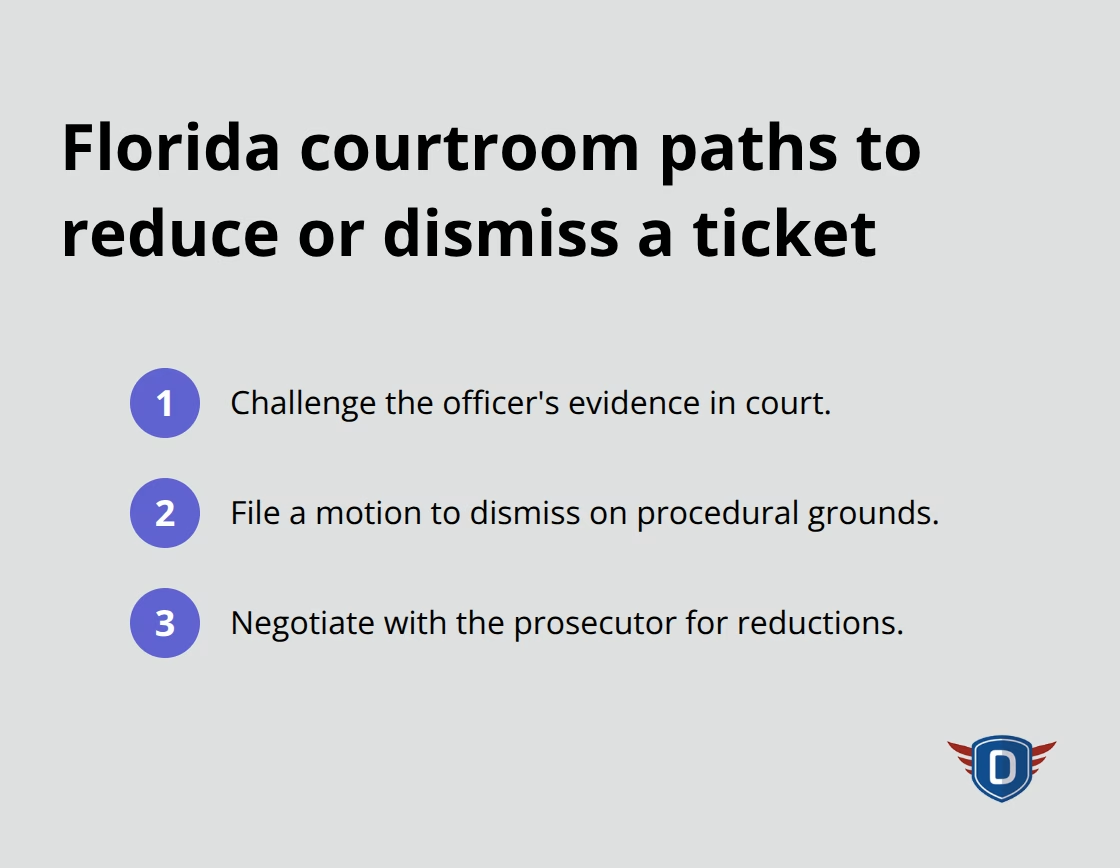
Florida traffic court offers three realistic paths to dismiss or reduce your ticket, but only one produces consistent results. Your first option involves challenging the officer’s evidence directly in court. This means questioning whether the officer had reasonable suspicion to stop you, whether the speed gun or radar received proper calibration, or whether field sobriety tests followed state procedures. Most officers in Florida document their stops correctly, and judges hear these challenges constantly. Unless you have specific evidence that the officer violated your constitutional rights during the stop itself, this approach rarely succeeds. You must file a motion before your court date, which requires understanding Florida’s Rules of Criminal Procedure and knowing exactly what evidence to contest. Most drivers attempt this alone and fail because they lack the technical knowledge to challenge equipment calibration records or police procedures effectively.
Filing a Motion to Dismiss
Your second path involves filing a motion to dismiss based on procedural grounds. Florida courts do dismiss cases when prosecutors fail to meet strict deadlines, when evidence is mishandled, or when discovery violations occur (though this only works if your prosecutor actually made a procedural mistake). The prosecutor’s office in your county has specific protocols to avoid these errors, and they rarely miss filing deadlines or fail to provide required evidence. This approach demands your time and requires understanding Florida traffic law, with no guarantee of success.
Negotiating with the Prosecutor
Your third option involves negotiating with the prosecutor, which sometimes results in charge reductions. A settlement might involve a lesser number of points or violations, a lower level of charge, or going to traffic school. Prosecutors have limited authority to dismiss cases entirely without court involvement, and they prioritize serious violations. You must appear in court on your assigned date and speak with the prosecutor before the judge calls your case. Many prosecutors discuss reductions only minutes before your hearing, leaving little time to decide. All three courtroom approaches demand your time, require understanding Florida traffic law, and offer no guarantee of success. If you get the reduction wrong or miss a deadline, you lose your opportunity to challenge the ticket at all.
Why These Methods Fall Short
The reality is that courtroom dismissal strategies work inconsistently because they depend on procedural errors that rarely happen or evidence challenges that judges reject regularly. You invest time preparing for court, taking time off work, and potentially hiring an attorney-all for uncertain results. A single speeding ticket increases your car insurance premiums by $900 to $1,580 over three years, making the financial stakes real. Most drivers who pursue these courtroom options end up paying the fine anyway, having wasted weeks preparing for a hearing that produces no reduction. The better question isn’t whether you can win in court-it’s whether a proven alternative exists that protects your record without the uncertainty.
Why Traffic School Works Better Than Fighting in Court
How Florida-Approved Courses Eliminate Points Automatically
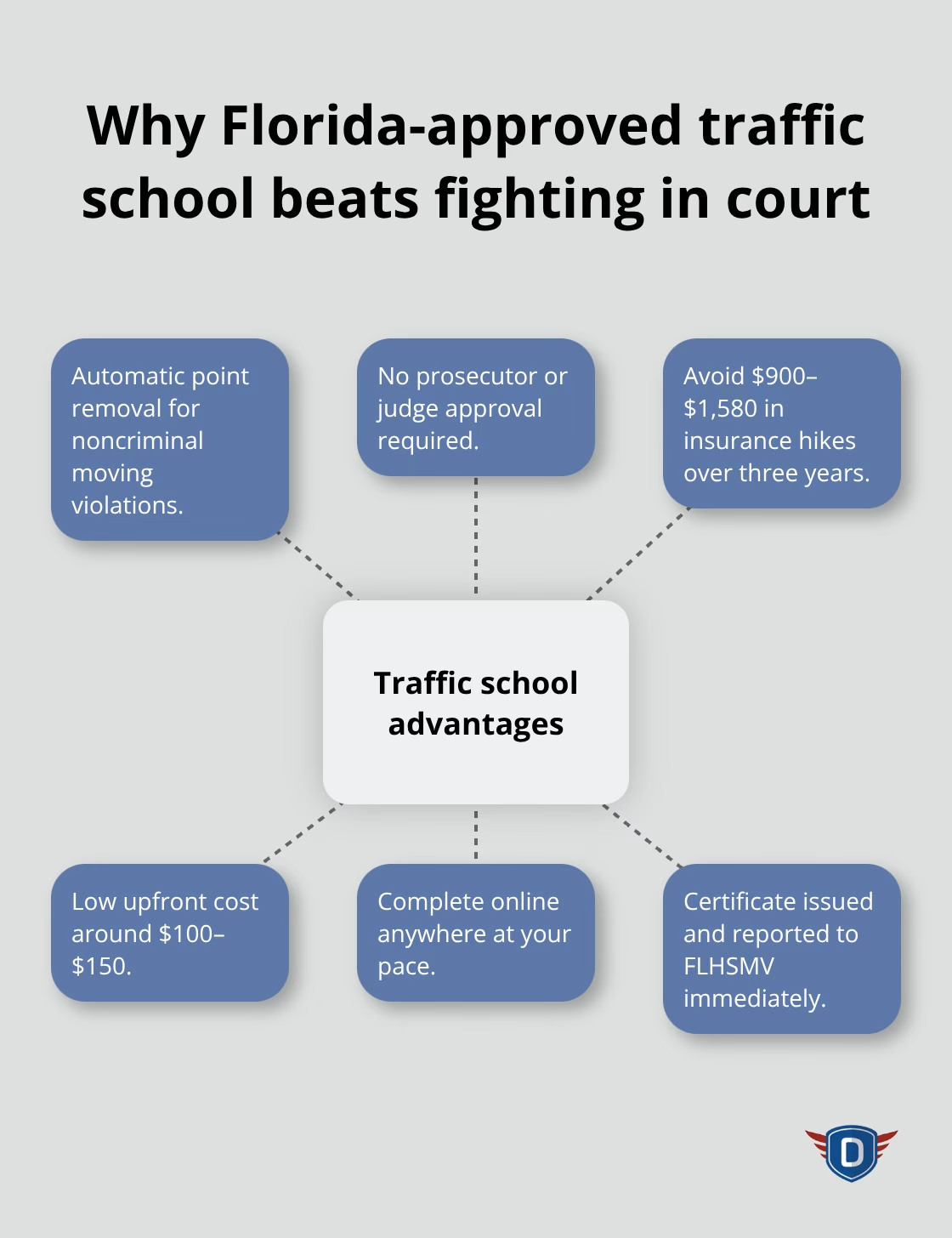
Florida-approved traffic school courses accomplish what courtroom strategies cannot: they eliminate points from your record without requiring you to win a legal argument. When you complete a Florida Department of Highway Safety and Motor Vehicles (FLHSMV) approved traffic school course like the 4-hour Basic Driver Improvement (BDI) program, the points disappear entirely for noncriminal moving violations. This isn’t a reduction or a negotiation-it’s an automatic point removal once you submit your completion certificate to the court.
Courts accept these certificates without question because state law mandates them. You don’t need the prosecutor to agree, you don’t need the judge to rule in your favor, and you don’t need to understand Florida traffic law. The state has already determined that completing an approved course satisfies the court’s requirements.
The Real Financial Advantage Over Courtroom Dismissal
The financial advantage over courtroom dismissal is immediate and substantial. A speeding ticket increases your car insurance premiums by $900 to $1,580 over three years, according to insurance industry data. Completing an approved traffic school course can help you avoid these insurance increases while eliminating the point that would trigger them.
This means you invest roughly $100–$150 in a course to prevent $1,000+ in insurance rate hikes. You also avoid taking time off work for court appearances, hiring an attorney, or preparing legal motions. The 4-hour BDI meets Florida’s Traffic Collision Avoidance Course (TCAC) requirements simultaneously, so you address multiple state mandates in a single course.
Flexibility and Guaranteed Results
The 8-hour Intermediate Driver Improvement (IDI) program works for drivers with multiple citations or court orders, allowing you to maintain a clean record even after recent violations. Unlike courtroom negotiations that depend on prosecutor discretion and judge decisions, traffic school produces guaranteed results because completion is the mechanism itself-not an argument you must win.
You can finish the course from your home, your car, or anywhere with internet access. The moment you complete the final exam, your certificate is issued electronically and reported directly to the FLHSMV, meeting all state filing requirements automatically. No waiting for court dates, no uncertainty about outcomes, and no legal knowledge required.
Why Drivers Still Waste Money on Courtroom Strategies
Most drivers who pursue courtroom dismissal options end up paying the fine anyway, having wasted weeks preparing for a hearing that produces no reduction. The better question isn’t whether you can win in court-it’s whether a proven alternative exists that protects your record without the uncertainty. Traffic school eliminates that uncertainty entirely because the state has already written the rules that make dismissal automatic.
Common Dismissal Myths That Cost Drivers Money
Procedural Errors Don’t Guarantee Dismissal
Drivers lose thousands annually betting on dismissal myths that sound logical but fail in Florida courtrooms. The first major myth claims that procedural errors automatically result in dismissal. Many drivers believe that if an officer fails to read Miranda rights, documents the stop incorrectly, or mishandles evidence, the case disappears. Florida courts reject this assumption constantly.
Procedural errors during traffic stops only matter if they involve constitutional violations during the traffic stop itself-not paperwork mistakes made afterward. An officer who forgets to write the exact speed on the citation or files documents late doesn’t trigger dismissal. Courts care about whether your constitutional rights were violated, not administrative sloppiness.
Officer Mistakes Rarely Lead to Case Dismissal
The second myth involves officer mistakes leading to automatic dismissal. Drivers assume that if the officer made any error-miscalculated speed, performed field sobriety tests incorrectly, or calibrated equipment improperly-the ticket vanishes. Reality differs sharply.
You must file a motion to suppress the evidence before trial, prove the officer’s error in court, and convince the judge that the mistake violated your rights or made the evidence unreliable. Most judges find officer testimony credible and reject these challenges regularly. Even if you succeed, the prosecutor can often refile charges or reduce them slightly rather than dismiss entirely.
Missing Deadlines Doesn’t Guarantee Relief
The third myth centers on missing court deadlines. Drivers believe that if the prosecutor misses a discovery deadline or fails to provide evidence within 15 days, the case gets thrown out automatically. Florida allows the prosecutor to request extensions, and judges grant them routinely.
Missing a deadline without proper justification might result in sanctions or evidence suppression, but dismissal remains rare. You must file a motion objecting to the extension and convince the judge that the delay harmed your defense. If you miss your court date, the consequences escalate significantly.
Why These Myths Cost You Money
These myths persist because they sound plausible and cost nothing to attempt. A driver might spend weeks researching procedural errors, filing motions, and preparing arguments only to watch the prosecutor cure the problem in court or the judge deny the motion. Meanwhile, your insurance premiums climb, your court date approaches, and your uncertainty grows.
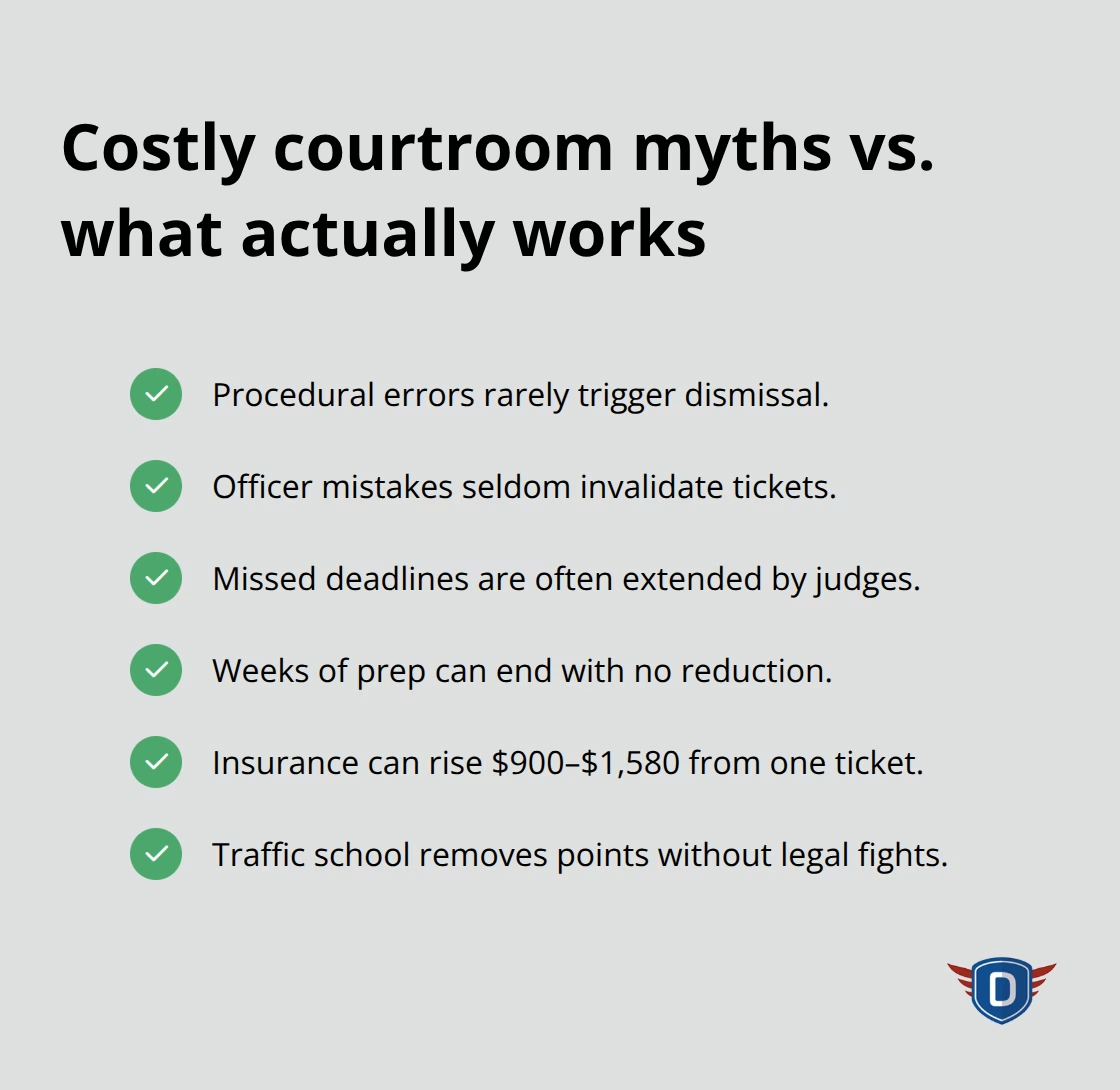
The 4-hour Basic Driver Improvement course eliminates points automatically without requiring you to win procedural arguments or prove officer mistakes. Your completion certificate satisfies Florida law directly, removing the gamble entirely. Drivers who waste time pursuing procedural dismissals often end up taking traffic school anyway-after the court date has passed and insurance increases have already taken effect (sometimes costing $900 to $1,580 over three years from a single speeding ticket).
The Guaranteed Alternative to Courtroom Gambling
The procedural approach demands legal knowledge, court appearances, and hope. The traffic school approach demands a few hours online and produces results because state law makes the outcome automatic. One path leaves your record and wallet at risk; the other protects both.
Final Thoughts
Florida traffic ticket dismissal options split into two distinct paths: courtroom strategies that demand your time and legal knowledge with uncertain outcomes, and traffic school that produces guaranteed results. Courtroom approaches involving evidence challenges, procedural motions, and prosecutor negotiations fail because procedural errors rarely trigger dismissal, officer mistakes don’t automatically invalidate tickets, and missing deadlines doesn’t guarantee relief. These methods cost you weeks of preparation, time off work, and potentially attorney fees for outcomes that depend entirely on judge discretion and prosecutor cooperation.
Traffic school eliminates this uncertainty because Florida law mandates automatic point removal once you complete an approved course. Your completion certificate satisfies state requirements directly, protecting your driving record without courtroom gambling, and a single speeding ticket costs $900 to $1,580 in insurance increases over three years, making the $100–$150 investment in traffic school financially obvious. You finish the course from home at your own pace, receive your certificate electronically, and the points disappear from your record.
We at DriverEducators.com offer Florida-approved traffic school programs designed to help you protect your record and wallet while becoming a safer driver. Our Basic Driver Improvement course meets all FLHSMV requirements and can be completed entirely online, with certificates issued electronically and reported directly to the state. Start protecting your driving record today by choosing the dismissal method that actually works.