Road crashes kill 1.35 million people worldwide each year, according to the World Health Organization. Most of these deaths could be prevented through better road design and infrastructure planning.
We at DriverEducators.com believe the benefits of road safety audit programs offer the most effective solution for reducing traffic fatalities. These systematic evaluations identify dangerous road conditions before accidents occur.
What Makes a Road Safety Audit Different
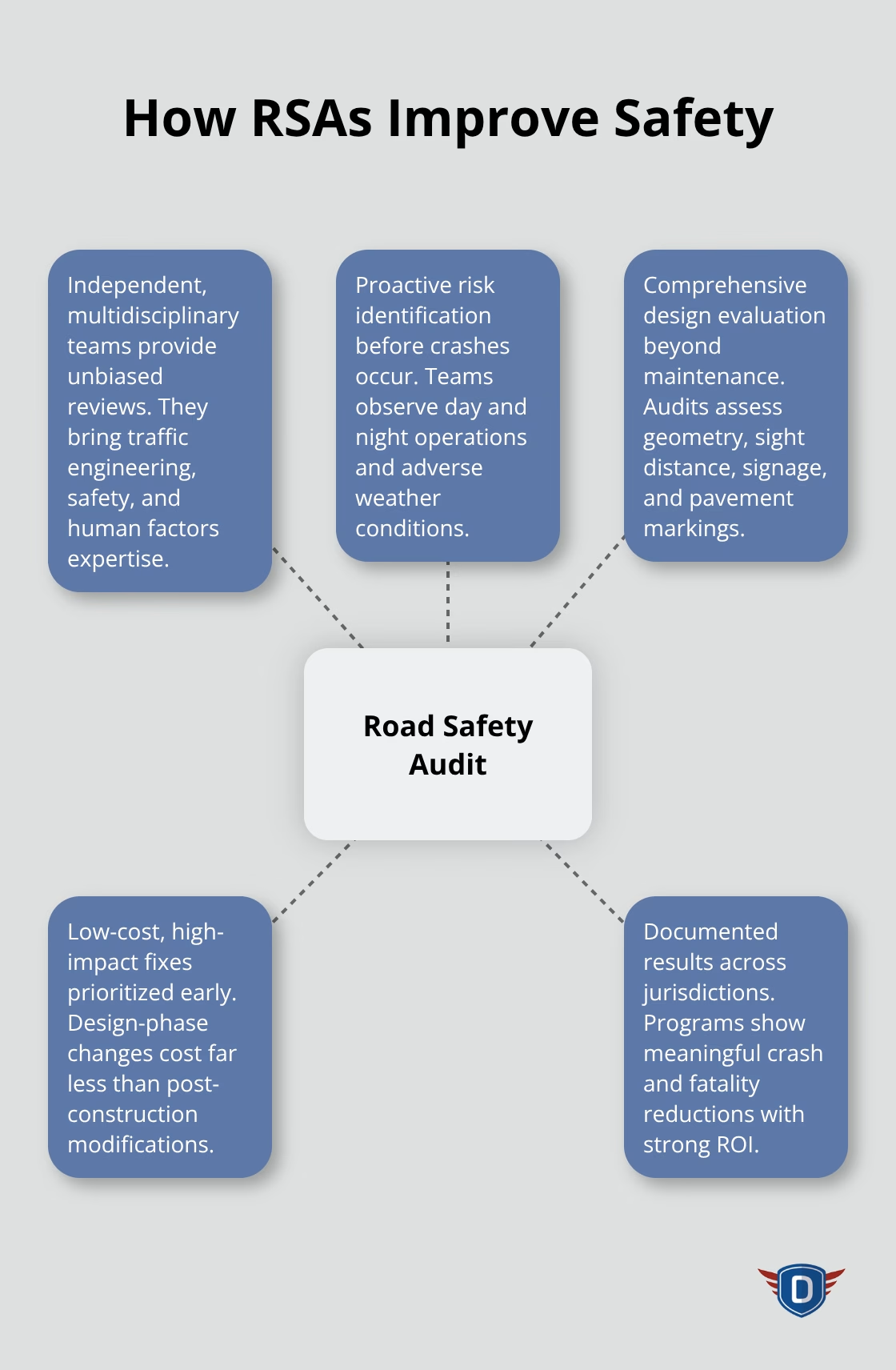
A Road Safety Audit represents an independent, multidisciplinary assessment that examines road design and operations from a safety perspective. The Federal Highway Administration defines RSAs as formal examinations conducted by teams of 3 to 4 experts who evaluate potential safety issues for all road users, including drivers, pedestrians, and cyclists. RSA teams operate independently from the original design team, which provides unbiased perspectives on safety concerns that might otherwise go unnoticed.
Independent Assessment Teams Drive Better Results
RSA teams include traffic engineers, safety specialists, and human factors experts who conduct field reviews at different times of day to observe real user interactions. This approach differs dramatically from regular road inspections, which typically focus on maintenance issues like pavement condition or sign visibility. The New York State Highway Safety Improvement Program demonstrates the effectiveness of this independent approach through significant reductions in traffic fatalities and serious injuries on public roads.
Comprehensive Safety Analysis Beyond Maintenance
Road safety audits examine geometric design, sight distances, access management, and human behavior factors that regular inspections miss. Teams follow detailed steps for conducting comprehensive evaluations as they assess how different weather conditions and traffic patterns affect safety. This comprehensive approach identifies low-cost improvements like better signage and pavement markings that can prevent crashes before they occur, rather than simply maintain existing infrastructure.
Proactive Risk Identification vs. Reactive Maintenance
Traditional road inspections respond to visible problems after they develop, while RSAs identify potential hazards before accidents happen. Teams assess how drivers, pedestrians, and cyclists interact with road features under various conditions (including night-time and adverse weather scenarios). This proactive methodology allows transportation agencies to address safety concerns during the design phase when modifications cost significantly less than post-construction changes. The systematic evaluation process that RSAs follow sets the foundation for understanding their substantial benefits.
What Impact Do Road Safety Audits Have
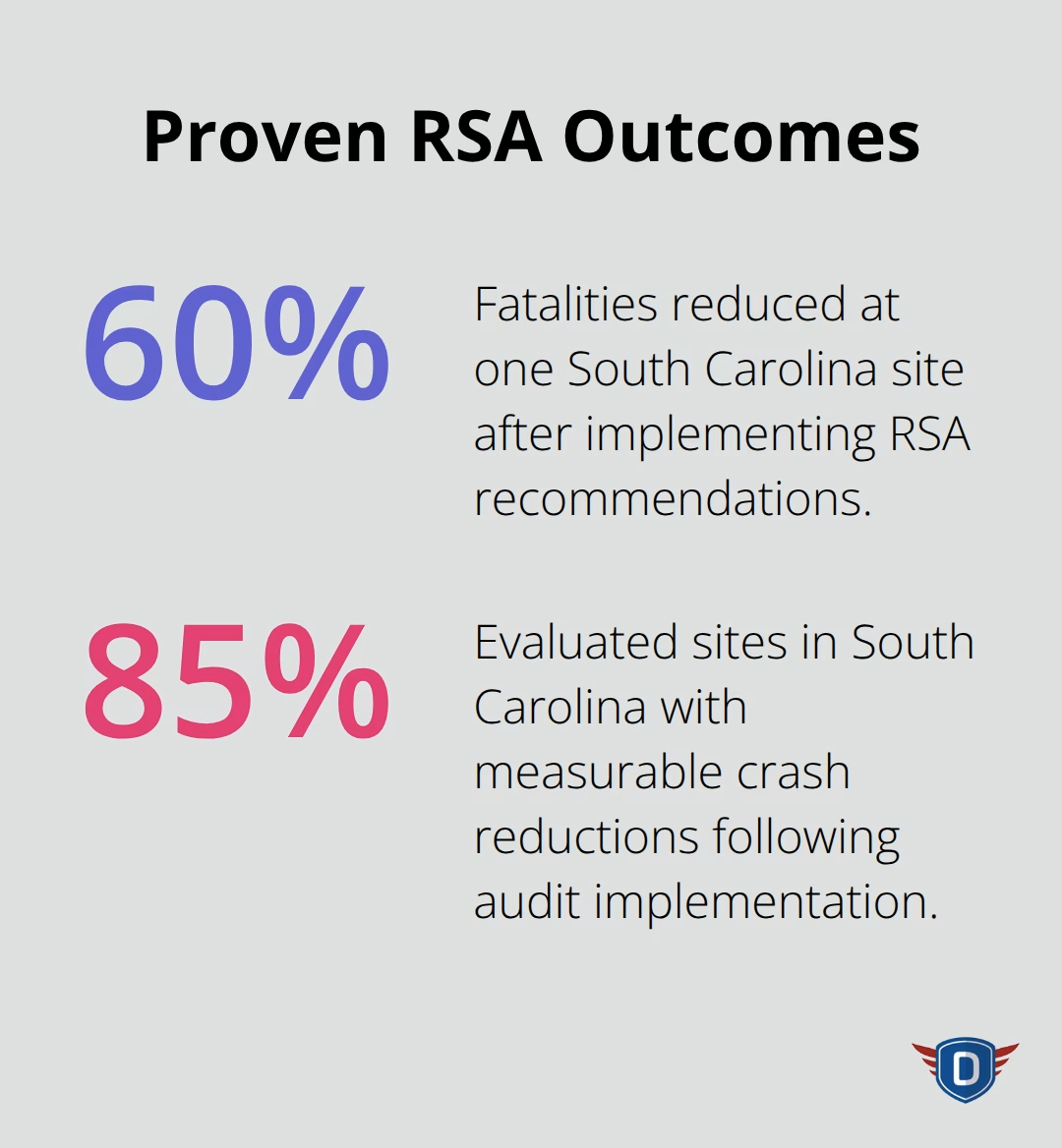
Road Safety Audits deliver measurable reductions in traffic accidents and fatalities that justify their implementation costs. The New York DOT documented 20 to 40 percent crash reductions at over 300 high-crash locations after teams implemented RSA recommendations. South Carolina DOT experienced even more dramatic results, with one site that achieved a 60 percent reduction in fatalities and saved approximately $3.66 million in economic costs. These statistics demonstrate that RSAs prevent deaths rather than simply reduce minor incidents.
Substantial Cost Savings Through Prevention
The economic benefits of RSAs far exceed their implementation costs through prevented crashes and reduced infrastructure damage. The US Department of Transportation calculates crash costs at $3 million for traffic fatalities, $2.29 million for critical injuries, and $6,000 for minor injuries (making prevention highly cost-effective). A typical RSA requires only 40 hours of team effort and prevents enough moderate-severity crashes to justify expenses.
Enhanced Infrastructure Planning and Design Quality
RSAs identify low-cost safety improvements during the design phase when modifications cost significantly less than post-construction changes. Teams focus on geometric design improvements, better signage placement, and pavement marking enhancements that traditional design reviews miss. Surrey County, UK research showed RSA assessments resulted in 1.25 fewer crashes per year, nearly five times more effective than non-assessed sites. The formal report process creates accountability and documentation that transportation agencies use to prioritize safety investments.
Proven Results Across Multiple Jurisdictions
South Carolina documented $147,000 in economic savings at one location that implemented 25 out of 37 suggested improvements, which resulted in a 23.4 percent crash reduction. Another South Carolina site experienced a 12.5 percent drop in total crashes (equivalent to $40,000 in economic savings). These consistent results across different states and countries validate the effectiveness of the RSA methodology and establish clear benchmarks for success that agencies can expect when they implement comprehensive audit programs. These improvements translate directly to bottom-line benefits through reduced insurance costs and improved operational efficiency.
How Do Teams Execute Effective Road Safety Audits
Successful road safety audits require systematic plans that begin with strategic site selection based on crash data, traffic volume, and geometric complexity. Transportation agencies prioritize locations with crash rates that exceed regional averages or sites where multiple road users interact, such as school zones and commercial districts. The Federal Highway Administration recommends agencies select audit teams 60 days before field work begins, which allows time to gather traffic studies, crash reports, and design documents that inform the evaluation process.
Strategic Site Selection Drives Audit Success
Teams analyze three years of crash data to identify patterns that involve specific weather conditions, times of day, or user groups that traditional safety reviews miss. High-priority locations include intersections with sight distance limitations, roadways with access management issues, and corridors where pedestrian or cyclist activity creates potential conflicts. RSA costs include team, design, and change costs, while benefits encompass reduced crash costs, reduced life-cycle costs, and improved safety practices.
Comprehensive Field Assessment Methods
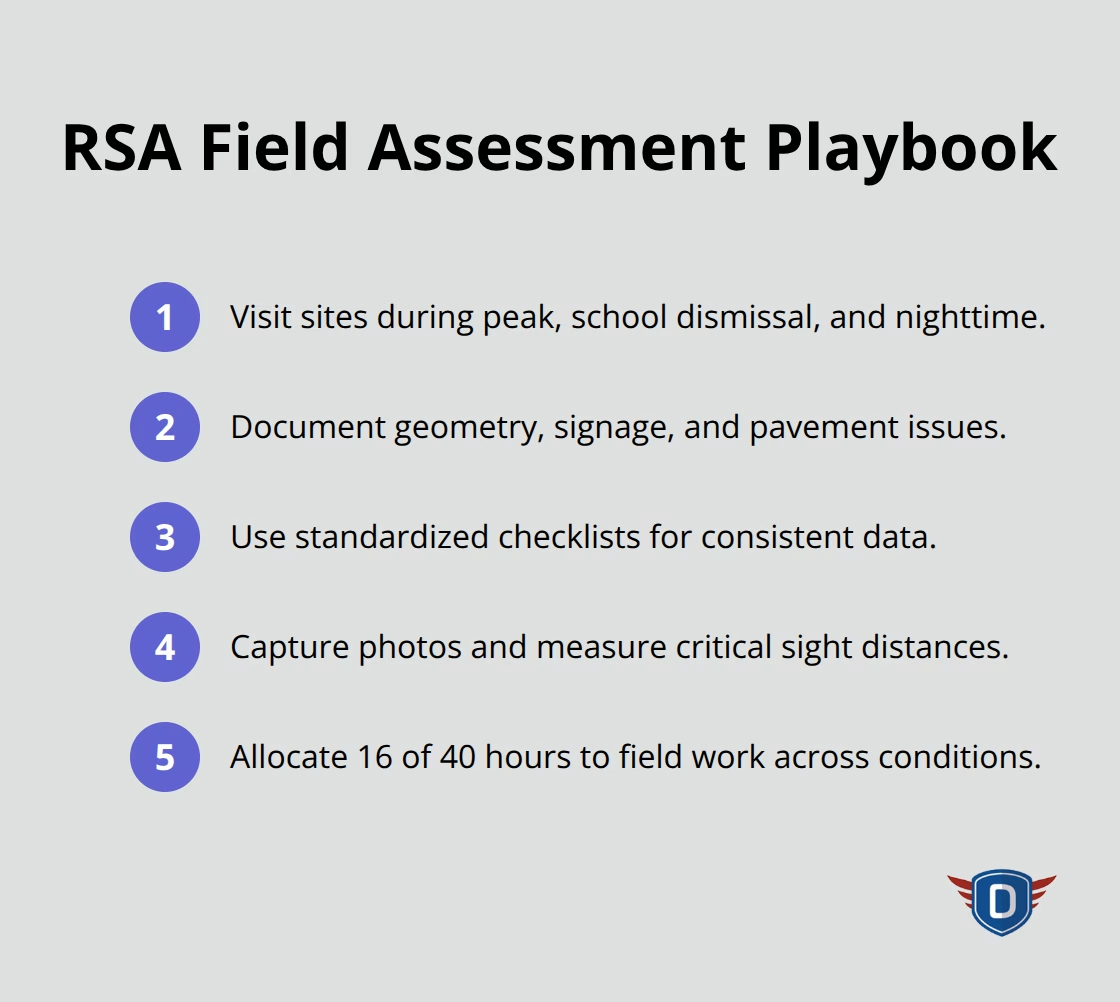
RSA teams conduct field visits during multiple time periods, which include peak traffic hours, school dismissal times, and nighttime conditions to observe how different light affects visibility and user behavior. Teams document geometric deficiencies, sign placement issues, and pavement problems with standardized checklists that capture quantitative measurements alongside qualitative observations. The typical 40-hour audit process includes 16 hours of field assessment across different conditions (with teams that photograph specific safety concerns and measure sight distances at critical decision points).
Implementation Through Actionable Reports
Post-audit reports rank recommendations based on implementation cost and safety impact, with agencies implementing customizable RSA programs that encourage systematic improvement strategies. Teams categorize findings into immediate low-cost fixes like improved signs, medium-term geometric modifications, and long-term reconstruction projects that address fundamental design flaws. South Carolina’s systematic approach to implement audit recommendations resulted in measurable crash reductions at 85 percent of evaluated sites (with agencies that track safety performance for five years post-implementation to validate audit effectiveness).
Final Thoughts
The benefits of road safety audit programs extend far beyond crash reduction statistics. These systematic evaluations create safer communities where families feel confident when they walk to school and businesses operate without constant accident disruptions. Transportation agencies that implement RSA recommendations build infrastructure that protects all road users while they reduce long-term maintenance costs.
Road safety audits transform how communities approach traffic safety education. Parents see tangible improvements in school zones, while new drivers learn on roads that designers created with human behavior in mind. The 60 percent fatality reduction that South Carolina achieved demonstrates how proper infrastructure supports driver education efforts when it creates roads that forgive human error.
Transportation agencies increasingly recognize that proactive safety investments deliver better outcomes than reactive crash response. We at DriverEducators.com understand this connection between infrastructure and education, which explains why our comprehensive driver education programs emphasize safe habits that work best on well-designed roads. Communities benefit from the proven combination of better infrastructure and quality driver education (as RSA programs expand nationwide and create safer transportation networks for everyone).