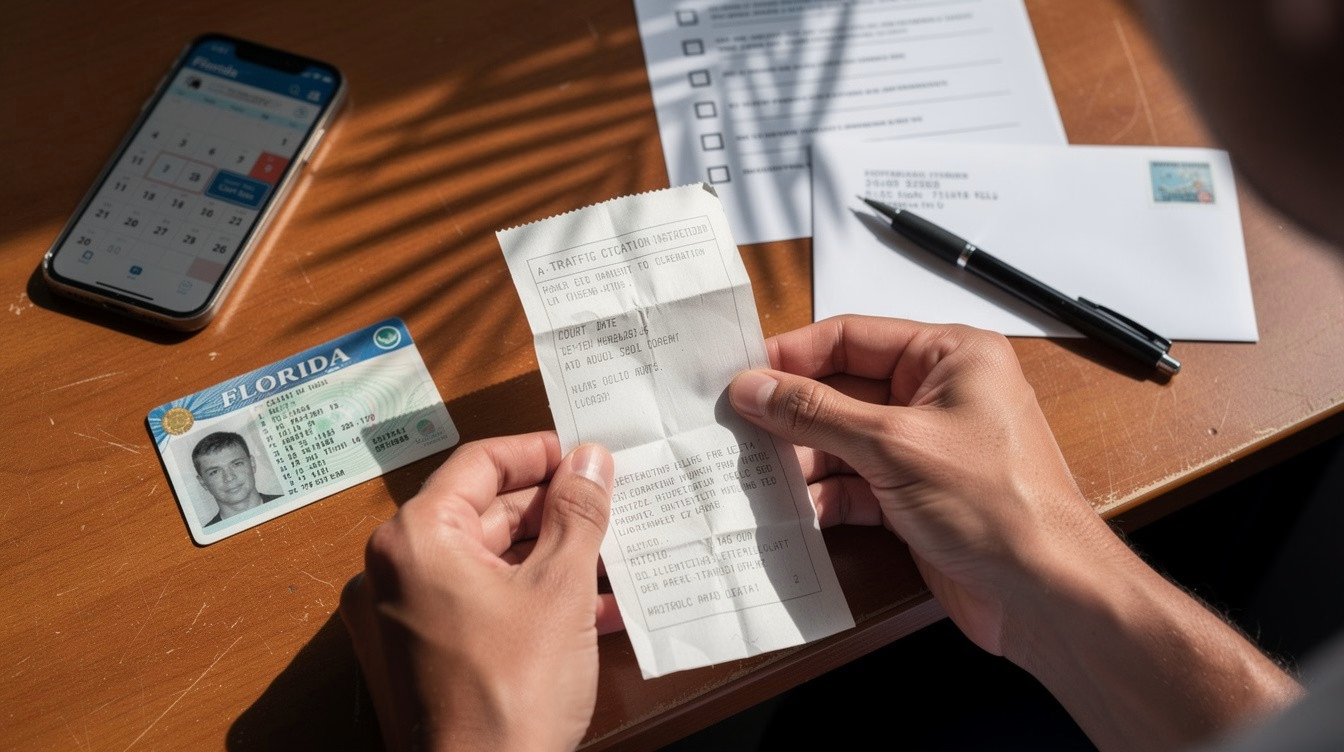
Getting told to complete a court compliance driving class usually comes with a deadline, a case number, and very little patience for mistakes. If the court ordered you to finish a course, the main goal is simple – complete the right one, on time, and make sure your completion is properly reported.
The problem is that not every traffic course meets every court requirement. Some drivers sign up for a general defensive driving class when the court actually required a state-approved driver improvement program. Others complete the right subject but miss a filing deadline or fail to confirm whether the court, county, or state will accept online completion. That is where a little clarity can save time, money, and unnecessary stress.
What a court compliance driving class means
A court compliance driving class is a driver education course ordered or accepted by a court to satisfy a legal or administrative requirement related to a traffic case. In plain terms, it is not just any driving course. It must match the reason the court assigned it and meet the approval rules that apply in that jurisdiction.
Courts may require these classes after a moving violation, a reckless driving charge, a distracted driving offense, an aggressive driving incident, or as part of a plea agreement. In some cases, the class helps reduce points, supports ticket dismissal, or shows the court that the driver completed a corrective action. In other cases, it is mandatory and tied directly to keeping driving privileges in good standing.
That is why the course title matters less than the approval status and subject matter. A driver improvement course, a wireless communications device course, or another specialized traffic safety class may all function as a court compliance option, but only when the court accepts that specific program.
How courts decide which class you need
The court order is the first place to look. It usually identifies the course type, the deadline, and sometimes the provider requirements. If the order is vague, that does not mean you can choose any class that sounds close enough. It means you should verify the details before enrolling.
In practice, the right class depends on several factors: your state, the court handling the case, the violation involved, and whether the course must come from an approved provider. Some states maintain official approval standards for online traffic schools or driver improvement programs. Some judges also expect proof in a certain format, such as a certificate with your case number or a completion record sent directly by the provider.
There can also be trade-offs. An online class is often the most convenient option because it is self-paced and available 24/7, but only if the court allows online completion. A local in-person class might satisfy the requirement in one county while an approved online option works in another. The safest move is always to confirm the exact requirement before paying for a course.
Why approval status matters
Approval is what turns a course from useful information into accepted compliance. If a provider is not recognized for the course you need, completion may not count even if you finished every lesson and passed every quiz.
That is why drivers should look for more than a polished website or a low price. The practical questions are better: Is the course approved for the state or court requirement involved? Is it designed for the offense category in your case? How is proof of completion handled? Are there any hidden fees for certificates or reporting?
A reliable provider should make those answers clear. The process should feel straightforward, not vague. For drivers trying to satisfy a legal requirement, clarity is part of the service.
Common types of court-ordered driving courses
A court compliance driving class may fall into several categories depending on the offense and state rules. A basic driver improvement course is common for moving violations and point-related matters. A distracted driving or wireless communications device course may be assigned for phone-related citations. Some courts order aggressive driver programs or more specialized traffic safety education when the facts of the case call for it.
This is where drivers sometimes get tripped up. Two courses may both sound like traffic school, but they are not interchangeable. The court may accept one and reject the other. If your paperwork names a specific program type, use that wording when confirming your options.
What to check before you enroll
Before you register, review your court documents carefully. Look for the due date, the required course type, any case identifiers, and whether the court mentions approved schools or online eligibility.
Then verify the provider. Make sure the course is recognized where your case is being handled and ask how completion is documented. If the certificate needs to go to the court by a certain date, do not assume processing happens instantly. Some providers issue proof immediately, while others need additional time.
You should also confirm the full cost upfront. A low advertised price can become less appealing if certificate delivery, reporting, or customer support comes with extra charges. For most drivers, convenience matters, but predictable pricing matters too.
How online completion helps when time is tight
For many drivers, the biggest advantage of an online court compliance driving class is flexibility. You can start quickly, log in from a phone or computer, and complete lessons around work, family, or other obligations. That can make a big difference when the court gives you a short deadline.
Online delivery also reduces another common problem: scheduling delays. Waiting for the next available classroom session may put you too close to your due date. A self-paced online option can lower that risk, provided it is approved for your requirement.
That said, convenience does not replace accuracy. The best online course is still the one the court will accept. If you are unsure, verify first and enroll second.
What happens after you finish the class
Completion is not always the final step. Sometimes you must submit the certificate to the court yourself. In other cases, the provider reports completion electronically or by mail. The key point is not to guess.
As soon as you finish, confirm what happens next. Save your certificate, check your case instructions, and keep records of submission or reporting. If the court deadline is close, give yourself a margin rather than assuming everything will process the same day.
This is also the moment to make sure your information matches the case file. A small error in your name, citation number, or date of birth can delay acceptance.
Choosing a provider with fewer surprises
When a course is tied to a court matter, drivers usually want the same things: legitimacy, speed, and a process that does not create more problems. That is why approved course options, transparent pricing, mobile access, and responsive support are not extras. They are practical features that reduce compliance risk.
DriverEducators.com focuses on that kind of experience by offering state- and court-approved education in a flexible online format. For drivers balancing deadlines and legal requirements, that kind of structure can make the process much easier to manage.
Court compliance driving class FAQs
What is a court compliance driving class?
It is a driver education course used to satisfy a court requirement related to a traffic case. The course must match the court’s rules and the type of violation involved.
Is a court compliance driving class the same as traffic school?
Sometimes, but not always. Traffic school is a broad term, while court compliance usually means a specific approved course tied to your case.
Can I take a court compliance driving class online?
Often yes. Online courses are commonly accepted, but only when the court or state allows online completion for that requirement.
How do I know which course the court will accept?
Check your court order first. If it is unclear, contact the court or confirm with an approved provider before enrolling.
What if I take the wrong class?
It may not count. You could lose time, pay twice, and risk missing your court deadline.
How long does a court compliance driving class take?
It depends on the state and course type. Some programs are brief, while others have a fixed number of instructional hours.
Do I need to send the certificate to the court myself?
Sometimes yes. Some providers report completion for you, but many courts still expect you to verify submission.
Can this type of class help dismiss a ticket?
Sometimes. It depends on the court, the charge, and whether course completion is part of an approved disposition.
Are all online providers approved?
No. Approval varies by state, course type, and court requirement.
What should I do first after getting ordered to take a class?
Read the order carefully. Then confirm the exact course type, deadline, and reporting instructions before registering.
If you need a court-ordered course, the fastest path is usually the simplest one: verify the requirement, choose an approved class, and leave enough time for completion and reporting so the court sees the result, not the scramble.