Think of your Florida driving record like a scorecard for your time behind the wheel. Every time you get a ticket for a moving violation, you don't just pay a fine—you also get demerits. This is the heart of the Florida driver's license points system.
It's a straightforward way for the state to keep an eye on driving habits and spot patterns of risky behavior.
Understanding The Florida Points System
The system isn't meant to be complicated. It's really just a scale that assigns a specific point value to different traffic violations. For example, a minor speeding ticket won't hit your record as hard as something more serious, like reckless driving.
The more dangerous the mistake, the more points you'll see on your license.
The main goal here, from the perspective of the Florida Highway Safety and Motor Vehicles (FLHSMV), is to flag drivers who are a potential danger on the road. It’s less about punishment and more about prevention—a way to encourage safer driving before bad habits lead to a serious crash.
Why These Points Are a Big Deal
It’s tempting to just pay a ticket and forget about it, but the points are what stick with you. Letting them pile up can set off a chain reaction of problems that are far more painful than the cost of the original ticket.
Here’s what you’re really looking at:
- License Suspension: Hit a certain number of points in a set period, and the state will automatically take away your driving privileges.
- Skyrocketing Insurance Rates: Insurance carriers see points as red flags. More points almost always lead to a nasty spike in your car insurance premiums that can last for years.
- Trouble at Work: Many jobs require a clean driving record, especially if you drive for work. A few tickets could jeopardize your career.
The real sting of the points system isn't just losing your license for a while. It’s the financial hit—paying hundreds, sometimes thousands, more for insurance and even risking your job.
Keeping a close watch on your driving record is crucial. If you're not sure where you stand, you can find out exactly how to check the points on your license in our guide. Knowing how the system works is the first and most important step to protecting your license, your wallet, and your freedom to drive.
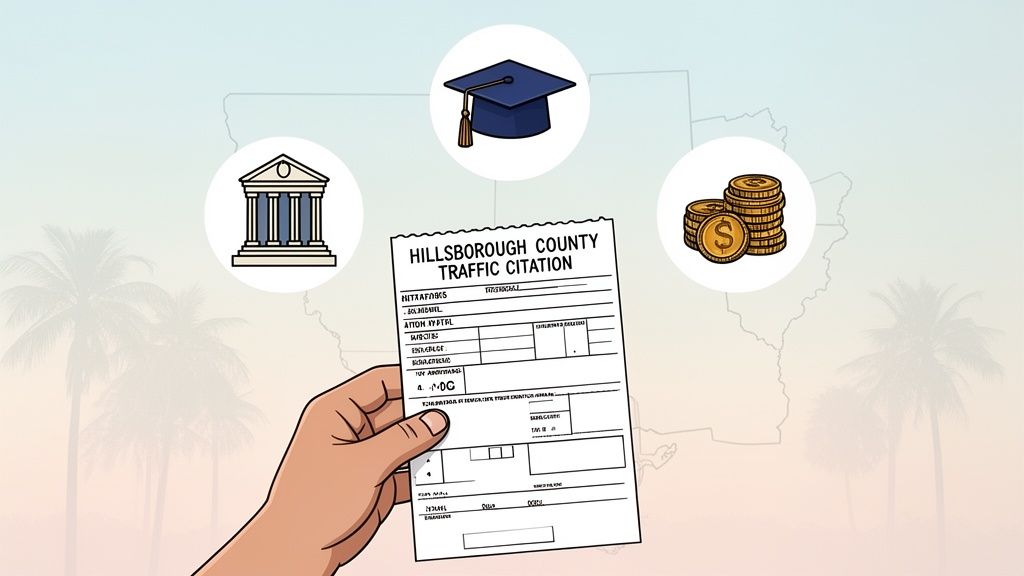
Getting a traffic ticket in Florida means more than just paying a fine. For every moving violation, the Florida Highway Safety and Motor Vehicles (FLHSMV) also assigns a specific number of driver's license points to your record. Think of it as a direct cause-and-effect system that links your actions behind the wheel to the status of your license.
The logic is pretty straightforward: the more serious the violation, the more points you get. This tiered system ensures that a minor mistake, like rolling through a stop sign, doesn't carry the same penalty as something far more dangerous, like reckless driving or causing a crash. Getting a handle on how these points are assigned is the first step in protecting your driving record.
This infographic gives a great overview of how the state tracks driving behavior and decides when to step in with penalties.
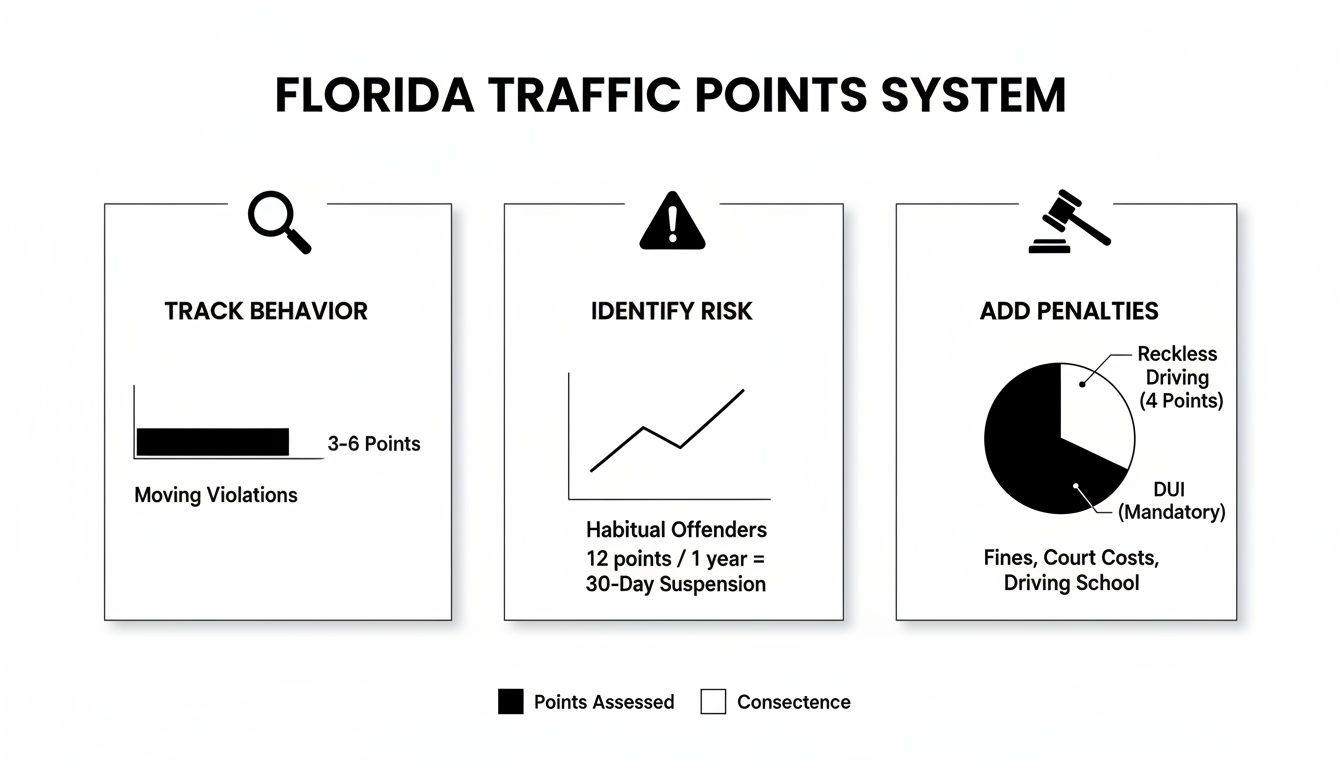
As you can see, the whole system is designed to correct unsafe habits before they lead to bigger problems.
Common Florida Traffic Violations and Their Point Values
Points only hit your license after a conviction for a moving violation—meaning you either paid the ticket (which is an admission of guilt) or were found guilty in court. Tickets for non-moving violations, like a broken headlight, won't add points. If you're a bit fuzzy on the difference, our guide on what is a moving violation can clear things up.
So, how many points are we talking about? It really depends on the specific citation.
Here’s a quick rundown of some of the most common tickets issued in Florida and the points that come with them.
| Violation Type | Points Assigned |
|---|---|
| Speeding (15 mph or less over the limit) | 3 |
| Speeding (16 mph or more over the limit) | 4 |
| Speeding resulting in a crash | 6 |
| Reckless driving | 4 |
| Leaving the scene of a crash with property damage >$50 | 6 |
| Running a red light or stop sign | 3 |
| Violation of a traffic control device | 4 |
| Improper passing of a stopped school bus | 4 |
| Passing on the right side of the road where not permitted | 3 |
| Open container of alcohol in vehicle | 3 |
This table gives you a clear picture of how Florida weighs different offenses based on the risk they pose to other drivers.
Understanding The Severity Scale
The points system is all about risk. A simple error in judgment, like speeding by a few miles per hour, will land you 3 points. But an action that puts others in immediate danger, like causing a crash because you were speeding, doubles that penalty to a whopping 6 points.
The state isn't just picking numbers out of a hat. Each point value is a direct reflection of how dangerous that specific driving behavior is.
It’s easy to see how quickly things can add up. Just a couple of "minor" tickets in a year could put you on the fast track to a license suspension. That's why it's so critical to handle every citation carefully instead of just paying the fine and letting the points pile up.
The Real Consequences Of Too Many Points
Getting points on your driver's license can feel abstract at first, like losing a point in a video game. But in Florida, those numbers on your record trigger very real, tangible consequences that can be both expensive and seriously disruptive. The points system is there to spot patterns of risky driving, and when you hit certain levels, the penalties are swift and automatic.
The most immediate threat? Losing your privilege to drive altogether.
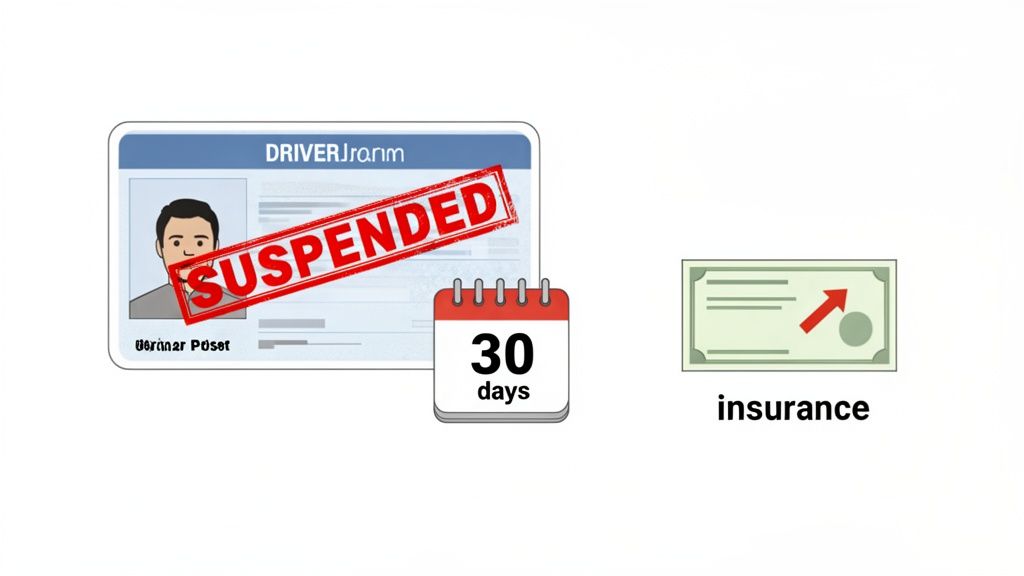
This isn't just an empty warning. The state has very clear, black-and-white rules about when it will step in and take your license away.
License Suspension Thresholds
Florida's system for suspending a license is all about timing—how many points you get and how quickly you get them. The faster they pile up, the sooner you'll face a suspension. Knowing these limits is the key to keeping your license in your wallet.
Here’s the breakdown of how it works:
- Get 12 points within any 12-month period, and you're looking at a 30-day suspension.
- Rack up 18 points within an 18-month window, and that turns into a 3-month suspension.
- Amass 24 points over 36 months, and you'll face a full 1-year suspension.
These aren't suggestions or warnings; they are mandatory actions taken by the FLHSMV. If you're getting nervous about where you stand, our detailed guide explains exactly how many points it takes to get your license suspended. A little knowledge here can save you a world of trouble.
And these point systems work. Research from institutions like Johns Hopkins University shows that demerit systems can lead to a 15–21% reduction in traffic fatalities in the years after they're put in place. It's a proven method for making roads safer.
The Financial Fallout From Points
Losing your license is a major headache, but the financial sting can often hurt more and last much longer. Car insurance companies use your driving record to predict your risk, and every point you get is a signal to them that you're more likely to file a claim.
To an insurer, driver's license points are red flags that signal higher risk. A driver with multiple violations is no longer seen as a safe bet, and their premiums will increase to reflect that new level of risk.
We're not talking about a small price bump, either. A single ticket with points attached can easily cause your insurance rates to spike by 20% or more. That rate hike can follow you for three to five years. For someone with a few violations on their record, the cost can double or even triple, sometimes making insurance unaffordable. For many people, this financial burden becomes the most lasting consequence of a simple traffic ticket.
How to Protect Your Driving Record After a Ticket
Getting a traffic ticket can feel like a major setback, but it doesn't have to permanently stain your driving record. In Florida, you have a powerful option to stop points from ever hitting your license in the first place. This is, without a doubt, the single best way to protect your driving privileges and keep your insurance premiums from skyrocketing.
The answer is completing a state-approved Basic Driver Improvement (BDI) course. Think of it less as a punishment and more as a strategic move. When you elect to take a BDI course, you're making a conscious choice to keep those damaging drivers license points off your record for that ticket.
It's your chance to hit the reset button on a minor mistake.
The Power of a BDI Course
When you're handed a ticket for a moving violation, you generally have a few paths you can take. You could just pay the fine, but that means accepting the points. You could also try to fight it in court. But for most common, non-criminal tickets, there's a third option that's often the smartest: taking a BDI course.
This choice comes with some major perks:
- No Points on Your License: This is the big one. Finish the course, and no points are added to your record for that violation.
- Prevent Insurance Hikes: Insurance companies can't legally raise your rates due to a ticket if you complete a BDI course and no points are assessed.
- Become a Safer Driver: The course is actually a great refresher on defensive driving skills and the latest Florida traffic laws.
Choosing to complete a BDI course is a powerful tool. It puts you back in control, preventing one ticket from causing long-term financial and legal headaches.
Taking this proactive step is key to keeping your driving record clean and avoiding the vicious cycle of higher insurance costs that almost always follows a conviction.
Why Online Traffic School Is the Smart Choice
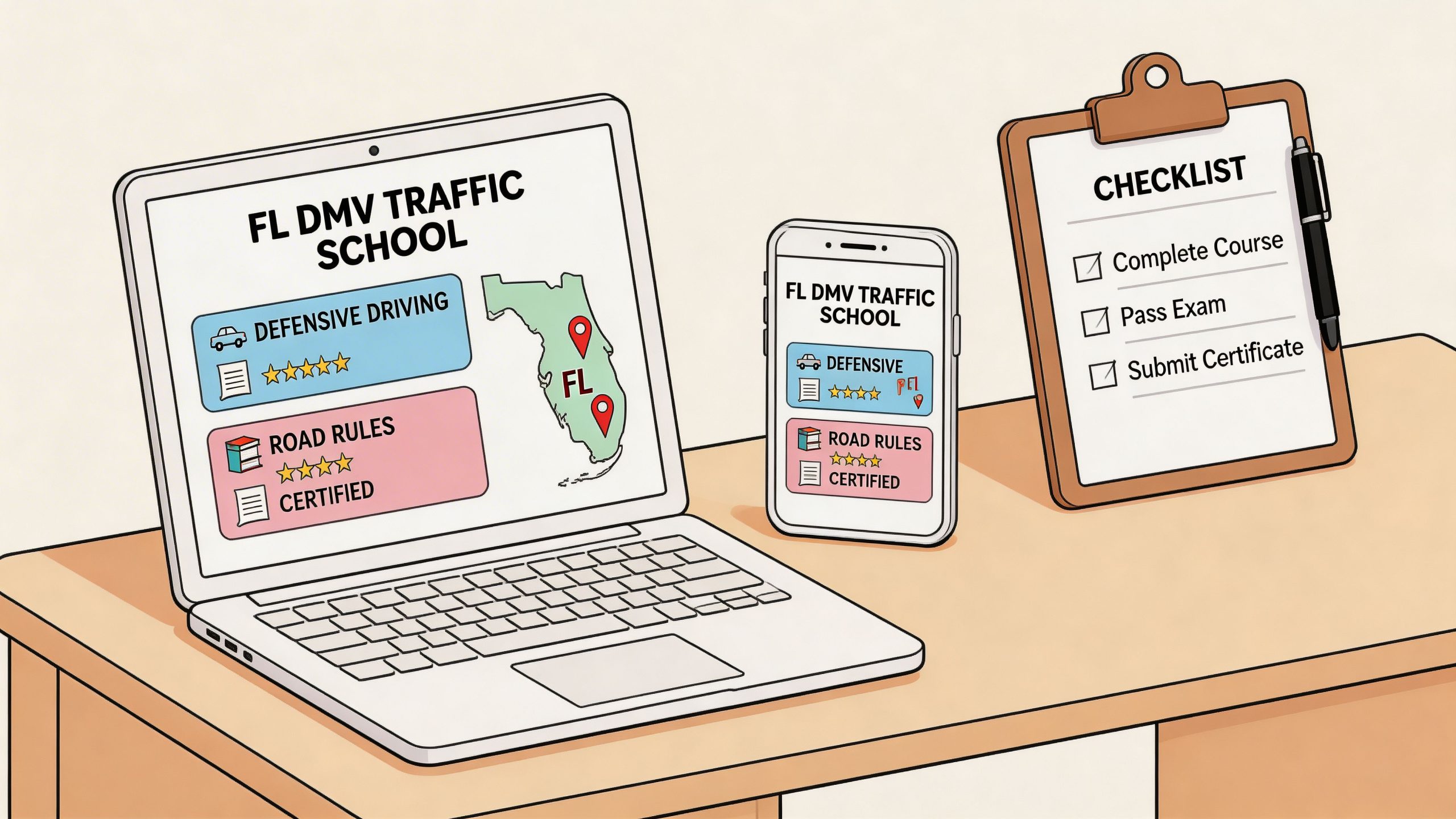
Let's be realistic—finding time to sit in a classroom for hours is a huge hassle for most people. That’s exactly why online traffic schools like BDISchool.com exist. As a provider fully approved by the Florida Highway Safety and Motor Vehicles (FLHSMV), we offer a solution that works around your life, not the other way around.
Our 100% online BDI course was built for total convenience. You can log in and out whenever you want, chipping away at the material from your phone during your lunch break or on your computer after the kids are asleep. No stuffy classrooms, no rearranging your work schedule.
The course is completely self-paced, so you set the timeline. This flexibility means you can easily meet your court deadline without adding any more stress to your plate. By picking a trusted, state-approved online school, you can handle your ticket efficiently, shield your record from unwanted drivers license points, and get back to your life.
Your Step-By-Step Guide To Taking A BDI Course
Getting a ticket is never fun, and figuring out what to do next can feel like a real hassle. But the good news is, handling it is usually more straightforward than you might think. By following a few simple steps, you can keep those pesky drivers license points off your record and avoid the headaches that come with them.
Here's a simple roadmap to guide you through the process, taking the guesswork out of it so you can handle your ticket the right way.
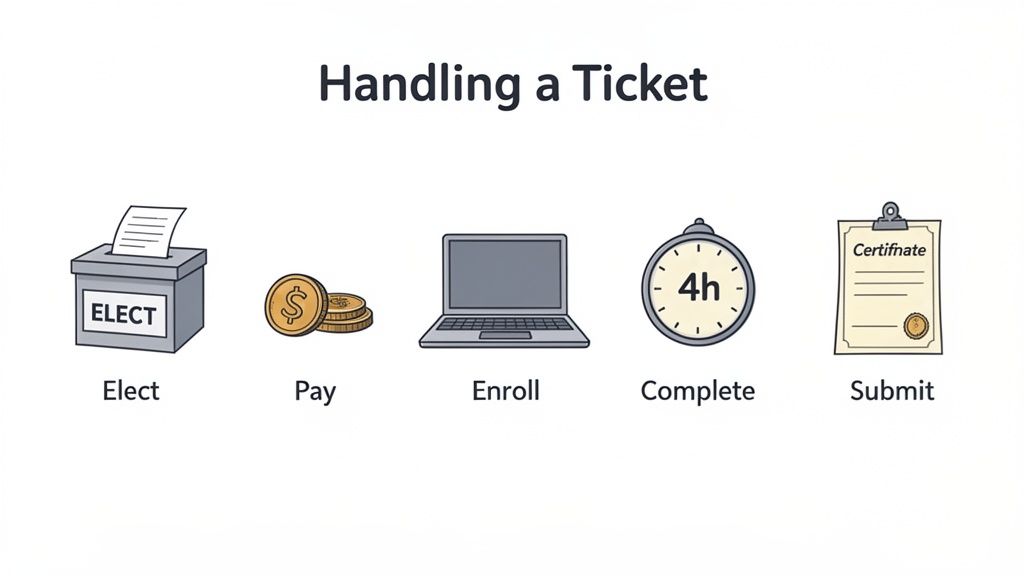
This whole process is designed to put you back in control, letting you turn a potentially bad situation for your driving record into a non-issue.
Step 1: Contact The County Clerk
Okay, first things first. Before you even start looking for a traffic school, you have to tell the court what you're planning to do. This means formally notifying the Clerk of Court in the same county where you got the ticket that you want to take a Basic Driver Improvement (BDI) course.
This is a non-negotiable step. It’s how you officially declare your intention to resolve the citation through driver education. You generally have 30 days from the day you received the ticket to do this, so don't let that deadline slip by. If you miss it, you'll likely lose the chance to take the course for that violation.
Step 2: Pay The Ticket Fine
Here's a common point of confusion: choosing to take a BDI course doesn't make the fine disappear. You still have to pay the full amount of the ticket to the Clerk of Court. Usually, this payment is due right around the same time you inform them you're taking the course.
Think of it as a two-part process. Paying the fine settles your financial obligation for the violation itself. Completing the course is the educational part that keeps the points from ever hitting your license. You have to do both.
By successfully completing the BDI course, you're preventing a conviction from being formally reported to the FLHSMV. This is the key that stops the points from ever showing up on your driving record and shields you from a potential insurance rate hike.
Step 3: Enroll In A State-Approved School
Once the court knows your plan and you've paid the fine, it’s time to find a course. The most important thing here is to choose a school that is officially approved by the Florida Highway Safety and Motor Vehicles (FLHSMV). If it's not on their list, it won't count.
Online schools are by far the most flexible and convenient option for most people. You can check out our simple, self-paced, and fully approved Florida BDI course online to get a feel for how easily you can fit it into your life.
Step 4: Complete The BDI Course
The Florida BDI course is a 4-hour program across the board. The best part about taking it online is that you don't have to block out a huge chunk of your day. You can log in and out whenever you have a spare moment, breaking the material down into smaller, more manageable sessions that fit your schedule.
Step 5: Submit Your Certificate Of Completion
You've finished the course! Great job. Now for the final, crucial step. The school will issue you a certificate of completion, and it's your responsibility to get that certificate to the Clerk of Court in the county where the ticket was issued.
This is the proof they need that you held up your end of the bargain. Once they receive it, your case is officially closed, and you've successfully kept your driving record clean.
Your Top Questions About Florida License Points, Answered
If you've just gotten a ticket, you've probably got questions. The Florida points system can feel a bit confusing, and it's easy to get overwhelmed by the rules. How long do these points actually haunt your record? Can you take a traffic school course again?
Let's cut through the noise. Here are straight, simple answers to the questions we hear most often. Think of this as your quick guide to making the best decision for your situation.
How Long Do Points Stay On Your Record?
This is the big one, and the answer isn't as simple as you might think. There are really two timelines to keep in mind.
For the Florida DHSMV, the clock is ticking for 365 days. The points from a ticket count toward a potential license suspension for exactly one year from the day you pay the fine. This is the period the state watches most closely.
But your insurance company has a much longer memory. The violation itself will likely stay visible on your full driving history for three to five years, and sometimes even longer for more serious infractions. That's the record your insurer pulls when they decide how much you're going to pay for coverage.
How Often Can You Take a BDI Course?
Taking a Basic Driver Improvement (BDI) course is a fantastic way to keep points off your record, but you can't use it for every ticket. Florida law puts some clear limits on it.
First, you can only choose to take a BDI course for a ticket once every 12 months.
More importantly, there's a lifetime cap. You're only allowed to elect traffic school a total of five times in your entire driving life. It’s crucial to keep track, because you don't want to burn through your chances on minor tickets and find yourself out of options for a more serious one down the road.
Remember the "five times in a lifetime" rule. Think of it as a limited resource. Using it is a strategic move, so make sure it counts.
A little forethought here can go a long way in keeping your driving record clean for the long haul.
Who Is Eligible To Take a BDI Course?
Not everyone qualifies for the traffic school option, even if it's their first ticket in years. Generally, it's available for standard, non-criminal moving violations, but there are some key exceptions.
You are not eligible to take a BDI course if:
- You have a Commercial Driver's License (CDL). This applies even if you were ticketed in your personal car.
- The ticket was for a crash where you were at fault and someone had to be taken to the hospital.
- You've already hit your five-lifetime limit for taking the course.
When in doubt, always double-check your eligibility with the Clerk of Court for the county where you got the ticket.
How Does The Court Know I Finished The Course?
Once you finish your course, the school will issue a certificate of completion. Here's the critical part: it is your responsibility to get that certificate to the Clerk of Court before your deadline. If you miss that deadline, it’s like you never took the course at all.
This is where a quality online school can save you a major headache. Many providers, including BDISchool, offer to send your completion certificate directly to the court for you, often electronically. This is the safest way to ensure the court gets it on time, your case is closed, and no drivers license points are ever added to your record.
A single ticket shouldn't derail your clean record or send your insurance premiums through the roof. BDISchool offers a 100% online, DHSMV-approved Basic Driver Improvement course that’s designed to be fast and painless. You can complete it from anywhere, on your own schedule. Protect your license and your budget—enroll today at https://bdischool.com.