Your first behind the wheel practice sets the foundation for everything that follows. The difference between drivers who stay safe and those who don’t often comes down to what happens during those early sessions.
We at DriverEducators.com have seen firsthand how the right approach transforms nervous beginners into confident, capable drivers. This guide walks you through the skills you need, the environment where you should practice, and the habits that stick with you for life.
What You Must Master Before Traffic
Your first drive demands ruthless focus on three mechanical skills: steering control, smooth braking, and controlled acceleration. These aren’t optional refinements-they’re the foundation that everything else builds on. Start in an empty parking lot and spend at least 20–30 minutes on steering alone. Keep both hands on the wheel at the 9 and 3 o’clock positions, make smooth inputs without jerking the wheel, and practice staying centered in a lane. Then move to braking: approach a line, brake gradually to a complete stop without lurching, and repeat this 10–15 times. Most new drivers brake too hard or too late because they misjudge distance. Acceleration comes last-ease off the brake, apply gentle throttle, and practice smooth transitions without spinning wheels or stalling. The goal isn’t speed; it’s precision and consistency.
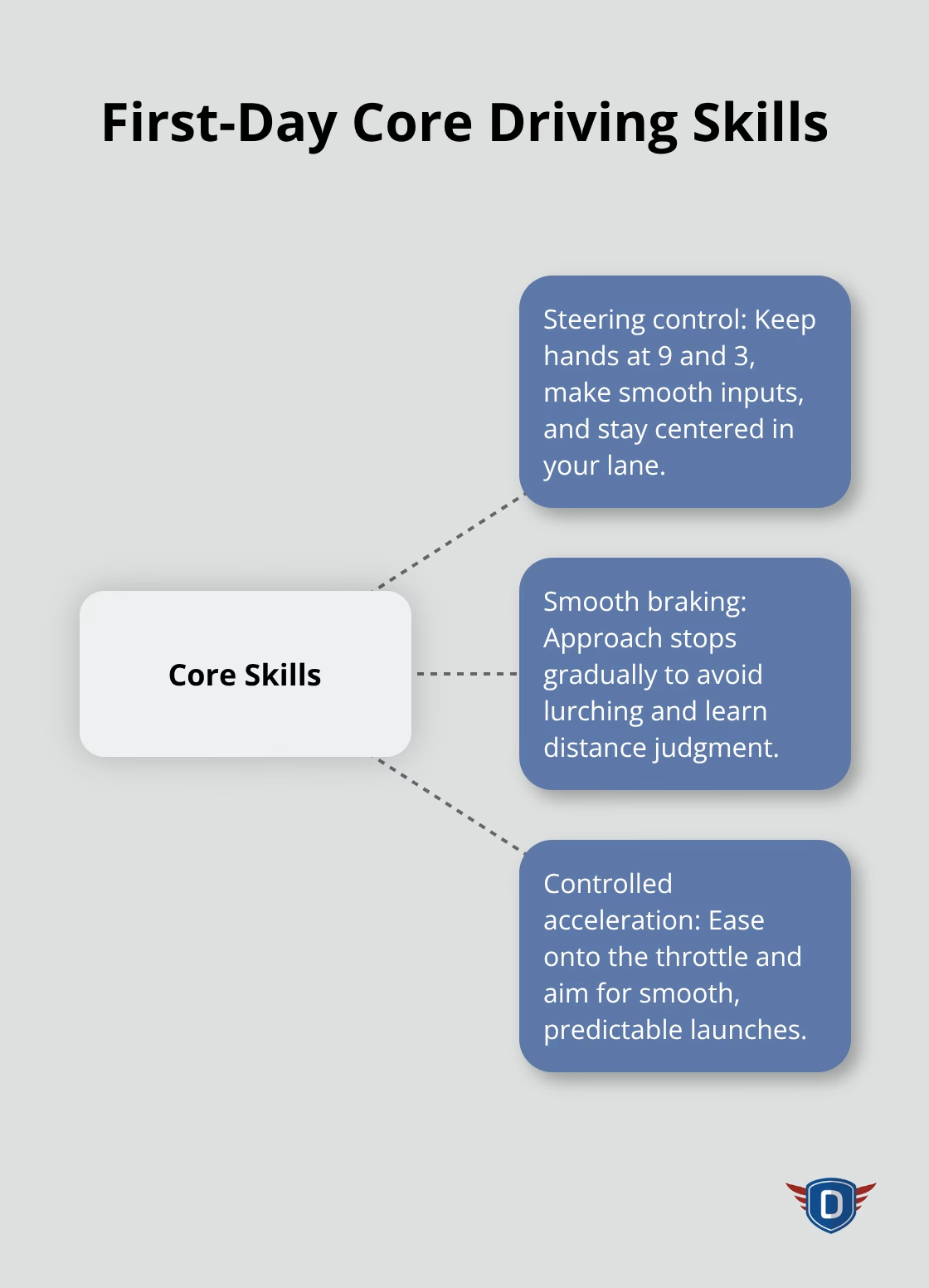
These three skills take 45–60 minutes of focused practice in a controlled setting, and they matter more than anything else you’ll do that day.
Building Automaticity in Vehicle Control
Once you own steering, braking, and acceleration, practice basic maneuvers in the same empty lot. A three-point turn, a simple reverse into a space, and a gentle parking attempt teach your hands and feet to work together without external pressure. Research on older drivers shows that combining classroom instruction with on-road practice yields larger improvements in actual driving performance than either approach alone, which means your hands-on time is irreplaceable. Spend 15–20 minutes on each maneuver and repeat them until they feel automatic. The second you move to a real street with traffic, your mental load jumps dramatically-your brain processes other cars, pedestrians, traffic lights, and road markings simultaneously. If steering and braking still demand conscious thought, you’ll fail at everything else. Your body needs to handle vehicle control without asking your conscious mind for permission. This is why empty-lot time isn’t wasted; it’s the only chance you get to build that automaticity before real consequences appear.
Progressing to Real Streets at the Right Pace
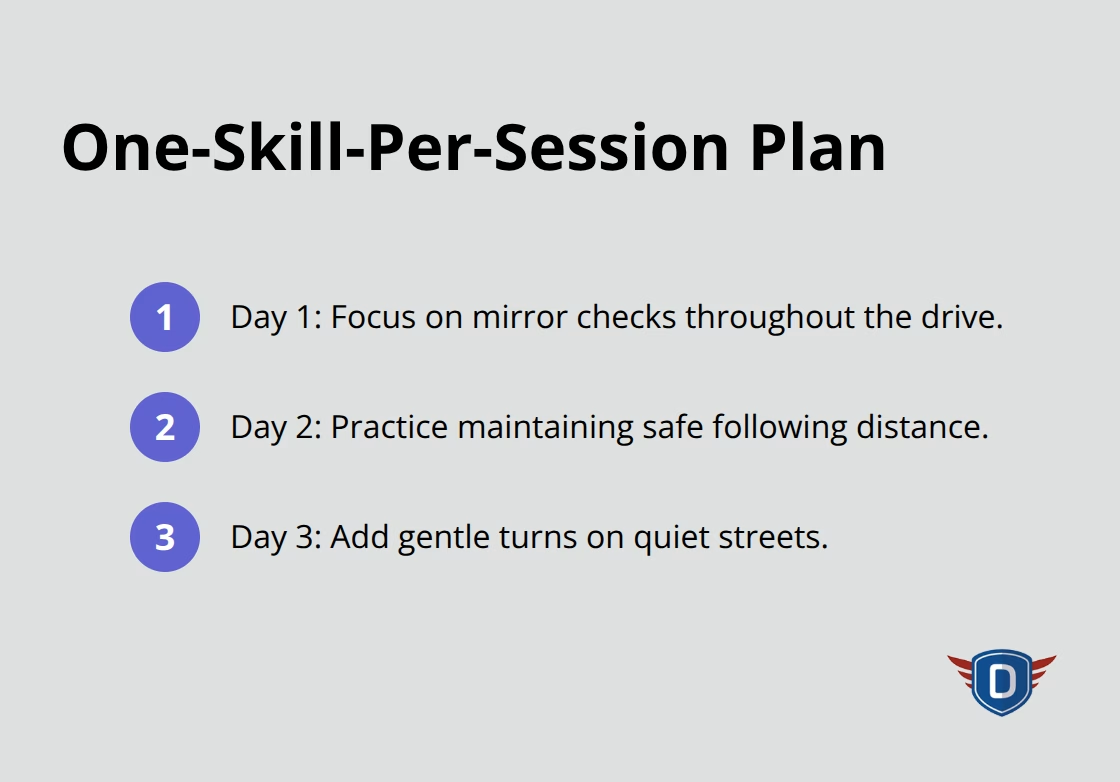
Move to low-traffic residential streets only when you can steer smoothly, brake predictably, and accelerate without jerking in the parking lot. A qualified instructor should make this call, not you. Your job is to execute what you practice, not to judge your own readiness. Once on quiet streets, focus on one new skill per session: maybe mirror checks on day one, then following distance on day two, then gentle turns on day three. Don’t stack five new demands into a single outing.
Nervous new drivers often push too hard too fast because they want to prove they’re ready, and that impatience creates sloppy habits that stick around for years. Slow progression builds competence; rushing builds false confidence followed by panic. Drivers with 30–50 hours of supervised practice before their road test pass at higher rates and have lower early-accident involvement, which means every hour in a low-stress environment pays dividends later.
Where to Practice First and Why Location Matters
Your practice location determines whether you build solid skills or develop habits you’ll have to unlearn later. Empty parking lots work for the first 45–60 minutes, but the moment you need to practice with other road users present, you need a genuine low-traffic street, not a busier one. The difference is measurable: streets with fewer than 10 vehicles per minute during your practice window let you focus on one task at a time without your attention fracturing across multiple threats. Residential streets in neighborhoods with 20 mph speed limits, minimal pedestrian traffic during off-peak hours, and minimal traffic lights qualify. Avoid school zones entirely during school hours, and skip main arterial roads or anything near shopping centers. Your instructor should know these routes in your area already; if they don’t, that’s a red flag about their experience. Structured, progressive on-road sessions with immediate feedback on real decisions build durable safety skills far better than any other method. This means your practice environment must be real enough to teach actual decision-making but controlled enough that mistakes don’t turn into emergencies.
Why Your Instructor Stops Bad Habits Before They Stick
An experienced instructor isn’t a passenger who watches you drive. They’re an active safety net who stops the car, corrects sloppy habits in real time, and prevents you from practicing mistakes repeatedly. New drivers cannot self-assess their own performance accurately because they lack the reference points to know what good looks like. You might think you checked your mirror when you didn’t, or you might believe you maintained safe following distance when you were actually tailgating. An instructor catches these gaps immediately and fixes them before they calcify into automatic behavior. Certified instructors know state-specific licensing standards, understand how examiners evaluate drivers, and recognize which mistakes cost points on road tests. They also manage your progression deliberately: they decide when you’re ready to move from parking lots to quiet streets, from daytime to night driving, from dry conditions to rain. This isn’t something you should negotiate or rush. If your instructor says you need another week of low-traffic practice, that’s not a failure on your part; it’s a professional assessment based on decades of watching new drivers. Learners who work with qualified instructors for structured behind-the-wheel sessions pass their road tests at significantly higher rates than those who practice only with friends or family, partly because instructors prevent bad habits from forming in the first place.
Rain and Darkness Demand Separate Practice Sessions
Dry, daylight conditions are the only environment where you should spend your first 10–15 hours of practice. Rain and darkness add separate skill demands that overload a brain still struggling with basic vehicle control. Once you own steering, braking, and smooth acceleration in ideal conditions, then introduce one new variable at a time: maybe rain on a quiet street, or night driving on a familiar residential route. Never combine multiple new stressors in a single session.
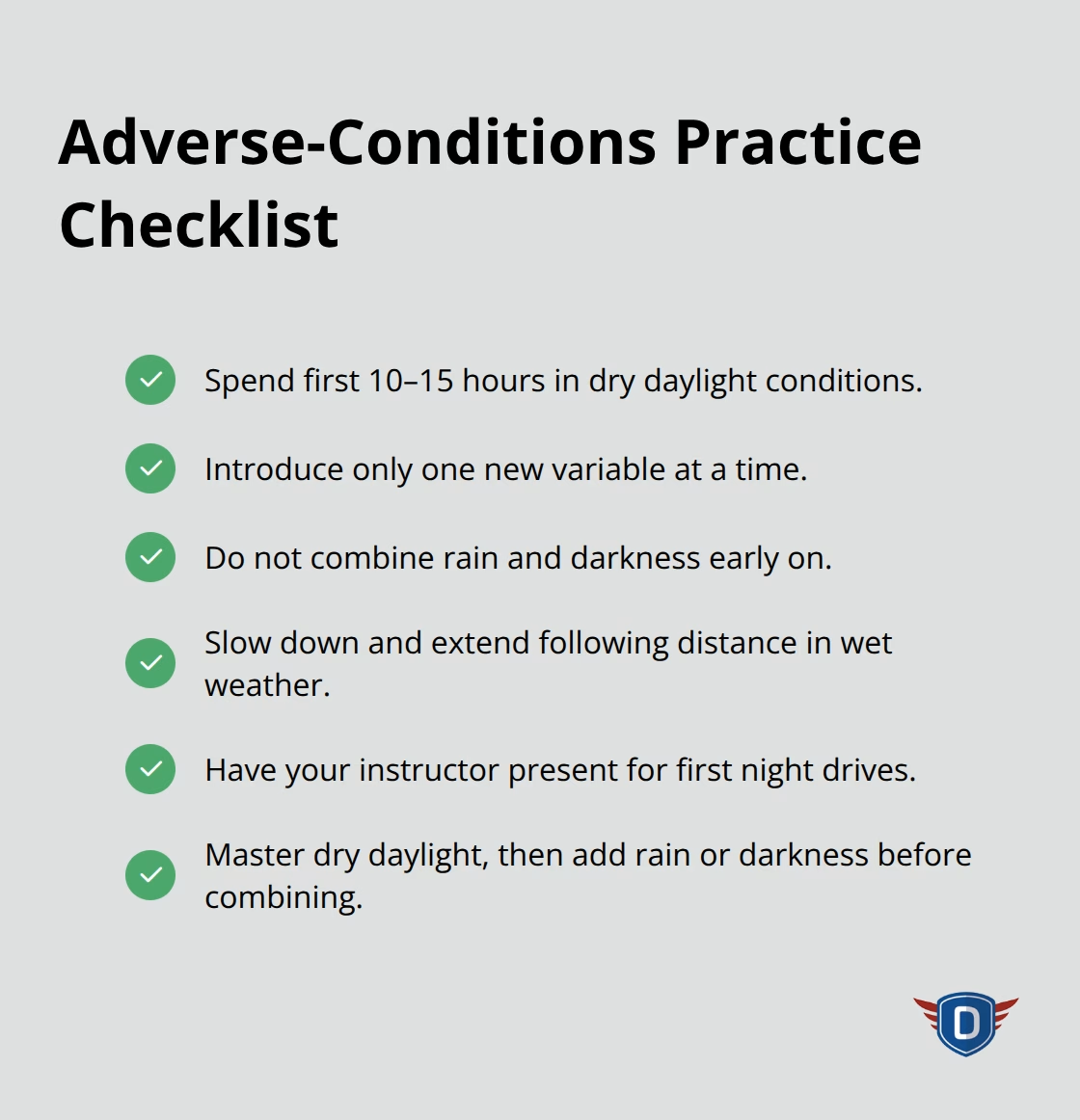
Rain reduces tire grip and visibility simultaneously, which means your braking distances increase significantly and your ability to spot hazards drops sharply. Night driving eliminates the visual information your eyes normally use to judge distance and speed, forcing you to rely more heavily on headlights and reference points. Both require conscious attention and deliberate technique adjustments. Your instructor should teach you how to adjust your speed and following distance for wet conditions before you encounter rain on your own, and they should sit beside you during your first few night drives to catch mistakes before they become reflexes. Fog presents similar challenges: visibility drops, and drivers often misjudge their speed. Cold-weather driving introduces additional complications like hydroplaning and reduced traction. The sequence matters: master dry daylight, then add rain or darkness separately, then combine them later. Rushing through this progression creates drivers who can handle ideal conditions but panic the moment conditions change. Your next step involves learning which specific mistakes new drivers make most often-and how to spot them in yourself before they become automatic.
The Three Habits That Sink New Drivers
Overconfidence Accelerates Failure
Overconfidence kills more early driving progress than lack of ability ever does. New drivers who pass their first parking lot session often convince themselves they’re ready for busier streets immediately, and instructors who don’t push back enable this dangerous leap. The National Highway Traffic Safety Administration reports that drivers aged 16–19 have crash rates nearly three times higher than drivers aged 20 and older, partly because inexperience combines with overestimating their own capabilities. You feel competent after 90 minutes of steering circles in an empty lot, but that feeling is misleading. Your brain hasn’t yet built the neural pathways needed to handle steering, braking, and monitoring traffic simultaneously. A qualified instructor will tell you to spend another week on quiet streets before highway exposure, and that’s not overcaution-it’s preventing you from practicing panic.
The second mistake compounds the first: new drivers rush through low-traffic practice because they’re tired of feeling like beginners. They skip the structured progression their instructor recommends and push into moderate traffic 2–3 weeks too early. This creates drivers who can handle ideal conditions but freeze when multiple hazards appear at once. Your job isn’t to prove readiness; it’s to follow your instructor’s timeline, even when it feels slow.
Mirror Awareness and Positioning Errors
Poor mirror awareness and positioning mistakes form the foundation of every near-miss on the road. Most new drivers don’t actually check mirrors-they look in the general direction and assume they’ve seen everything. An instructor watching from the passenger seat catches this immediately: you think you checked your side mirror before turning, but you didn’t move your eyes far enough or hold your gaze long enough to register what was there. Research shows that combining on-road instruction with immediate corrective feedback produces the largest gains in actual driving performance, and this principle applies equally to new drivers. Fix this habit now, in low-traffic streets, or it becomes automatic behavior that causes lane-change collisions later.
Positioning errors follow the same pattern: new drivers sit too close to the steering wheel, which limits their field of view and makes steering inputs jerky; they position their seat too high or too low, which distorts their sense of the vehicle’s boundaries; they angle their mirrors incorrectly, which creates blind spots they don’t know exist. An instructor adjusts your seat and mirrors during the first session and watches you repeat the same positioning mistakes until they stick in muscle memory.
Hazard Recognition Lags Behind Real Time
The third critical mistake is inadequate reaction time to hazards. New drivers spot dangers too late because they don’t actively scan for them-they passively watch the road ahead. A pedestrian steps off the curb, a car pulls out from a side street, a traffic light changes from green to yellow: these events happen constantly, and your brain must process them in real time. Experienced drivers scan continuously, checking mirrors every 5–8 seconds, monitoring pedestrian behavior at intersections, and anticipating what other drivers might do next. New drivers focus on their own vehicle and miss the context.
An instructor teaches you to scan methodically: mirror check, road ahead, pedestrians, side streets, repeat. This takes conscious effort for months before it becomes automatic, which is why your first 30–50 hours of supervised practice must include deliberate hazard-awareness training, not just vehicle-control drills. The difference between drivers who stay safe and those who don’t often comes down to whether they built this scanning habit early or learned it the hard way through close calls.
Final Thoughts
Your first behind the wheel practice establishes habits that protect you for decades. Defensive driving starts immediately in the parking lot-your instructor teaches you to scan for hazards, maintain safe following distances, and anticipate what other drivers might do. These practices become automatic only through repetition, and when you check mirrors every 5–8 seconds during your first low-traffic session, you build neural pathways that fire automatically when you’re tired, distracted, or stressed years from now.
Situational awareness develops through the same mechanism. Early practice sessions train you to read the environment: pedestrians at intersections, brake lights ahead, traffic patterns, road conditions. Your instructor points out hazards you missed and explains why they matter. Over 30–50 hours of supervised practice, your brain learns to spot these patterns without conscious effort, and you stop reacting to emergencies and start anticipating them instead.
The final piece involves establishing routines that prioritize safety over speed. Set a personal speed limit slightly below posted limits in unfamiliar areas, maintain a three-second following distance instead of two, and take extra time at intersections to confirm the path is clear. We at DriverEducators.com work with certified instructors who teach these defensive techniques from your first session, correct sloppy technique before it calcifies into automatic behavior, and create the safe learning environment where you can practice mistakes without consequences-contact us to start your structured behind-the-wheel training today.