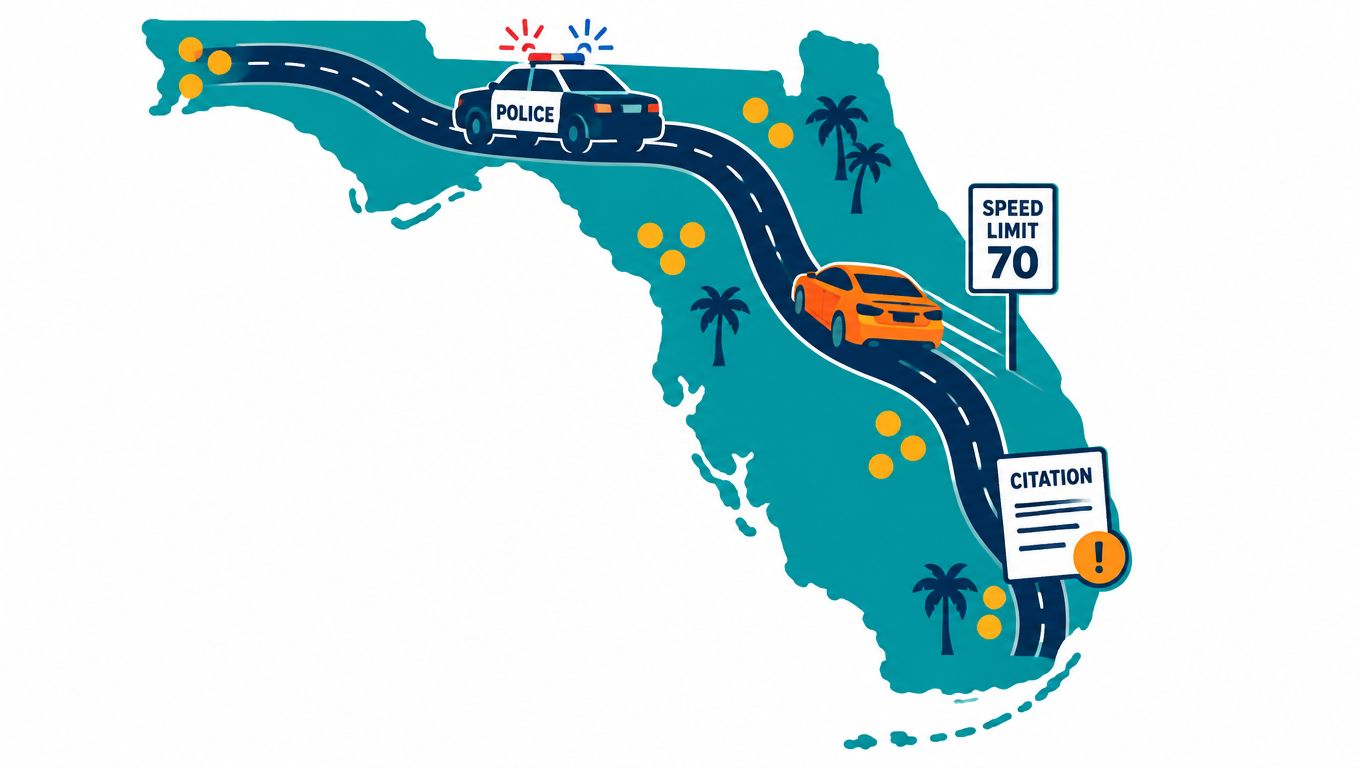
You’re driving home after a long day. The light turns green, you ease into the intersection, and a car in the next lane suddenly cuts across to make a late turn. You hit the brakes in time. Your heart pounds for a second, then you keep going.
Most drivers call that luck.
A trained driver sees it differently. They noticed the drifting vehicle, the slow roll forward, the front wheels beginning to angle. They read the clues early and gave themselves space before the danger fully developed. That’s the difference hazard recognition training makes.
For Florida drivers, this skill matters for more than safety alone. It can help you avoid repeat tickets, protect your license, satisfy court or state requirements, and put you in a better position when you’re looking for insurance savings through an approved course. If you’ve recently gotten a citation, or you want to stop feeling like every drive is a reaction drill, this is one of the most practical skills you can build.
The Difference Between Luck and Skill on the Road
A near-miss usually feels sudden. In reality, it often starts several seconds earlier.
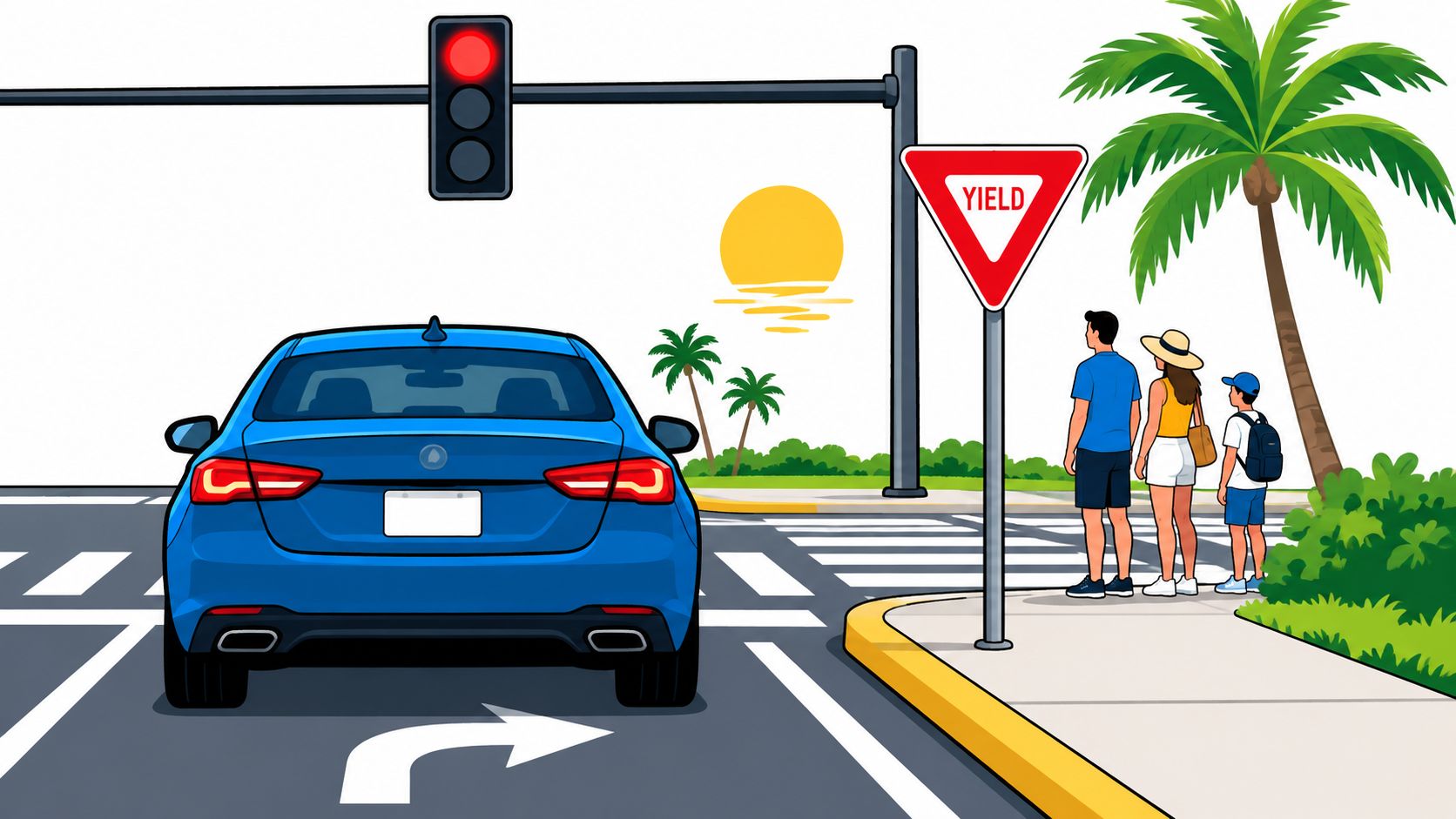
A pedestrian stands near the curb but keeps glancing across the street. A delivery van blocks part of your view at a crosswalk. A driver two cars ahead taps the brakes for no clear reason. None of these details is a crash. Each one is a warning.
What skilled drivers notice earlier
Newer or distracted drivers tend to focus on the car directly in front of them. Skilled drivers keep a wider mental picture.
They watch movement at the edges of the road. They notice when traffic flow changes. They assume that other people may make rushed, careless, or unpredictable choices.
Practical rule: If something feels slightly off, treat it like an early warning, not a random detail.
That mindset changes your timing. Instead of braking hard at the last second, you ease off the gas sooner. Instead of swerving, you leave space. Instead of feeling trapped, you keep options open.
Why reaction alone isn’t enough
Reactive driving starts after the threat is obvious. By then, your choices are smaller.
Hazard recognition training teaches you to identify risk before it becomes an emergency. That means spotting the driver who’s likely to run the yellow, the child whose ball rolls toward the street, or the SUV that keeps wandering within its lane because the driver may be distracted.
Here’s a simple comparison:
| Driving style | What the driver does |
|---|---|
| Reactive driver | Waits for danger to fully appear, then tries to respond |
| Proactive driver | Reads clues early and adjusts speed, space, and attention first |
When people improve this skill, they usually feel calmer behind the wheel. That matters. Calm drivers make cleaner decisions, and cleaner decisions help protect passengers, records, and wallets.
What Is Hazard Recognition Training for Drivers
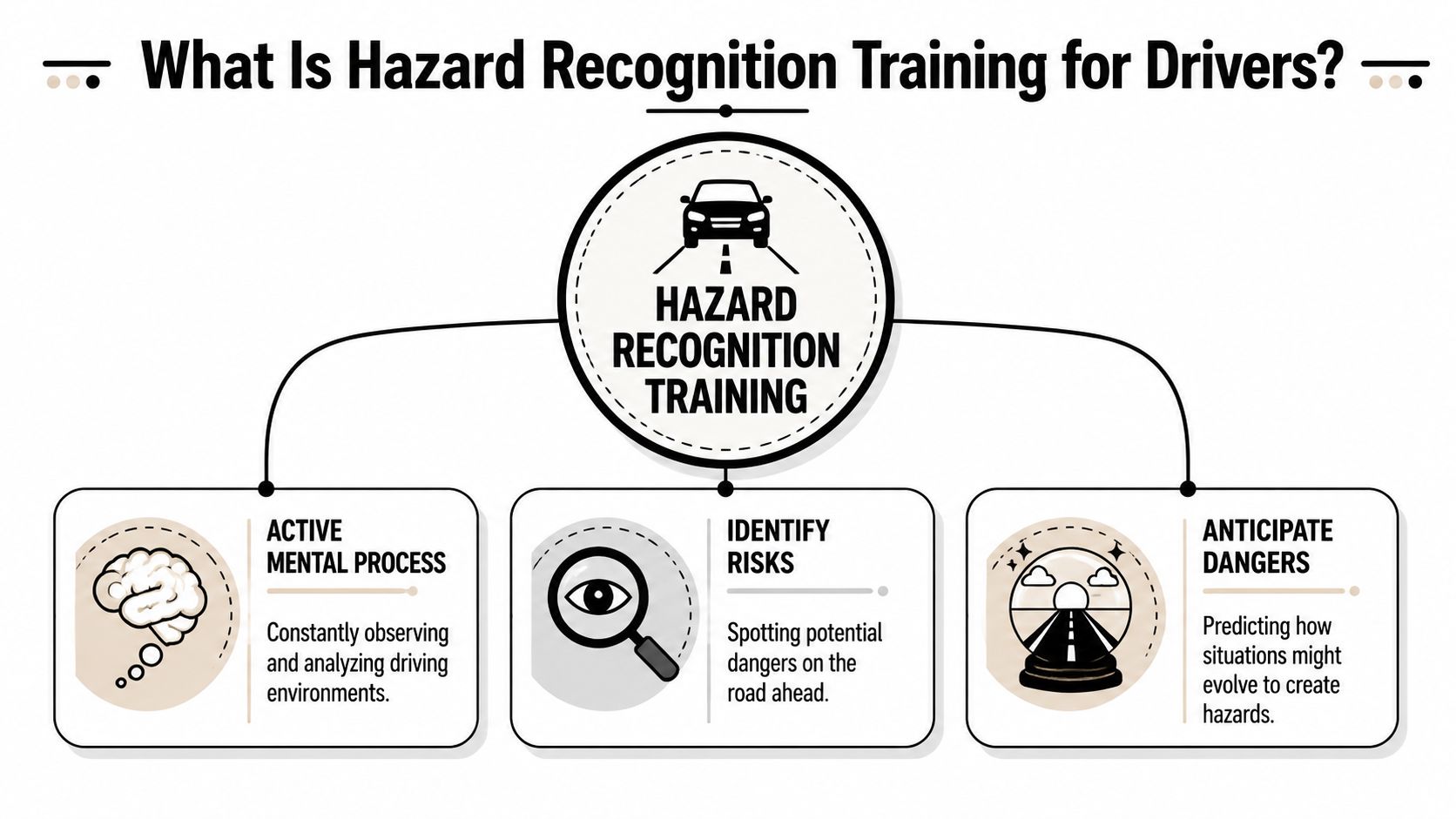
Hazard recognition training is the practice of teaching drivers to spot, interpret, and respond to developing risk before it becomes immediate danger.
It isn’t just memorizing road signs or traffic laws. It’s an active mental process. You’re constantly reading the road, judging what might happen next, and adjusting before the situation gets tight.
It’s closer to chess than memorization
A passive driver sees only the present moment. A trained driver thinks one or two moves ahead.
If a ball rolls into the street, a passive driver reacts to the ball. A trained driver expects a child to follow it. If a car is weaving slightly ahead, a passive driver notices bad lane control. A trained driver increases following distance because that driver may brake late, drift wider, or change lanes suddenly.
That’s why hazard recognition training works best when it teaches pattern recognition, not just rules.
The three parts of the skill
Most drivers improve fastest when they break the habit into three mental actions:
- Observe actively: Don’t stare straight ahead. Check mirrors, side streets, crosswalks, brake lights, and lane behavior.
- Identify the risk: Ask what could go wrong from what you’re seeing right now.
- Anticipate the next move: Decide what you’ll do if the situation changes in the next few seconds.
This is also why strong defensive driving instruction often overlaps with hazard recognition. Defensive driving reinforce the same core principle: safe drivers don’t wait for trouble to become obvious.
Hazard recognition is learned attention. The road gives clues constantly. Training helps you notice them in time to act.
Anyone can improve it
Some readers assume this is something you either “have” or don’t. That’s not true.
Drivers improve when they practice with realistic scenarios, review mistakes without panic, and learn how to connect visual clues to likely outcomes. The goal isn’t to become fearful. It’s to become prepared.
The Real World Benefits of Sharpening Your Skills
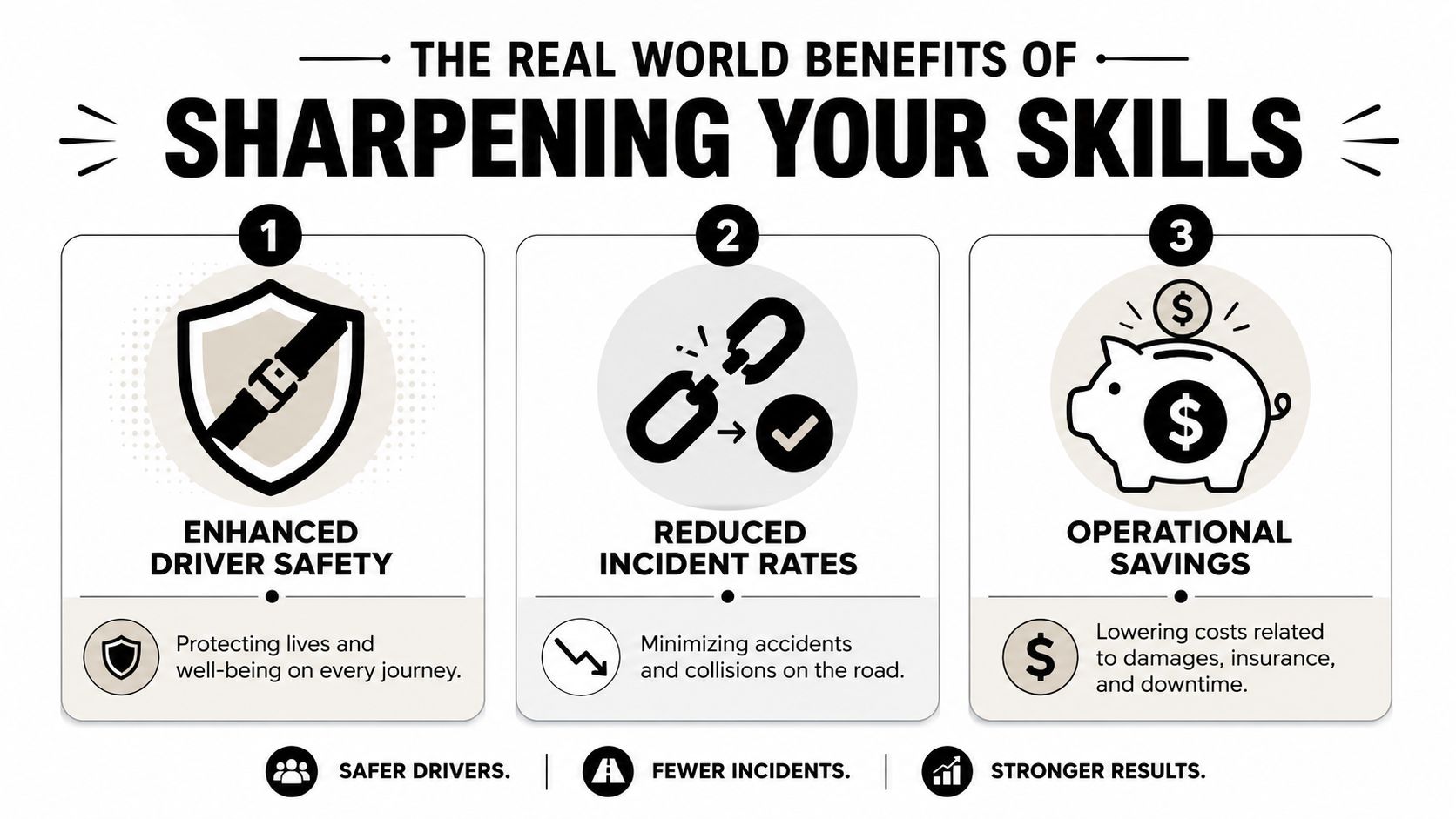
The biggest benefit is simple. You give yourself more time.
More time means smoother braking, safer lane changes, better judgment at intersections, and fewer moments when you’re forced into a split-second decision. That protects you, your passengers, and everyone sharing the road with you.
Safer driving changes daily outcomes
A lot of crashes begin with ordinary situations that turned into surprises. Following too closely. Missing a cyclist in a mirror. Entering an intersection without reading the full traffic picture.
When you sharpen hazard recognition, those situations stop feeling random. You start seeing how one small clue connects to the next.
If you want a practical review of collision patterns that often begin with missed warning signs, DFox Law personal injury resources provide a useful overview of common causes of car accidents.
Better skills can protect your record
For Florida drivers with a recent citation, the topic becomes very real.
Data from the Florida Department of Highway Safety and Motor Vehicles shows that 68% of drivers who complete BDI courses with embedded hazard recognition modules reduce repeat citations within 12 months, according to this hazard awareness summary. That’s a meaningful connection between learning to identify risk sooner and avoiding another ticket later.
A repeat citation doesn’t just sting once. It can create a chain reaction that affects your driving record, court obligations, and insurance costs. Stronger scanning and decision-making help interrupt that pattern.
There’s a money side too
Safer driving habits can support lower overall driving costs. Fewer violations and fewer risky moments put you in a better position when you’re trying to avoid insurance increases or qualify for a discount through an approved course.
A state-approved defensive driving course can also carry legal value after a moving violation. If you’re weighing that route, this page on defensive driving course benefits in Florida gives a helpful overview of how course completion may support drivers dealing with tickets, points, and insurance concerns.
- Safety benefit: You reduce surprise and increase control.
- Financial benefit: You may lower the odds of costly repeat mistakes.
- Legal benefit: You can use approved training to address the consequences of a moving violation.
That combination is why hazard recognition training isn’t just another driving topic. For many Florida drivers, it’s a practical reset.
Key Hazard Recognition Techniques You Can Use Today
You can start using hazard recognition techniques on your very next drive.
The goal isn’t to become tense or suspicious of everything. The goal is to create a simple routine that keeps your brain engaged with what’s changing around you.
Scan farther than feels natural
Most drivers look too close to their own vehicle. That narrows your time to react.
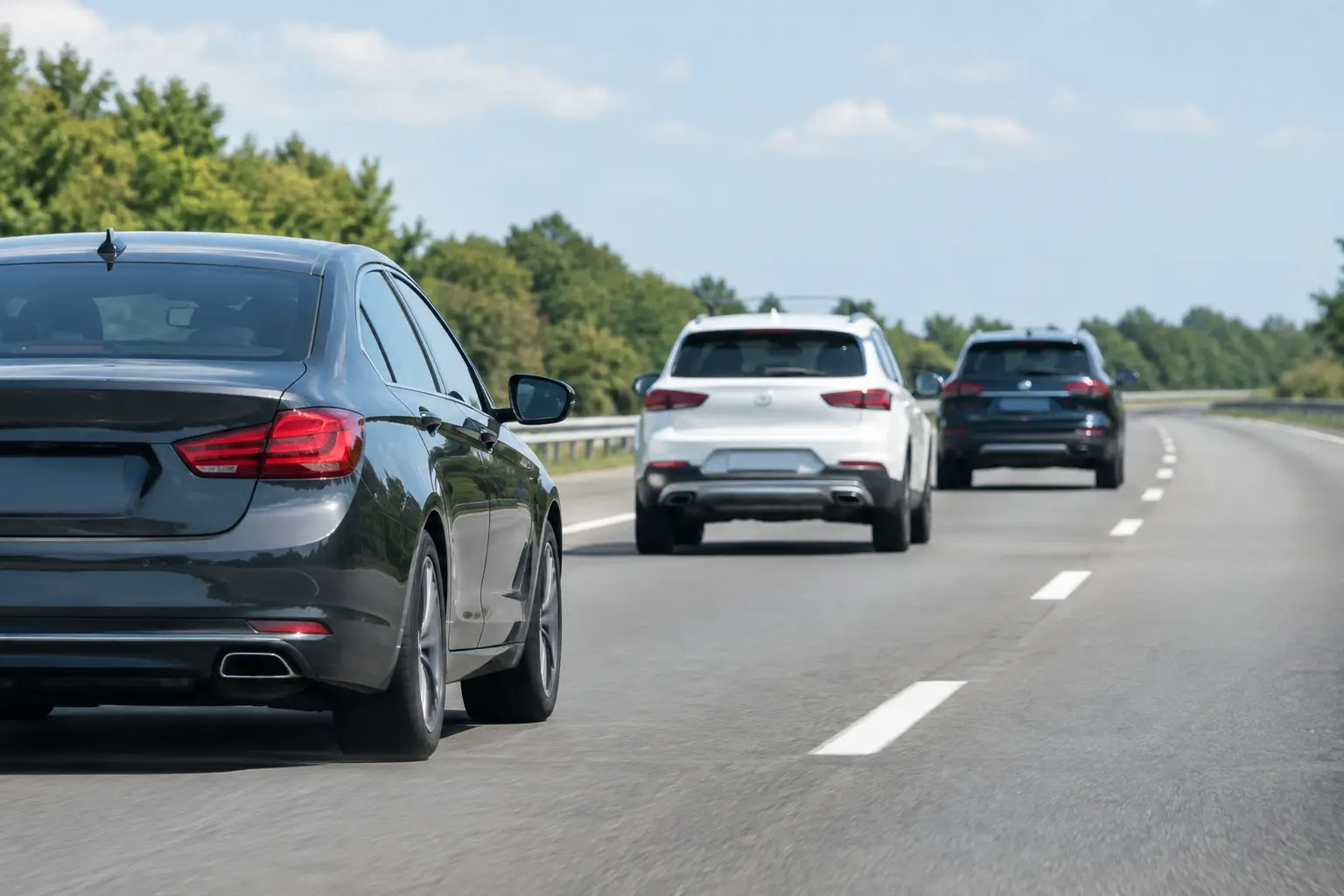
Try a wider scan pattern. Look well ahead, then check mirrors, then return to the road ahead. Notice side streets, parked cars with brake lights on, and people near crosswalks. This works in city traffic, on highways, and even in parking lots.
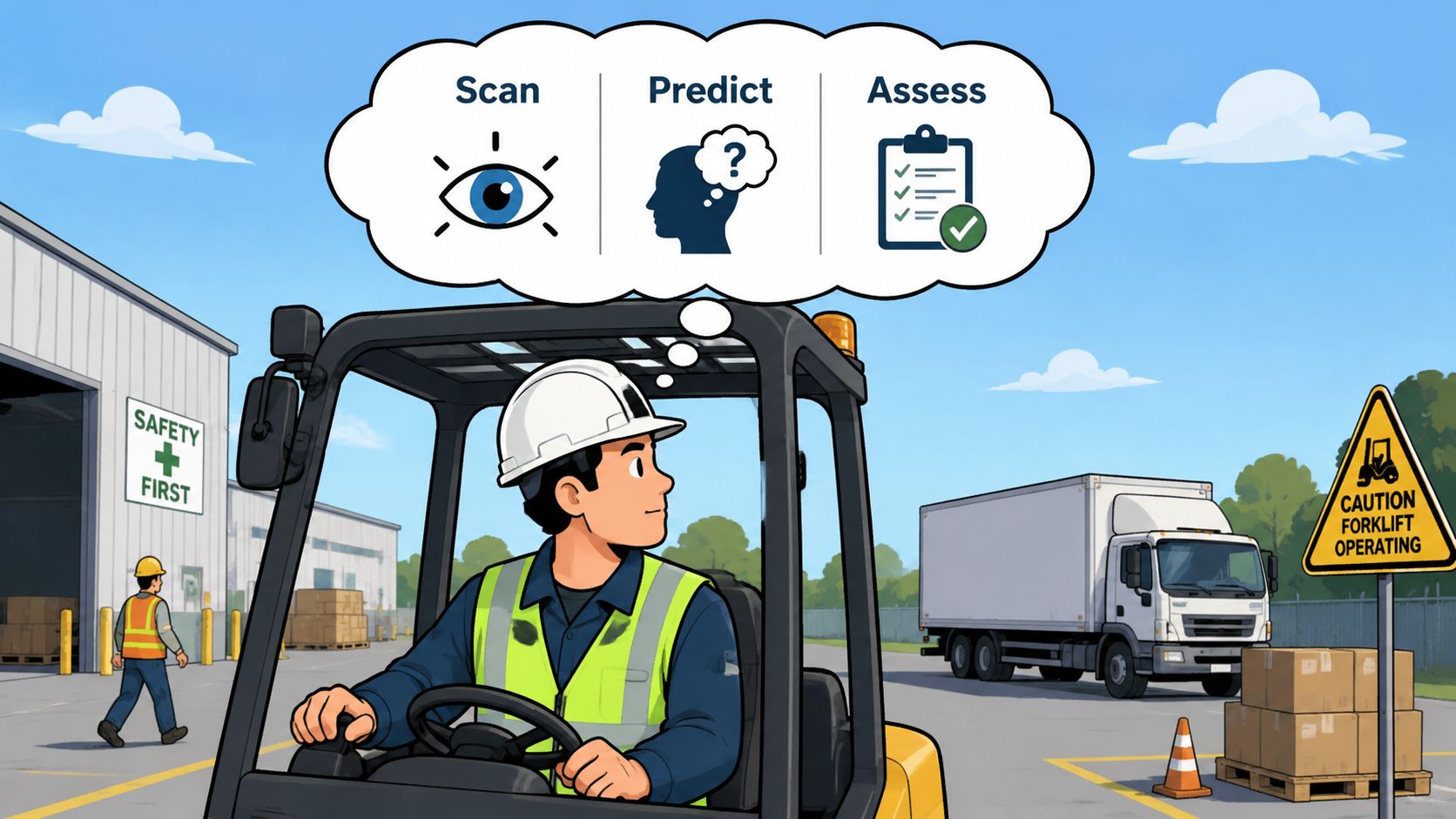
A good scan answers one question repeatedly: what might enter my path next?
Build 360-degree awareness
Hazard recognition isn’t only about what’s ahead. It’s about what surrounds you.
That includes the car in your blind spot, the tailgater behind you, the motorcycle filtering through traffic, and the driver in the next lane who may dive toward your exit at the last second.
Use this quick framework:
- Front zone: Brake lights, lane slowdowns, intersections, pedestrians
- Side zones: Merging traffic, turning vehicles, cyclists, opening car doors
- Rear zone: Tailgaters, fast-approaching vehicles, pressure from behind
Drivers who know what’s around them make smoother choices. They don’t get boxed in as often.
Use Dynamic Risk Assessment while driving
Professional-level hazard recognition training often uses Dynamic Risk Assessment, or DRA.
In that approach, drivers keep asking: What has changed? and What are the new risks? According to EHS Insight’s explanation of Dynamic Risk Assessment, this method directly correlates with a significant reduction in reactive incidents in high-risk environments.
That sounds technical, but it’s easy to use in a car.
Rain starts suddenly. What changed? Traction, visibility, stopping distance.
A truck ahead signals late. What’s the new risk? An abrupt merge or blocked sightline.
School dismissal traffic appears. What must you do? Slow down, widen your scan, expect unpredictable movement.
Ask the road questions before it asks them for you.
For more practical habits that support this mindset, this guide to defensive driving techniques is a useful next read.
How Modern Hazard Recognition Training Is Delivered
Modern hazard recognition training doesn’t have to feel like a stale classroom lecture.
The best programs use self-paced online lessons, realistic traffic scenarios, short learning modules, and guided decision exercises. That format fits busy drivers because you can learn from your phone, tablet, or computer without rearranging your whole week.
Why scenario-based learning sticks better
A driver usually learns more from a realistic situation than from a page of abstract warnings.
That’s why simulations matter. When you watch or interact with a traffic scene, you practice timing, spacing, and judgment in a way that feels closer to real driving. You’re not just reading “watch for hazards.” You’re identifying the hazard, deciding what matters most, and seeing how your choice changes the outcome.
Benchmark data reveals that integrating simulations and game-based “Play as Worker” modes into hazard recognition training significantly improves situational awareness and response speed compared to traditional lecture-based methods, as validated by OSHA’s hazard identification training tools.
Convenience matters because completion matters
Even good training fails if it’s too hard to finish.
Online delivery solves that problem for many adults. You can pause, return later, and complete lessons at a pace that works around work, family, and court deadlines. That makes it easier to stay focused instead of rushing through material just to get it over with.
A strong option is a format built around self-paced online driving courses, where the structure supports both flexibility and retention.
The easiest course to benefit from is the one you can actually complete carefully and on time.
Finding a Florida-Approved Program That Works for You
Florida drivers need more than a generic online class. They need a program that meets state requirements and fits their actual situation.
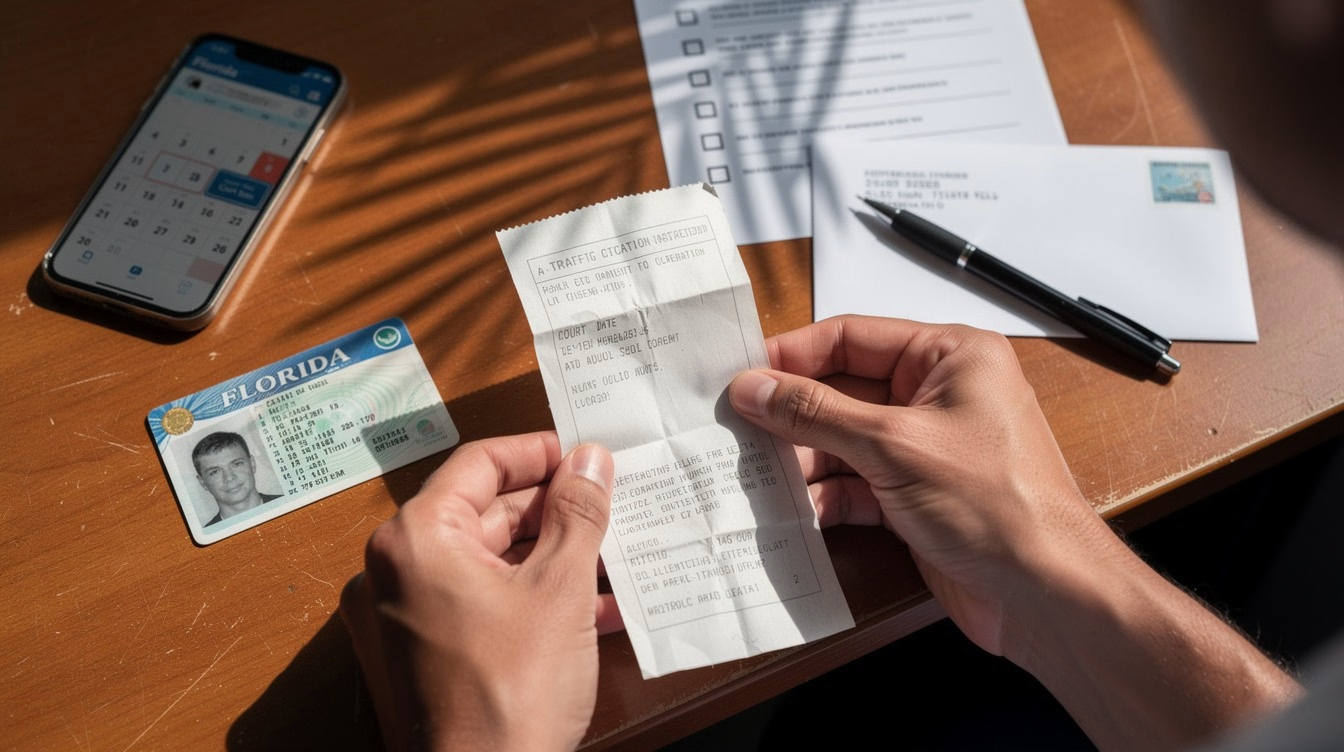
If you received a moving violation and choose a Basic Driver Improvement course, Florida law requires completion within 90 days from the date of the citation to avoid points being added to your license That deadline matters.
What to look for in a program
A useful program should be Florida-approved, easy to access online, and clear about who the course is for.
Different drivers need different things. Some need a 4-hour BDI course after a ticket. Some need a court-ordered course. Others want a mature driver refresher or training that may support an insurance discount.
Here’s a simple checklist:
- State approval: Make sure the program is accepted for Florida traffic school purposes.
- Flexible format: Busy drivers usually need a course they can complete on their own schedule.
- Clear reporting process: You should know how completion is documented and sent.
- Language access: This matters more than many schools admit.
Why language access isn’t a side issue
Many hazard recognition mistakes start with misunderstanding, not carelessness.
Data shows non-native English speakers can have a 50% drop in hazard recall from standard training, based on the multilingual training findings in this NIOSH-linked research summary. That’s why culturally adapted instruction in Spanish and Portuguese can make a real difference for Florida drivers trying to absorb safety concepts accurately.
If you’re comparing providers, a good place to start is a list of Florida-approved online traffic school options. Look for a course that matches your violation, your deadline, and the language you learn best in.
The right program shouldn’t just help you finish. It should help you drive differently afterward.
Frequently Asked Questions About Hazard Training
I’ve been driving for years. Will I really learn anything new?
Yes. Experience helps, but experience can also harden bad habits.
Many longtime drivers stop scanning actively because familiar roads feel safe. Hazard recognition training rebuilds attention and helps you notice the warning signs you may have started ignoring.
Can this help with insurance savings?
It can, depending on your insurer and the type of approved course you complete.
Ask your carrier directly before you enroll. Tell them the course type you’re considering and ask whether they recognize it for a discount.
How fast can I finish after getting a ticket?
Don’t wait. Florida law requires drivers who elect to take a Basic Driver Improvement course for a moving violation to complete it within 90 days from the date of the citation to avoid points being added to their license.
That’s why drivers should choose a course quickly and start as soon as possible.
What should I look for in the right course?
Focus on four things:
- Approval status: Confirm it’s accepted in Florida.
- Course fit: Match the class to your reason for taking it.
- Schedule flexibility: Online, self-paced access helps many drivers finish on time.
- Language support: If English isn’t your strongest language, choose training offered in the language you understand best.
Is hazard recognition only for people with tickets?
No. It helps first-time drivers, older drivers, busy commuters, and anyone who wants to feel more in control behind the wheel.
The drivers who benefit most are often the ones who want fewer surprises on the road.
If you’re ready to protect your driving record, meet Florida requirements, and build safer habits that can carry over into lower long-term costs, explore the Florida-approved online courses at BDISchool. You can review the available options, choose the course that fits your situation, and get started on a schedule that works for you.