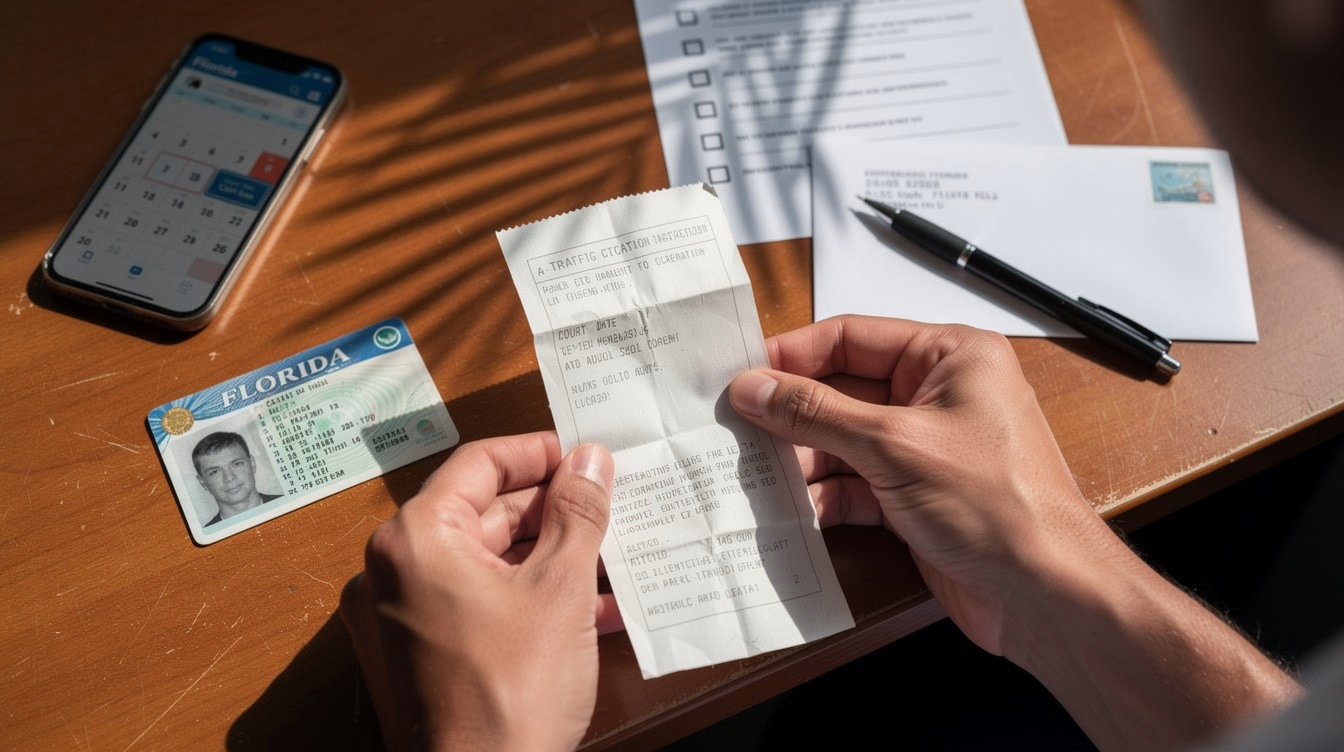
Getting a ticket or court notice usually creates the same problem: you need to complete a course, but you do not have time for a classroom. That is exactly why many drivers want to know how online traffic school works. The short answer is simple – you enroll in a state- or court-approved course, complete it at your own pace, pass any required quizzes or final exam, and the provider reports or issues proof of completion based on your state’s rules.
The details matter, though. Online traffic school is convenient, but the process can look different depending on why you are taking it, where you live, and whether a court, DMV, or insurance company is involved.
How online traffic school works from start to finish
Online traffic school is a digital driver improvement course designed to meet a specific legal, court, DMV, or insurance requirement. Instead of attending a scheduled class in person, you log in from your phone, tablet, or computer and work through the lessons on your own time.
Most students start by selecting the right course for their situation. That part is more important than many people realize. A traffic school course for ticket dismissal may not be the same as a driver improvement course required after a violation, and neither is necessarily the same as a mature driver course for an insurance discount.
Once you choose the correct course, you create an account, provide basic identifying information, and pay the course fee. A legitimate provider will clearly explain the price, approval status, course length, and what happens after completion. If those details are vague, that is a sign to slow down and verify the course before enrolling.
After registration, the course opens online. Lessons are usually broken into short sections that cover traffic laws, safe driving behavior, defensive driving habits, risk awareness, and the consequences of unsafe choices. Some courses include videos, reading modules, knowledge checks, or short quizzes to confirm progress.
Most approved online courses are self-paced. That means you can sign in, complete a section, log out, and return later. This is one of the biggest benefits for busy drivers who need to fit the course around work, family, or other obligations.
At the end, you may need to pass a final exam. Some states require one. Some do not. Some courses also require identity verification during the process to confirm that the registered student is the person completing the work.
When you finish, the provider either sends your completion information directly to the required agency or gives you a certificate to submit, depending on the state and course type. That final step is where approval and reporting rules become especially important.
What happens inside an online traffic school course
The course itself is usually straightforward. You read or watch a lesson, answer review questions, and move to the next section. The purpose is not just to check a box. Approved courses are meant to reinforce safer driving habits and reduce repeat violations.
Expect content on right-of-way rules, speed management, distracted driving, alcohol and drug awareness, sharing the road, and hazard recognition. Some courses also explain how points, suspensions, or insurance consequences work in that state.
Time requirements are often built into the course. If your state requires a four-hour program, you typically cannot complete it in twenty minutes, even if you read quickly. The system may track your time in each section and require minimum participation before letting you continue.
That can feel inconvenient when you want to finish fast, but it is also what makes the course acceptable to courts and agencies. Approved traffic school is not just downloadable paperwork. It is regulated education.
Why self-paced matters
Self-paced means you control when you study. It does not mean the rules disappear.
You still need to complete every required section, meet any timing standards, and finish before your deadline. The advantage is flexibility, not exemption from the requirement.
How tests usually work
Most quizzes are simple checks for understanding. The final exam, when required, is generally based on the course material and often allows multiple attempts.
That said, requirements vary. Some states are stricter about passing scores, retakes, or identity checks than others.
Approval is the part you should never skip
If you remember one thing about how online traffic school works, make it this: the course must match your requirement. A well-designed online course is only useful if the court, DMV, or insurance company accepts it.
Approval may come from a state agency, a county court, or another official body. Some providers are approved in one state but not another. Some are approved for one course type but not for every driver need.
Before you enroll, confirm three things. First, who requires the course – court, DMV, employer, or insurer. Second, what exact course type is required. Third, whether the provider is approved for that requirement in your state or county.
This is where a trusted provider makes a real difference. Clear course descriptions, visible approval information, support access, and transparent next steps reduce the risk of taking the wrong program.
How long online traffic school takes
The timeline depends on the state and the course type. Some are four hours. Some are longer. Court-ordered or violation-based programs can have set instructional hours that cannot be shortened.
What changes with online learning is the schedule. You may be able to finish in one sitting, split the work over several evenings, or complete sections during breaks in your day. For drivers managing jobs, childcare, or transportation issues, that flexibility is often the deciding factor.
Still, waiting until the last minute is risky. Reporting deadlines, certificate delivery times, and technical issues can all create unnecessary stress. Starting early gives you room to finish comfortably and correct problems if anything needs to be verified.
What online traffic school can help you do
The reason for taking traffic school affects both the course you need and the outcome you can expect. Some drivers take it to satisfy a court requirement after a citation. Others use it to dismiss an eligible ticket, reduce points, meet a DMV order, qualify for an insurance discount, or complete a first-time licensing education requirement.
It depends on your state and your case. Online traffic school does not automatically erase every violation or prevent every insurance increase. In some situations, it helps with one issue but not another. For example, a course might satisfy a court requirement without changing an insurer’s rating decision.
That is why outcome claims should always be specific. If a provider promises a result without mentioning eligibility, approval, or state rules, be cautious.
Common issues drivers run into
The most common mistake is enrolling in the wrong course. This usually happens when someone assumes all traffic school is the same. It is not.
Another issue is misunderstanding reporting. Some providers report completions electronically. Others issue a certificate for you to send yourself. If you assume the provider reports automatically and your court expects you to file proof, you could miss your deadline.
Drivers also sometimes underestimate the required time. Online is easier to schedule, but approved courses still take real time to complete. Technical problems can add delays too, especially if you wait until the final day.
A better approach is simple: verify the requirement, confirm approval, understand the reporting method, and start early.
FAQ: How online traffic school works
Is online traffic school legit?
Yes, online traffic school is legitimate when the course is approved for your specific requirement. Approval is what matters, not just the fact that it is online.
Do I have to finish the course in one sitting?
Usually no. Most online traffic school courses are self-paced, so you can log out and return later.
How do I know if my court will accept it?
Check your court notice or contact the court directly. Then confirm the provider is approved for that court or state requirement.
Is there a final exam?
Sometimes. Some courses require a final exam, while others only use quizzes or section checks.
When is my completion reported?
It depends on the provider and the state. Some report electronically, and some give you a certificate to submit.
Can online traffic school remove points from my record?
Sometimes. Point reduction or ticket dismissal depends on state law, your eligibility, and the reason you are taking the course.
Can I take the course on my phone?
Usually yes. Many providers offer mobile-friendly courses that work on phones, tablets, and computers.
What if I sign up for the wrong course?
Contact the provider right away. A reputable school should help you confirm the correct course before you spend more time than necessary.
For most drivers, online traffic school is not complicated once the requirement is clear. The real goal is to choose an approved course that fits your deadline, complete it on a schedule that works for you, and move on with confidence. If the provider makes those steps easy to understand, you are probably in the right place.