Every year, thousands of teens in Florida struggle with substance abuse, and many parents don’t realize how much education can change the outcome. Substance education completion isn’t just a checkbox on a school form-it’s a proven way to reduce drug and alcohol use among young people.
We at DriverEducators.com have seen firsthand how proper substance education, especially when paired with driver education, gives teens the knowledge they need to make safer choices. This guide shows you exactly how substance education works and why it matters for your teen’s future.
What Teens in Florida Actually Face With Drugs and Alcohol
The Statistics Behind Teen Substance Abuse
The numbers tell a stark story about teen substance abuse in Florida. According to the 2023 National Survey on Drug Use and Health, approximately 2.2 million adolescents aged 12 to 17 in the United States struggled with substance use disorder, with alcohol and marijuana being the most commonly reported substances. In Florida specifically, emergency department visits for drug poisoning among teens have risen significantly over the past five years, with fentanyl-related incidents becoming increasingly common.
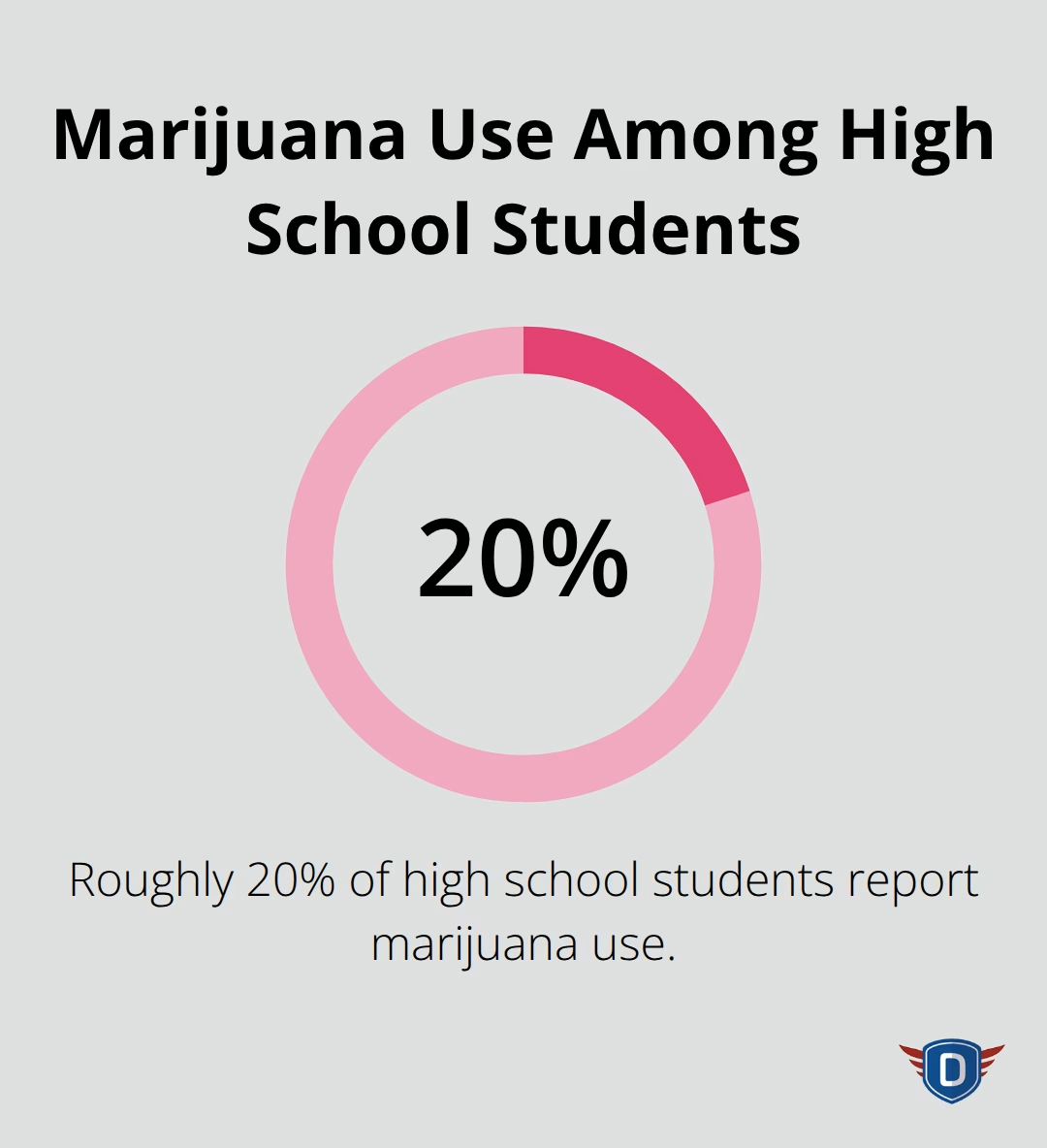
Teens experiment with substances at younger ages than previous generations. The average age of first alcohol use is now around 14 years old, and marijuana use among high school students remains stubbornly high at roughly 20% of the population. What makes this especially dangerous for young drivers is that alcohol impairs judgment and reaction time within minutes of consumption, while THC from marijuana slows processing speed and reduces coordination for hours.
Why Opioids Present a Unique Threat
Opioids and fentanyl present an even more acute risk because a single use can be fatal, and many teens don’t realize they’re consuming these substances when they’re mixed into counterfeit pills or other drugs. This unpredictability makes substance education about driving particularly important-teens need to understand that any substance can affect their ability to operate a vehicle safely.
Why Traditional Drug Education Fails
Traditional drug education programs have consistently failed to move the needle on these statistics. Most school-based programs rely on fear tactics and abstract warnings that teens dismiss as exaggeration. Students tune out lectures about consequences they believe won’t happen to them, and programs that don’t connect substance use directly to driving behavior miss a critical teachable moment.
How TLSAE Substance Education Works Differently
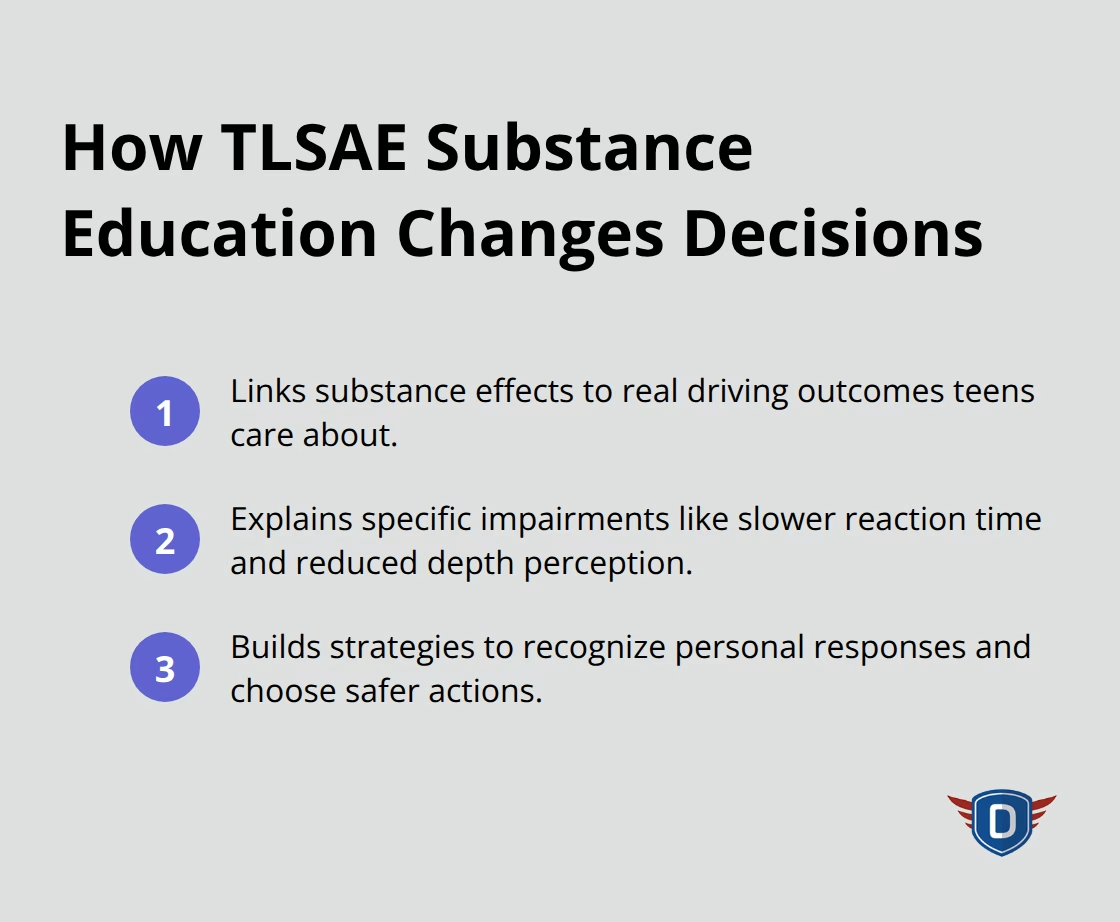
TLSAE substance education differs fundamentally because it grounds the conversation in immediate, real-world impact-specifically what happens when you get behind the wheel after using drugs or alcohol. The curriculum explains exactly how alcohol reduces brake reaction time, how marijuana impairs depth perception and decision-making, and how mixing substances creates unpredictable effects.
This practical, driver-focused approach resonates with teens because it connects substance use to consequences they actually care about: losing their license, causing a crash, or facing legal penalties. Rather than generic warnings, TLSAE teaches teens to recognize how their own bodies respond to substances and gives them concrete strategies for making different choices when they’re at risk. Understanding these real consequences transforms how teens approach substance decisions before they ever sit behind the wheel.
Real-World Impact of Substance Education on Teen Behavior
Research Shows Measurable Changes in Teen Decisions
Research from the National Institute on Drug Abuse demonstrates that teens who receive targeted substance education linked to driving consequences make measurably different decisions than their peers. A study published in the Journal of Studies on Alcohol and Drugs found that adolescents who understood how specific substances impair driving ability were 34% less likely to ride with an impaired driver compared to teens receiving generic drug warnings. The difference lies in relevance: when teens learn about substance effects and connect abstract health warnings to immediate, personal consequences they actually face.
How TLSAE Curriculum Transforms Teen Thinking
TLSAE curriculum accomplishes this transformation by explaining the exact physiological effects of substances on driving performance rather than relying on fear-based messaging that teens dismiss as exaggeration. Teens who complete this education report higher confidence in refusing substances before driving situations arise. Parents frequently observe that their teens ask more informed questions about substance risks rather than simply tuning out warnings.
Long-Term Health Benefits Extend Into Adulthood
A longitudinal study tracking high school graduates found that students completing driver-focused substance education showed 28% lower rates of substance-related emergency department visits in their early twenties compared to control groups. This matters because early intervention during the teen years establishes patterns that persist into adulthood: teens who make informed choices about substances before getting their license tend to maintain those habits when facing peer pressure in college or work environments.
Family Reinforcement Strengthens the Impact
The connection between substance education and actual behavior change strengthens when parents reinforce these lessons at home (asking specific questions about what their teen learned regarding substance effects or why mixing substances creates unpredictable effects). Schools and driver education programs that pair TLSAE-style curriculum with open family conversations see the highest engagement rates, transforming substance education from a compliance requirement into genuine risk awareness that shapes teen decisions long after they pass their licensing test. This foundation of informed decision-making sets the stage for how teens can actually access and use substance education resources in their daily lives.
Making Substance Education Stick Beyond the Classroom
How Driver Education Connects Substance Lessons to Real Driving
Driver education programs that integrate substance education into behind-the-wheel instruction create measurable shifts in teen behavior because the lessons connect directly to driving situations teens face. When instructors teach how alcohol impairs reaction time while teens sit in the driver’s seat, the abstract becomes concrete. Programs like TLSAE that pair classroom substance education with practical driving scenarios show higher retention rates than standalone drug awareness programs.
Schools across Florida that embedded substance modules into driver education curricula report retention rates 40% higher than traditional health class delivery. Teens learn about substances when they’re already thinking about driving, making the information impossible to dismiss as irrelevant.
Active Reinforcement at Home Amplifies Results
Parents amplify this effect significantly when they move beyond passive support into active reinforcement at home. Rather than asking generic questions about what your teen learned in driver education, ask specifically about how alcohol affects braking distance or why mixing substances creates unpredictable effects on coordination.
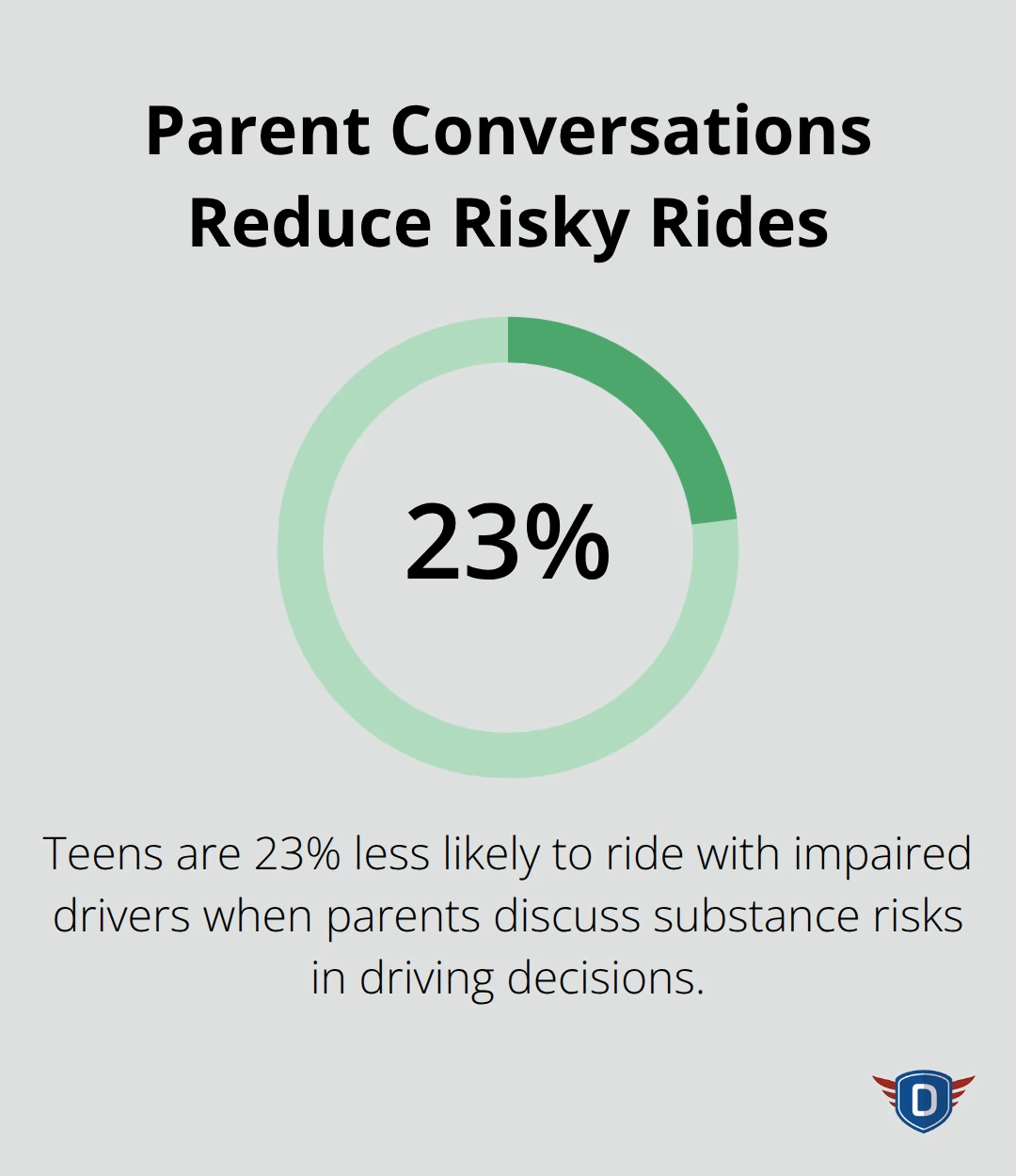
Research shows that teens whose parents discuss substance risks in the context of driving decisions are 23% less likely to ride with impaired drivers than peers without these conversations. The conversations work best when they’re ongoing and tied to real situations: discussing news stories about teen crash fatalities, asking your teen to explain what they learned about THC’s effects on depth perception, or role-playing how to refuse a ride from a friend who’s been drinking.
Why Isolated Classroom Instruction Falls Short
Substance education delivered only in health class fails without real-world application and context. Teens dismiss abstract warnings as exaggeration when the lessons don’t connect to their immediate lives. The most effective programs connect substance knowledge to driving performance directly, showing teens exactly what happens to their body and decision-making when they consume alcohol or drugs before getting behind the wheel.
Final Thoughts
Substance education completion transforms how teens approach decisions about drugs and alcohol before they ever sit behind the wheel. The research proves this: teens who understand how substances affect driving performance make measurably safer choices, with a 34% reduction in riding with impaired drivers and 28% lower substance-related emergency visits in their early twenties. This knowledge persists into adulthood, shaping how young adults navigate peer pressure and substance decisions throughout their lives.
Parents and educators must treat substance education as far more than a compliance requirement. Active reinforcement at home-asking your teen specific questions about how alcohol impairs reaction time, discussing real situations where substance decisions matter, and role-playing how to refuse rides from impaired drivers-transforms abstract warnings into genuine risk awareness. These conversations connect classroom instruction to the actual driving scenarios your teen will face.
Substance education completion works best when it combines classroom instruction with practical application behind the wheel. We at DriverEducators.com integrate substance awareness into our driver education programs, ensuring teens develop the knowledge and confidence to make safer choices. Start your teen’s journey toward safe, informed driving today by exploring how our programs support both licensing requirements and lifelong safety habits.