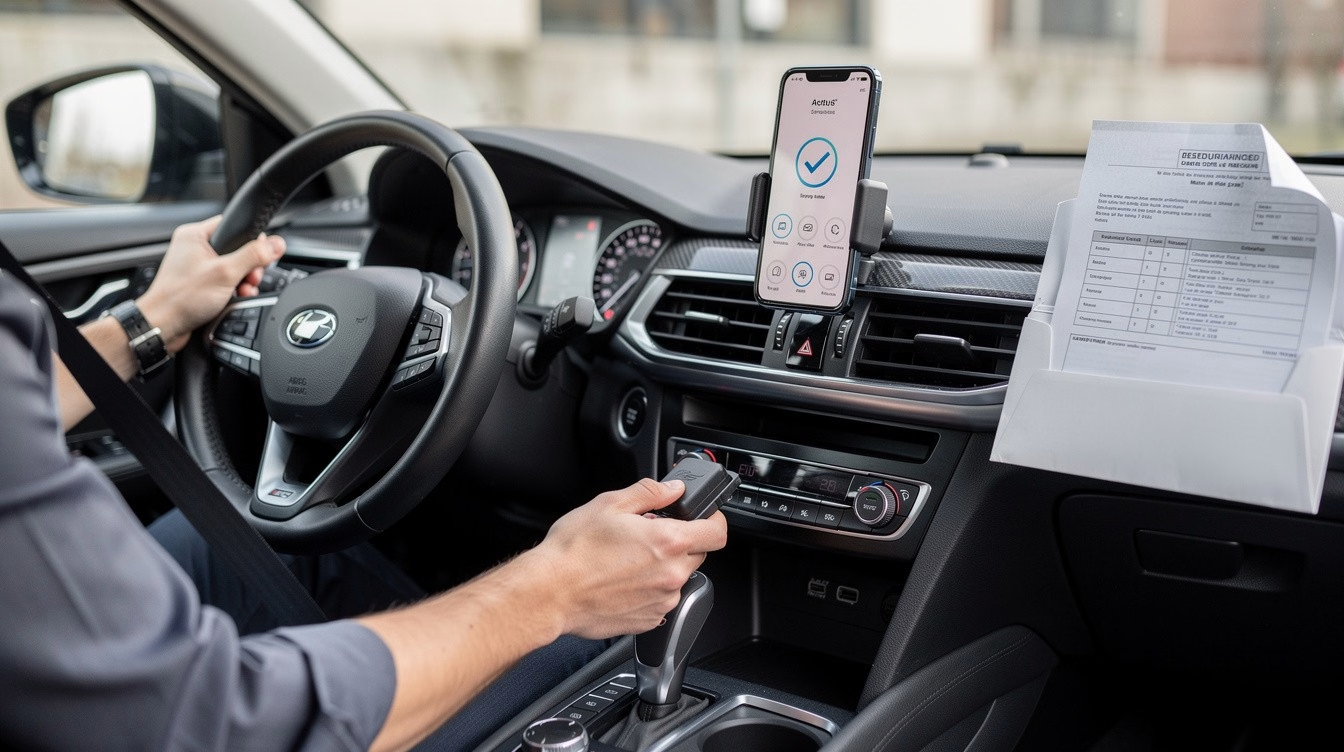
At 5:40 p.m., traffic on I-275 through Tampa compresses into a wall of brake lights. Your car stops, the vehicle behind you doesn’t, and the impact sends your airbags forward before you fully understand what happened. Your ears ring. Burnt propellant fills the cabin. Your hands tremble on the steering wheel while you instinctively switch on the hazard lights.
You don’t need legal theory in that moment. You need a calm accident reporting procedures plan that protects your health, preserves evidence, and keeps a preventable paperwork mistake from damaging your claim. The next ten minutes matter because Florida drivers often leave the scene, apologize in a way that sounds like an admission, or forget to photograph the vehicles before they’re moved.
The immediate priorities are simple, but the order matters. Get safe, check for injuries, decide whether police must respond, document the scene, exchange information, and understand when the Florida SR-1 self-report is required. The following guide walks you through those decisions without assuming you can think perfectly while shaken.
The First Ten Minutes After a Florida Crash
A crash leaves you with seconds to make safe decisions. Horns sound, traffic moves past, and your body reacts before your judgment catches up. Keep your seat belt fastened while you check for fire, leaking fuel, approaching vehicles, or another immediate threat.
If the car can move safely, get it out of the travel lane. Switch on the hazards and leave it where approaching drivers can see it. If damage or injury prevents movement, remain inside unless the vehicle is more dangerous than the shoulder or another safe location. Tell the 911 dispatcher your exact position.
Your first job is preventing a second collision, not proving who caused the first one.
Check yourself and your passengers before approaching the other vehicle. Adrenaline can hide pain, and someone who says they are fine may still need medical care. Call 911 for injuries, blocked traffic, an unsafe vehicle, an aggressive or impaired driver, or a driver who is trying to leave.
Keep the conversation narrow. Exchange the identifying and insurance information Section 2 covers, then wait for assistance. Do not argue about speed, braking, fault, or policy limits, and do not apologize or guess about what happened.
Photograph everything before vehicles move, using the documentation checklist below. Those images can preserve the collision’s clearest record. Keep the what to do after a car accident guide available so you can review the correct sequence before a crash occurs.
Florida’s reporting decision now requires special attention. Beginning October 1, 2026, the state’s damage threshold changes, but that does not eliminate the need to understand the SR-1 self-report workflow. Police response and a driver’s self-report are separate questions, and one does not automatically replace the other.
An incomplete report, or a report never filed, can weaken an insurance claim. Record what happened while details are fresh, follow the required reporting path, and keep proof that you completed it. The goal in these first minutes is straightforward: stay safe, preserve the facts, and prevent a paperwork gap from becoming an insurance problem.
What to Do Right Away at the Scene
Detailed documentation and exchange guidance follows from the ten-minute window above. Use this order at the scene, especially when traffic, injuries, or an upset driver make the situation unstable.
If the vehicle can move and doing so will not worsen an injury, steer it out of active traffic. Turn on the hazard lights and apply the parking brake. Use flares or warning triangles only if you have them and can place them without entering danger.
Check yourself before helping anyone else. Look for bleeding, breathing problems, severe pain, confusion, or trouble moving normally. Assess people in the other vehicle from a safe position. Do not pull an injured person from a vehicle unless an immediate hazard makes removal necessary.
Call 911 if anyone may be injured, a lane is blocked, a vehicle needs removal, or the scene is becoming unsafe. Tell the dispatcher the road, direction of travel, nearby exit or intersection, number of vehicles, and visible hazards. Stay on the line until the dispatcher ends the call.
Document before the scene changes
Create the record before vehicles move, if the scene is safe. Start with wide photographs of the roadway and traffic layout, then capture damage and identifying details at close range.
- Photograph every corner: Take all four corners of every vehicle, followed by close-ups of dents, scratches, broken lights, paint transfer, and deployed airbags.
- Capture the context: Photograph lane markings, signals, signs, weather conditions, road defects, skid marks, fluid, and the debris field.
- Record identity details: Photograph each license plate, the VIN sticker when accessible, and the other driver’s insurance card and license if that driver consents.
- Preserve positions: Photograph the vehicles before repositioning them. If safety requires movement, record their original positions first.
- Keep notes factual: Write down the time, location, traffic direction, visible injuries, witness names, and each person’s statements. Leave out conclusions about fault.
Exchange only necessary information
Provide your name, address, phone number, driver’s license number, plate number, insurance carrier, and policy number. Request the same details from the other driver. If someone witnessed the collision, obtain that person’s contact information.
Keep the conversation limited to logistics. Do not discuss fault, speed, braking, distractions, or policy limits. Do not threaten the other driver or allow a request to “handle it privately” to prevent medical or official assistance.
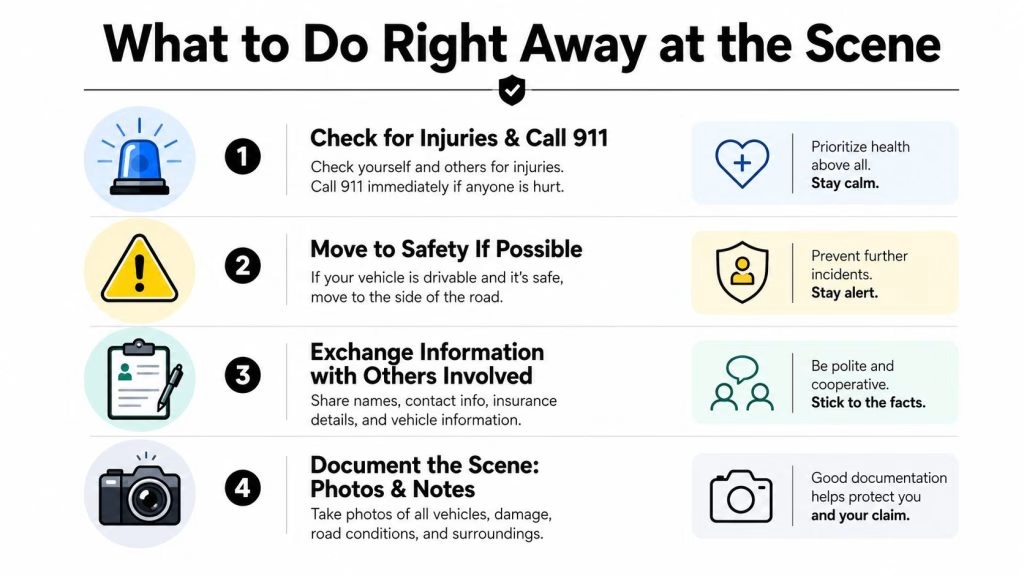
Save this page or print the checklist for your glove box. Shaking hands make a short visual reminder easier to follow than memory alone.
Calling the Police and the New Damage Threshold
You are standing beside a damaged vehicle, traffic moving past, and the other driver asking to exchange information and leave. Make the reporting decision based on injuries, safety, vehicle condition, and cooperation, not pressure. For more guidance on when to call police after a car, use the stricter choice when facts are unclear.
Florida’s reporting decision will change on October 1, 2026, when the property-damage threshold for the applicable law-enforcement reporting rule rises from $500 to $2,000, as described in Florida’s updated police-reporting guidance. That change does not remove other reasons to call 911 or replace separate self-report duties.
| Scenario | Before Oct 1, 2026 ($500) | On/After Oct 1, 2026 ($2,000) |
|---|---|---|
| Injury or death | Call 911 and request law enforcement and medical help | Call 911 and request law enforcement and medical help |
| Apparent property damage at or above the applicable threshold | Call 911 when damage is at least $500 | Call 911 when damage is at least $2,000 |
| Vehicle requires removal by a wrecker | Call 911 | Call 911 |
| Commercial vehicle involved | Call 911 | Call 911 |
| DUI, hit-and-run, or refusal to exchange information | Call 911 | Call 911 |
| No injury, no listed aggravating factor, and damage below the applicable threshold | A self-report may be appropriate | A self-report may be appropriate |
Use 911 immediately if anyone is hurt, a vehicle needs towing, a commercial vehicle is involved, information is withheld, impairment is suspected, or the crash is a hit-and-run. Do not try to judge repair costs from the roadside. A bumper can hide damage, and an incomplete or never-filed report can weaken an insurance claim later.
If no officer responds, keep the self-report process in view. Florida law addresses written crash reports and self-reporting duties in Florida Statute 316.066. The Florida traffic-law update also explains the threshold change before it takes effect. Record the facts promptly and preserve every document for your insurer.
Save this page or print the checklist for your glove box. Shaking hands make a short visual reminder easier to follow than memory alone.
Filing the Florida Crash Report and SR-1
The Florida self-report form is HSMV-90010, commonly called the Driver Self Report of Traffic Crash. Complete it when the crash falls within the applicable reporting requirements, including injury, death, or property damage meeting the relevant threshold. Before October 1, 2026, the property-damage figure in the supplied Florida statute is $500. For crashes on or after that date, the applicable updated threshold is $2,000, as reflected in the Florida legal update cited above.
Florida’s statutory workflow gives drivers 10 days to submit the required report in the circumstances described by the law. The Florida statute also provides that if law enforcement doesn’t file the required report, the driver must submit a written crash report within that period.
Complete the form as a record, not an argument
Start with the basic facts. Enter your name, address, driver’s license information, vehicle details, crash date, location, and insurance information exactly as they appear on your documents.
Pay close attention to the insurance policy number. A carrier name without the correct policy number can slow identification and create unnecessary follow-up.
The narrative diagram deserves equal care. Mark the direction each vehicle traveled, the point of impact, lane positions, signals, signs, and final positions. Don’t draw what you think should have happened. Draw what you observed, and label uncertainty rather than filling gaps with speculation.
If law enforcement responded, enter the officer’s name and badge number when the form requests it. Don’t guess. Use the information on the exchange card, report paperwork, or agency record.
Submit and preserve proof
Follow the current FLHSMV submission options available for the form, including online, by mail, or in person at a driver license office. Confirm the destination and method before sending anything, and retain proof that the submission was completed.
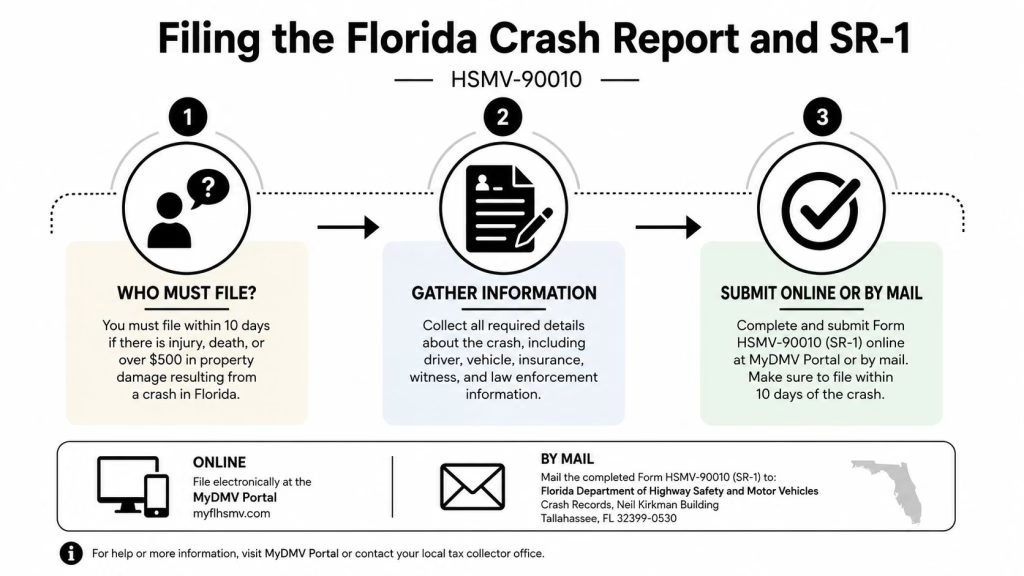
Photocopy or photograph every page before mailing. Store the confirmation receipt with the vehicle’s title and your claim documents. The Florida Highway Safety and Motor Vehicles resource is a useful place to review agency information and driver responsibilities.
Don’t assume a police report eliminates the need to check your own filing obligation. The two records serve different purposes, and the safest practice is to confirm what was filed, by whom, and when.
Talking to Your Insurance Company the Right Way
Call your insurer promptly, ideally within 24 hours, while following the policy’s requirement to report the crash “as soon as practicable.” Speed helps establish a clean timeline, but claim quality matters more than making a rushed call with incomplete information.
Give the adjuster documented facts. State where and when the crash occurred, who was involved, whether anyone sought medical care, and what reports or photographs exist. Don’t guess at speed, distance, fault, or the long-term seriousness of an injury.
Build the file, don’t perform for the adjuster.
Answer “Are you hurt?” truthfully. If you’re in pain, say so and describe what you know. If you don’t yet know the full extent, say that you have symptoms and are seeking evaluation. Don’t minimize pain to sound cooperative, and don’t diagnose yourself.
If injuries exist, speak with an attorney before giving a recorded statement to another driver’s insurer. You can provide basic notice without agreeing to an interview that locks you into an incomplete account. The other insurer isn’t your advocate, even when the adjuster sounds friendly.
After the initial call, send one organized follow-up email containing the police report number, scene photographs, SR-1 submission confirmation, and any medical documentation currently available. Keep a copy of the email and attachments in a dated claim folder.
Treat every conversation as evidence-building. Casual apologies, guesses, and comments about insurance limits can become more memorable to an adjuster than the physical evidence, so keep your words narrow, accurate, and calm.
Handling Hit and Run and Injury Cases
A hit-and-run isn’t automatically untraceable. Victims lose bargaining power when they leave the scene, fail to preserve small details, or wait for someone else to collect video.
Stay parked if you can do so safely, activate the hazard lights, and call 911 so an officer can be dispatched. Request the crash report number and keep it with your claim file. The Florida reporting framework requires a report within 10 days for the victim’s filing obligation when the applicable circumstances exist, so don’t rely only on a verbal promise that someone else will handle it.
Preserve clues other drivers overlook
Photograph paint transfer, broken glass, plastic fragments, tire marks, and the debris pattern. Capture the direction in which the other vehicle fled and write down its color, body style, visible damage, company markings, and any portion of the plate you remember.
Then look outward. Nearby businesses, apartment buildings, parking lots, and homes may have doorbell or security cameras. Ask for preservation of footage covering the crash time window before systems overwrite it. Post a factual request in local community social media groups, including the location, general time window, vehicle description, and police report information when available.
Florida uninsured motorist coverage may help with a parked-car strike when the responsible driver isn’t identified, depending on the policy and facts. Notify your insurer promptly and ask what documentation it requires.
Injury cases deserve legal advice before the medical record becomes fragmented. If pain, neurological symptoms, or mobility problems continue, a personal injury attorney can help protect the evidence and evaluate the claim while details remain available. Fast action is the victim’s practical advantage.
For a Florida-specific review of immediate reporting decisions, see Hit and Run in Florida.
Florida Driving Do’s and Don’ts After a Crash
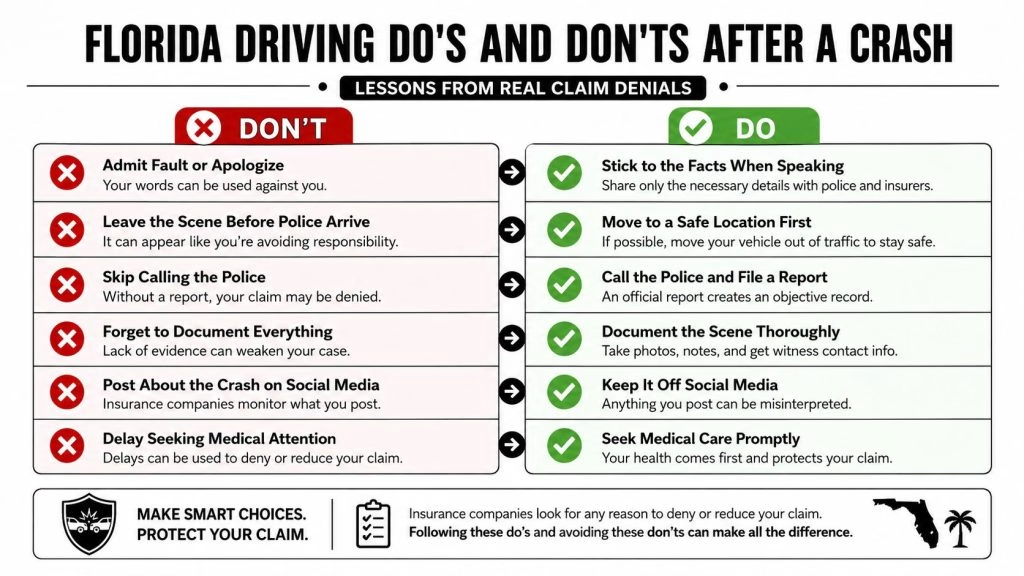
A denied or weakened claim can begin with one rushed decision. Use this checklist during the first minutes after a collision, especially if the other driver urges you to leave, apologize, or trade only phone numbers.
Protect the scene and the evidence
- Don’t stay in a travel lane: Move to safety if the vehicle can be moved without creating another hazard.
- Do use hazard lights: Make the vehicle visible and call 911 when traffic, injuries, towing, or conflict creates danger.
- Don’t admit fault or apologize: Avoid comments about speed, braking, distraction, or responsibility.
- Do stick to observed facts: Tell officers and insurers what you saw, heard, and did. Do not guess.
- Don’t photograph only the dent: A close-up may not show how the collision occurred.
- Do photograph road context: See the documentation checklist above for the detailed photo record.
- Don’t accept a vague insurance exchange: “My insurer is probably State Farm” does not identify coverage.
- Do obtain the exact policy number: Record the carrier, policy number, driver’s license details, plate, and contact information.
- Don’t give casual conversations to the other driver’s insurer: Do not speculate for an opposing adjuster.
- Do keep communications organized: Send the report number, photographs, and SR-1 confirmation together, then save every message.
- Don’t assume police response ends your duty: As noted earlier, Florida may require a separate written report.
- Do submit the SR-1 within 10 days when required: Keep the copy and confirmation with your vehicle records.
- Don’t dismiss soft-tissue pain: Symptoms may become clearer after the initial shock.
- Do seek medical evaluation within 24 hours: Ask the provider to document symptoms, limitations, and their connection to the crash.
- Don’t delete recordings: Dashcam, doorbell, and nearby business footage may establish timing and movement.
- Do preserve original files: Save unedited copies and note when and where each recording came from.
- Don’t trust memory alone: Stress can change recall.
- Do keep a dated claim journal: Record calls, symptoms, medical visits, expenses, and submission dates.
Florida’s standardized reporting system helps keep crash information consistent for claims, enforcement, and safety analysis. The same principle applies to your insurance file. An incomplete or never-filed report creates gaps in the timeline, vehicle damage, and witness evidence. Those gaps can give an insurer grounds to question what happened, even when the crash itself was straightforward.
A state-approved basic driver improvement or traffic school course can refresh these decisions, review current Florida rules, and, when eligible, address a citation. BDISchool offers Florida-approved online courses, including Basic Driver Improvement, Intermediate Driver Improvement, Aggressive Driver, and Mature Driver programs, with self-paced access and electronic certificate reporting to FLHSMV.
BDISchool’s Florida-approved courses cover crash response, defensive driving, traffic laws, and safer decision-making through online study. Visit BDISchool to choose a course for citation, court, insurance, or refresher needs and review better driving habits.