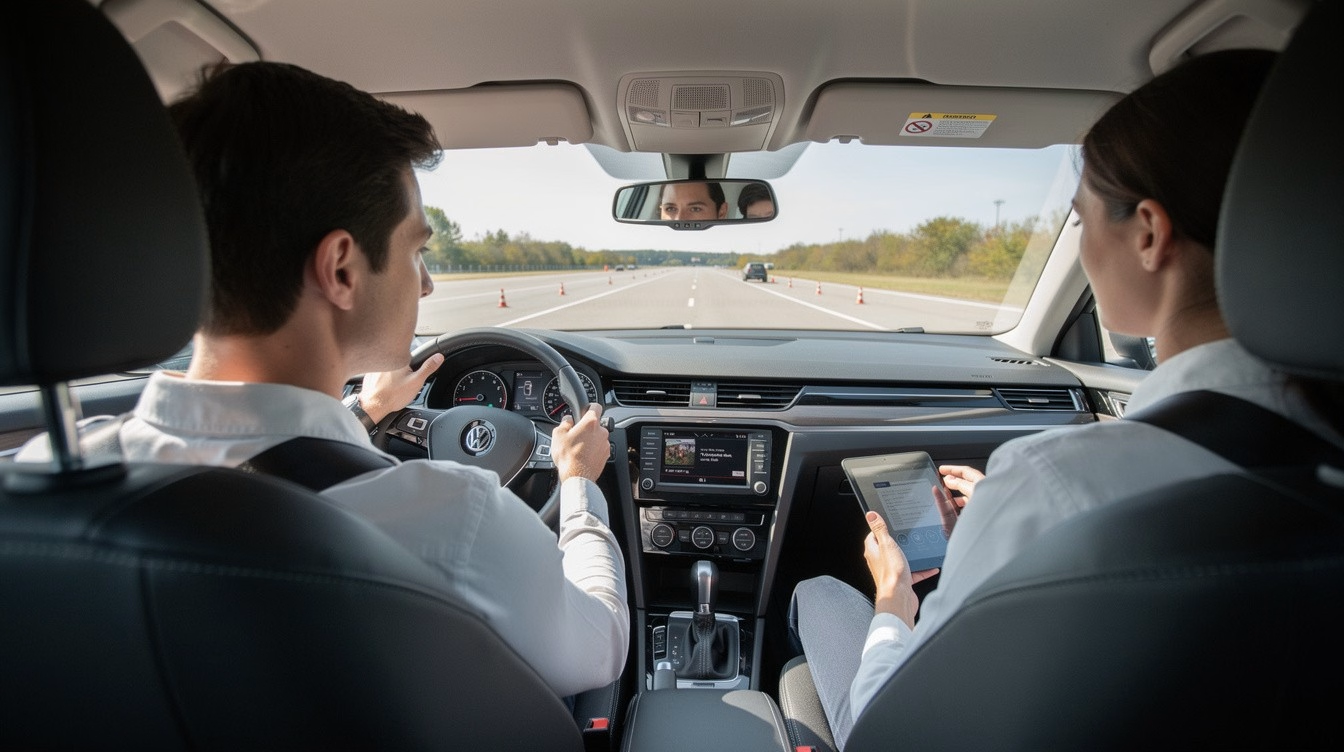
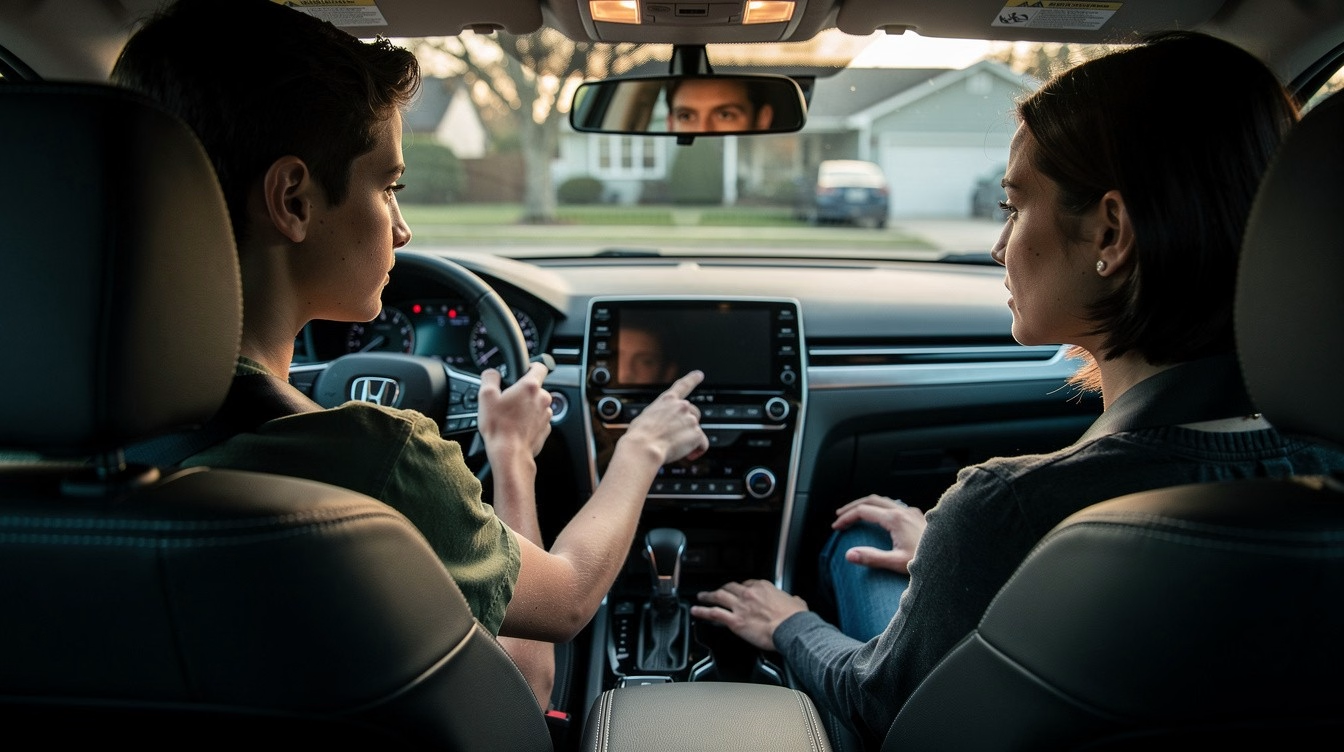
Teaching your teen to drive is one of the most important responsibilities you’ll face as a parent. The decisions you make now-from setting clear rules to teaching defensive techniques-directly impact their safety on the road.
We at DriverEducators.com have created this parent-teen driving guide to help you navigate this critical transition with confidence. You’ll learn how to establish expectations, monitor progress, and build the skills your teen needs for a lifetime of safe driving.
Setting Rules That Actually Work
Create a Parent-Teen Driving Agreement
A parent-teen driving agreement isn’t just paperwork-it’s a conversation starter that forces both of you to articulate what safe driving looks like. The National Highway Traffic Safety Administration reports that teens whose parents set clear expectations have significantly lower crash rates than those without formal agreements.
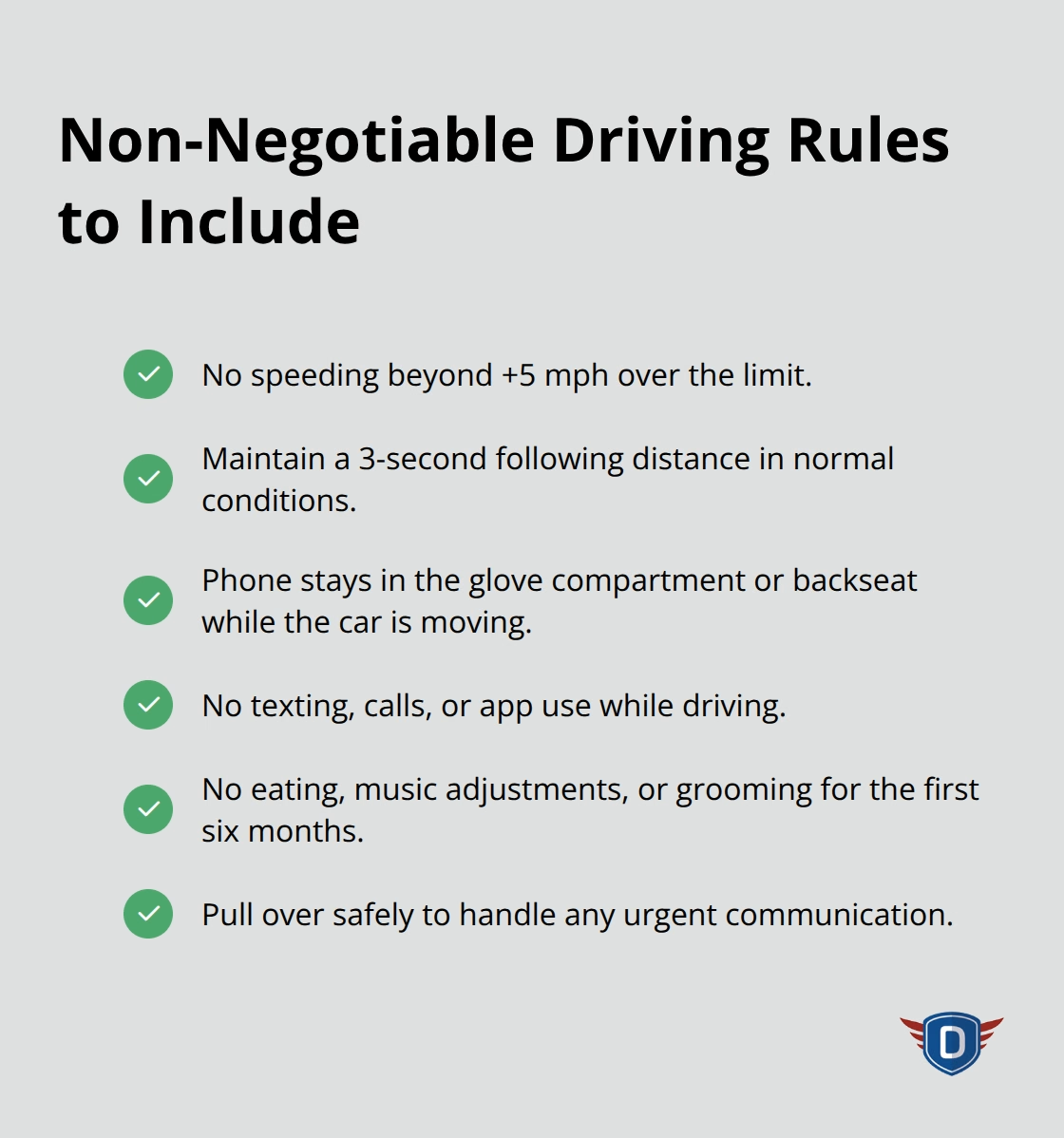
Start by writing down specific rules rather than vague statements. Instead of saying no reckless driving, specify that your teen cannot exceed the speed limit by more than 5 mph and must maintain at least a 3-second following distance in normal conditions.
Address Phone Use and Distraction
Address phone use directly and absolutely-research from the Insurance Institute for Highway Safety shows that texting while driving increases crash risk by 23 times. The rule must be clear: the phone stays in the glove compartment or backseat while the car is moving, no exceptions for emergencies. Your teen can pull over safely if they need to respond to something urgent.
Distracted driving remains the leading cause of teen crashes according to the CDC. Beyond phones, address eating, adjusting music, talking to passengers, or applying makeup while driving. The rule should prohibit these activities during the first six months of driving, period. After six months of violation-free driving, you can relax some restrictions slightly, but phone use should remain off-limits.
Establish Clear Consequences
Consequences matter more than the rules themselves. When your teen violates an agreement, the response should be swift and proportional. If they exceed the speed limit, they lose driving privileges for a week. If they use their phone while driving, they lose driving privileges for two weeks.
Vague consequences like being grounded don’t connect to the behavior. The consequence should directly relate to driving because that’s where the rule was broken. Some parents use a graduated system where minor infractions result in shorter suspensions and major violations-like driving under the influence or reckless speeding-mean losing the car for a month or longer.
Your teen will test boundaries; that’s developmentally normal. When they do, follow through immediately. Inconsistency teaches them that rules are negotiable, which is the opposite of what you want on the road.
Use Monitoring Tools and Build Buy-In
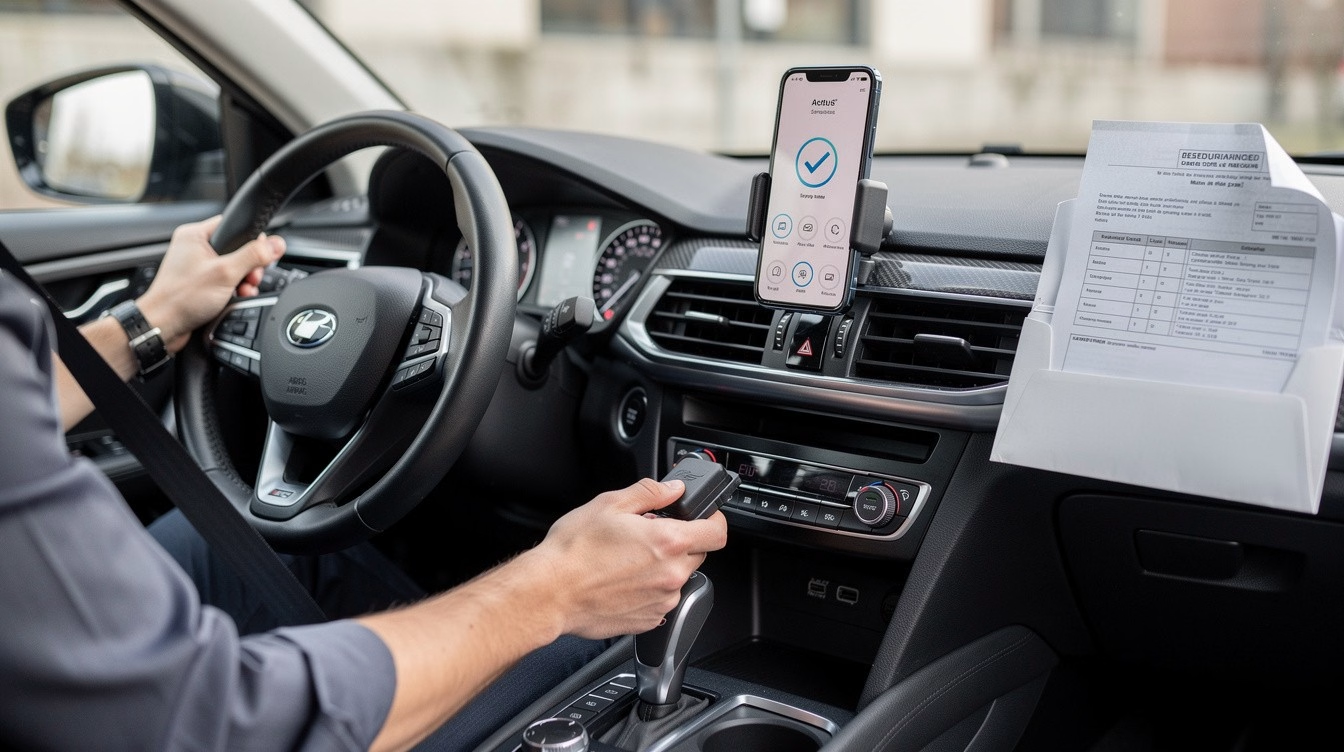
Some parents use apps like Life360 that track location and harsh driving events (such as sudden acceleration or hard braking). These tools provide objective data about your teen’s driving habits rather than relying on their self-reporting. Your teen might resist monitoring, but frame it as a safety tool, not surveillance.
The agreement works best when your teen has input in creating it. Ask them what rules they think are fair and why. If they suggest reasonable rules themselves, they’re far more likely to follow them. This isn’t about letting them set all the terms-you maintain authority-but their voice in the process builds buy-in.
Review the agreement every three months. As your teen demonstrates responsibility, certain restrictions can ease. This progression keeps them motivated and shows that following rules leads to earned freedom. With expectations locked in place, the next step is teaching your teen the defensive techniques that turn rules into real-world safety habits.
How to Teach Your Teen to Read the Road Before Problems Happen
Train Your Teen to Spot Hazards Early
Defensive driving isn’t about memorizing rules-it’s about training your teen’s brain to spot danger seconds before it becomes a crash. The Insurance Institute for Highway Safety found that teens involved in serious crashes often failed to recognize hazards rather than making conscious reckless choices. Your job is to systematize how your teen scans the road.
Start with the 12-second rule: your teen should look ahead of their vehicle. Tell them to identify potential problems-a pedestrian stepping toward the curb, brake lights activating three cars ahead, or a vehicle drifting between lanes.
Have them practice narrating what they see during supervised drives. Say things like “there’s a red car on my left that might turn without signaling” or “that pedestrian looks distracted.” This verbal processing trains their eyes and mind to work together. After 10 to 15 supervised drives with this technique, most teens internalize the scanning pattern.
Master Following Distance and Speed Control
Following distance is where most parents fail their teens. A 3-second gap sounds reasonable until you test it in real conditions. Have your teen pick a fixed object-a sign, a tree-and count the seconds between when the car ahead passes it and when your vehicle reaches it. In rain or darkness, that gap should expand to 5 or 6 seconds. The National Safety Council reports that inadequate following distance is a factor in crashes.
Speed management isn’t about never exceeding posted limits; it’s about matching speed to conditions. Your teen should understand that a 35-mph speed limit on a dry, straight road differs from the same limit on a wet road with curves. Teach them that posted limits assume ideal conditions. When visibility drops, road surfaces are wet, or pedestrian traffic increases, speed must drop accordingly.
During one supervised drive, deliberately choose a rainy evening and have your teen explain why they’re slowing down. Real-world experience with natural consequences-longer stopping distances, reduced traction, compromised visibility-teaches this faster than any lecture.
Practice Decision-Making Under Pressure
When decision-making pressure arrives, your teen needs reference points, not panic. High-risk situations-a vehicle merging into their lane, a traffic light turning yellow 50 feet ahead, a pedestrian stepping into traffic-require split-second choices. The best preparation isn’t discussing what they should do in theory; it’s practicing actual scenarios during supervised drives.
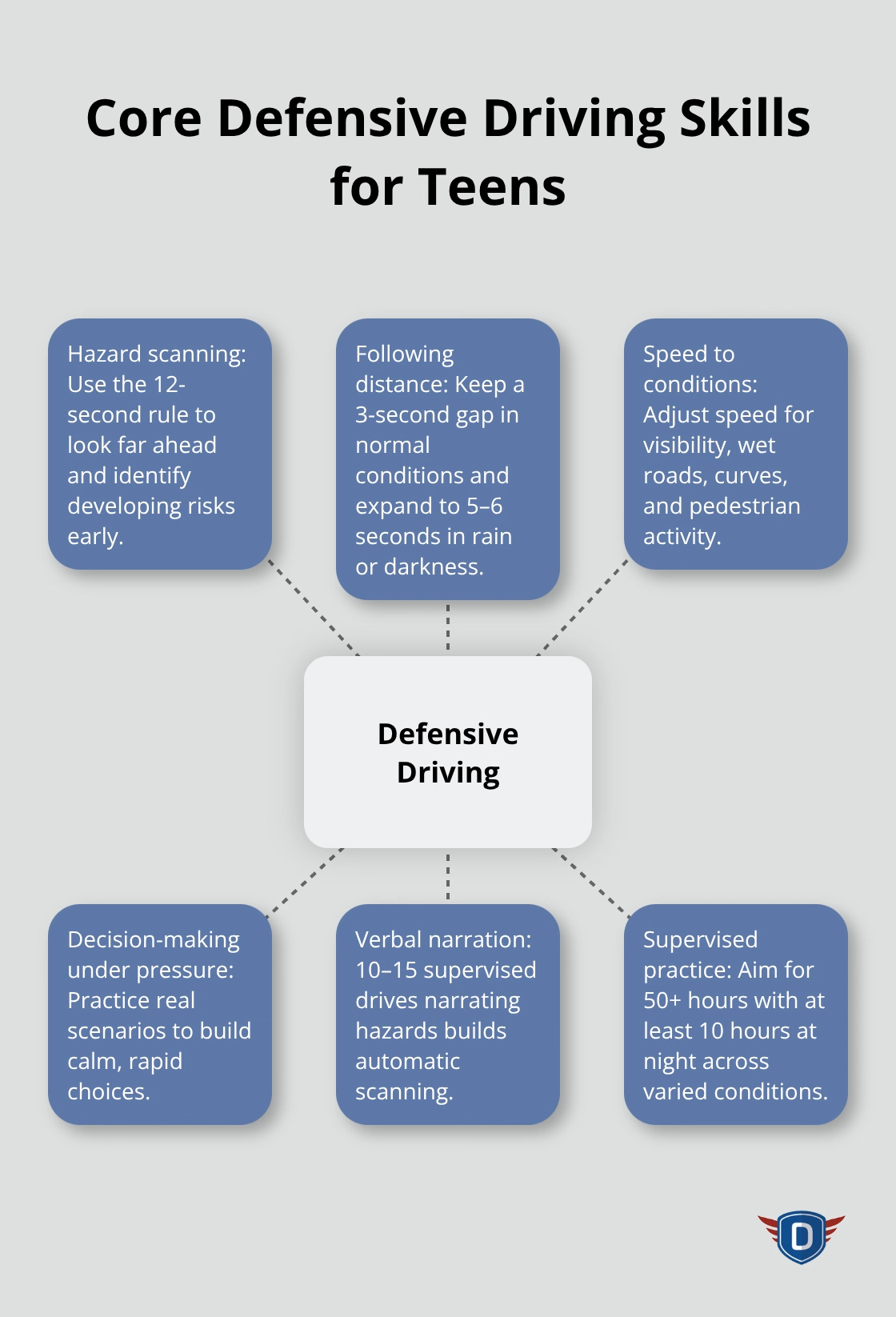
Create situations where your teen must decide whether to brake or accelerate, whether to honk or swerve, whether to proceed through a yellow light or stop. After each decision, discuss what they chose and why. If they accelerated to make a yellow light, ask them what could have gone wrong. If they braked suddenly, discuss whether they checked their mirrors first. This reflection converts experience into learning.
Most crashes involving teens happen during the first 6 months of solo driving, according to research from the CDC, because they haven’t yet built the mental database of how vehicles behave in different conditions. Supervised practice with deliberate scenario exposure compresses this learning curve. Your teen should complete at least 50 hours of supervised driving before driving alone, with at least 10 hours in darkness and various weather conditions.
Once your teen demonstrates these defensive techniques consistently, they’re ready to transition from supervised practice to monitored independence-and that’s where tracking progress and building confidence becomes your next focus.
From Practice Drives to Solo Driving
Track Hours and Real Conditions
The transition from supervised to solo driving demands a system, not guesswork. Tracking your teen’s actual hours and conditions matters far more than assuming they’re ready. The Insurance Institute for Highway Safety reports that teens who complete 50 to 100 hours of supervised driving with at least 10 hours in darkness have significantly lower crash rates in their first year of independent driving.
Create a simple log where you record the date, duration, conditions (dry/wet/night), and road types (highway/local/heavy traffic) for each supervised drive. This log becomes your evidence that your teen has genuinely experienced varied conditions, not just driven to school on sunny afternoons.
Provide Specific Feedback After Each Drive
After each drive, spend five minutes discussing what went well and what needs work. Avoid vague praise like “that was great driving.” Instead, point to specifics: “you maintained your following distance when traffic slowed, which gave you time to react” or “you accelerated into that merge too quickly without checking your blind spot first.”
This constructive feedback connects behavior directly to outcomes, which is how your teen’s brain builds safer instincts. Feedback must happen immediately after the drive while the memory is fresh, not hours later at dinner.
Expand Privileges Based on Performance
Privilege expansion follows demonstrated competence, not age or arbitrary timelines. If your teen drives flawlessly for three weeks on local roads but hasn’t tackled highway driving, they’re not ready for solo highway trips yet.
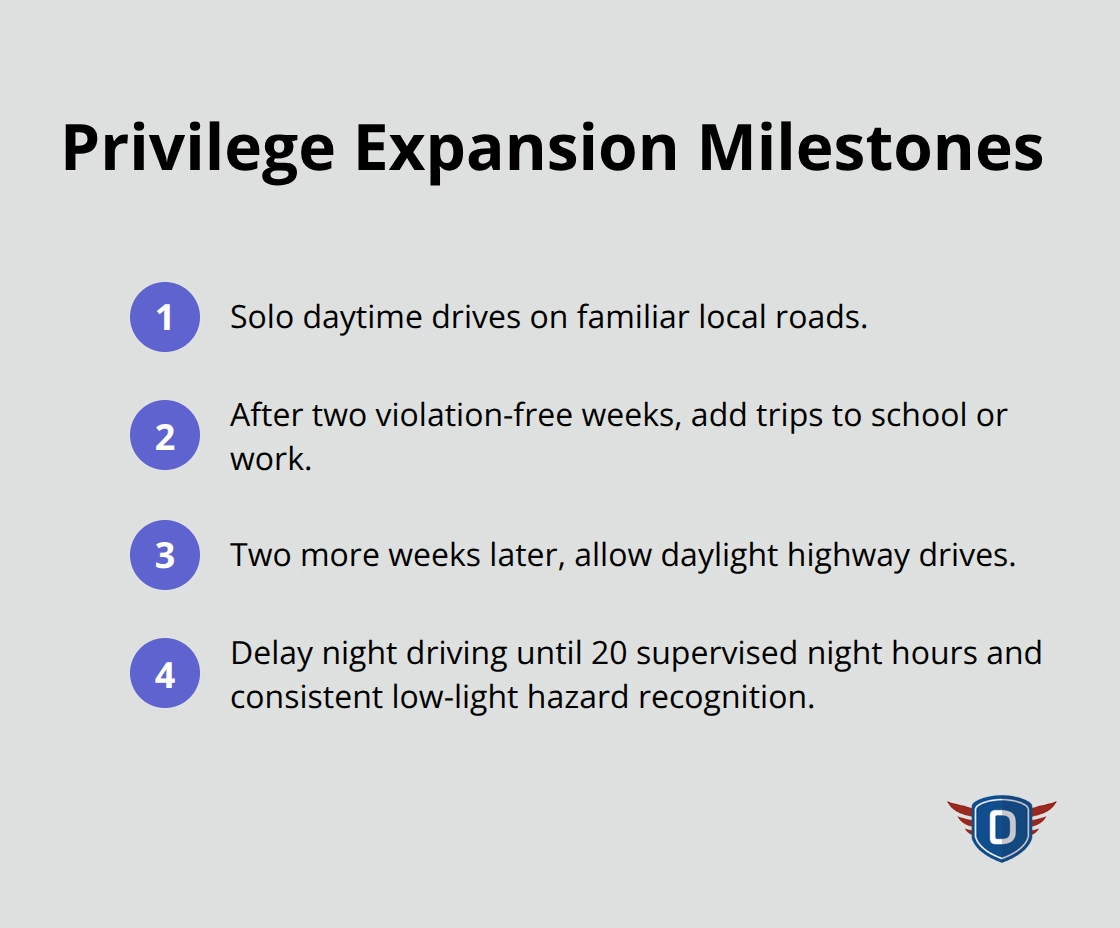
Introduce new privileges incrementally: first, solo drives on familiar local roads during daylight. After two weeks of violation-free driving, add the ability to drive to school or work. After another two weeks, permit solo drives on highways during daylight only. Restrict nighttime driving until they’ve logged at least 20 hours of supervised night driving and demonstrated consistent hazard recognition in low-light conditions.
Use Monitoring Tools for Accountability
Some parents use phone-based monitoring apps like Life360 or Verizon’s Family Locator to track not just location but also harsh acceleration, hard braking, and speeding events. These tools provide objective data about your teen’s actual behavior when you’re not in the car, which eliminates the guesswork from trust.
Your teen will know they’re being monitored, which reinforces that safe driving is non-negotiable. The goal isn’t surveillance; it’s accountability with real consequences. If the app flags excessive speeding or hard braking, that conversation starter reveals what happened and why their reaction wasn’t appropriate. Earned freedom works better than granted freedom-when your teen understands that each safe drive unlocks new privileges, they stay motivated to perform well.
Final Thoughts
Teaching your teen to drive isn’t a sprint to independence-it’s a foundation for lifelong safety. The parent-teen driving guide you’ve built through this process works only if you maintain open communication long after your teen receives their license. Check in regularly about their driving experiences, ask what situations made them nervous, and discuss how they handled them. This ongoing dialogue keeps safety at the forefront and shows your teen that you remain invested in their development as a driver.
Your role shifts from instructor to mentor once your teen drives solo, but it doesn’t disappear. Continue monitoring their progress through apps and conversations. Celebrate when they demonstrate good judgment, and address problems immediately when they arise. The habits they build in their first year of driving shape how they’ll drive for decades.
Safe driving isn’t about reaching milestones quickly-it’s about building competence that lasts. A teen who drives cautiously for six months and gradually earns more freedom will develop better instincts than one who receives unrestricted access after minimal practice. Visit DriverEducators.com to access comprehensive driver education programs that reinforce what you’re teaching at home.