Defensive driving courses teach you skills that actually prevent accidents. We at DriverEducators.com know that understanding defensive driving course benefits goes beyond just staying safe-it directly impacts your wallet and your confidence on the road.
The statistics are clear: drivers who complete these courses see measurable reductions in accidents and insurance claims. This guide walks you through the safety gains, financial savings, and personal confidence you’ll build.
How Defensive Driving Cuts Accident Rates
Drivers who complete defensive driving training see real reductions in accident frequency and insurance claims. According to the National Safety Council, defensive drivers are 37% less likely to have a collision and 35% less likely to experience a crash that results in an injury. These numbers matter because they translate directly into fewer accidents on the road and fewer claims filed with insurance companies.
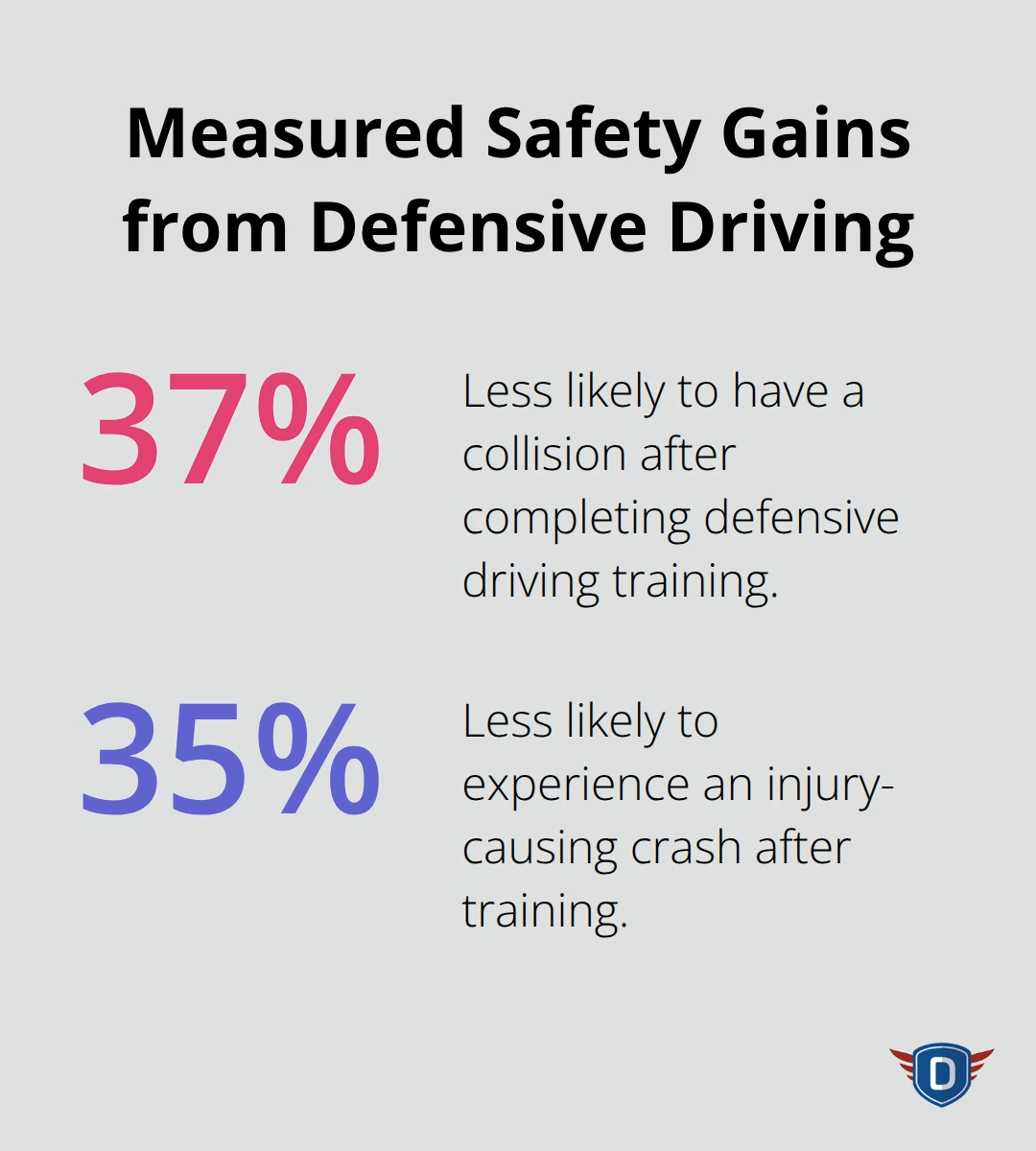
The Insurance Institute for Highway Safety reports that drivers who complete formal defensive driving courses show measurable improvements in hazard recognition and response time-the two factors that prevent most accidents before they happen.
What Defensive Drivers Actually Do Differently
Defensive driving isn’t about paranoia or excessive caution. It’s about controlling the variables you can control while anticipating what other drivers might do. Courses teach you to maintain proper following distance, which is the single most effective technique for accident prevention. The standard advice of following at a three-second distance becomes automatic after training, and this alone prevents rear-end collisions that account for nearly 30% of all multi-vehicle accidents.
You also learn to scan the road continuously rather than focusing on a single point, which catches hazards 2 to 3 seconds earlier than passive driving. This extra time is the difference between reacting and crashing. Defensive drivers also practice smooth steering and braking techniques that keep vehicles stable during emergency maneuvers, reducing the chance of skidding or loss of control.
Practical Scenarios That Stick With You
Real defensive driving courses don’t teach abstract concepts. They walk you through specific situations you’ll face: merging on congested highways, navigating intersections with poor visibility, adjusting speed for wet roads, and reacting to sudden obstacles. Scenario-based learning helps drivers retain techniques better when they mentally rehearse the actual conditions they’ll encounter.
Courses also cover the decision-making habits that prevent accidents caused by distraction or poor judgment. When you practice deciding whether to accelerate through a yellow light or brake safely, or whether to change lanes during heavy traffic, these habits become your default response on the road. This shift from conscious thought to automatic reaction is what separates safe drivers from those who rely on luck.
How Insurance Companies Recognize These Skills
Insurance companies track accident data closely, and they’ve noticed the pattern: drivers with defensive training file fewer claims. This recognition translates into the financial benefits we’ll explore next, where your improved skills directly reduce what you pay for coverage.
Financial Benefits of Taking a Defensive Driving Course
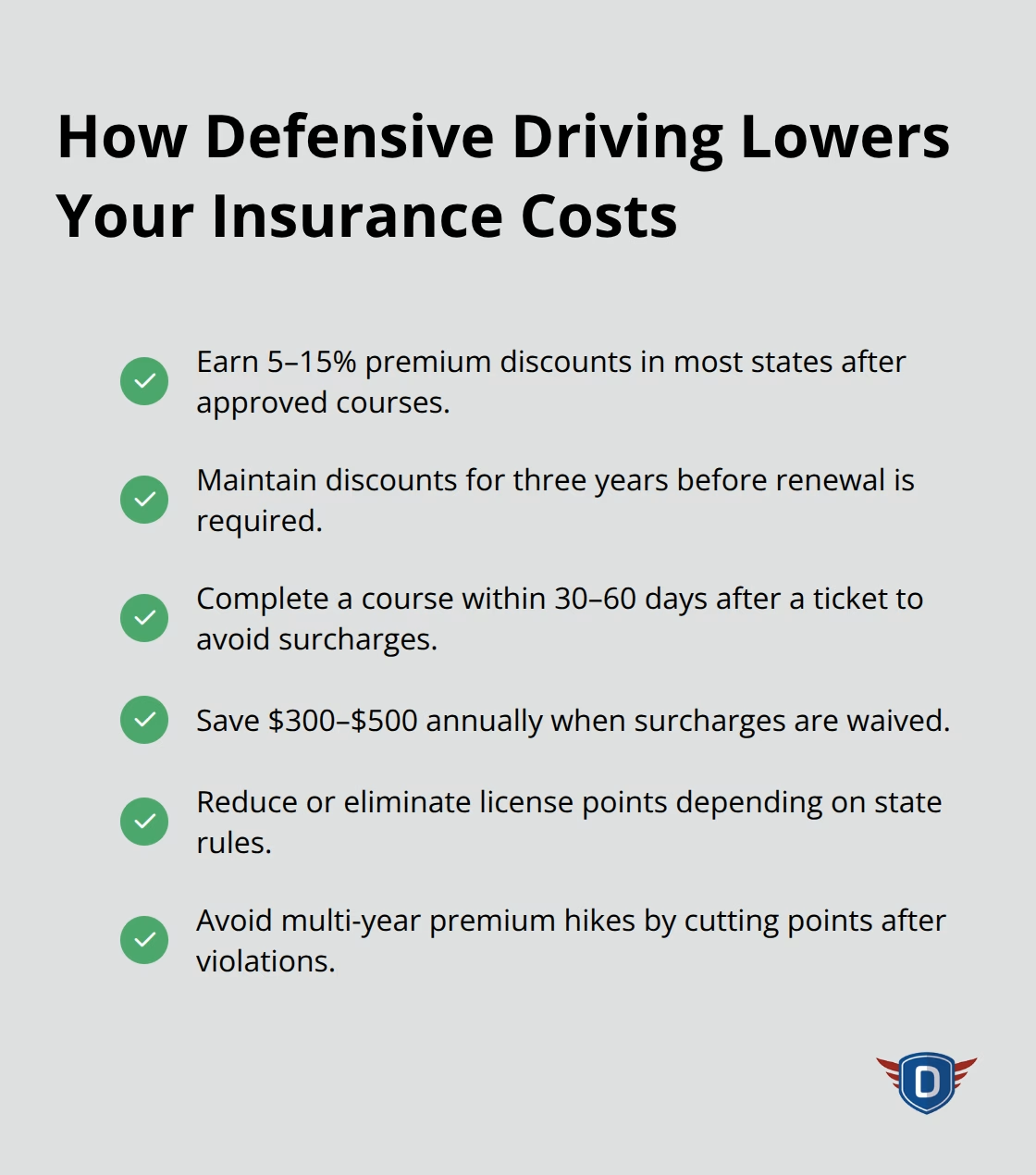
Insurance companies offer discounts for defensive driving courses because data proves these drivers cost them less money. Most states allow insurance companies to reduce premiums by 5 to 15 percent for drivers who complete an approved defensive driving course, and some insurers go higher. For a driver paying $1,200 annually, a 10 percent discount saves $120 per year, which compounds to $600 over five years.
These discounts typically last three years, so you’ll need to renew the course to maintain the reduction. Many insurance companies also waive the surcharge that normally follows a traffic violation if you complete a defensive driving course within a specific timeframe-usually 30 to 60 days after receiving a ticket. This alone can save you $300 to $500 annually, depending on your insurer and the severity of the violation.
How Points Damage Your Wallet
Points don’t just damage your pride-they directly increase your insurance premiums. In Florida, a single moving violation typically adds three to four points to your record, and insurance companies respond by raising your rates immediately. A driver with four points on their record can expect a 25 to 50 percent increase in premiums, depending on the insurer and the type of violation.
Completing a defensive driving course can reduce or eliminate these points entirely, depending on your state’s laws. Florida allows drivers to reduce points by one point for every course completion, up to five points per 12-month period. This means a single course can save you not just the immediate discount but also prevent years of elevated premiums that would otherwise follow.
An accident or serious violation without point reduction could cost you $2,000 to $4,000 in additional premiums over three years. The investment in a defensive driving course becomes financially obvious when you calculate these long-term costs.
What Accidents Actually Cost You
The real financial benefit of defensive driving emerges when you avoid accidents entirely. A minor accident without injuries typically costs $15,000 to $25,000 in vehicle repairs, medical expenses, and increased insurance premiums. A serious accident involving injuries can easily exceed $100,000 when you factor in hospital bills, ongoing treatment, and liability claims.
Your insurance premium increases by an average of 20 to 40 percent after a reportable accident, and this increase lasts three to five years. The average cost of a crash involving an injury is $90,000, while fatal crashes average $1.4 million in economic losses.
Prevention Techniques That Protect Your Finances
Defensive driving techniques taught in courses directly prevent the kinds of accidents that drain your finances. A driver who maintains proper following distance, scans for hazards continuously, and makes deliberate decisions behind the wheel statistically avoids these catastrophic expenses. These skills transform how you respond to dangerous situations on the road.
The three-second following distance rule alone prevents rear-end collisions that account for nearly 30 percent of all multi-vehicle accidents. Continuous road scanning catches hazards 2 to 3 seconds earlier than passive driving, giving you time to react rather than crash. Smooth steering and braking techniques keep vehicles stable during emergency maneuvers, reducing the chance of skidding or loss of control.
Why Your Confidence Matters Next
The financial savings from defensive driving extend beyond insurance discounts and accident avoidance. Your improved skills and knowledge build genuine confidence behind the wheel, which leads to better decision-making in high-pressure situations. This confidence shift-from anxious to assured-changes how you approach every drive.
How Defensive Driving Builds Real Confidence on the Road
Confidence behind the wheel isn’t about feeling brave. It’s about knowing exactly what to do when something unexpected happens on the road. Defensive driving courses replace uncertainty with competence. When you complete training that covers hazard recognition, emergency braking, and lane positioning, you stop second-guessing your reactions. You know your stopping distance. You recognize when another driver is about to cut you off. You understand how your vehicle handles in rain or on curves. This knowledge transforms panic into calm decision-making.
Studies show that drivers who complete defensive training report higher confidence levels and lower stress during their commutes. The difference isn’t psychological comfort alone-it’s grounded in actual skill development. You’ve practiced the techniques. You’ve seen how your vehicle responds. You’ve mentally rehearsed the scenarios. This preparation means your brain doesn’t freeze when conditions deteriorate; it executes the responses you’ve learned.
Advanced Safety Skills Create Genuine Competence
A defensive driving course teaches you smooth steering inputs that prevent skidding during emergency maneuvers, proper braking techniques that maintain vehicle control, and precise throttle management that keeps your car stable. You learn the actual physics of why a three-second following distance works-not as an abstract rule, but as a practical buffer that gives you reaction time.
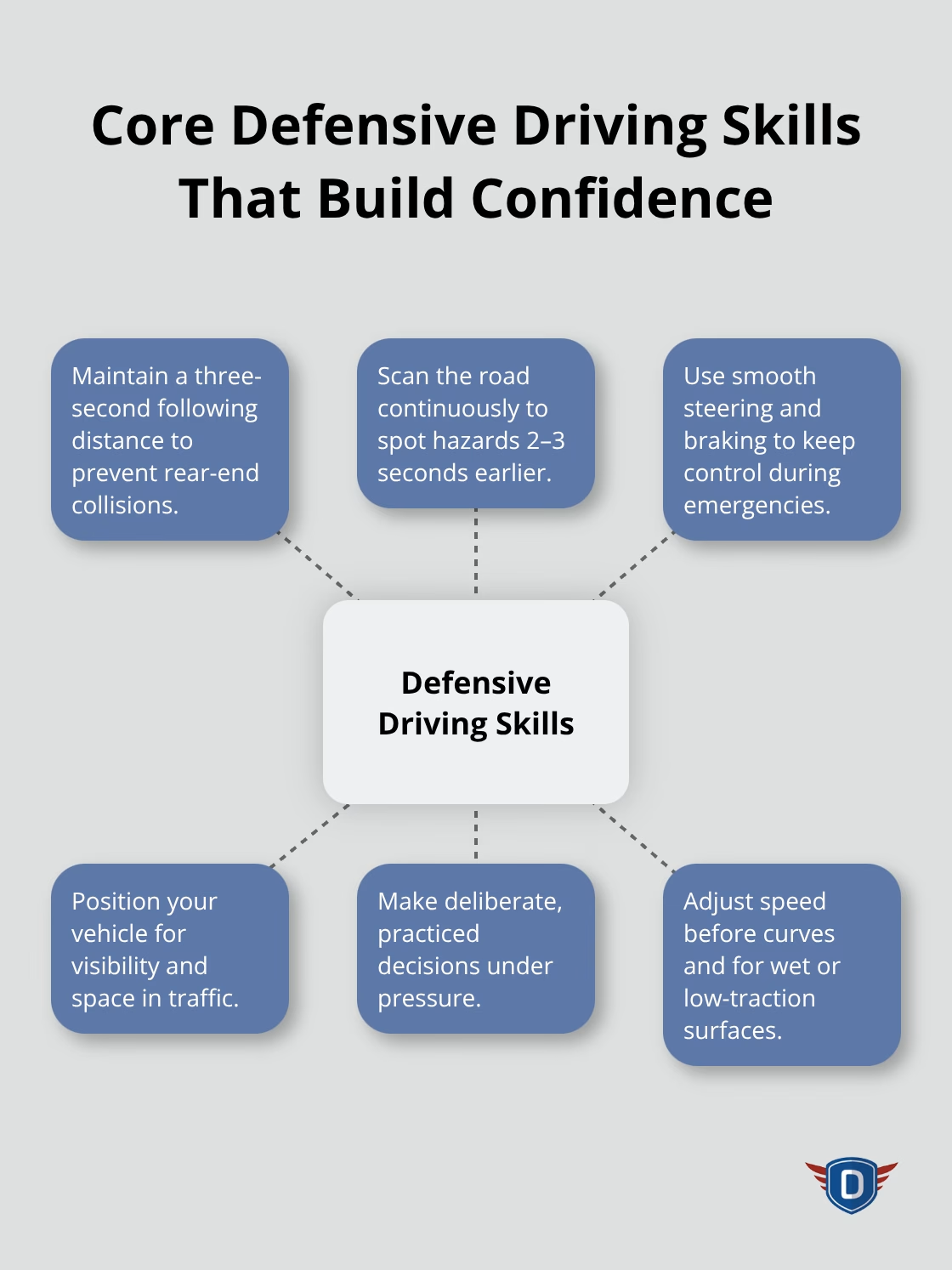
Real courses teach you how to position your vehicle in traffic to maximize visibility and minimize risk. You understand why scanning the road ahead catches hazards before they become threats. You practice adjusting your speed before entering curves, not during them. These technical skills eliminate the guesswork that causes hesitation on the road.
When you know your vehicle’s braking distance at 35 mph versus 55 mph, you make faster, better decisions at intersections and on highways. When you understand how tire grip changes with road surface, wet conditions no longer trigger anxiety-they trigger appropriate adjustments.
Hazard Awareness Separates Competent Drivers From Nervous Ones
Defensive driving teaches you to identify danger patterns rather than just reacting to immediate threats. You learn to spot the driver drifting between lanes before they cross into yours. You recognize the intersection where someone always runs the red light. You notice the parked car with a driver inside preparing to pull out.
You see the pedestrian looking at their phone rather than traffic. This pattern recognition comes from structured training that teaches you where accidents happen and why. When you can identify these patterns automatically, your confidence increases because you’re no longer surprised. You’re prepared.
Decision-Making Under Pressure Separates Skilled Drivers From Casual Ones
A course forces you to make real choices in scenarios that matter: whether to accelerate through an amber light or brake, how to handle a vehicle merging into your lane, what to do when visibility drops suddenly. These scenarios aren’t theoretical-they’re based on actual accident data and real driving conditions.
When you’ve mentally practiced these decisions multiple times, your brain doesn’t freeze in the actual moment. You’ve already played through the options. You know what works. This mental rehearsal is why defensive drivers make better split-second choices.
Research shows that drivers trained in decision-making techniques demonstrate improved hazard response compared to untrained drivers. Your confidence grows because you’ve already faced these moments in the safety of a course. The road no longer feels unpredictable. It feels manageable because you’ve prepared for the variables that actually matter.
Final Thoughts
Defensive driving course benefits extend far beyond a single discount or certificate. The safety gains, financial savings, and confidence you build create lasting value that compounds over years of driving. A 37% reduction in collision risk means the difference between arriving home safely and spending weeks in recovery, while the $120 to $600 annual insurance savings add up to thousands over your driving lifetime.
Defensive driving transforms how you approach every drive because you stop relying on luck and start relying on skills. You recognize hazards before they become threats, make deliberate decisions under pressure instead of freezing, and understand your vehicle’s limits and your own reaction time. This shift from passive to active driving separates drivers who have accidents from drivers who avoid them.
Visit DriverEducators.com today to enroll in our Florida-approved traffic school programs and start building the skills that protect your safety, your finances, and your peace of mind on the road.