You got a ticket. Your stomach dropped, your day got worse, and now you’re wondering how much this is going to cost you in points, insurance, and hassle.
Good news. A defensive driving school course can turn that mess into a manageable task. For many Florida drivers, it’s the simplest way to deal with a citation, protect a clean record, and put yourself back in control fast.
This isn’t about punishment. It’s about using a practical option that helps you move on.
Turn a Traffic Ticket into a Smart Move
Most drivers don’t need a lecture after a ticket. They need a clear next step.
That’s where defensive driving school comes in. If you’re eligible, taking a Florida-approved course can help you handle the violation in a way that’s cleaner, cheaper, and less stressful than just paying and hoping for the best.
Why the course is usually the smarter choice
Paying a ticket without thinking it through can create bigger problems later. Once points or a conviction affect your record, insurance costs can become the primary penalty.
That’s why many drivers look for ways to limit the damage early. If you’re also trying to understand the insurance side, Progressive gives some tips to help drivers lower insurance premiums and explains what can happen after a speeding ticket.
You don’t need to overcomplicate this. Start by checking whether a course is the right option for your case, then enroll and finish it on your schedule. If your goal is to keep the process simple, dismiss a Florida traffic ticket online with a state-approved course option.
Practical rule: Don’t wait until the deadline is close. Ticket problems get harder, not easier, when you stall.
This is a fixable problem
A ticket feels personal in the moment. It isn’t. It’s an administrative problem, and administrative problems usually have straightforward solutions.
A defensive driving school course gives you one. You handle the requirement, learn something useful, and put the issue behind you without dragging it out for weeks.
What Exactly Is a Defensive Driving School
A defensive driving school is a post-license course for people who already know how to drive but need to sharpen judgment, review traffic laws, or satisfy a court or insurance requirement.
That matters because many drivers hear “traffic school” and assume it’s remedial. It’s not. It’s a structured refresher built for licensed drivers who want a better outcome after a ticket, a cleaner record, or a practical review of safe driving habits.
It’s not beginner driver’s ed
Beginner driver education teaches basic operation and road rules to new drivers. Defensive driving school focuses on something different.
It teaches drivers how to spot risk earlier, make better decisions under pressure, and avoid preventable mistakes. That includes topics like right-of-way judgment, following distance, distraction awareness, and how to respond when other drivers do something reckless.
Defensive driving is about staying ahead of problems, not reacting late.
It has a long track record
This isn’t a trendy add-on. The NHTSA says Defensive Driving Courses has been around since 1964.
That history matters. It shows defensive driving school has been treated for decades as a mainstream safety tool for licensed drivers, not a niche class for edge cases.
What you should expect from a good course
A useful course should be clear, practical, and built around real driving behavior. It should also fit real life.
Look for these basics:
- State approval: The course should meet Florida requirements for the purpose you need.
- Flexible access: You should be able to log in when it works for you, not rearrange your life around a classroom.
- Convenience of use: The availability of videos, read-along audio, and multiple languages are good indicators that a course is well designed.
- Plain instruction: The material should explain laws and driving choices in simple language.
- Straightforward completion: You should know exactly what’s required from start to finish.
If a course feels confusing before you enroll, it usually won’t get better later. Pick one that makes the process easy from the start.
Unlock Benefits Like Point Dismissal and Insurance Discounts
The biggest reason people take a defensive driving school course is simple. They want a practical benefit, not just a certificate.
In Florida, the two benefits drivers care about most are protecting their record and lowering insurance costs. Those are the right priorities.
Point protection matters more than most drivers think
A ticket isn’t only about the fine. The long-term issue is what follows you after the payment clears.
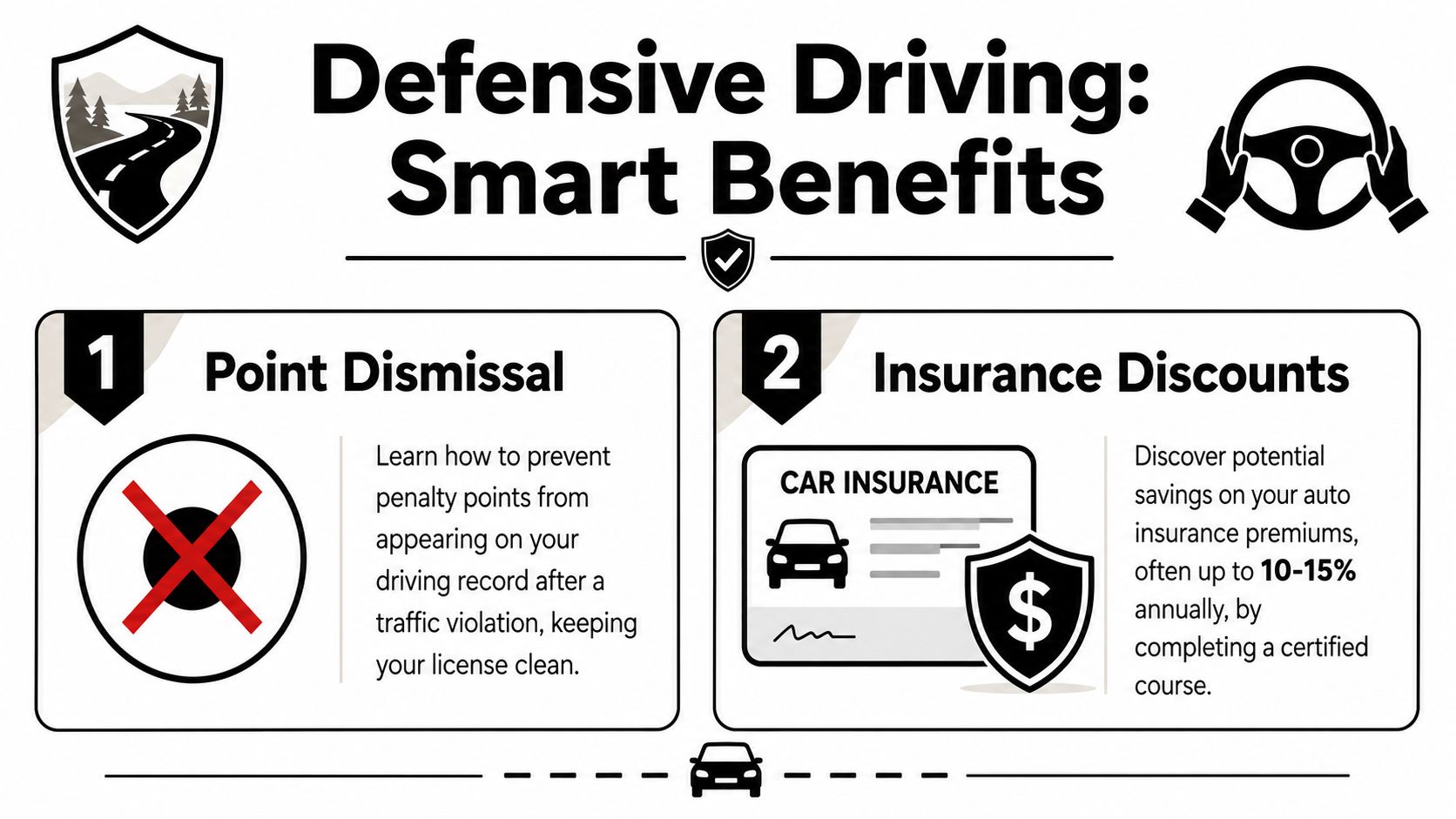
If you’re eligible to elect traffic school, the course can help keep a moving violation from hitting your record the way it otherwise might. That can help you avoid the chain reaction drivers really want to avoid, more scrutiny, more cost, and more stress every time insurance renews.
This is why defensive driving school is often the smartest move even when you could pay the ticket. Paying is faster in the moment. Taking the course is often better for the months that follow.
Insurance savings are a real reason to enroll
A defensive driving course can also make sense even if you’re not dealing with a fresh citation. Some drivers take one voluntarily because insurance savings can justify the time.
The supporting evidence is solid enough to take seriously. A review of 14 controlled studies found that, in the methodologically strong tests, the Defensive Driving Course had no consistent effect on crashes but did reduce traffic violations by about 10%. Separate studies reported conviction rates improved by 57% and described the results as consistent with a 10% insurance premium discount, as summarized in this PubMed record on defensive driving course studies.
That’s the right way to think about it. Don’t sign up because someone promises miracles. Sign up because the course has a credible connection to fewer violations, better outcomes, and recognized insurance value.
Who benefits most
Some drivers should stop overthinking this and just enroll.
- Recent ticket recipients: If you’re eligible, this is often the cleanest way to respond.
- Drivers with rising premiums: If insurance has become expensive, a qualifying course may help.
- Busy professionals: Online coursework is easier than taking time off for an in-person class.
- Returning or cautious drivers: A refresher can help rebuild confidence and sharpen habits.
The point isn’t to prove you’re a bad driver. The point is to keep one mistake from becoming an expensive pattern.
If your main goal is the insurance side, review a Florida defensive driving insurance discount course and confirm what your carrier accepts before you start.
Find the Right Florida Traffic School Course for You
Not every Florida driver needs the same course. Picking the wrong one wastes time.
The fastest way to solve your ticket or insurance problem is to match your situation to the right class from the start. Most drivers fall into one of a few common categories.
The main Florida course types
A standard moving violation usually points drivers toward the 4-Hour Basic Driver Improvement course. That’s the course many people need when they want to address a regular ticket and take the straightforward route.
An 8-Hour Intermediate Driver Improvement course usually fits drivers who were ordered by a court or who need a more serious corrective option.
There are also specialty courses. An Aggressive Driver course is typically for drivers with behavior-related requirements, while a Mature Driver course is often chosen by older drivers who want a refresher and may be seeking an insurance discount.
Florida Online Traffic School Course Comparison
| Course Name | Length | Primary Purpose | Ideal For |
|---|---|---|---|
| Basic Driver Improvement (BDI) | 4-hour | Ticket resolution and driving record protection | Drivers with a standard moving violation |
| Intermediate Driver Improvement (IDI) | 8-hour | Court-ordered driver improvement | Drivers told by a judge or court to complete a longer course |
| Aggressive Driver Course | 8-hour | Behavior-focused corrective education | Drivers assigned a course tied to aggressive driving concerns |
| Mature Driver Course | 6-hour | Refresher training and possible insurance-related use | Drivers age 55+ looking to review safe driving habits |
How to choose without guessing
Use the paperwork you received. Your citation, court notice, or clerk instructions usually tell you what kind of course satisfies the requirement.
If the paperwork doesn’t make it obvious, focus on these questions:
- Was it a regular ticket or a court order: A basic ticket and a judge’s order usually don’t point to the same class.
- Are you trying to handle a violation or get an insurance discount: Those are different goals, and the course choice should match the goal.
- Do you need language support or flexible pacing: Online access matters if your schedule is tight or English isn’t your preferred language.
If you want a single page that lays out the options clearly, compare approved Florida traffic school online courses before enrolling.
One practical recommendation
Don’t buy based on vague marketing. Buy based on fit.
A course is useful only when it matches your requirement, works with your schedule, and gives you a clean path to completion. The right course feels boring in the best way. No confusion, no friction, no wasted steps.
Your Simple Path to Enrollment and Completion
Most drivers put this off because they assume the process will be annoying. It usually isn’t.
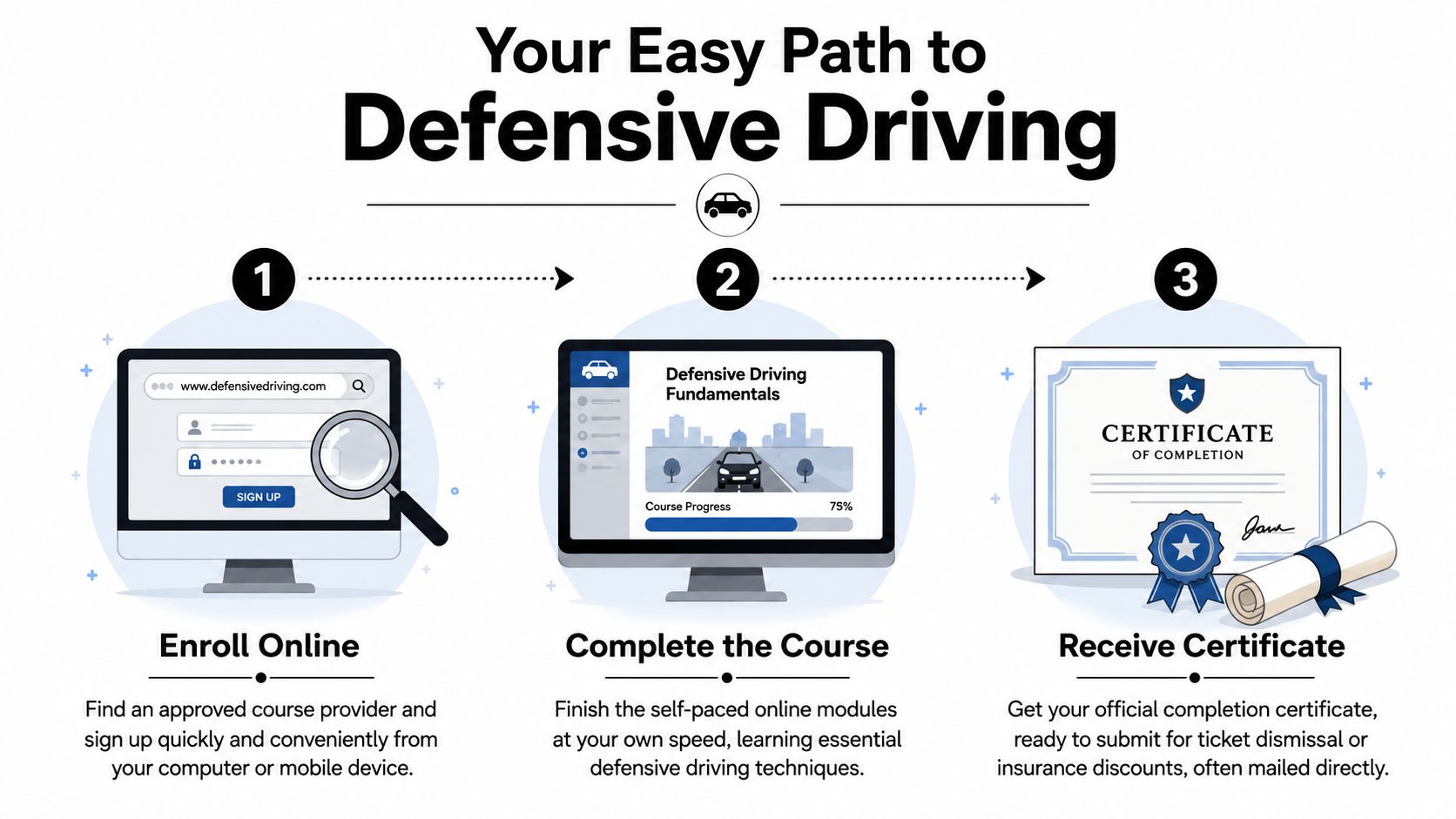
Online defensive driving school is built for convenience. If you can fill out a basic form, log in, and read simple course material, you can get this done.
The easiest way to handle it
Start by verifying what the court or county expects. Don’t assume. Check eligibility, confirm any deadline, and make sure you know which course satisfies the requirement.
Then enroll in the correct online class. The setup is usually quick, and you can begin without turning it into a whole project.
What completion usually looks like
Most online courses follow a simple pattern:
- Register for the course that matches your ticket, court notice, or insurance goal.
- Work through the lessons at your own pace from a phone, tablet, or computer.
- Finish the final assessment and complete any remaining steps for your certificate.
That’s it. No classroom commute. No awkward scheduling. No need to block off an entire day if the course format lets you pause and resume.
Use the self-paced format to your advantage. Finish a section during lunch, another at night, and keep moving.
Keep the process easy on yourself
You don’t need to cram. You don’t need to treat this like a college exam.
A state-approved online option like BDISchool offers Florida traffic school courses in formats tied to common needs such as BDI, IDI, aggressive driver, and mature driver requirements. The practical benefit is simple. You can complete the material on your own time and from your own device.
The people who get through this with the least stress do three things well:
- They verify the requirement first
- They enroll right away instead of delaying
- They chip away at the course instead of waiting for the last minute
What Happens After You Complete the Course
Once you finish the course, the goal is closure. You want proof it’s done, and you want the right people to receive that proof.
That’s why post-completion reporting matters. You should know how your certificate is handled and whether you need to submit anything to a court, clerk, or insurance company.
What to do next
After completing your course, follow the instructions tied to your case. Some situations require you to provide documentation to the county clerk or confirm completion with the appropriate office. If your reason for taking the course is insurance, send the completion information to your agent or carrier and ask how they process it.
If you need background on the state agency involved in driver records and course reporting, review the Florida Highway Safety and Motor Vehicles information page.
A quick preview of what you’ll actually learn
A good defensive driving school course doesn’t just check a box. It gives you habits you can use the same day.
One of the most practical examples is the 3-second following-distance rule. Training materials describe it as a minimum space cushion, with more room being safer. The same guidance recommends at least 6 seconds on wet roads and 8 to 10 seconds in snow.
That kind of instruction is why the course has value beyond the ticket. It helps you drive in a way that lowers the odds of being back in this situation again.
Frequently Asked Questions About Defensive Driving School
Short answers help most here. If one of these applies to you, handle it directly and don’t guess.
FAQ Section
| Question | Answer |
|---|---|
| What if I miss my court deadline? | Contact the clerk or court tied to your citation right away. Don’t assume a late course will still count without confirmation. |
| Can a non-Florida driver take a course for a Florida ticket? | Often, the key issue is what Florida requires for the citation. Check the ticket instructions or court notice before enrolling. |
| What if I fail the final exam? | Most online traffic school providers explain their retake policy during enrollment or in the course rules. Read that policy before you start so there are no surprises. |
| Can I take defensive driving school if I have ADHD, anxiety, autism, or another learning difference? | Yes, many students can complete these courses successfully, but you should ask about support before enrolling. Some driver-education programs offer extra help for students on the autism spectrum, with ADD/ADHD, or with other learning differences, which shows why accommodations and format options matter, as discussed by Montgomery College’s article on helping drivers with special needs. |
| What should I ask a provider if I need accommodations? | Ask whether the course is self-paced, whether instructor support is available, how lessons are structured, and what options exist if you need more time or a less stressful format. |
If you’re unsure about anything, ask before you enroll. A good provider should give you clear answers about course fit, deadlines, reporting, and accessibility.
If you’re ready to stop worrying about the ticket and start fixing it, take the direct route with BDISchool. Choose the Florida-approved course that fits your situation, enroll online, and finish it on your schedule.