You got a ticket. Or your insurance bill showed up and made you stare at it for a full minute.
That’s usually when people start searching for a driver training course and immediately run into a mess of acronyms, half-explanations, and pages that tell you to enroll before they tell you what you need.
Here’s the straight answer. In Florida, the right course can help you protect your record, satisfy a court requirement, qualify for an insurance discount, or sharpen skills that have gotten rusty. The wrong course wastes your time.
I’m going to make this simple. If you know your situation, you can choose the correct course fast and move on with your life.
Turn That Ticket Into a Win
A traffic ticket feels like damage control. Most drivers go into panic mode and start asking the wrong question.
They ask, “What’s the fastest class I can click into?”
The better question is, “Which driver training course solves my exact problem?”
That shift matters. A state-approved course isn’t just a box to check. Driver education has long been treated as a safety tool, and the U.S. driving schools industry is projected to reach about $2.0 billion in 2026 according to the ANSTSE data collection guide reference. That tells you this isn’t some fringe add-on. Drivers use these courses every day for tickets, compliance, and skill refreshers.
What most Florida drivers get wrong
A lot of people assume all traffic school is the same. It isn’t.
Some courses are built for a standard moving violation. Some are for a court order. Some are aimed at older drivers who want an insurance-related refresher. Some deal with aggressive driving behavior. If you pick the wrong one, you can finish the whole thing and still not satisfy the requirement that sent you there in the first place.
Practical rule: Match the course to the reason you’re taking it, not to the name that sounds familiar.
The fastest way to lower the stress
Start with your paperwork.
Look at the ticket, court notice, insurer request, or personal goal. That one document usually tells you whether you need a basic improvement course, a longer court-ordered class, or a mature-driver refresher.
Then choose a format you’ll complete. If your schedule is packed, online usually makes more sense than pretending you’ll show up somewhere on a weeknight.
A good driver training course should do three things right away:
- Solve the immediate issue: ticket, court requirement, insurance, or skill gap.
- Keep the process simple: registration, course access, and completion should feel straightforward.
- Teach something useful: not trivia, but decisions that help you stay out of trouble next time.
That’s the win. Not just finishing a course, but finishing the right one.
Understanding Florida Driver Training Courses
Florida drivers usually run into four course types again and again. Once you know what each one is for, the confusion drops fast.
The main categories are Basic Driver Improvement (BDI), Intermediate Driver Improvement (IDI), Aggressive Driver, and Mature Driver. Each serves a different purpose. Don’t treat them as interchangeable.
If you’re also dealing with age-related renewal questions, this guide to Florida license renewal vision is useful because it explains a separate issue many older drivers face at renewal time.
Florida Driver Training Courses at a Glance
| Course Type | Course Length | Primary Use Case |
|---|---|---|
| Basic Driver Improvement (BDI) | 4 hours | Standard moving violation, point avoidance situations, general traffic school requirement |
| Intermediate Driver Improvement (IDI) | 8 hours | Court-ordered driver improvement or a more serious required traffic education situation |
| Aggressive Driver | 8 hours | Drivers ordered into a course tied to aggressive driving behavior |
| Mature Driver | 6 hours | Drivers age 55+ seeking a refresher and possible insurance-related benefits |
What each course really means
BDI is the course generally understood as “traffic school.” It’s the common fit for a typical ticket situation when a driver wants to handle the citation properly and protect the record where eligible.
IDI is more serious. If a judge, court, or official notice specifically requires a longer improvement course, this is usually where you land.
Aggressive Driver is not a generic defensive driving class. It’s targeted. If the issue involves hostile, reckless, or repeated unsafe behavior patterns, this course addresses that behavior directly.
Mature Driver is the refresher option for older adults. Some drivers take it because they want to stay sharp. Others take it because they’re looking into insurance discount eligibility.
The course name matters less than the trigger. Ticket. Court order. Age-based refresher. Behavior issue. Start there.
One more category people overlook
A lot of Florida residents searching for a driver training course aren’t really looking for traffic school at all. They’re new drivers, returning drivers, or adults who want foundational instruction.
That’s a different lane entirely. If you need first-time learning rather than citation-related education, start with Florida driver education options instead of a ticket-focused class.
That distinction saves people a lot of wasted clicks.
Which Driver Training Course Do You Need
Here’s the simplest way to choose. Don’t read course descriptions like marketing copy. Read them like instructions.
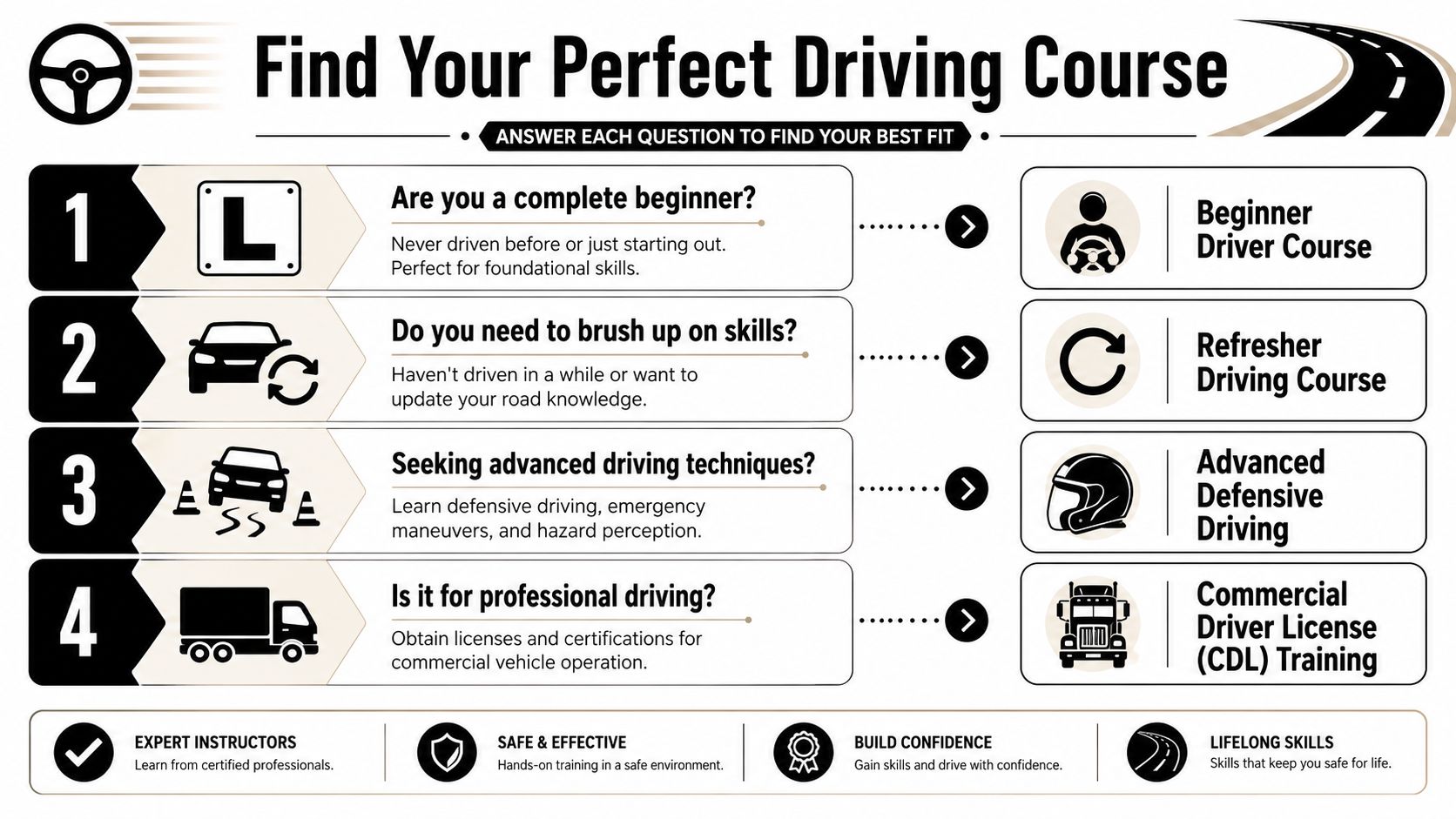
If this happened, take this course
You got a standard moving violation and want the usual traffic-school solution.
Take BDI. This is the most common answer for a routine ticket situation.
A judge or court paperwork says you must complete a driver improvement course.
Take IDI if the notice calls for the longer, court-ordered option. Don’t substitute a shorter course and hope it counts.
Your issue involves aggressive driving behavior or a requirement specifically tied to that label.
Take the Aggressive Driver Course. If the paperwork uses that language, follow it precisely.
You’re 55 or older and your goal is refresher training or an insurance-related benefit.
Take the Mature Driver Course. This one is about staying current and sharpening judgment, not resolving a ticket.
If you’re not solving a ticket problem
Some drivers are in the wrong category from the start.
If you’re a complete beginner, a returning adult driver, or someone who wants to rebuild confidence before getting back on the road, you don’t need citation-focused traffic school. You need actual driver education. In that case, a better starting point is online driver education in Florida.
That matters because traffic school and driver education solve different problems. One handles a legal or administrative issue. The other builds driving skill from the ground up.
My recommendation for Florida drivers
Use this checklist before you enroll:
- Read the notice carefully: If the court, clerk, or ticket paperwork names a course type, follow that wording.
- Match your goal: Point prevention, court compliance, insurance discount, and skill refreshers are not the same thing.
- Choose a format you’ll finish: Self-paced online works well for busy adults because you can complete it without rearranging your entire week.
If your reason for taking the course isn’t crystal clear, stop and verify before you pay. The right class feels easy once the purpose is clear.
There’s a broader policy trend behind all this. States increasingly treat driver training as a formal safety tool, not optional fluff. Ohio, for example, changed its rules effective September 30, 2025, requiring drivers ages 18, 19, and 20 to complete an approved course plus supervised driving practice, as outlined by Ohio’s driver training requirements. Florida has its own structure, but the bigger takeaway is obvious. Regulators take course selection seriously, and you should too.
What to Expect From the Curriculum
A driver training course is often expected to be dry. They picture recycled slides, obvious reminders, and a quiz that feels disconnected from real driving.
A useful course should feel different from the first screen.
Real-world judgment, not trivia
The strongest courses focus on anticipation and risk management.
That means you’re not just memorizing signs. You’re learning how to spot trouble before it develops, how to leave space around your vehicle, how to recognize distraction risk, and how to make the safer choice when traffic gets messy. The Defensive Driver Courses frames defensive driving around hazard recognition and space management that reduce collision exposure in its defensive driving program overview.
That’s exactly how a modern curriculum should be built.
What the lessons usually cover
A solid Florida-oriented course often includes material like this:
- Traffic law review: Current rules, right-of-way basics, lane use, and common violation traps.
- Defensive driving habits: Following distance, scanning ahead, speed control, and conflict avoidance.
- Behavior awareness: Distracted driving, aggressive decisions, emotional driving, and how small mistakes escalate.
- Crash avoidance thinking: Spotting risk early enough to avoid late braking, bad lane changes, and panic moves.
Those topics matter because they connect directly to the mistakes that get drivers cited in the first place.
Good instruction changes how you read the road. That’s more valuable than simply passing a quiz.
What the learning experience feels like
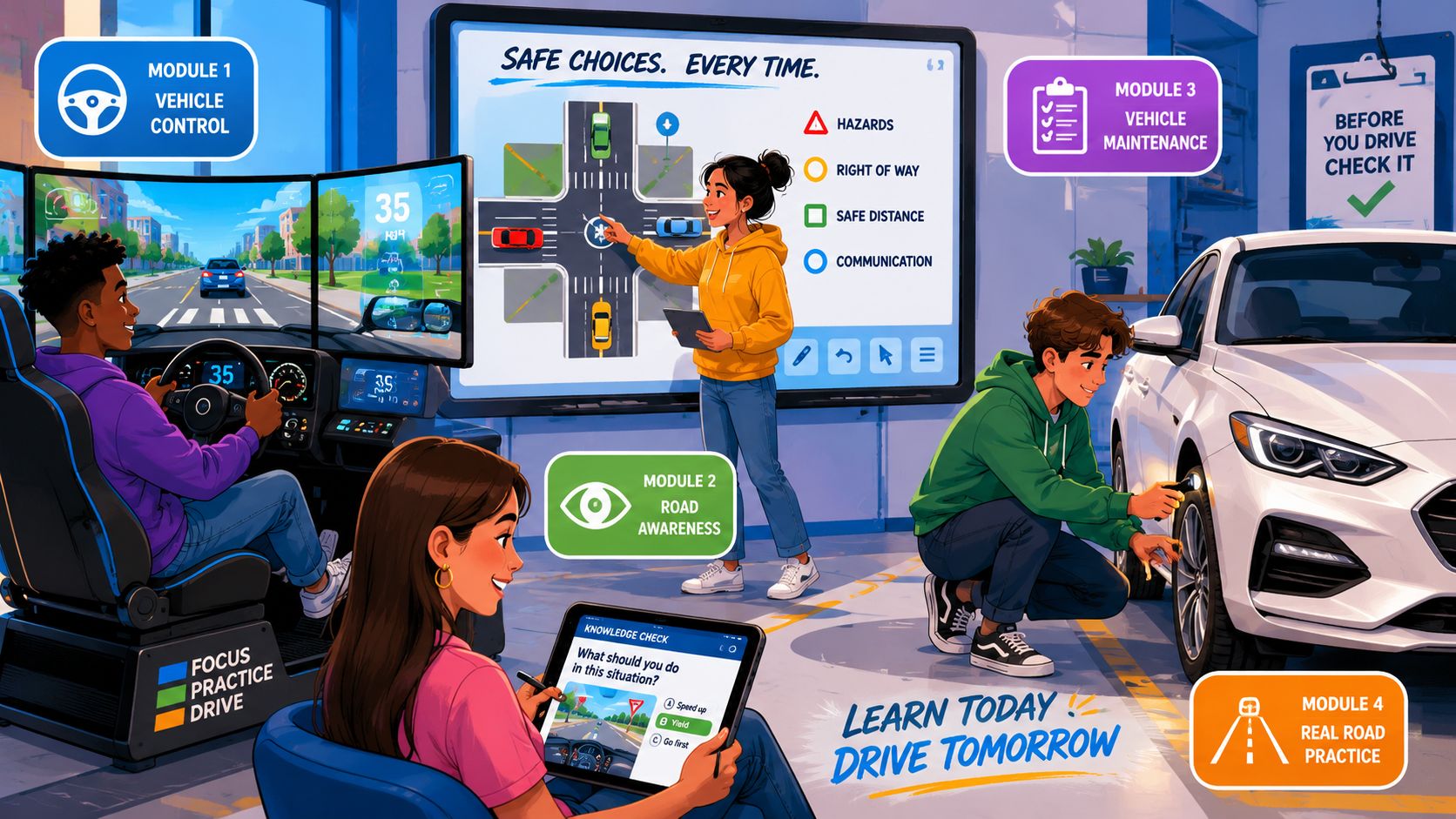
You’ll typically move through short modules, scenario-based examples, and knowledge checks. That’s a better format than one long lecture because it forces you to apply the rule while the situation is still fresh in your head.
The best part is that useful curriculum doesn’t treat drivers like they only need more information. It treats them like they need better habits.
That’s the difference between a course you forget the next day and one that helps you drive smarter.
The Real Benefits of Completing a Course
The immediate reason to take a driver training course is usually annoying. A ticket. A court notice. An insurance question.
The long-term payoff is much better.
Protect your driving record
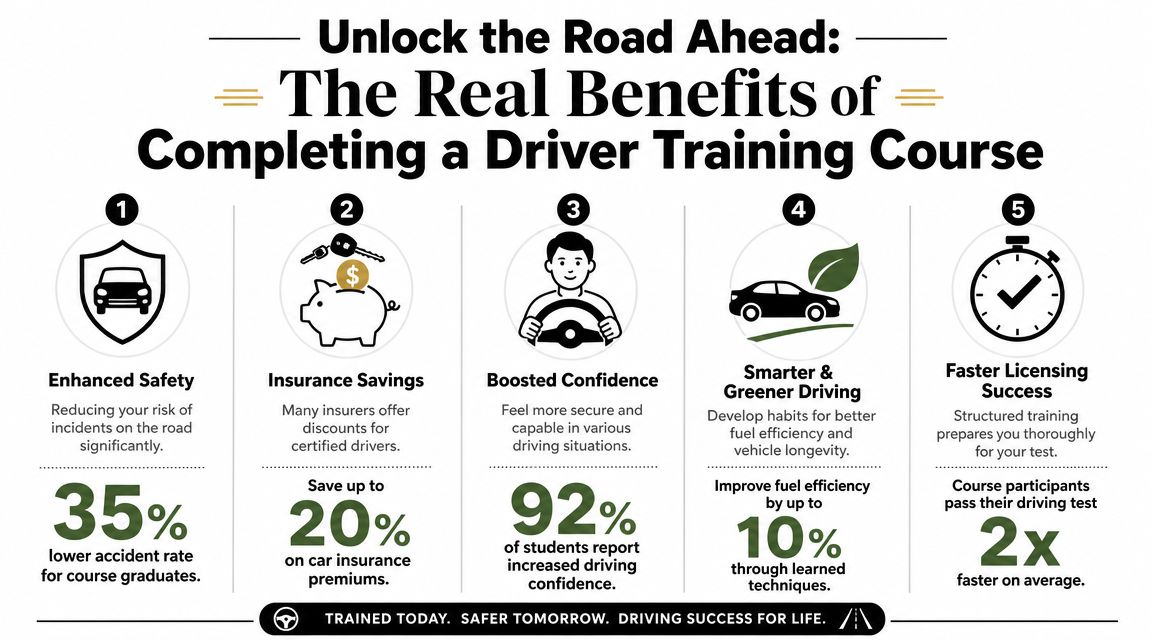
For many Florida drivers, the biggest reason to act quickly is record protection. If the right course helps you handle an eligible violation properly, that can prevent a short-term problem from becoming a longer-term headache.
That matters more than people think. Once your record gets messy, every future issue becomes harder to manage.
Keep more money in your pocket
Insurance companies pay attention to risk. So should you.
A qualifying course may help in one of two ways. It can support an insurance discount in the right situation, or it can help you avoid the kind of record damage that often leads to higher costs later. If that’s your goal, review the details on defensive driving insurance discount information.
Get back your confidence
This is the benefit people underestimate.
A good course helps you feel more in control because it gives structure to situations that used to feel rushed or confusing. Merging, lane changes, following distance, reaction time, and distraction control all get easier when you’ve thought through them calmly instead of improvising in traffic.
Here’s what that looks like in practical terms:
- Less panic after a ticket: You know what action to take and why.
- Cleaner decision-making: You stop guessing in common problem spots like intersections and lane changes.
- More confidence for returning drivers: If you haven’t driven much lately, a refresher can reduce hesitation.
- Better habits for daily commuting: Safer spacing and sharper scanning pay off every single week.
The course isn’t just about today’s problem. It can stop the next one.
My opinion is simple. If a course can help you protect your record, support lower costs, and make you a calmer driver, it’s not a nuisance. It’s a smart cleanup move.
Your Simple 3-Step Enrollment Process
Prospective participants often delay enrolling due to the assumption that it will be annoying. It usually isn’t.
If you know which driver training course you need, the process is straightforward.
Step 1 Register online
Pick the course that matches your situation.
That means BDI for a common ticket issue, IDI for a court-ordered longer course, Aggressive Driver if that’s specifically required, or Mature Driver if you’re taking a refresher route. Don’t guess. Match the course to the notice.
Step 2 Complete the course on your schedule
Online, self-paced access is the easiest option for most Florida adults.
You can work through the material from your phone, laptop, or tablet when your schedule allows. That’s a lot better than waiting for the perfect day that never opens up.
Step 3 Get your certificate handled properly
Once you finish, confirm how completion is documented and delivered.
For drivers who want to understand the final proof-of-completion step, this page on online driving certificate delivery explains what to expect. That last step matters because completion only helps you if the paperwork side is clean.
One final enrollment tip
Save your receipt, your completion confirmation, and any course email until everything is fully processed.
That takes almost no effort, and it protects you if you ever need to verify completion later.
FAQ About Driver Training
Is an online driver training course really effective?
Yes, if your goal is the kind of course that’s approved for your situation and built for real comprehension.
Online works especially well for busy adults because they can complete the material without commuting to a classroom. Driver education has also moved beyond the old teen-only model, with self-paced access and multilingual instruction increasingly shaping how people complete these requirements, as reflected in adult-friendly and multilingual driving school formats.
How do Spanish and Portuguese options usually work?
The course content is offered in the selected language, so the learner can study, review, and complete modules more comfortably.
That matters for comprehension. If someone understands the material better in Spanish or Portuguese, they should use that option instead of forcing their way through an English version and missing key safety concepts.
Do I need a learner’s permit before taking a course?
It depends on the kind of course.
Traffic school for a ticket is different from beginner driver education or behind-the-wheel training. If your goal is actual driving instruction rather than citation-related education, permit requirements can apply before in-car training.
Will the course automatically solve my ticket?
Not by itself.
You still need to choose the correct course, complete it on time, and follow any instructions tied to your case. A course is part of the solution. It’s not magic.
I’m an anxious adult driver. Should I still take a course?
Yes. In fact, you’re one of the people who benefits most from a clear, structured format.
Anxiety gets worse when everything feels vague. A good course breaks the process into manageable pieces and gives you a calm path forward.
What if I’m older and just want a refresher?
Take the mature-driver route if that matches your goal.
That option makes sense for drivers who want to stay sharp, review current rules, and explore insurance-related benefits without waiting for a problem to force the issue.
If you’re ready to handle the problem and move on, start with the course that matches your situation at BDISchool. Choose the right Florida-approved option, complete it on your schedule, and get the requirement behind you without making it harder than it needs to be.