You’re driving home in Florida, the light turns green, and then you hear it. A siren. For a split second, everything gets noisy at once. Cars around you brake at different times, someone drifts left, another driver freezes in the lane, and you’re stuck trying to decide what the law wants from you.
That moment is where many drivers get in trouble. Not because they’re reckless, but because they’re unsure. Emergency vehicle rules sound simple until you’re living them in real traffic, with limited space and only a few seconds to react.
A lot of Florida drivers only learn the slogan version: pull over and stop. That’s not enough. Safe driving depends on knowing when to yield, where to move, when to stay put, and how to avoid making the situation worse. If you’ve had a recent ticket, need a refresher, or just want to feel more confident when sirens start closing in, this is exactly the kind of practical knowledge a good traffic course reinforces.
The Sound of Sirens What Florida Drivers Must Know First
The first mistake many drivers make is panicking.
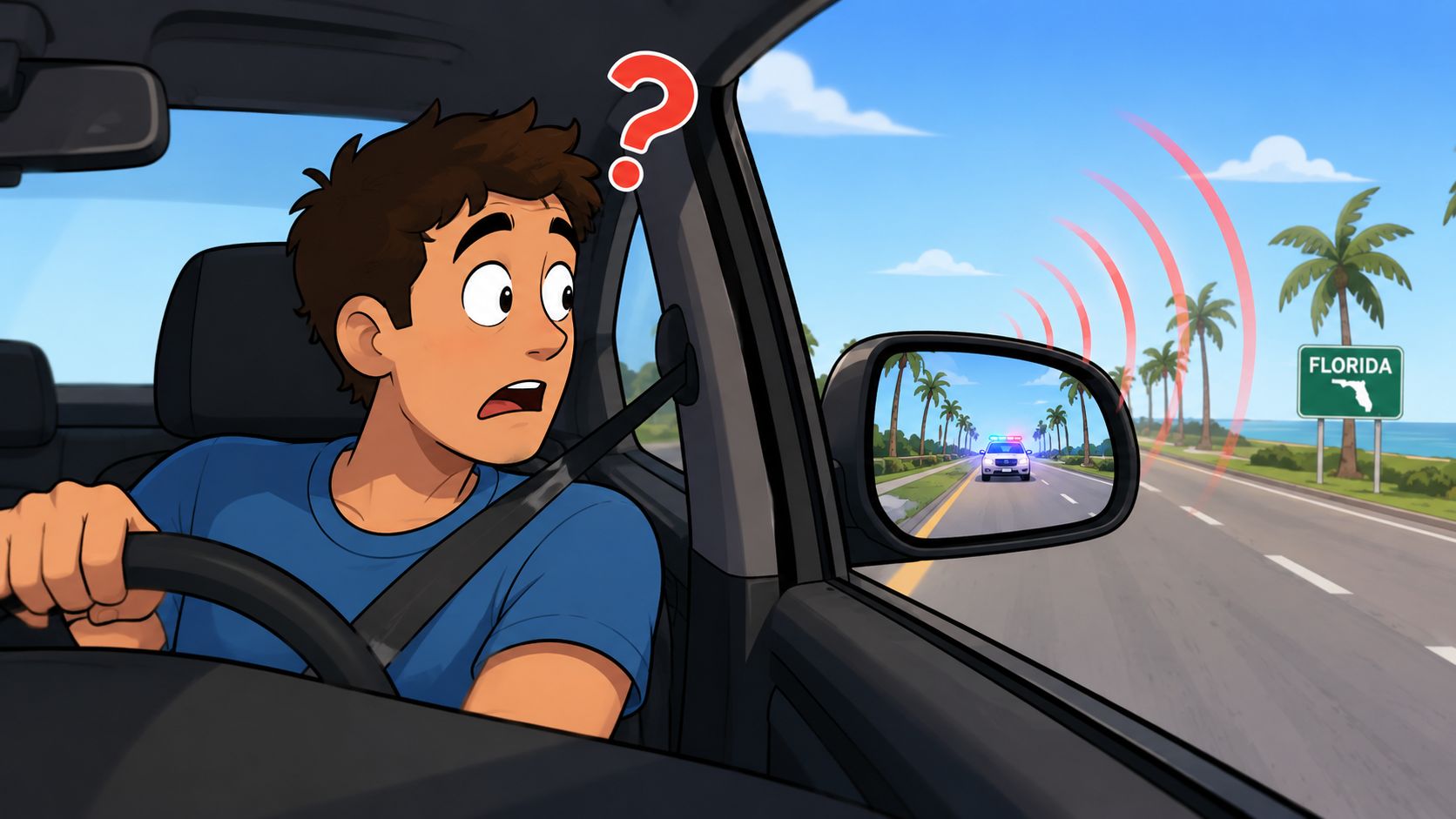
A police car, fire truck, or ambulance can appear behind you fast. Your instinct may be to brake hard, stop in the middle of the lane, or dart into the nearest opening. Those reactions are understandable, but they can block the very vehicle trying to get through.
Why this matters to everyone
These situations aren’t only about protecting first responders. They also protect the people in ordinary cars.
The National Safety Council reports that emergency vehicle crashes killed 225 people in 2024, and 56% of those deaths were occupants of non-emergency vehicles, which shows why these rules matter for every driver on the road, not just police, fire, and EMS crews (Move Over safety information).
Practical rule: When you hear a siren, your job is to become predictable. Emergency drivers can work with slow, clear movements. They can’t safely work around panic.
The most common point of confusion
Many drivers don’t know whether they should stop immediately, keep rolling, clear the intersection, or change lanes first.
That confusion gets worse in Florida because our roads are busy, fast, and often multilane. On a crowded arterial road, “just pull over” may not be possible in the exact second you hear the siren. You need judgment, not guesswork.
A solid understanding of who has the right of way helps here, because emergency vehicle encounters are really right-of-way situations under pressure.
What confident drivers do differently
Drivers who handle sirens well usually do three things fast:
- They identify the source instead of reacting blindly.
- They scan traffic around them before moving.
- They choose one clear action and stick with it.
That’s what training is for. It turns a stressful moment into a practiced response.
Understanding Florida’s Move Over Law
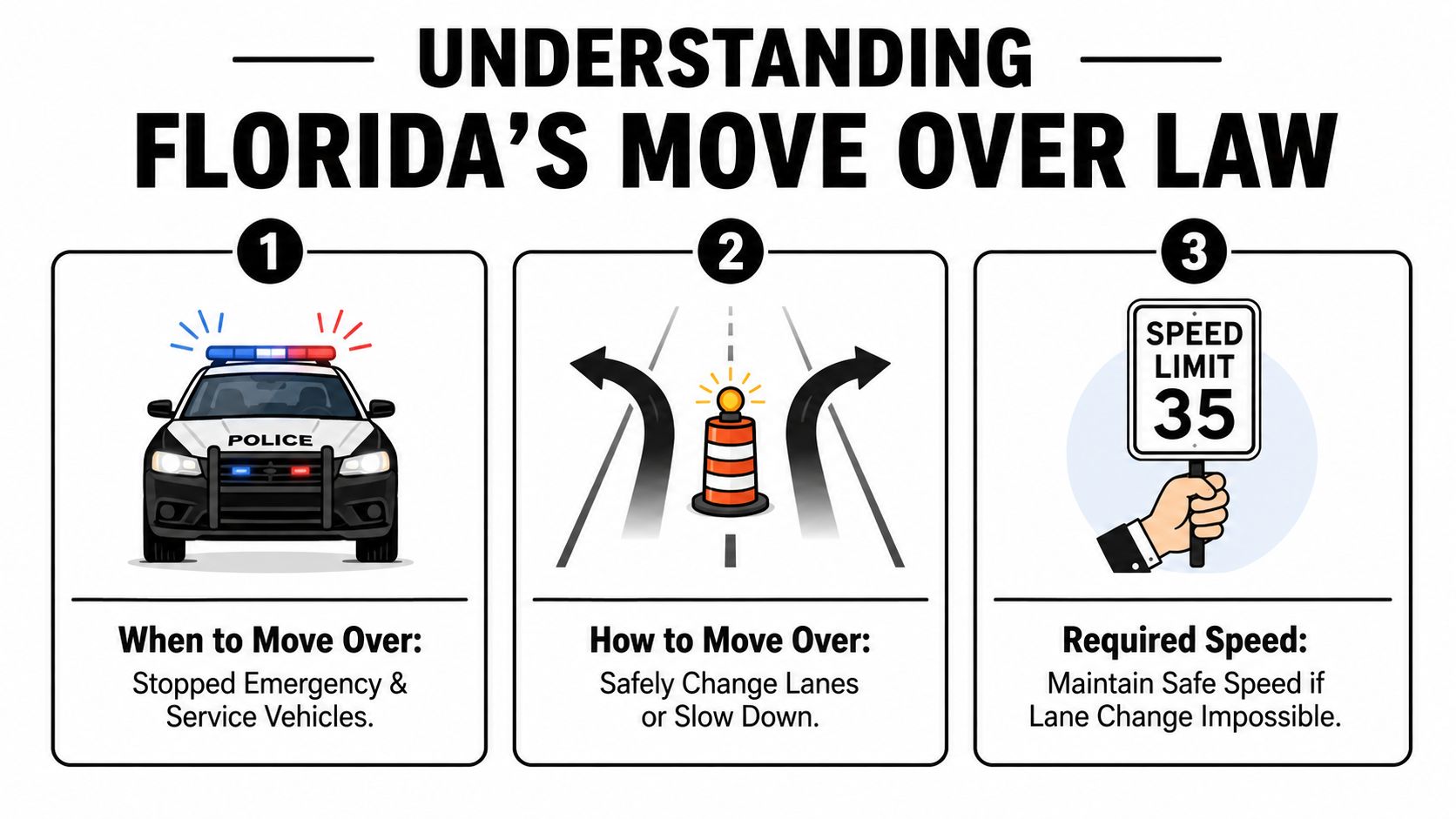
Florida drivers usually hear the phrase Move Over Law in two different situations. One involves an emergency vehicle approaching from behind with lights or sirens. The other involves vehicles stopped on the roadside with warning lights active.
Those are related situations, but they don’t feel the same from behind the wheel. That’s why people mix them up.
Two Florida situations drivers must separate
When an emergency vehicle is approaching you, think about yielding space so it can pass safely.
When an emergency or service vehicle is stopped on the roadside, think about creating a safety buffer around that scene.
Core idea: Florida emergency vehicle rules aren’t just about moving. They’re about creating space.
Here’s the simplest way to remember it:
Approaching from behind: yield, move right when safe, and let the vehicle pass.
Stopped on the roadside: move over a lane if you can. If you can’t, slow down and pass carefully.
Later in this article, I’ll show you how to apply that in intersections, highways, and jammed traffic, because those are the spots where drivers hesitate.
Why laws get so specific
Drivers often assume traffic law stays broad. It doesn’t. States write detailed emergency vehicle rules because vague instructions create dangerous improvisation.
For example, Virginia requires drivers to stay at least 500 feet behind a fire truck responding to a call, which shows how state laws can go far beyond a general “pull over” instruction (Virginia emergency vehicle statute).
That kind of detail matters because real traffic creates real edge cases. A multilane road, a shoulder blocked by debris, a tow truck on the right, or a narrow bridge all require more than a slogan.
To stay current with changes that affect how you respond on Florida roads, it helps to review new Florida traffic laws.
Here’s a short visual refresher before we get into the practical side.
Vehicles drivers often forget are covered
Many people think only police cars, ambulances, and fire trucks matter.
In practice, roadside safety laws can also involve other vehicles using warning lights during hazardous work or disabled conditions. That’s one reason these rules feel harder than they used to. Drivers have to identify the scene, not just listen for a siren.
- Traditional emergency responders: police, fire, and ambulance vehicles
- Roadside incident vehicles: certain stopped vehicles using warning lights
- Work and hazard scenes: situations where the law expects extra care and more space
If you remember one thing from this section, remember this: don’t reduce Florida emergency vehicle rules to one sentence. The safest response depends on whether the vehicle is moving, stopped, behind you, or already working a roadside scene.
Reacting to Emergency Vehicles A Step-by-Step Guide
When the siren starts, use a sequence. Drivers who try to improvise tend to make sudden moves. Drivers who follow a routine usually make cleaner, safer decisions.
The five-step response
Stay calm and locate the vehicle.
Don’t brake hard the instant you hear a siren. Check your mirrors, look ahead, and figure out whether the vehicle is behind you, crossing your path, or approaching an intersection.Signal your intention early.
If you’re going to move right or change lanes, use your turn signal. That gives nearby drivers a clue and helps prevent a side-swipe.Create space smoothly.
Ease off the accelerator. Move toward the right side when safe. If a lane change is needed for a stopped roadside scene, do it gradually, not as a last-second swerve.Stop only when stopping makes sense.
If the emergency vehicle is actively trying to pass, stop in a safe place and wait. If stopping in your exact spot would block an intersection or trap the vehicle, keep rolling carefully until you reach a better position.Wait until the path is clear.
Don’t jump back into traffic the second one vehicle passes. Check for a second ambulance, a trailing patrol car, or fire apparatus following behind.
Smooth and predictable beats fast and dramatic every time.
Emergency Vehicle Action Checklist
| Step | Action | Why It Matters |
|---|---|---|
| 1 | Check mirrors and identify where the siren is coming from | You can’t yield properly until you know the vehicle’s path |
| 2 | Signal before moving | Other drivers need to understand what you’re doing |
| 3 | Move right or create a lane buffer when safe | This opens a usable path for responders |
| 4 | Avoid stopping in a bad place | A poor stop can block the emergency vehicle |
| 5 | Re-enter traffic only after the scene is clear | More than one responder may be coming |
Where drivers go wrong
The most common errors are surprisingly ordinary.
- Freezing in the lane: This blocks traffic and leaves the responder guessing.
- Cutting left without checking: That’s dangerous on multilane Florida roads.
- Stopping inside the intersection: It traps everyone.
- Resuming too soon: Emergency vehicles often travel in groups.
A lot of this overlaps with right-of-way rules at intersections, because the underlying skill is the same. Read the traffic pattern, then yield in a way others can understand.
Build the habit before you need it
The goal isn’t to memorize legal jargon. The goal is to make this response automatic.
Try mentally rehearsing what you’d do in three places you drive often:
- A neighborhood road: where pulling right is usually easy
- A six-lane commercial road: where lane changes require more planning
- A crowded intersection: where your first move may be to wait, not to dive across lanes
That kind of rehearsal is one reason defensive driving courses help. They turn “I think I know” into “I know what to do.”
What to Do in Complex Traffic Situations
The hard part of emergency vehicle rules isn’t the basic version. It’s the odd moment. You’re boxed in at a red light. You’re on a one-way street downtown. Traffic is crawling, and there’s no shoulder worth using.
That’s where drivers need calm judgment.
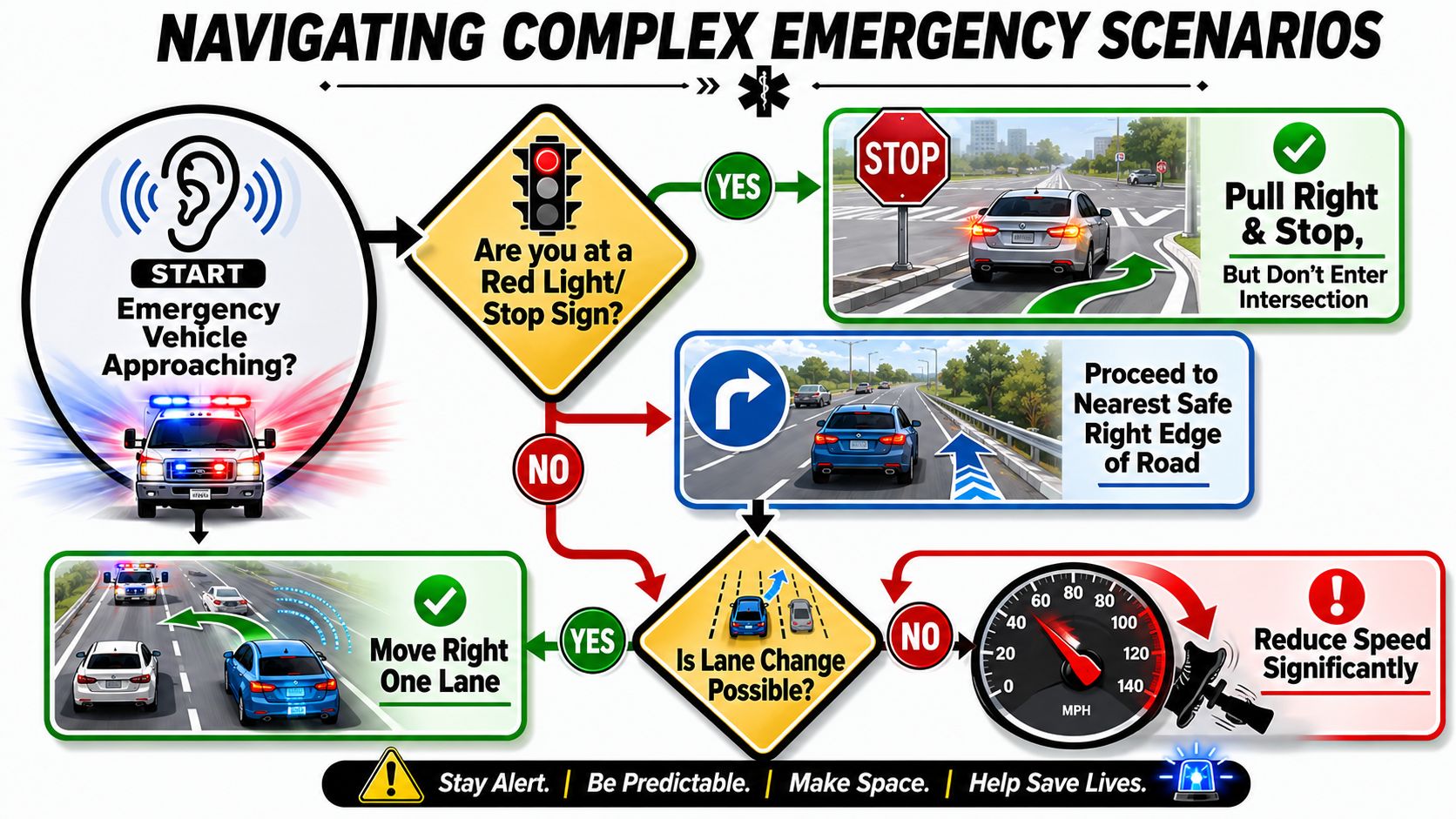
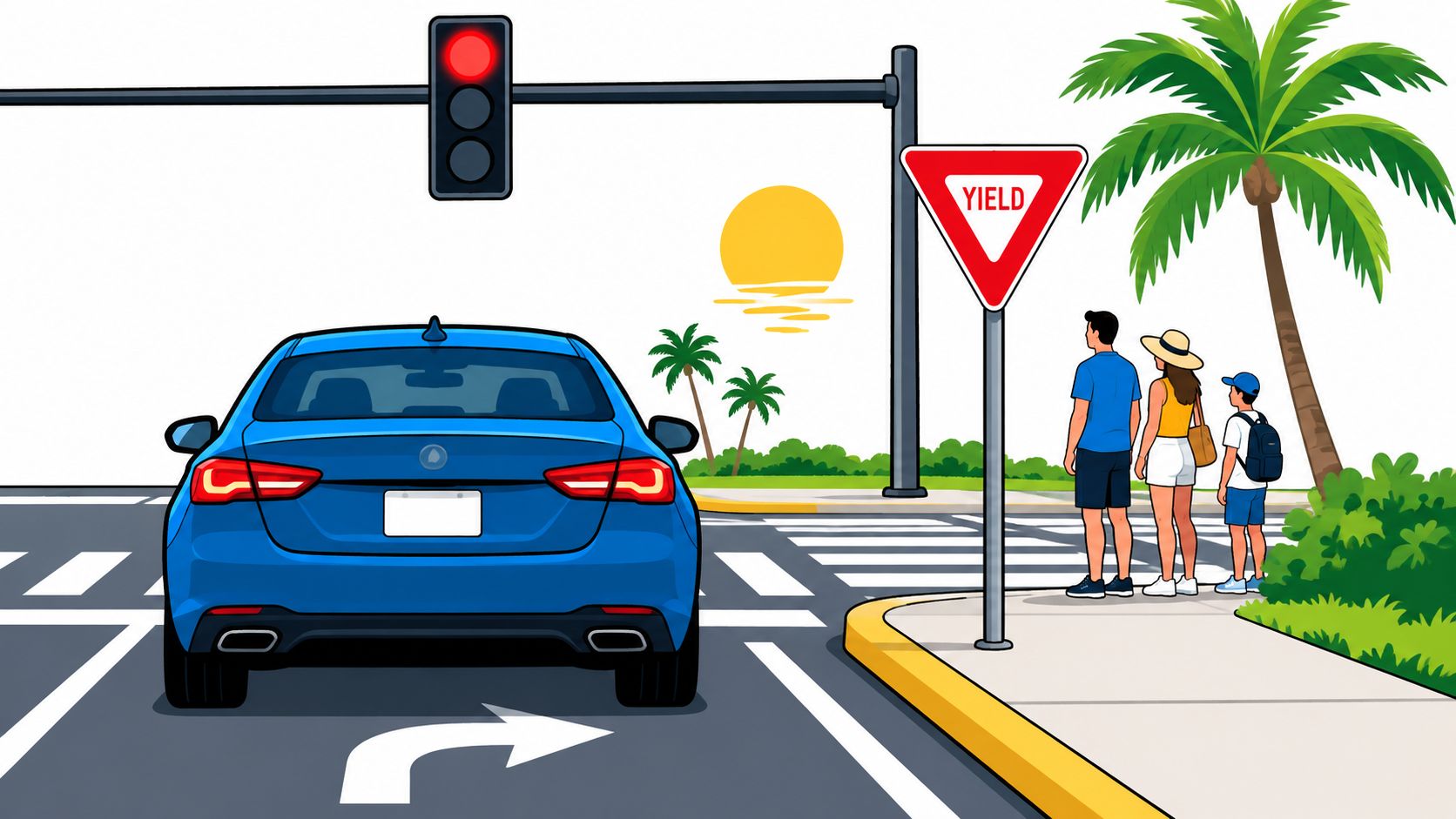
At a red light or stop sign
Let’s say you’re first in line at a red light and an ambulance appears behind you.
Drivers often feel pressure to do something immediately. The safest move may be to stay controlled, keep your wheels straight, and create room only if you can do it without entering cross traffic dangerously. Drivers get into trouble when they rush into the intersection without a safe opening.
New York law is especially clear on this point. Drivers at an intersection must clear it before pulling to the right, which shows how specific these rules can get when traffic situations become complicated (New York vehicle and traffic law section 1144).
If your next move would create a second hazard, stop and reassess. Don’t trade one danger for another.
On a multilane highway
On a Florida highway, the question is usually not whether to react. It’s how much room you can make.
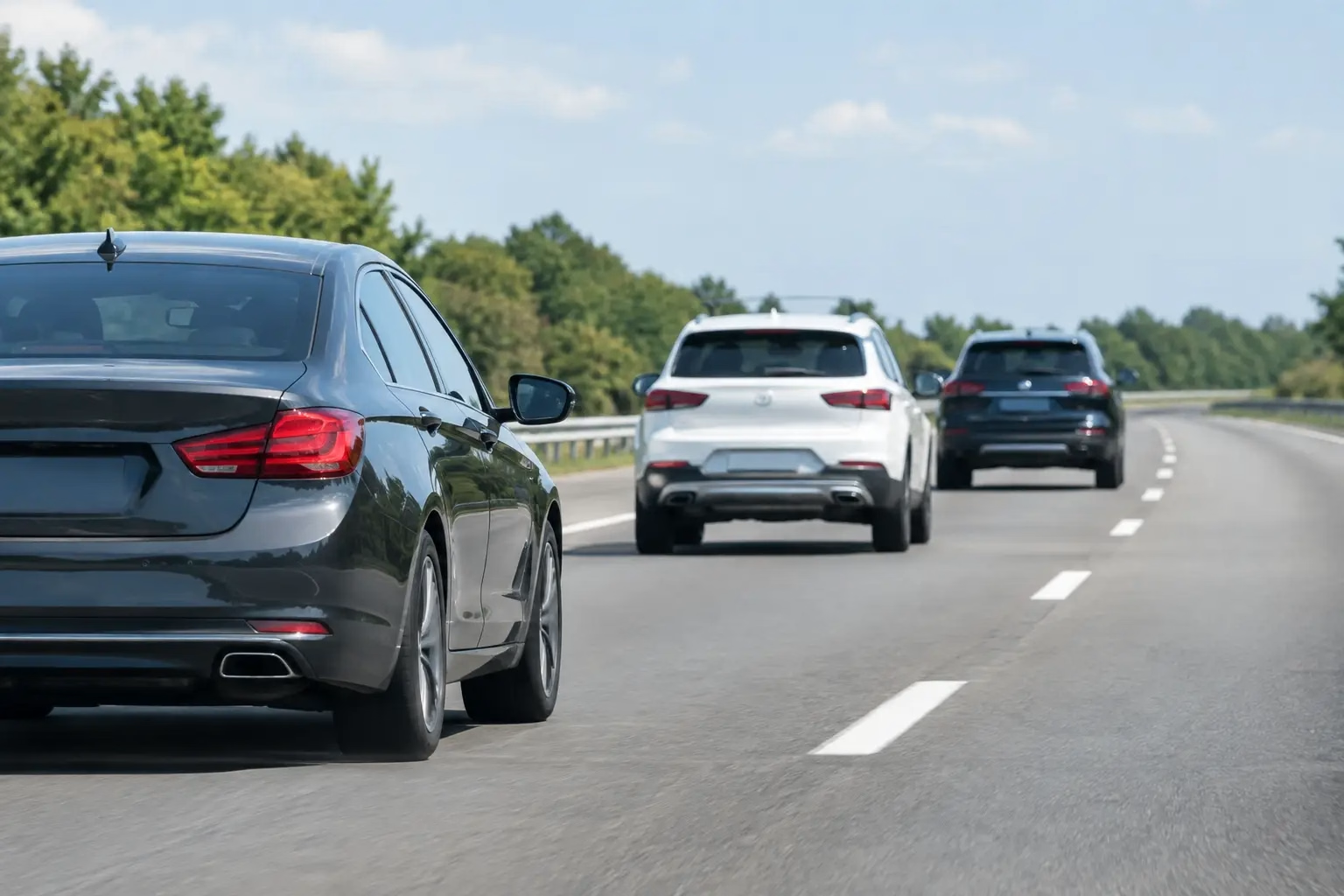
If the emergency vehicle is behind you in your lane, signal, move right when safe, and let it pass. If responders are stopped on the shoulder, create a lane buffer if traffic allows. If traffic is too tight, reduce speed and pass carefully without drifting toward the scene.
A good mental script is simple:
- Look first
- Signal early
- Move smoothly
- Don’t race the vehicle
- Don’t reclaim the lane too fast
On a one-way street or in dense traffic
Many drivers overcorrect. They hear a siren and assume “right side” always solves it.
But on a one-way street, the available space may be different. In dense traffic, the emergency driver may be threading between lanes. Your job is to open space in the most predictable way available, not to force a perfect textbook maneuver.
If you truly can’t move over
Sometimes there isn’t room.
In that case, don’t panic and don’t make a violent lane change. Slow down, keep your vehicle steady, and follow the flow that gives responders the clearest path. A controlled, slower vehicle is easier for an emergency operator to pass than a startled driver making sudden moves.
Reasonable, visible, gradual actions help responders more than last-second heroics.
Consequences of Non-Compliance and How to Protect Your License
Ignoring emergency vehicle rules can cost you more than a ticket.
It can put responders, crash victims, roadside workers, and your own passengers in danger. It can also create a chain of legal and financial problems that follow you long after the stop itself.
Why the stakes are rising
Traffic laws in this area keep getting broader because roadside scenes keep getting more complex.
California’s Move Over law was expanded to protect drivers of disabled vehicles with flashing hazard lights, which shows a wider trend toward covering more roadside situations and requiring more from drivers who pass those scenes.
That matters in Florida because the same confusion shows up here. A driver may think, “That’s not a police stop, so the rule doesn’t apply,” when the safer legal response is still to create room and reduce risk.
The practical consequences for Florida drivers
Failing to handle an emergency vehicle encounter properly can lead to several headaches at once:
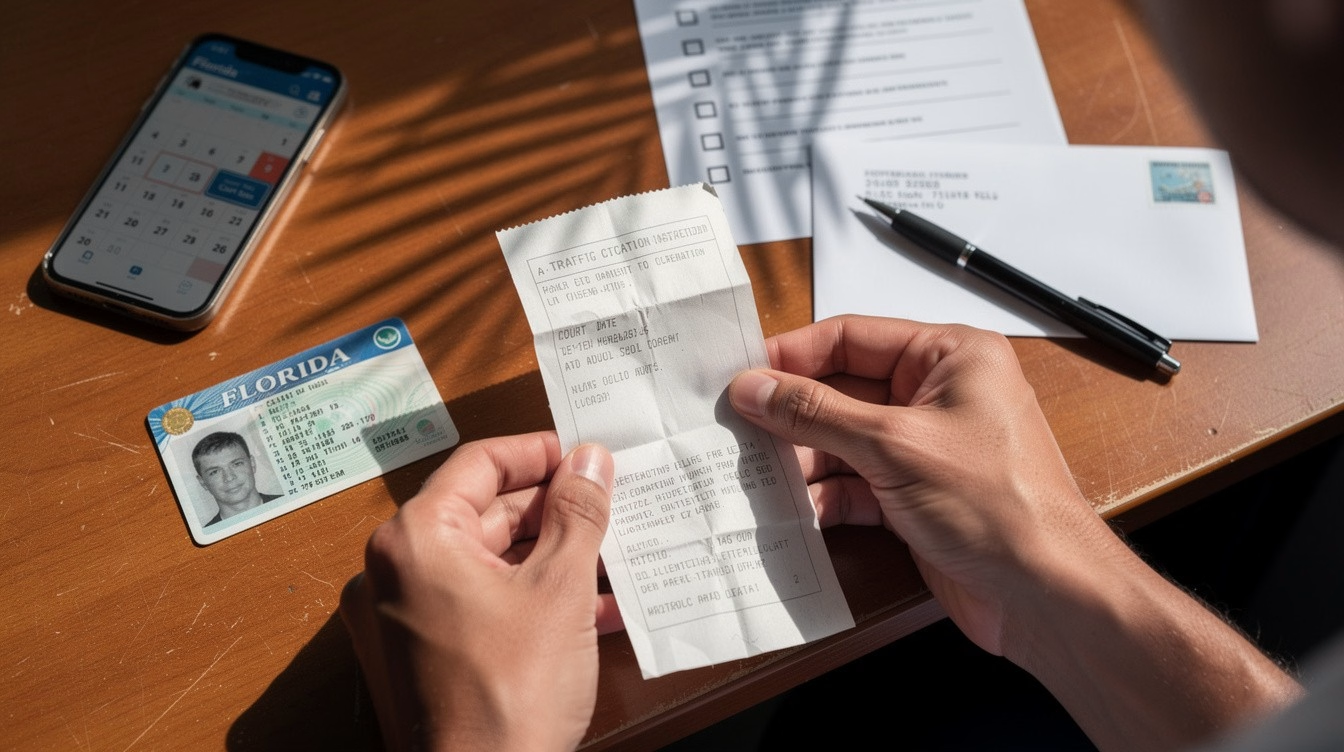
- A citation and court obligations: Missing the rule in traffic often means you’re now dealing with deadlines, paperwork, and added stress.
- Points on your record: For many drivers, this is the issue that keeps hurting after the stop. You can review how that system works on Florida’s driver license points guide.
- Insurance concerns: Even one mistake can affect what you pay going forward.
- Crash exposure: A poor reaction near sirens or roadside scenes can turn a traffic stop into an injury event.
If a roadside incident has already turned serious, families looking for legal context may find these Florida reckless driving victim resources useful.
A smarter way to respond after a violation
If you’ve recently been cited, a Florida-approved course can help you correct the knowledge gap that caused the problem in the first place.
BDISchool offers online Florida traffic courses, including the Basic Driver Improvement course for eligible drivers, along with other programs for court requirements, refresher training, and insurance-related needs. The value is straightforward. You get structured review of Florida traffic law, defensive driving habits, and the decision-making skills drivers often lose under pressure.
For many people, that’s the difference between repeating a mistake and fixing it.
Frequently Asked Questions About Florida Emergency Vehicle Rules
Do I always have to pull to the right
Usually, yes. But only when it’s safe and practical.
The key idea is to yield in a predictable way that helps the emergency vehicle pass. If moving right immediately would put you into another hazard, slow down, assess, and make the safest legal move available.
What if I’m already in an intersection
Don’t stop in a way that blocks the intersection.
If you’re committed to the intersection, continue carefully and then pull over as soon as there’s a safe place to do it. Intersections are one of the worst places to freeze because they create confusion in every direction.
What if several emergency vehicles are coming
Wait longer than you think you need to.
One ambulance may be followed by police units, fire apparatus, or another responder. Before you move again, check your mirrors, scan ahead, and make sure the full path is clear.
What if traffic is too heavy to move over
Slow down and avoid sudden movements.
If there’s no safe lane change available, your job is to reduce risk. Hold a steady line, create whatever space you can, and don’t make a sharp move that another driver can’t predict.
Does this apply only to police cars and ambulances
No. Drivers should be alert for a wider range of roadside emergency and hazard situations.
That’s one reason these rules trip people up. Modern roadside safety laws often cover more than the classic siren-and-lights scenario.
How should I handle a stopped roadside scene
Move over a lane if it’s safe. If it isn’t, slow down and pass carefully.
Think of the roadside as a work zone with human beings exposed just a few feet away. Your lane position and speed both matter.
What if I’m driving near medical transport or other nontraditional emergency services
Treat any active transport or roadside assistance scene with caution and extra space.
If you want a simple overview of how non-air emergency transport fits into the broader system, this medical ground transportation guide gives useful background in plain language.
Does the law stop at the test question level
No. Real driving is more detailed than the handbook version.
Most violations happen when a driver knows the general rule but doesn’t know how to apply it in a multilane, high-stress, real-world moment. That’s why refresher education helps so much after a ticket or long gap in driving.
If you want a practical Florida refresher that helps you handle sirens, roadside scenes, right-of-way decisions, and other high-pressure traffic situations with more confidence, take a look at the online courses at BDISchool. They’re built for real drivers who need clear instruction, flexible scheduling, and a better grasp of the rules that protect both your record and everyone around you.