The TLSAE exam stands between your teen and their driver’s license. Passing it requires more than hoping for the best-it demands solid preparation.
TLSAE practice questions are your most effective tool for building real test readiness. At DriverEducators.com, we’ve seen firsthand how students who work through practice questions consistently score higher and feel more confident on test day.
What Is TLSAE and Why Practice Questions Matter
Understanding the TLSAE Requirement
The TLSAE, or Traffic Law and Substance Abuse Education course, is a 4-hour mandatory requirement for all first-time drivers in Florida. This isn’t optional paperwork-it’s a hard requirement before you can obtain your driver’s license. The course covers Florida traffic laws, the effects of drugs and alcohol on driving ability, and defensive driving fundamentals. For teens under 18, completing TLSAE holds equal weight to passing the knowledge test itself. Motor vehicle crashes are the leading cause of death for U.S. teens, according to data emphasized in the TLSAE curriculum. This statistic isn’t meant to scare-it’s meant to ground the course in real consequences. TLSAE practice questions directly mirror the content and format of the actual course assessment, so working through them prepares you for exactly what you’ll face.
How Practice Questions Build Real Confidence
Practice questions accomplish something theory alone cannot: they build genuine confidence through repetition and immediate feedback. When you answer a question incorrectly on a practice test, you see why the correct answer matters. This active learning sticks far better than passively reading the handbook. Students who use practice questions perform measurably better on their final assessments because they’ve already encountered similar scenarios. Practicing under timed conditions trains your brain to work at the pace the real exam demands, preventing panic when the clock starts.
Identifying Your Weak Spots Before Test Day
Practice questions expose your weak spots before test day arrives. If you consistently miss questions about alcohol’s effects on driving, you know exactly what to study harder. Try scoring at least 90% on practice questions to maximize your chances of passing the real course assessment. This 90% target creates a safety margin; if you’re scoring that high on practice, you’re genuinely prepared. The next section covers the specific topics that appear most frequently in TLSAE assessments and how to tackle them effectively.
Key Topics Covered in TLSAE Practice Questions
Traffic Laws Form the Foundation
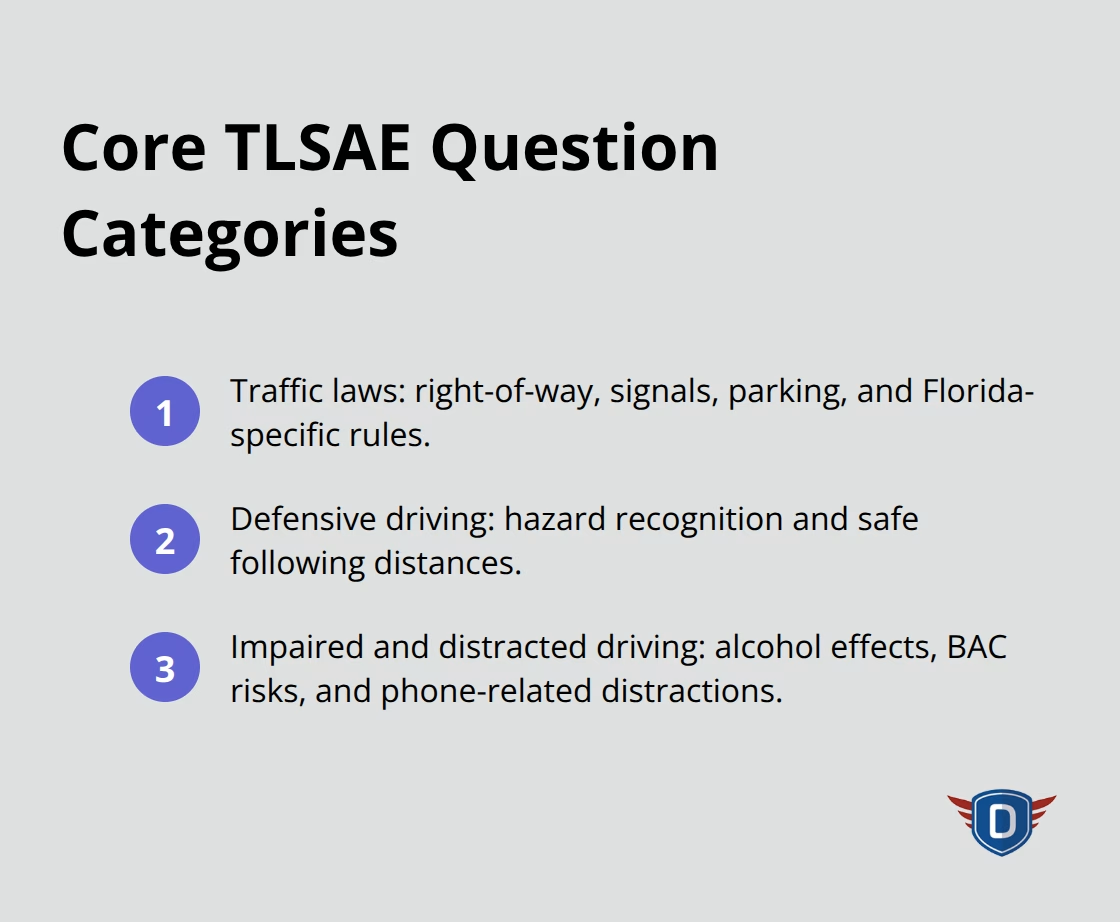
TLSAE practice questions test three interconnected areas that directly shape real-world driving safety. Traffic laws dominate TLSAE questions because they form the legal foundation for driving in the state. The course emphasizes specific rules like the move-over law, no-fault insurance requirements, and speed limit violations-topics that appear repeatedly across practice tests. When you work through practice questions on traffic laws, patterns emerge: questions about right-of-way situations, traffic signal meanings, and parking regulations appear frequently because these scenarios occur constantly on Florida roads.
Defensive Driving and Hazard Recognition
Defensive driving techniques represent the second major category, and here’s where practice questions reveal a critical insight-the test doesn’t ask theoretical questions about defensive driving. Instead, it presents hazard recognition scenarios where you must identify dangers before they become crashes. You’ll encounter questions about maintaining safe following distances, recognizing distracted drivers ahead of you, and responding to sudden road conditions. These questions train you to spot threats in real time rather than memorize abstract concepts.
Impaired and Distracted Driving Awareness
The third pillar covers impaired and distracted driving awareness, and this section carries significant weight because the TLSAE course fundamentally aims to prevent substance-related crashes among new drivers. Alcohol metabolism facts appear regularly-the liver processes approximately one standard drink per hour, and nothing accelerates this process despite common myths about coffee or cold showers. Practice questions test whether you understand that at a BAC of .15, drivers are at least 12 times more likely to crash than drivers with a BAC of zero, and that alcohol impairs vision, reflexes, and judgment simultaneously. Distracted driving questions emphasize that phone use, eating, or adjusting controls behind the wheel creates measurable crash risks.
Targeting Your Study Efforts
Try scoring at least 90% on practice questions covering these three areas before taking the actual course assessment. This approach exposes your weak spots now rather than during the real exam, and it trains you to recognize the specific question formats and answer patterns you’ll face. The next section shows you exactly how to use practice questions strategically to maximize your preparation time.
How to Structure Your Practice Test Routine
Time Pressure Reveals Your True Readiness
Timing transforms practice questions from a study tool into an exam simulator. You must take full-length practice tests under actual timed conditions rather than work through questions casually whenever you have a few minutes. The TLSAE assessment expects you to work through material at a specific pace, and practicing without time pressure creates a false sense of readiness. Set a timer for the exact duration of the real exam, eliminate distractions, and complete the test in one sitting. This approach trains your nervous system to perform under pressure and reveals whether you can actually finish within the time limit. Many students discover they rush through the final questions when practicing under time pressure, exposing a critical weakness before test day arrives.
Review Your Answers Before Checking the Score
After you complete a timed test, resist the urge to immediately check your score. Instead, review your answers first without the answer key to see which questions genuinely stumped you versus which ones you second-guessed yourself on. This distinction matters because second-guessing often indicates anxiety rather than knowledge gaps. You’ll identify patterns in your thinking that the score alone cannot reveal. Questions you answered correctly on instinct versus questions you wrestled with tell different stories about your preparation level.
Target Weak Areas With Focused Study Sessions
Your weak areas demand focused attention, not repetition of material you already know. After each practice test, create a list of every question you missed or answered incorrectly, then categorize them by topic: traffic laws, defensive driving, or substance abuse awareness. If you missed three questions about alcohol metabolism but only one about parking regulations, your next study session targets alcohol content specifically. This targeted approach eliminates wasted time reviewing concepts you’ve already mastered. You spend your energy on the topics where practice questions reveal consistent errors.
Process Explanations Actively, Not Passively
When you review incorrect answers, read the explanation thoroughly and then close the materials and explain the correct answer aloud in your own words. This forces your brain to process the concept rather than passively read someone else’s explanation. If you still don’t understand why an answer is correct after reading the explanation, that signals a need to review the relevant section of the Florida Driver Handbook or seek clarification from an instructor. Active explanation locks knowledge into memory far more effectively than passive reading ever could.
Establish Your Readiness Threshold
Take timed practice tests until you consistently score above 90%. This threshold indicates genuine readiness and creates a safety margin for test day performance. Anything below that level suggests additional focused study is needed in your weak areas. Reaching 90 percent across traffic laws, defensive driving, and substance abuse awareness means you’ve mastered the material at a level that transfers to the real exam.
Final Thoughts
Regular practice with TLSAE practice questions transforms preparation from guesswork into measurable progress. Students who consistently score above 90% on practice tests don’t just pass the real assessment-they develop genuine understanding of Florida traffic laws, defensive driving principles, and substance abuse awareness. This knowledge sticks because you’ve encountered the material repeatedly in the exact format you’ll face on test day.
Your next step is straightforward: commit to a structured practice routine starting today. Set a timer, complete full-length practice tests under timed conditions, identify your weak areas, and focus your study efforts on those specific topics. Try for that 90% threshold before taking the actual TLSAE course assessment.
We at DriverEducators.com provide comprehensive driver education programs designed to help you master not just the course material, but the safe driving habits that protect you for life. Whether you’re working through TLSAE practice questions or preparing for your knowledge test, quality study materials and expert guidance make the difference between barely passing and truly understanding the material.