Understanding traffic laws isn’t optional-it’s the foundation of safe driving. Whether you’re navigating intersections, managing speed, or avoiding violations, knowing the rules protects you and everyone on the road.
At DriverEducators.com, we’ve seen how drivers who master these fundamentals avoid costly tickets, insurance hikes, and license suspensions. This guide breaks down Florida’s traffic laws into actionable insights you can apply immediately.
Mastering Traffic Signals and Right-of-Way
Understanding Traffic Light Meanings
Traffic signals and right-of-way rules form the language of the road, and misunderstanding them leads directly to collisions. Red lights mean you must stop completely before the line or crosswalk. Yellow lights mean you should prepare to stop, not accelerate through the intersection. Green lights mean you can proceed only if the intersection is clear and safe.
Failure to obey traffic signals causes serious harm on American roads. This statistic underscores why drivers cannot treat these signals as suggestions.
Navigating Four-Way Stops
At four-way stops, the first vehicle to stop has the right to proceed first. If two vehicles arrive simultaneously, the one on the right proceeds first. If vehicles are directly across from each other, the one turning left yields to the one going straight.
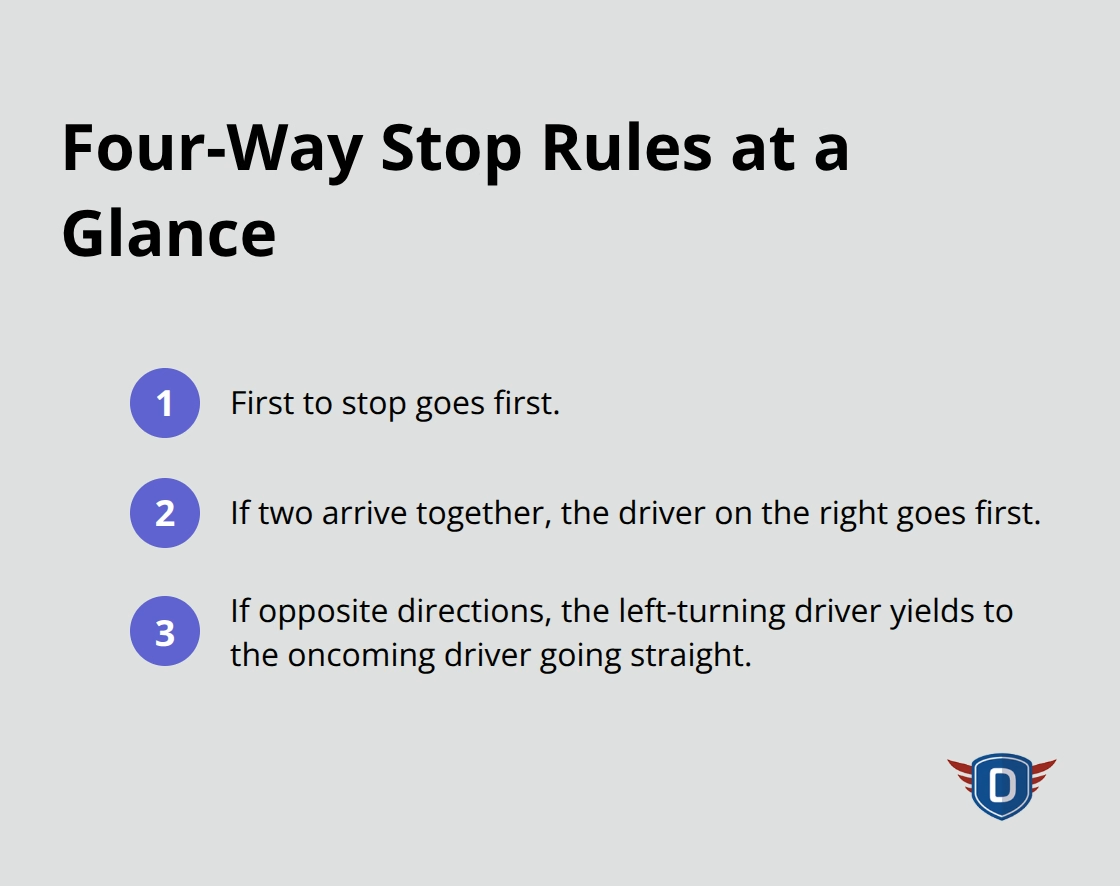
Many drivers treat four-way stops as optional, rolling through with barely a pause. That hesitation costs lives. The moment you approach a four-way stop, you must come to a complete halt and assess the situation before moving forward.
Protecting Pedestrians and School Zones
Pedestrians always have the right-of-way in crosswalks, whether marked or unmarked at intersections. School zones require a complete stop at yellow flashing lights when children are present, and you cannot pass a stopped school bus in either direction.
Florida law defines the school zone as 1,000 feet from the school building, and speeding violations in these areas result in doubled fines. School zones operate under strict rules because children cannot predict vehicle movement the way adults can. If you pass a stopped school bus illegally while it displays a stop signal, Florida assigns 4 points to your license and fines reach $200. Illegally passing on the side where children enter or exit costs $400 for a first offense. Repeat violations within five years jump to $1,000 and potential license suspension.
Yield Signs and Turning Safely
Yield signs demand immediate action, not delayed compliance. You must slow down, look both ways, and stop if necessary before entering the intersection or merging onto the roadway.
Pedestrians crossing with the walk signal have absolute right-of-way, and drivers turning right on red must yield to them completely. Drivers turning left at any traffic light must yield to oncoming traffic and pedestrians. The distinction matters because aggressive drivers often assume a green light gives them priority over pedestrians, when the law clearly states otherwise (pedestrians with the walk signal always have priority).
Right-of-Way in Real Situations
Understanding these rules prevents expensive violations and protects vulnerable road users. The moment you recognize a traffic signal or yield sign, your action should be immediate and precise. Hesitation or aggressive assumptions about right-of-way create dangerous situations that endanger everyone sharing the road.
These foundational rules set the stage for the next critical aspect of safe driving: maintaining appropriate speeds and following distances that match road conditions and traffic flow. Drivers who want to strengthen their knowledge further can explore driver education and traffic safety resources to reinforce these essential concepts.
Speed Limits and Safe Following Distances
How Speed Limits Work in Florida
Florida sets speed limits based on road classification, and ignoring these limits costs drivers real money. Residential areas cap out at 25 mph, while urban streets typically allow 35 mph. Highways range from 55 to 70 mph depending on conditions and posted signs. The Florida Department of Transportation determines these limits through traffic studies, accident data, and road design characteristics, not arbitrary decisions.
Speed limits exist because engineers calculated them as the maximum safe speed for those specific road conditions, not as suggestions drivers can negotiate based on personal comfort. Crash severity doubles for every 5 mph increase above 50 mph according to the National Highway Traffic Safety Administration. Drivers often assume they can safely exceed posted limits by 5 or 10 mph, but this assumption directly contradicts crash data.
The Cost of Speeding Violations
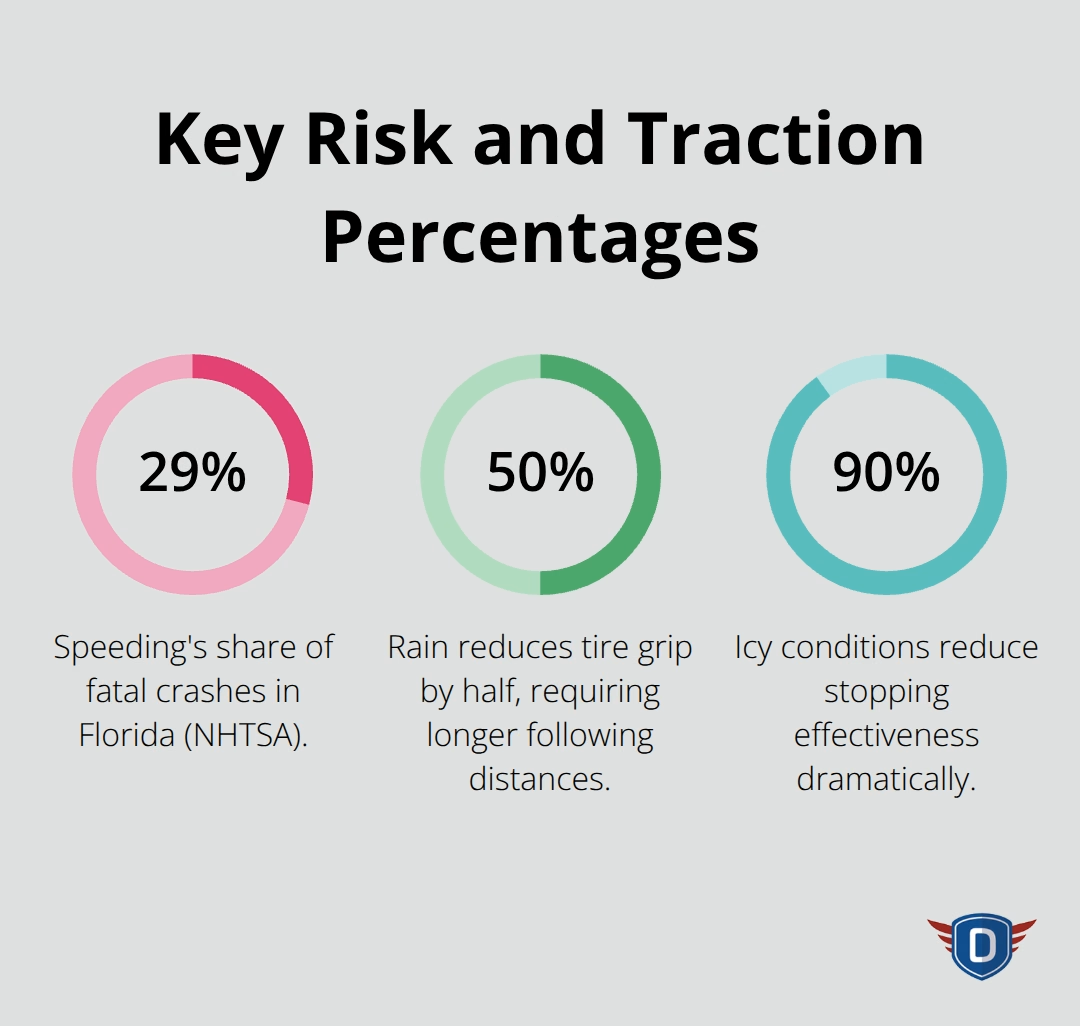
Speeding in school zones doubles fines, meaning a 35 mph violation in a school zone costs significantly more than the same violation elsewhere. Speeding contributed to roughly 29 percent of all fatal crashes in Florida according to NHTSA data, making this far more than a minor infraction. A single speeding ticket can increase insurance premiums by 15 to 30 percent depending on your insurer and driving history.
The Two-Second Rule and Weather Adjustments
Following distance matters equally, and the two-second rule provides a practical baseline for most conditions. At 55 mph, two seconds equals roughly 160 feet of space between your vehicle and the one ahead. Rain reduces tire grip by 50 percent, requiring four seconds of following distance. Wet roads cut stopping distance effectiveness by half, while icy conditions reduce it by 90 percent according to tire safety research from Bridgestone.
Tailgating and Rear-End Collisions
Aggressive drivers who tailgate reduce their reaction time to near zero, guaranteeing they cannot stop safely if traffic suddenly slows. Florida recorded 2,432 rear-end collisions in 2022 where the following vehicle struck the vehicle ahead, and these preventable crashes destroy insurance records instantly. A single rear-end collision can increase insurance premiums by 41 percent for three years.
Why Speed and Distance Matter Together
Speeding combined with inadequate following distance creates the conditions for multi-vehicle pileups that block highways for hours and endanger emergency responders. Drivers who maintain proper spacing and obey posted limits avoid these expensive consequences entirely and contribute to safer traffic flow for everyone sharing the road. Understanding how to apply these rules in real traffic situations leads directly to recognizing and avoiding the violations that carry the heaviest legal penalties.
What Happens When You Get a Traffic Violation
Florida’s Point System and License Suspension
Florida’s point system transforms traffic violations into permanent record markers that affect your driving privileges and wallet for years. Moving violations assign points ranging from 3 to 6 points depending on severity, and accumulating 12 points within 12 months triggers a 30-day license suspension. Reach 18 points in 18 months and you face a 3-month suspension, while 24 points in 36 months means a year-long suspension.
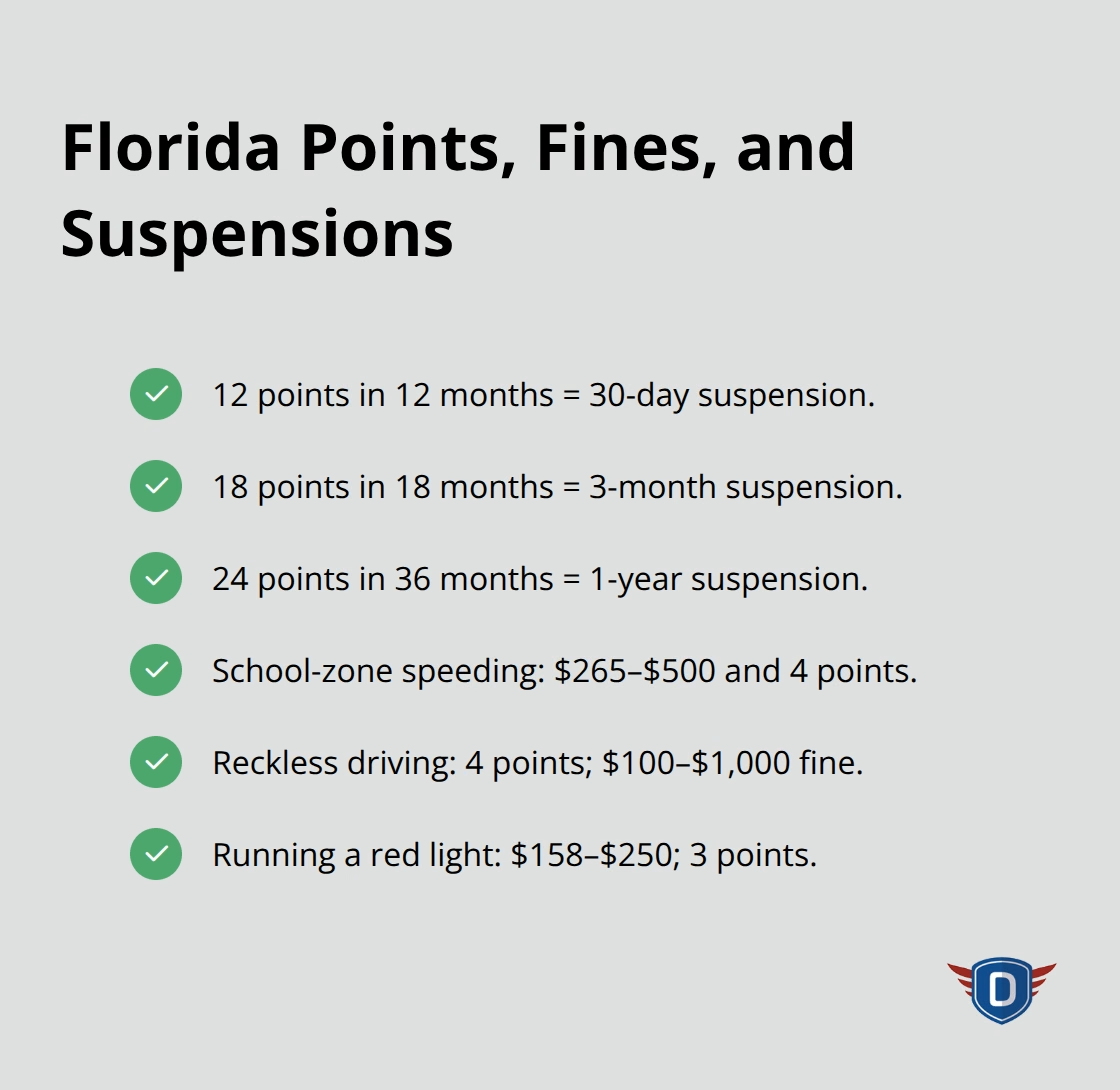
A single speeding ticket in a school zone costs $265 to $500 and adds 4 points to your license. Reckless driving assigns 4 points and fines between $100 and $1,000. Running a red light costs $158 to $250 and carries 3 points. These aren’t theoretical numbers-they’re what Florida drivers pay every day when they ignore traffic laws.
How Insurance Companies Respond to Violations
Insurance companies monitor your driving record closely, and a single violation increases your premiums immediately. While insurers don’t directly factor points into your rate, accumulating points means more violations on your record, which can lead to higher premiums. A speeding ticket that seems minor at the moment costs you approximately $2,000 in additional insurance premiums over three years when you factor in the initial fine plus higher monthly payments.
The financial impact extends far beyond the ticket itself-it compounds month after month on your policy.
Traffic School as Your Financial Protection
Court-ordered traffic school offers a real solution to protect both your license and your finances. Completing an approved course removes points from your license in many situations and prevents insurance companies from seeing the violation on your record. Florida law allows drivers to attend traffic school once every 12 months, making it an essential tool for managing violations.
Approved traffic school programs cover defensive driving techniques, Florida traffic laws, and the behavioral factors that lead to violations in the first place. These courses help you understand how attitude and behavior affect decision-making behind the wheel, transforming how you approach driving situations.
Taking Action After a Violation
Enrolling in traffic school immediately after a violation prevents license suspension and demonstrates to insurance companies that you’re committed to safer driving habits. The sooner you complete an approved course, the faster you can mitigate the financial damage and protect your driving record. Many drivers wait too long and watch their license suspension dates approach, but taking action right away changes the outcome entirely.
Final Thoughts
Understanding traffic laws transforms how you drive and protects your finances for years to come. The rules covering right-of-way, speed limits, and following distances aren’t bureaucratic obstacles-they’re proven safety measures backed by crash data and engineering research. Drivers who master these fundamentals avoid the 12-point license suspensions, insurance premium increases, and court-ordered requirements that plague those who ignore them.
Traffic school courses teach you how attitude and behavior influence your decisions behind the wheel. You learn defensive techniques, understand crash avoidance strategies, and recognize how distraction and aggression create dangerous situations. This knowledge becomes automatic, shaping how you respond to traffic situations months and years after completing the course.
Taking action immediately after a violation prevents the worst outcomes. Enrolling in an approved traffic school course removes points from your license, stops insurance companies from seeing violations on your record, and demonstrates commitment to safer driving. Enroll in an approved traffic school course today and apply what you’ve learned about understanding traffic laws to every drive.