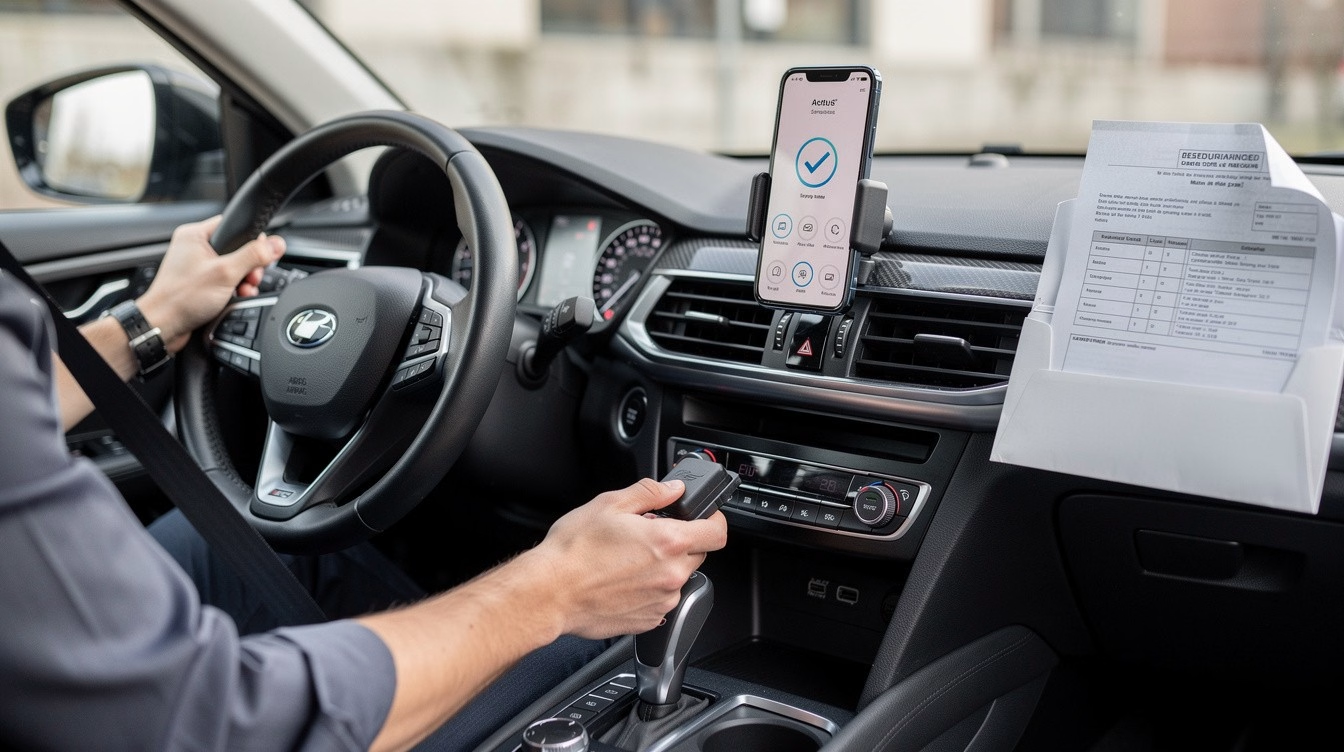
A driver course is often connected to a deadline: a court date, license application, citation requirement, insurance discount, or DMV request. The best online course features make that requirement easier to complete without creating new uncertainty about whether the course will count.
For driver education and traffic safety training, convenience matters, but approval matters more. A course should clearly explain who it is approved for, what it covers, how long it takes, and what happens after completion. The right program helps you meet the requirement while giving you practical information you can use behind the wheel.
Best Online Course Features for Driver Requirements
The strongest online driver courses are built around a simple goal: help the right student complete the right approved program on time. That means course quality is not just about attractive screens or short lessons. It is about accurate state-specific content, reliable recordkeeping, accessible technology, and clear support when questions arise.
Clear state, court, and insurance approval information
Approval status should be easy to find before enrollment. Look for a clear explanation of the state, court, licensing agency, or insurance purpose the course is designed to serve. If you need a course for ticket dismissal, a driver license requirement, or an insurance discount, verify that the specific course matches your situation.
Requirements can vary by state, county, court, insurer, age, and driving record. A course approved for one purpose may not satisfy another. Reliable providers explain these differences plainly instead of making broad promises that leave students guessing.
Self-paced access that respects required course time
A self-paced course lets you study when your schedule allows, including evenings, weekends, or breaks at work. You should be able to sign in, stop, and return without losing your completed work. This is especially helpful for parents, working adults, and students balancing other obligations.
At the same time, many state-approved programs have a required instructional length. A legitimate provider will not suggest that a six-hour or eight-hour requirement can be completed in a few minutes. The better experience is one that makes the required time manageable through clear lesson sections and saved progress.
Mobile compatibility without sacrificing usability
Many drivers begin coursework on a phone and finish it on a tablet, laptop, or desktop computer. Mobile access is valuable because it gives students more flexibility, but the course should remain easy to read and navigate on a smaller screen.
Look for straightforward menus, readable text, clearly marked buttons, and lessons that load reliably. You should also be able to move between devices when needed. Mobile-friendly design is not a replacement for course quality, but it can make completion far less stressful.
Progress tracking and clear completion status
A course dashboard should show where you are, what lessons remain, and whether you have met the requirements to finish. This reduces a common concern for drivers who are completing a course under a deadline: not knowing whether their work was saved or whether another step is required.
Good progress tracking also helps you plan your time. If a final exam, identity check, survey, or certificate request is still pending, you should see that before the last minute. Clear status information helps prevent avoidable delays.
Practical driver safety instruction
The best course experience does more than repeat traffic rules. It explains how those rules apply in real driving situations, including distracted driving, impaired driving, aggressive driving, speeding, following distance, intersections, work zones, and hazard awareness.
For new drivers, practical instruction can support safer habits before independent driving begins. For experienced drivers completing a court or insurance course, it can be a useful reset that connects a past mistake with safer choices going forward. The lesson should be direct, relevant, and easy to understand without oversimplifying the consequences of unsafe driving.
Features That Protect Your Time and Money
A course may meet an approval requirement and still be frustrating if the enrollment process is unclear. Transparent business practices are part of quality, especially when you need proof of completion for an official purpose.
Upfront pricing and no surprise charges
Before paying, you should understand the total course price and what it includes. Check whether the advertised amount covers course access, certificate processing, delivery, and any optional services. If a fee applies for a rush certificate or a mailed document, it should be explained before checkout.
The lowest advertised price is not always the lowest final price. Clear pricing helps you compare providers fairly and choose a course that fits your budget without unexpected add-ons.
A fair refund policy
A refund policy is especially useful if you enroll in the wrong course or learn that your court, DMV, or insurer requires a different option. Read the policy before you start the coursework, since eligibility may change after course activity begins.
A dependable provider explains the policy in plain language. The goal is not to assume a problem will occur. It is to know your options if your circumstances change.
Helpful customer support
Even an easy online course can raise questions. You may need help confirming approval, recovering account access, locating your certificate, or understanding how completion is reported. Accessible customer support can save time when a deadline is close.
Look for clear contact options and practical answers. Support staff should help you understand the process without giving legal advice or making claims about an agency decision they do not control.
Completion Records Matter as Much as the Lessons
For many drivers, the course is only one part of the requirement. The next step may involve submitting a certificate, having completion reported to a state agency, providing documentation to a court, or sending proof to an insurance company.
Ask how completion is handled. Some programs report electronically where permitted, while others provide a certificate for you to submit. Processing methods depend on the course type and jurisdiction, so always confirm your responsibility before your deadline.
Keep a copy of your completion record. Save the certificate digitally, note the completion date, and retain any confirmation number. If an agency does not immediately show the record, those details can help you follow up efficiently.
How to Compare Online Driver Courses Before Enrolling
Start with the requirement, not the course title. Identify why you need training and who must accept it. A teen working toward a first license, a driver responding to a citation, and a mature driver seeking an insurance discount may all need different approved programs.
Then compare the practical details: approval information, required time, device access, total price, support availability, refund terms, and completion reporting. DriverEducators.com, for example, centers its course options on approved driver education and traffic safety needs while making self-paced access and clear enrollment information easier to evaluate.
Do not choose based on speed claims alone. A course that appears faster can create problems if it does not meet the required length, is not accepted for your purpose, or leaves you responsible for a submission process you did not expect. The best choice is the one that fits your exact requirement and gives you a clear path from enrollment to documented completion.
FAQs About Online Course Features
What is the most important online driver course feature?
Approval for your specific requirement is the most important feature. Confirm that the course is accepted by the state, court, DMV, or insurer involved in your case.
Can I take a driver course on my phone?
Many online courses work on mobile devices. Confirm that the provider supports your phone or tablet and that your progress will save between sessions.
Will an online course report completion automatically?
It depends on the course and jurisdiction. Some providers report electronically, while others issue a certificate that you must submit yourself.
Are self-paced courses faster than classroom courses?
They are usually more flexible, not necessarily shorter. State-approved courses may still require a set number of instructional hours.
What should I do before enrolling?
Confirm the required course type, acceptance rules, deadline, and certificate process. This helps you avoid enrolling in a program that does not match your situation.
A driver course should leave you with more than a completion certificate. Choose one that gives you clear answers before you enroll, practical safety knowledge while you study, and dependable documentation when it is time to show that the requirement has been met.