A permit deadline can feel urgent, especially when a teen is ready to test or a parent is trying to fit driver education around school and work. So, how long does permit class take? The honest answer is that it depends on your state and the course your licensing agency requires. It may take as little as four hours, or it may require 24 to 32 hours of classroom instruction before a new driver can move forward.
The good news is that an approved online course can usually be completed on a schedule that works for you. You can study in shorter sessions, use a phone, tablet, or computer, and pick up where you left off. The required course time does not change, but online access can make that time far easier to manage.
Permit Class Length Depends on Your State
“Permit class” is a common phrase, but it does not mean the same thing everywhere. In some states, it means a short pre-licensing course required before a learner’s permit or first license. In others, it refers to the classroom portion of a full teen driver education program.
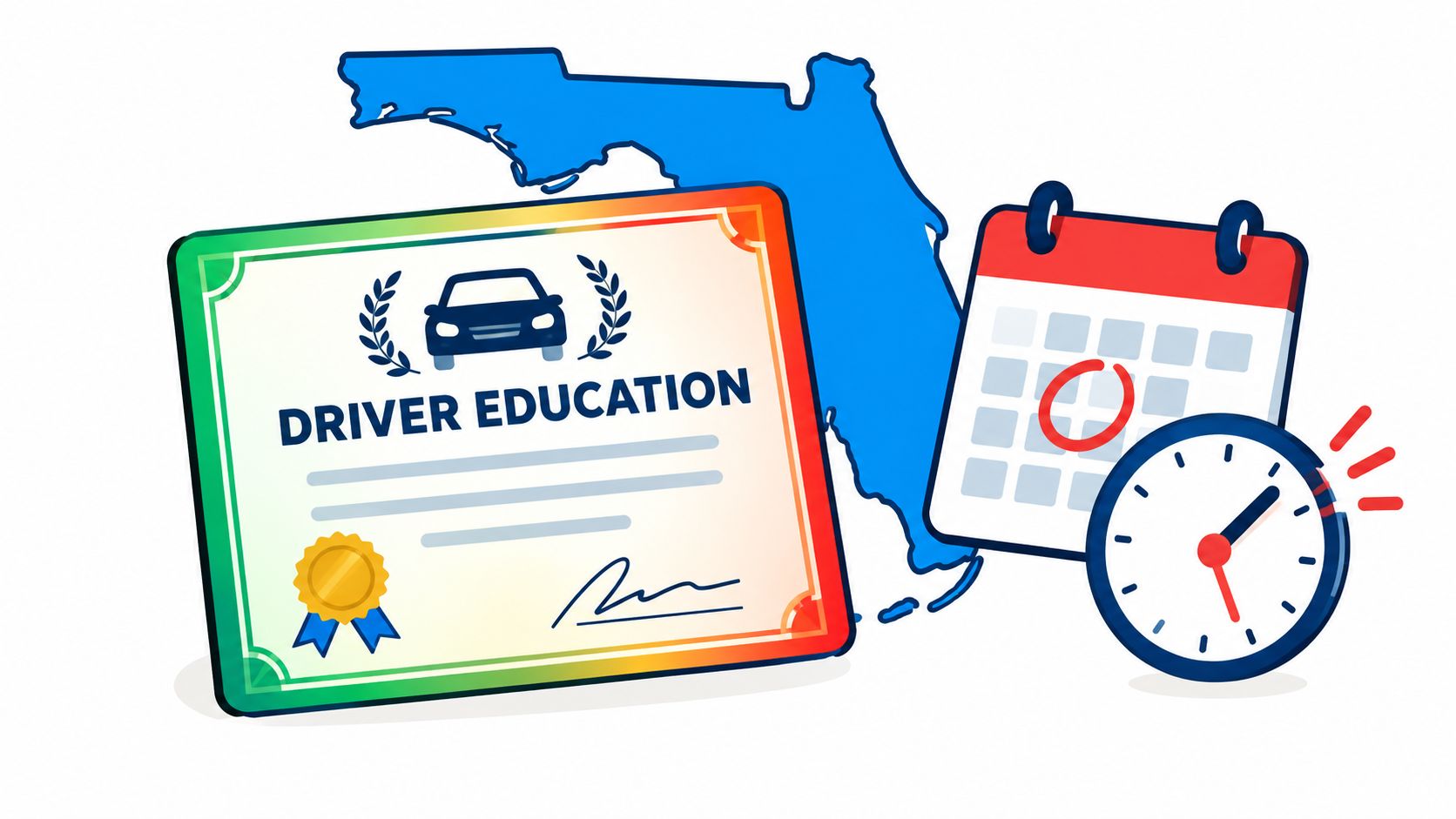
For example, Florida first-time drivers commonly need to complete a four-hour Traffic Law and Substance Abuse Education course, often called TLSAE, before applying for a learner’s permit. In states with comprehensive teen driver education requirements, the classroom portion is often much longer. California generally requires 30 hours of classroom driver education, while Texas teen programs commonly include 32 hours of instruction.
Your age can also affect the requirement. A teen applying for a first permit may need a state-approved driver education course, while an adult applicant may only need to pass the written knowledge test, vision screening, and road test. Court-ordered, ticket dismissal, and insurance courses are separate requirements and should not be assumed to meet permit rules.
The Course Clock May Be Regulated
Many state-approved programs must track instruction time. That means an online course cannot always be finished in one sitting, even if you are motivated to complete it quickly. Some states require minimum time in each lesson, scheduled breaks, or a limit on how many hours you can complete in one day.
These rules are designed to make sure students have time to understand traffic laws, signs, alcohol and drug safety, defensive driving, and sharing the road. A provider should clearly explain the required course length and any pacing limits before enrollment.
How Long Does Permit Class Take Online?
Online permit classes generally take the same number of required instructional hours as classroom courses. The difference is flexibility. Instead of attending a set class at a driving school, you can log in when your schedule allows.
A four-hour course may be completed in one day if state rules allow it and you have enough uninterrupted time. A 30-hour driver education course will usually take several days or weeks because of daily progress limits, school schedules, or the student’s own pace. Completing a few lessons after school or on weekends is often more practical than trying to finish everything at once.
Online access also helps families avoid missed sessions. If a student needs to pause for homework, sports, work, or family responsibilities, progress is saved. That convenience matters, but it does not eliminate the required instruction time.
Class Time Is Only One Part of Getting a Permit
Finishing the course is a major step, but it may not be the final step before receiving a learner’s permit. Depending on the state, a new driver may also need to provide identity documents, prove residency, pass a vision test, pass a written knowledge exam, and obtain parental consent if under 18.
Some states require a learner’s permit before a student begins certain parts of driver education. Others allow the classroom course to be completed first. Check the instructions from your state licensing agency so you complete the steps in the right order.
Behind-the-wheel training is another separate requirement in many states. It may involve a specified number of hours with a licensed instructor, supervised practice with a parent or guardian, or both. Do not confuse classroom driver education with the full graduated licensing process.
What You Learn During Permit Class
Permit courses are built around the information a new driver needs to recognize risks and make safer decisions. Lessons usually cover road signs and signals, right-of-way rules, speed management, following distance, lane changes, impaired driving laws, distracted driving, railroad crossings, and sharing the road with pedestrians, bicycles, motorcycles, and large trucks.
A quality course also prepares students for the knowledge test by explaining why rules exist, not just asking them to memorize answers. For example, knowing the correct following distance is more useful when a student understands how rain, darkness, traffic speed, and vehicle size change stopping distance.
Expect knowledge checks or quizzes throughout an online course. These help confirm that the student is following the material and can identify areas that need review before the permit exam.
Plan Your Course Around Your Permit Appointment
If you already have an appointment at the DMV or licensing office, do not wait until the night before to start. A short course may still require a final exam, identity verification, or processing time before your completion record is available. Longer driver education courses need even more lead time.
Start by confirming three details: the exact course required by your state, the number of required hours, and how your completion is reported. Some providers submit completion electronically, while others issue a certificate that must be printed or presented at the licensing office.
If you are taking an online course, choose a time when you can focus. Studying in 30- to 60-minute sessions often helps new drivers retain the material without feeling overwhelmed. Review difficult topics before moving on, especially rules related to right-of-way, alcohol and drug laws, and traffic signs.
An approved provider such as DriverEducators.com can offer online access and clear course information, but approval must always match the state and purpose of your requirement. A course approved for ticket dismissal, for example, may not satisfy a first-time permit requirement.
After You Finish the Course
Save your completion certificate or confirmation email as soon as you finish. If your state receives electronic reporting, keep your records anyway in case the licensing office cannot immediately locate the completion.
Before visiting the DMV, gather every required document and confirm whether an appointment is needed. Bring a parent or guardian when required, and study the current driver handbook before taking the written test. Passing the course does not automatically guarantee a passing test score, but it gives you a stronger foundation for one.
Permit Class FAQs
Can I finish permit class in one day?
Sometimes. A four-hour course may be completed in one day if your state allows it, but longer driver education programs and state pacing rules can prevent same-day completion.
Is an online permit class faster than an in-person class?
Online classes do not reduce required instructional hours. They are often more convenient because you can study on your own schedule instead of attending fixed sessions.
How many hours is driver education for a permit?
It varies by state. Requirements can range from a short four-hour pre-licensing course to 30 or more hours of classroom driver education.
Do I need behind-the-wheel lessons after permit class?
Many teens do. Behind-the-wheel lessons and supervised practice are separate from classroom instruction and are commonly required before a provisional or unrestricted license.
Will my certificate be sent to the DMV?
That depends on the state and provider. Some completions are reported electronically, while other programs provide a certificate you must submit or bring to your appointment.
Can adults take a permit class online?
Adults can take online courses when their state permits it and the course fits their licensing requirement. Adult first-time applicants should verify whether driver education is required or whether testing alone is sufficient.
Getting a permit is not just about checking off course hours. Give yourself enough time to complete the right approved program, review the driver handbook, and arrive prepared with the documents your state requires. That extra preparation can make the licensing process calmer, quicker, and safer from the first day behind the wheel.