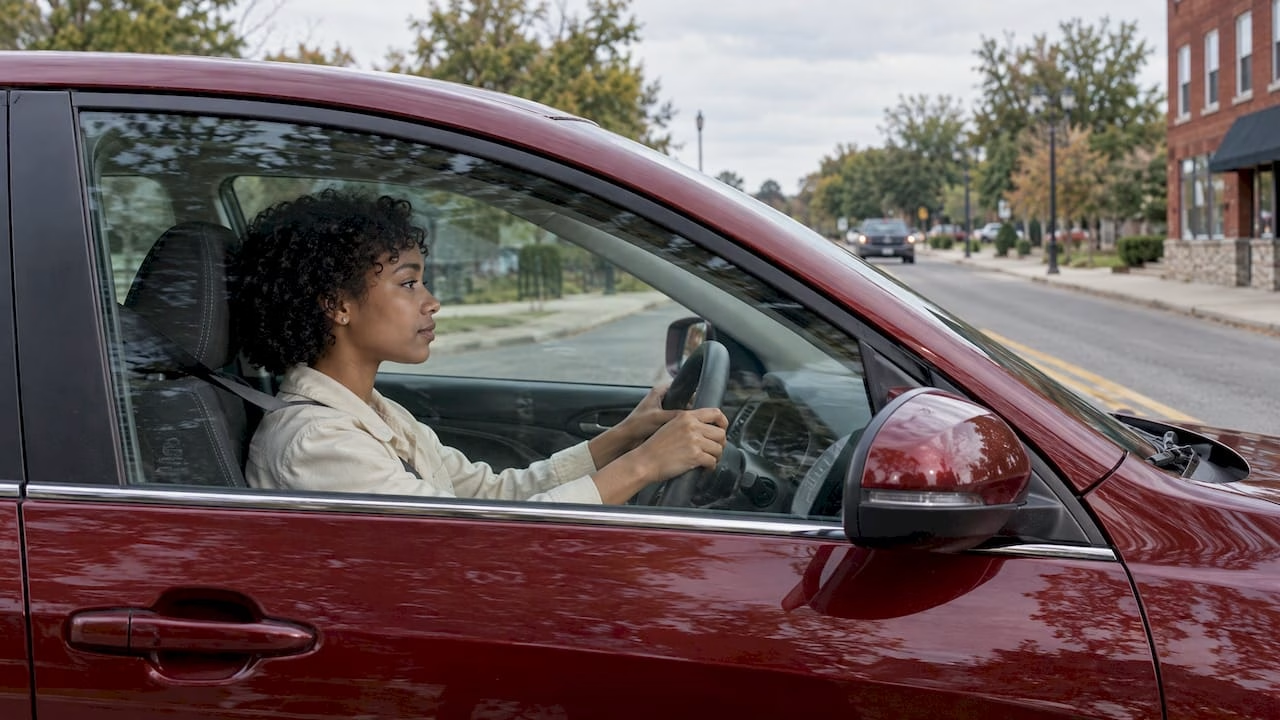
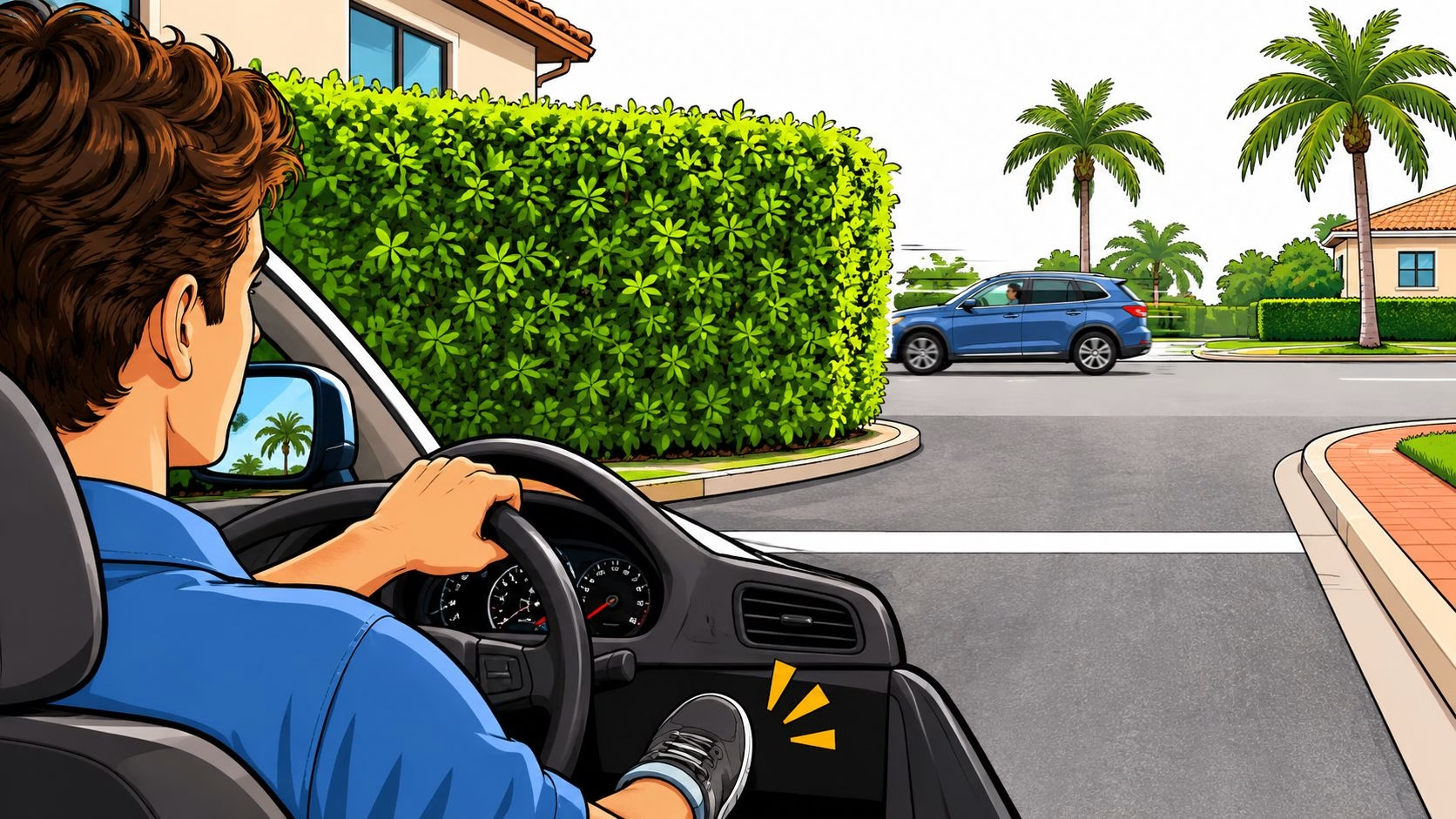
Your phone is a powerful tool-until it’s in your hand while driving. Distracted technology use transforms even experienced drivers into hazards on the road, and the statistics are sobering.
At DriverEducators.com, we’ve seen how a single notification can shatter focus and reaction time in milliseconds. This post breaks down exactly why phones are so dangerous behind the wheel, what the law says about it in Florida, and how it hits your insurance rates.
How Phones Destroy Your Reaction Time
Your brain cannot process two complex tasks at the same time. When you look at your phone while driving, your eyes leave the road for an average of 4.6 seconds according to the National Highway Traffic Safety Administration. At 55 mph, that’s long enough to travel the length of a football field blind. The damage happens instantly: your attention splits, your reaction time slows, and your ability to spot hazards collapses.
Visual distraction is only part of the problem. Cognitive distraction-the mental load of reading, responding to, or thinking about a message-lingers even after you look back at the road. Your brain continues processing what you read while your hands steer. This divided attention means you miss brake lights ahead, fail to notice pedestrians stepping into crosswalks, and react too slowly when something unexpected happens.
The Numbers Prove Phone Distraction Kills
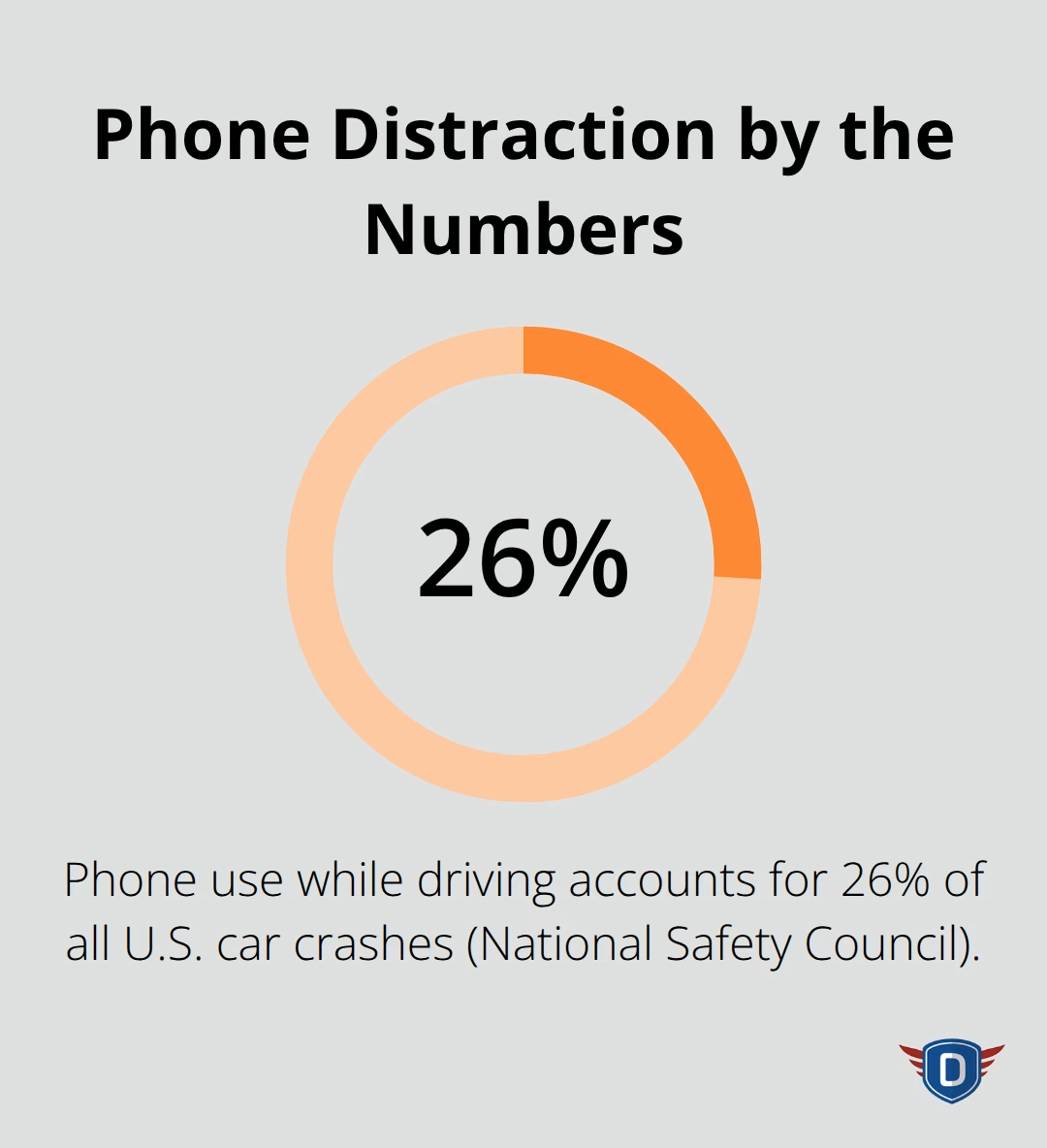
Phone use while driving accounts for roughly 26 percent of all car crashes according to the National Safety Council. In 2024, distracted driving caused 3,208 deaths in the United States, with cell phones being a leading factor. Florida recorded 3,142 crashes involving distracted drivers in a single year, injuring hundreds and killing dozens.
Texting while driving increases crash risk compared to focused driving. Sending or reading a text takes your attention away for an average of 5 seconds, yet drivers often check their phones multiple times during a short trip. Each check compounds the risk exponentially.
Insurance Companies Track Phone Distraction
State Farm’s Drive Safe & Save program monitors phone distraction as a major risk indicator, flagging when your phone screen is on and moving while your vehicle is in motion. Drivers with frequent phone distractions pay higher premiums at renewal because the data proves they’re statistically more likely to cause accidents. The program can deliver up to 30 percent auto insurance discounts for safe driving, but phone use directly undermines those savings.
Reaction Time Fails When It Matters Most
A sober, attentive driver at 35 mph needs roughly 1.5 seconds to brake after spotting a hazard. Add phone distraction and that reaction time stretches to 3 seconds or longer. That extra 1.5 seconds means traveling an additional 75 feet before your foot reaches the brake pedal-a distance that separates a close call from a fatality in urban areas where children run into streets or cars stop suddenly.
Young drivers aged 16 to 19 are three times more likely to crash when distracted, yet they’re also the demographic most likely to use their phones behind the wheel. Most drivers don’t feel the delay because your brain doesn’t send an alert saying you’re now slower to react. You feel fine, confident, in control-right up until the moment you’re not. This false sense of security is what makes phone distraction so lethal, and it’s why understanding the legal framework around this behavior matters for your wallet and your record.
Three Ways Your Phone Hijacks Your Attention While Driving
Visual Distraction: Eyes Off the Road
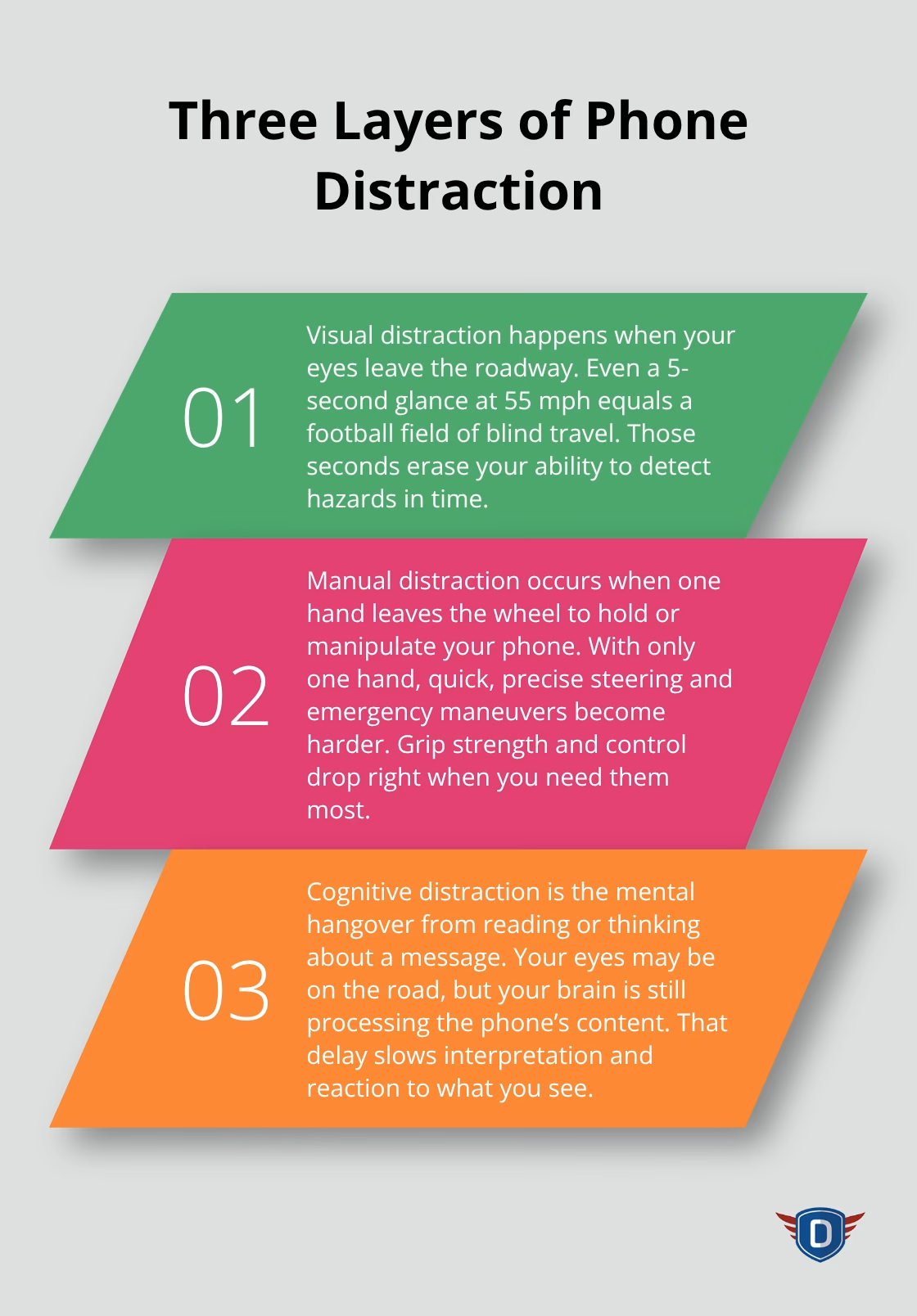
Your phone creates three distinct layers of danger, and understanding each one reveals why even a glance can destabilize your control of the vehicle. The first threat is visual-your eyes physically leave the road. Sending or reading a text takes your eyes off the road for 5 seconds. At 55 mph, that’s like driving the length of an entire football field with your eyes off the road.
Notifications compound this problem because they arrive unpredictably throughout your drive, creating a constant temptation to check. Your brain registers that notification sound or vibration and immediately triggers curiosity, which overrides your intention to stay focused. State Farm’s Drive Safe & Save program tracks this exact behavior, flagging when your phone screen activates while the vehicle moves. Drivers with frequent phone-related events pay higher premiums at renewal because the data shows a direct correlation between screen-on time and accident risk.
Manual Distraction: One Hand Gone
The second layer is manual distraction, which occurs when you reach for, hold, or manipulate your phone. Handling your device means one hand leaves the steering wheel, reducing your ability to make quick corrections if a hazard appears. This matters most in emergency situations where you need both hands to swerve, brake hard, or stabilize the vehicle during a skid.
Your reaction speed drops measurably when you operate your phone one-handed. You cannot steer as sharply, and your grip on the wheel weakens at the exact moment you need maximum control. Even experienced drivers lose precision in their steering inputs when their attention splits between the road and the device in their hand.
Cognitive Distraction: Your Mind Stays Behind
The third and most insidious layer is cognitive distraction, where your mind stays partially locked on the phone’s content even after you look back at the road. Reading a text message or thinking about a conversation pulls your mental resources away from the driving task. Your eyes track the road, but your brain processes what you just read, delaying your ability to interpret what you see.
Cognitive distraction in young drivers aged 16 to 19 is particularly severe because their brains are still developing decision-making capacity, yet this age group uses phones behind the wheel more than any other demographic. The combination of all three layers during a single trip creates compounding risk that most drivers completely underestimate because they feel capable and in control the entire time. This false confidence is precisely what makes phone distraction so dangerous-and why Florida’s legal system treats it with increasing severity.
What Florida Really Costs You for Phone Driving
The Base Fine Is Just the Beginning
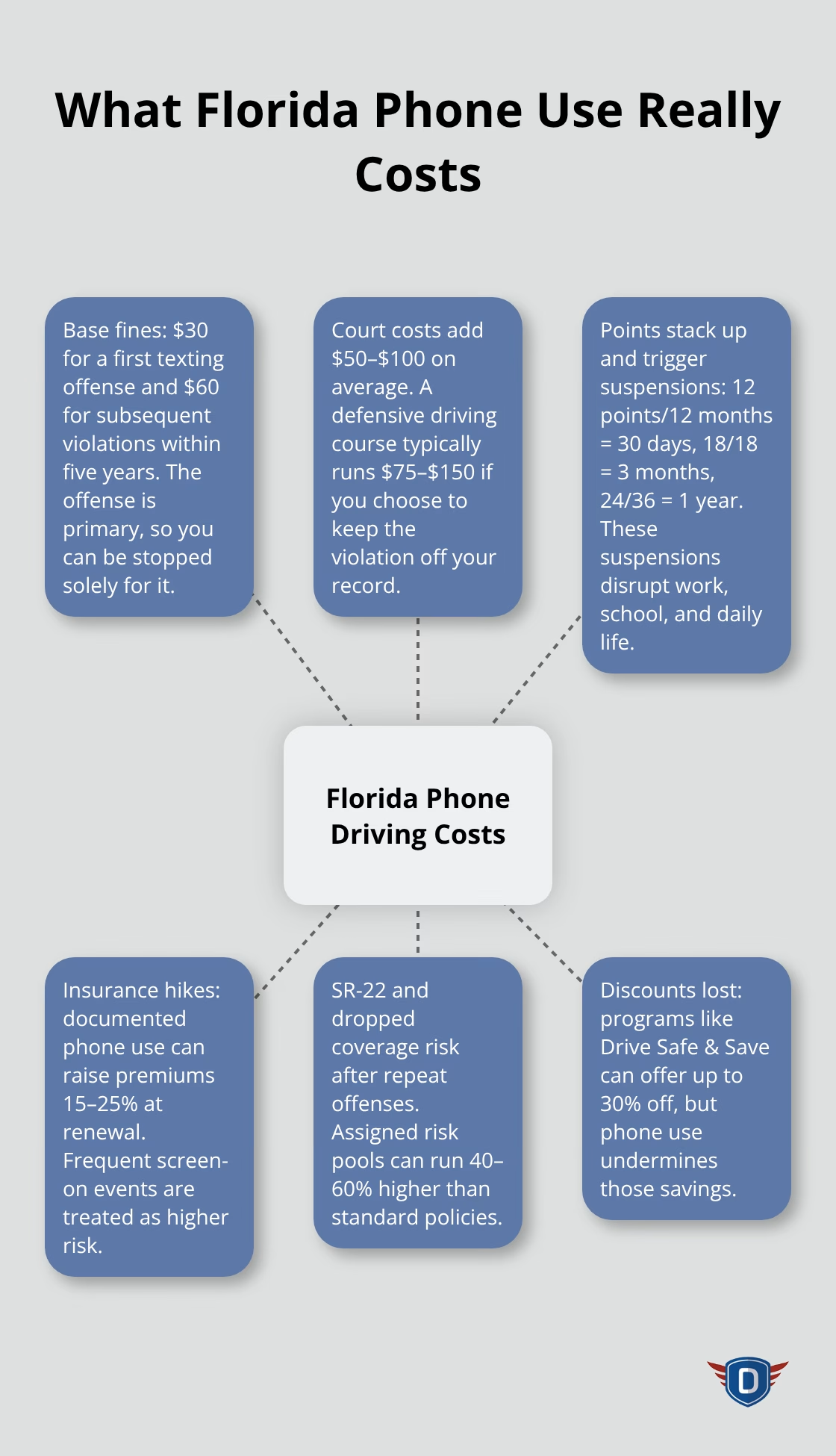
Florida treats phone use behind the wheel as a primary offense, meaning an officer can pull you over solely for holding your device while driving. The state’s distracted driving law prohibits texting, emailing, and instant messaging while the vehicle is in motion, with texting violations carrying a base fine of 30 dollars for a first offense and 60 dollars for subsequent violations within five years. However, the real financial damage extends far beyond the ticket itself.
A distracted driving citation adds points to your driving record, and Florida’s point system directly determines your insurance rates and license status. Court costs average 50 to 100 dollars, and a defensive driving course runs 75 to 150 dollars if you choose to mask the violation from your record.
License Suspension Threatens Your Mobility
Accumulating 12 points within 12 months triggers a 30-day suspension. Eighteen points within 18 months results in a 3-month suspension, and 24 points within 36 months leads to a full year without driving privileges. These suspensions devastate your ability to work, attend school, or handle daily responsibilities.
Insurance companies monitor these points aggressively because they correlate with accident risk. State Farm’s Drive Safe & Save program specifically flags phone distraction events during renewal calculations, and drivers with documented phone use behind the wheel see premium increases of 15 to 25 percent at their next renewal.
Insurance Rates Spike Dramatically After a Citation
A single 30-dollar ticket for texting creates cascading costs over years. Someone paying 1,200 dollars per year for auto insurance faces an additional 180 to 300 dollars yearly after a distracted driving citation, translating to 900 to 1,500 dollars in extra costs over five years before the violation ages off their record.
Repeat offenders face exponentially worse consequences because multiple violations within five years trigger enhanced penalties and license suspension risk. These suspensions lead to SR-22 insurance requirements that double or triple premiums for three years, making the total financial impact staggering.
Assigned Risk Pools Lock You Into High Rates
Some insurers simply drop high-risk drivers entirely, forcing them into assigned risk pools where rates spike 40 to 60 percent higher than standard policies. This outcome transforms a phone habit into a permanent financial penalty that affects every renewal for years.
The practical strategy is avoiding the phone entirely while driving. Store your device out of reach, use voice commands for navigation and calls, and enable iOS Driving Focus Mode or similar Android features that limit notifications and interactions until you arrive safely. These habits protect your record, your wallet, and your life.
Final Thoughts
Your phone will always be there, but your reaction time won’t wait. Distracted technology use transforms capable drivers into liabilities on the road, and Florida’s legal system responds with fines, points, and insurance penalties that compound for years. A single text message costs far more than 30 dollars when you factor in court fees, defensive driving courses, and premium increases that follow a citation.
Build defensive driving habits that protect you before a crisis arrives. Disable notifications before you drive, store your phone out of reach, and use voice commands for navigation and calls. These practices eliminate the temptation entirely rather than relying on willpower to resist it, and they work because they make distracted driving physically impossible.
Awareness alone changes nothing without action. Knowing phones are dangerous doesn’t stop you from checking one at a red light or noticing a notification in traffic. Visit DriverEducators.com to explore Florida-approved driver improvement courses that teach you how to recognize risky habits and replace them with safer behaviors that stick.