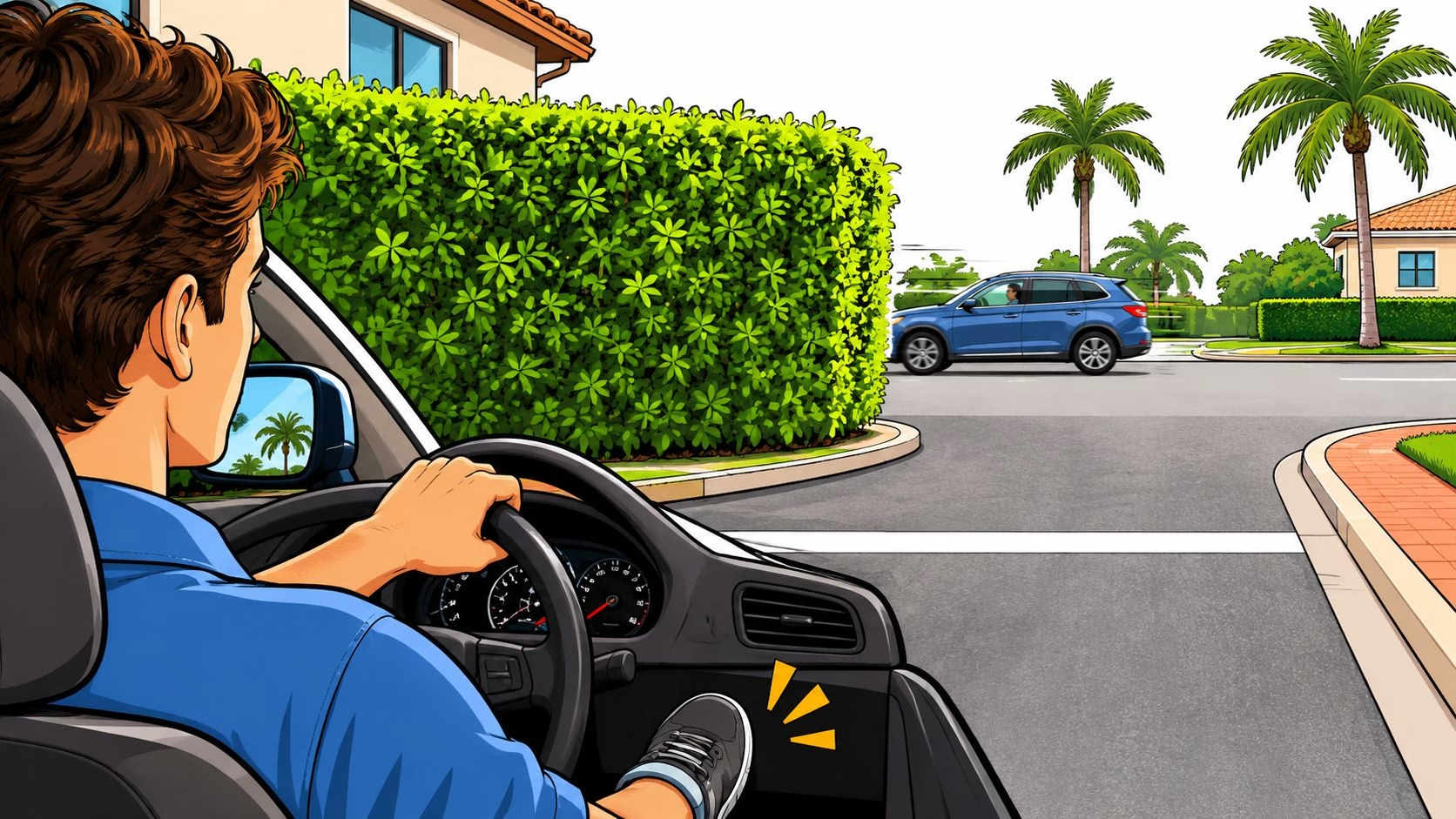
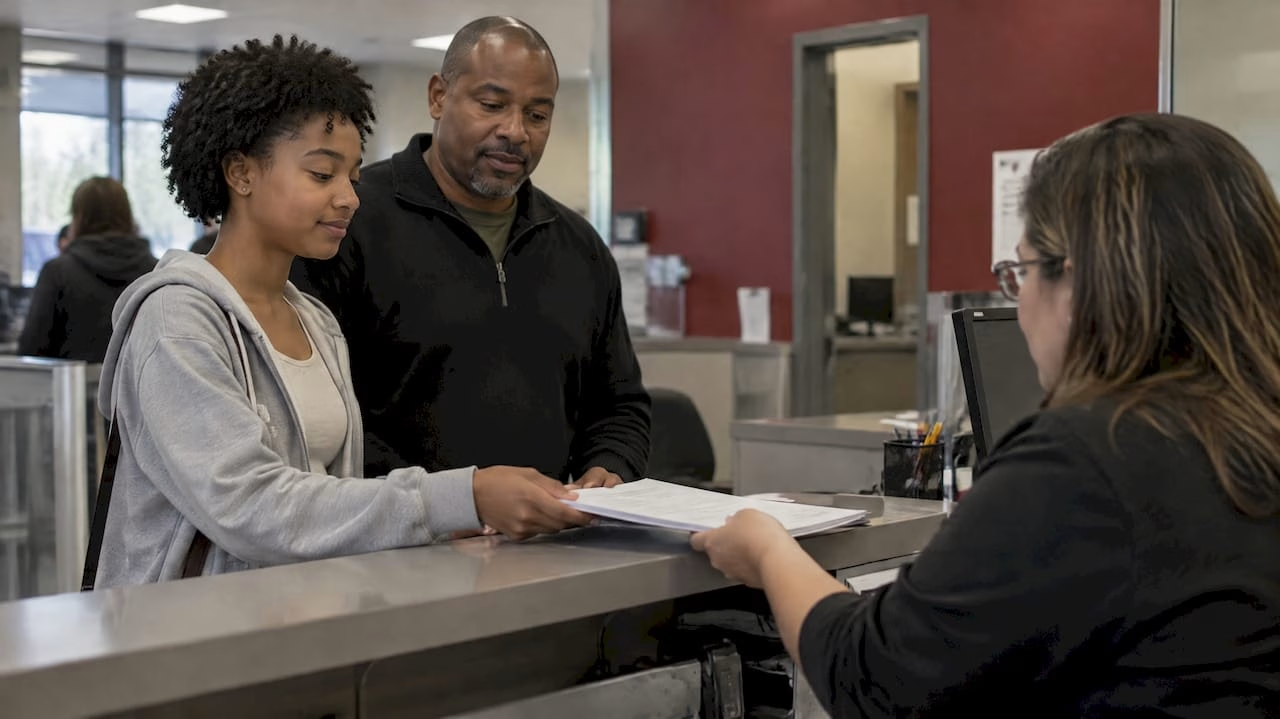
A provisional license is the middle step of graduated driver licensing (GDL). It comes after a learner’s permit and before a full, unrestricted license. It lets a new driver, usually a teen, drive without a supervising adult, but with limits on things like night driving, passengers and phone use. The name and the exact rules change from state to state, so the details below come from the state agencies that write them.
Key Takeaways
- A provisional license (also called intermediate, probationary or restricted in some states) is the solo-driving stage between a learner’s permit and a full license.
- You can drive without a supervisor, but restrictions apply: typically a night curfew, a cap on teen passengers and tight phone rules.
- Eligibility usually depends on age, months holding a permit, supervised practice hours and a clean record. Each state sets its own numbers.
- Violations can lead to warning letters, restrictions, suspension or a restarted clock, depending on the state.
- Florida uses a similar system but calls the stages a learner’s license and a Class E license with hour limits.
Table of Contents
- What a provisional license is
- Provisional license vs. learner’s permit vs. full license
- Can you drive around with a provisional license?
- How to qualify: the usual steps
- Common restrictions on a provisional license
- What happens if you break the rules
- Moving from provisional to a full license
- How Florida handles it
- Our perspective
- Tips for a clean provisional period
- Start your Florida driver education online
- FAQ
- Sources
What a provisional license is
Graduated licensing is built on a simple idea: give new drivers experience in lower-risk conditions before they get full privileges. Most systems move through three stages: a learner’s permit, a provisional or intermediate license, and a full license. The provisional stage is where a teen first drives alone.
The Maryland Motor Vehicle Administration describes it as the second step in its Rookie Driver program. It allows driving without a supervising driver, but with important restrictions. That is the pattern across the country.
Two points often cause confusion:
- The word “provisional” is not universal. Some states say intermediate, probationary, junior or restricted. Florida’s version is the Class E license for 16- and 17-year-olds.
- It is not the same as a learner’s permit. Some websites use “provisional permit” to mean the permit. In California, for example, the first step is the instruction permit, and the provisional license is a separate, later license.
Provisional license vs. learner’s permit vs. full license
| Stage | Who can drive with it | Supervision | Typical limits |
|---|---|---|---|
| Learner’s permit | New drivers, often starting at 15 or 16 | A licensed adult must be in the car | Practice only; often daylight or early-evening limits |
| Provisional license | Teens who completed the permit period, hours and a road test | None required, with exceptions | Night curfew, passenger limits, phone limits |
| Full license | Drivers who finished the provisional period, or adults | None | No GDL restrictions |
A full license only means a driver has met the minimum standard to drive alone. The Teen Driver Source at CHOP Research stresses that it does not mean a teen is fully experienced. That is why the practice you log and the habits you build during the earlier stages matter.
Can you drive around with a provisional license?
Yes. The main difference from a permit is that you do not need a licensed adult beside you. Maryland’s MVA confirms that provisional drivers may drive without a supervising driver, within the state’s restrictions.
In practice, “drive around” has conditions. You can usually go to school, work and errands. You generally cannot drive at certain late hours, carry a carload of friends or use your phone while driving. Breaking those rules is the fastest way to lose the license.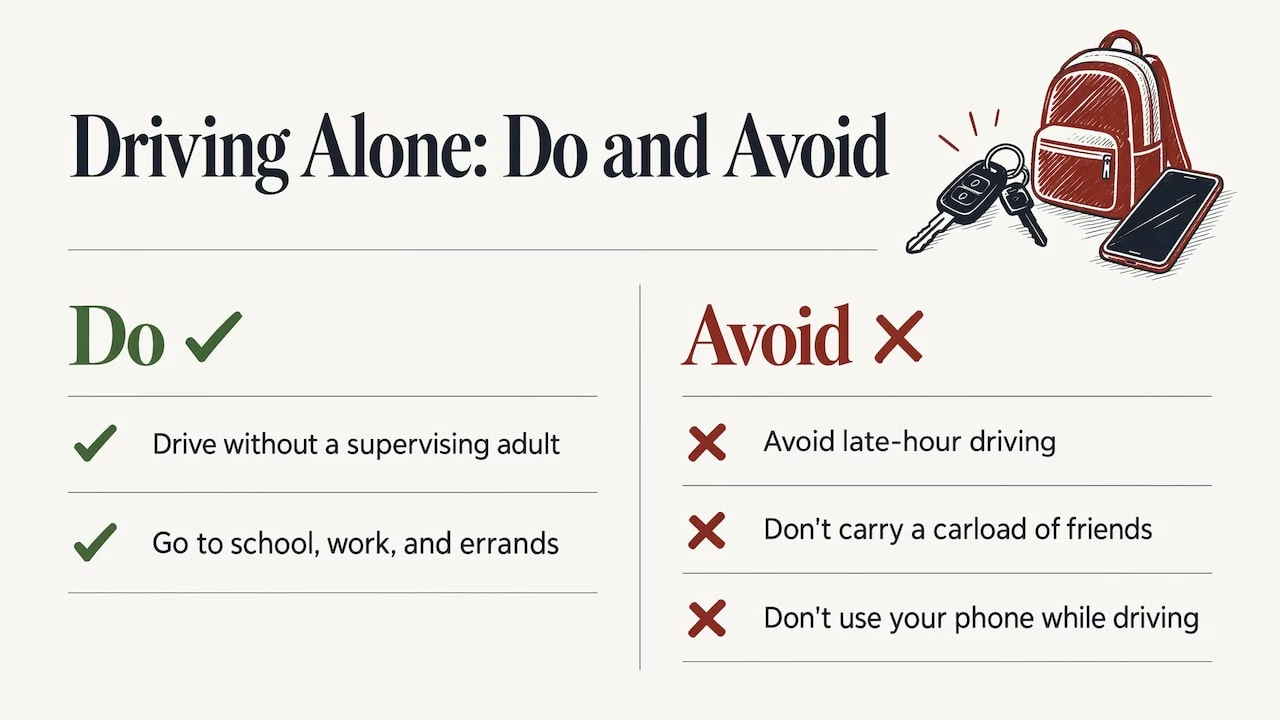
Can you drive alone in California?
Yes, with conditions. According to the California Driver Handbook, once you hold a provisional license you may drive alone as long as you have no collisions or traffic violations on your record. During the first 12 months you cannot drive between 11 p.m. and 5 a.m. You also cannot carry passengers under 20 unless a California-licensed parent or guardian, a licensed driver 25 or older, or a licensed or certified driving instructor is with you.
How to qualify: the usual steps
The numbers differ by state, but the path looks much the same. Three examples show the range.
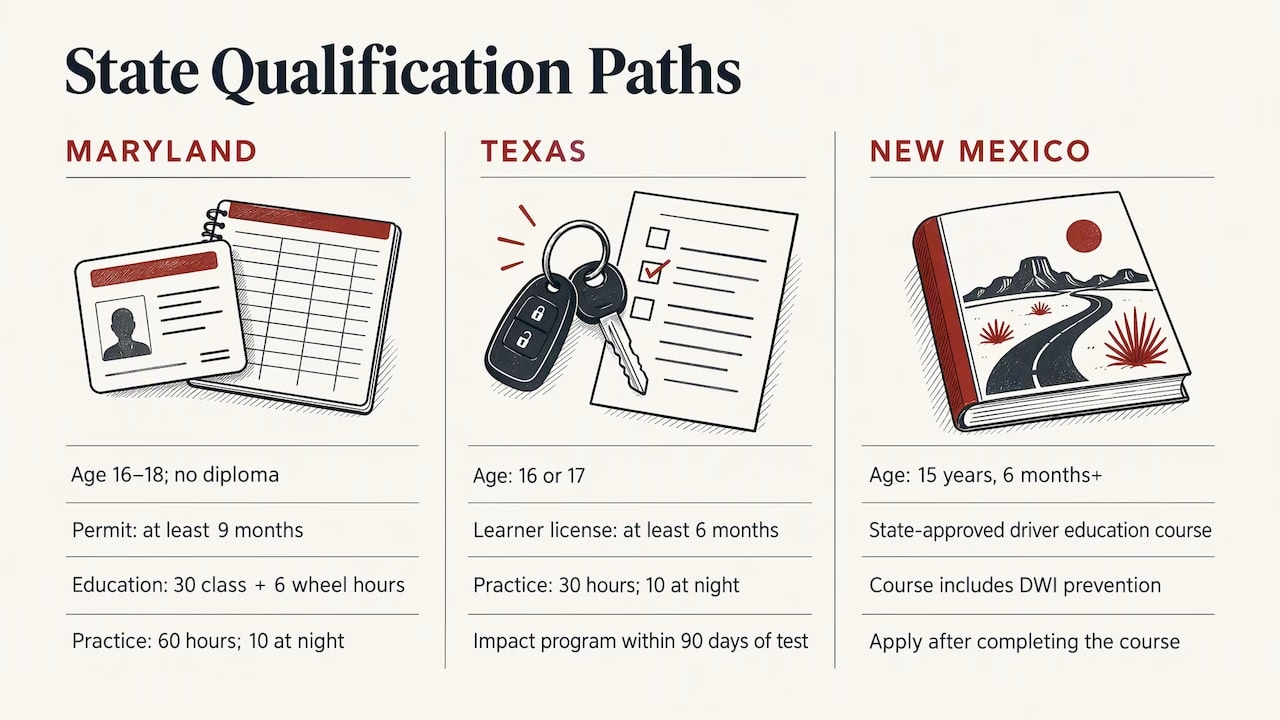 Maryland. Applicants aged 16 to 18 without a high school diploma must hold a learner’s permit for at least 9 months. They must finish a certified driver education course with 30 classroom hours and 6 behind-the-wheel hours, log 60 supervised hours (at least 10 at night), and have no moving-violation conviction or probation before judgment in the past 9 months, according to the Maryland MVA.
Texas. Drivers must be 16 or 17, have held a learner license for at least 6 months, complete 30 hours of behind-the-wheel practice (10 at night), finish the Impact Texas Teen Driver Program within 90 days of the driving test, and pass that test, per the Texas Department of Public Safety.
New Mexico. A person 15 years and six months or older may apply after completing a state-approved driver education course that includes a DWI prevention component, according to the New Mexico MVD.
A broader pattern: most states require a permit for at least 6 months and 50 supervised hours, 10 of them at night, before the road test. Always confirm the current numbers with your own state’s licensing agency before you plan.
A checklist for teens and parents
- Find your state’s permit age and how long you must hold it.
- Enroll in any required driver education course.
- Start a practice log on day one and include night hours.
- Avoid moving violations during the permit period, since many states count them.
- Book the road test once the hours and months are complete.
Our guide to Florida teen driver licensing requirements walks through this for Florida families, and parent and teen driving guidelines help you set house rules for practice.
Common restrictions on a provisional license
Restrictions fall into four groups.
Night driving
The Oregon DOT explains that the most severe teen collisions happen at night and on weekends. Novice drivers lack the experience to anticipate hazards when visibility drops. That is why curfews are a core part of GDL.
- California: no driving from 11 p.m. to 5 a.m. in the first year.
- Texas: no driving from midnight to 5 a.m., except for work, school activities or emergencies, per Texas DPS.
- New Mexico: driving is allowed from 5 a.m. to midnight. At other hours you need a licensed driver 21 or older, a family or medical necessity, travel to or from work or school, or a medical emergency, per the state MVD.
Passengers
Texas allows no more than one passenger under 21 who is not a family member. Oregon bars passengers under 20 (other than immediate family) for the first 6 months, then allows up to three for the next 6 months, according to the Oregon DOT. California’s rule is in the section above.
Phone use
Texas prohibits all cell phone use for provisional drivers, including hands-free, except in an emergency. Many other states have similar limits for new drivers.
Exceptions
Most states allow narrow exceptions. In California these include medical necessity, employment necessity, school-authorized activities, parental consent for an immediate family member, and emancipated minors. Each exception needs documentation and an end date. Keep that paperwork in the car.
What happens if you break the rules
Penalties are meant to correct habits early. In California, per the Driver Handbook:
- One at-fault collision or conviction within 12 months brings a warning letter.
- A second brings a 30-day restriction, unless you are accompanied by a licensed adult 25 or older.
- A third brings a 6-month suspension and 1 year of probation.
- A conviction for alcohol or a controlled substance between ages 13 and 21 brings a 1-year suspension.
All of this comes from the California Driver Handbook. Other states have their own ladders. Maine, for instance, still suspends the license for a moving violation during the two-year provisional term, even after the curfew rules lift, per the Maine Secretary of State.
Moving from provisional to a full license
Most states want time, plus a clean record. Examples:
- Maryland: 18 months with a clean record. A traffic conviction or probation before judgment restarts the period.
- New Mexico: under 18, at least 12 months on the provisional license, compliance with all restrictions, and no conviction in the 90 days before applying, per the state MVD.
- Washington, D.C.: at least 17, 6 months on the provisional license, 12 consecutive months with no point-assessable offenses, and a signed form certifying 10 hours of night practice, per the DC DMV.
- Maine: 270 days from the original issue date before the restrictions end.
In most states, restrictions also end automatically at age 18.
How Florida handles it
Florida does not use the word “provisional” for its teen license, but the structure is the same. Under the Florida Highway Safety and Motor Vehicles department’s GDL rules:
- Learner’s license (age 15): you must always be accompanied by a licensed driver 21 or older. Driving is limited to daylight hours for the first three months, then until 10 p.m. You must hold it for 12 months or until you turn 18, with 50 supervised hours, 10 at night.
- Class E license, age 16: driving is allowed only from 6 a.m. to 11 p.m., unless you are driving to or from work or are with a licensed driver 21 or older.
- Class E license, age 17: driving is allowed from 5 a.m. to 1 a.m., with the same exceptions.
Those details are on the FLHSMV teen licensing page, which also lists the requirements for a Class E license, including a clean record during the learner period. For a Florida-specific walkthrough, see our Florida GDL guide and the Florida teen driver’s license guide.
Our perspective
The provisional stage is where habits get set. A teen who has just passed a road test is legally on their own, but has seen only a sliver of real traffic. We think the best use of this period is to keep learning on purpose.
That is why we build our courses in-house with certified educators and safety specialists. Our content is designed to follow statutory requirements and to reflect real-world safety. Short, self-paced lessons on any device fit around school, sports and work, and our multilingual read-along feature helps families who learn in more than one language.
For first-time drivers in Florida, we recommend pairing supervised practice with structured instruction. Our defensive driving for teens lessons and the teen driver lessons roadmap show what to practice, and in what order. Parents can reinforce it with the habits listed in our guide on what your teen should master before driving.
the author
Tips for a clean provisional period
A clean record shortens the road to a full license in many states and protects insurance rates. A few habits do most of the work:
- Treat the curfew as a hard line. Plan rides home before the cutoff, not at it.
- Keep the phone out of reach. Put it in the glove box or on do-not-disturb before the engine starts.
- Keep passenger numbers low. Friends in the car raise the distraction level for a new driver.
- Carry exception paperwork. A work or school letter, where your state allows it, should be with you.
- Keep practicing. Rain, highway merging and night driving are skills, not box-ticks. Our driving safety tips for first-time teen drivers cover them.
Start your Florida driver education online
If you are a first-time driver in Florida, we offer state-approved online courses you can take at your own pace on a phone, tablet or computer. Our Florida Driver Education Traffic Safety Course (DETS) costs $29.90, with no hidden fees and a money-back guarantee.
See the course details on our Florida DETS course page, or browse every Florida driver education course we offer.
FAQ
Is a provisional license the same as a learner’s permit?
No. A learner’s permit is the first stage and requires a licensed adult in the car. A provisional license is the next stage and allows solo driving with restrictions. Some websites use “provisional permit” loosely for the permit, so check your state’s own terms.
How long do you keep a provisional license?
It depends on the state. Maine uses 270 days, New Mexico requires at least 12 months, and Maryland requires 18 months of clean driving. In most states the restrictions also end at age 18.
What age can you get a provisional license?
Usually 16, though some states start earlier. California issues it to people under 18 who are at least 15½, and New Mexico allows applications from 15 years and six months. Texas limits it to ages 16 and 17.
Do adults get a provisional license?
The provisional stage is aimed at teens, but some states apply graduated steps to older new drivers too. Rules differ, so check your state’s licensing agency. Adults learning to drive can also look at our adult driver education program.
Sources
- Provisional Driver’s License, Maryland MVA
- Texas Provisional License as a Teen, Texas DPS
- Chapter 4: Provisional Driver’s License, New Mexico MVD
- Start Smart: Provisional License Information, California Highway Patrol
- California Driver Handbook
- Parents’ Role in Teen Driving, Oregon DOT
- Provisional License, DC DMV
- License Age Restrictions, Maine Secretary of State
- From Provisional to Full License, Teen Driver Source
- Learner’s Permit vs. Provisional vs. Full Driver’s License
- Licensing Requirements for Teens, Florida FLHSMV
Recommended
- Florida Teen Drivers License: Your Complete Guide
- How to Get a License in Florida: A Step-by-Step Guide
- Your Guide to the Florida Learner’s Permit
This article is provided for general information and is not a professional advice.