Substance abuse risks behind the wheel kill thousands of teens every year. At DriverEducators.com, we know that impaired driving isn’t just about alcohol-drugs, prescription medications, and even energy drinks can impair your judgment and reaction time.
The consequences go far beyond a ticket. A single impaired driving incident can derail your future through legal penalties, insurance costs, and permanent marks on your record.
How Impaired Driving Slows Your Brain and Body
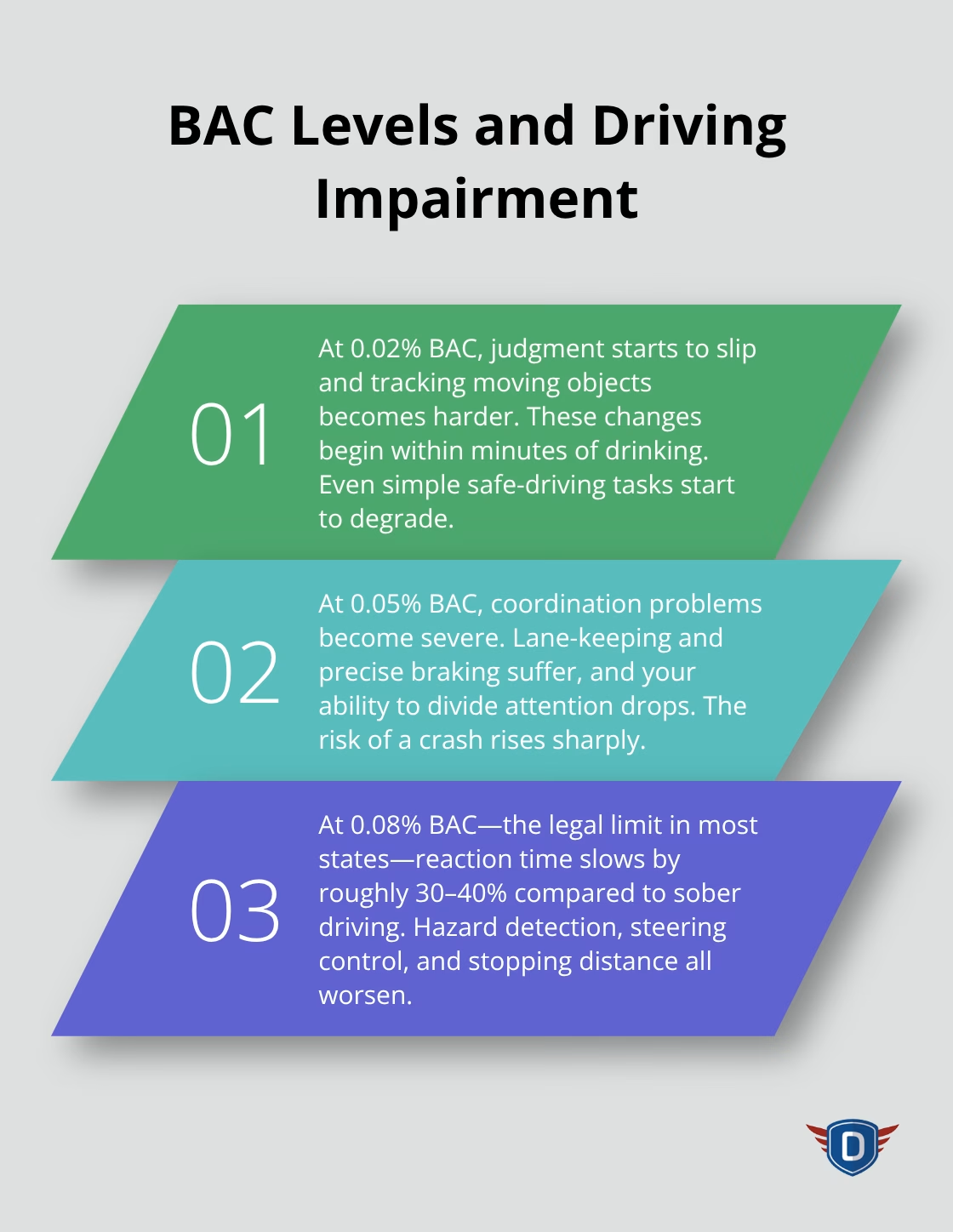
Alcohol hits your brain within minutes of consumption, and the damage to driving ability starts almost immediately. The National Highway Traffic Safety Administration reports that even a blood alcohol concentration of 0.02 percent impairs judgment and reduces your ability to track moving objects. At 0.05 percent, coordination problems become severe. At 0.08 percent, the legal limit in most states, your reaction time slows by 30 to 40 percent compared to sober driving.
The Distance Problem at Highway Speeds
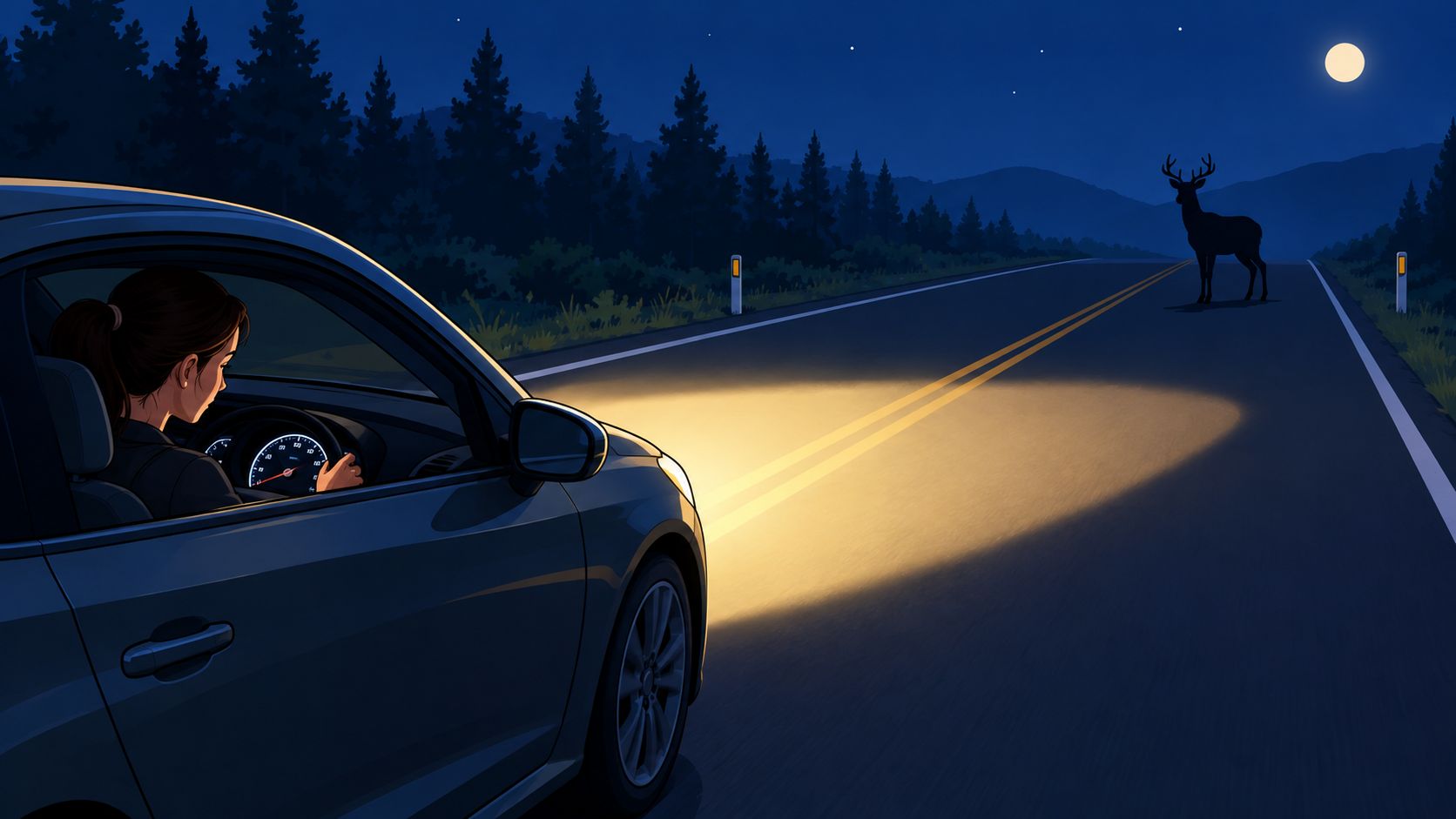
If you normally react to a hazard in one second, impaired you might take 1.4 seconds. In that extra 0.4 seconds at 55 mph, your vehicle travels an additional 32 feet before you even begin to brake. That distance can mean the difference between stopping safely and crashing into another car.
Drugs create different but equally dangerous problems. Marijuana impairs concentration and motor coordination. Prescription medications like benzodiazepines and opioids slow reaction time and cause drowsiness. Many teens don’t realize that over-the-counter cold medicines containing dextromethorphan can produce impairment similar to alcohol.
The Speed Misjudgment That Kills
Impaired drivers consistently misjudge how fast they’re traveling. Alcohol makes drivers think they’re going slower than they actually are, which leads to excessive speeding and difficulty maintaining lane position. You might feel confident behind the wheel when impaired, but your brain is literally lying to you about your competence.
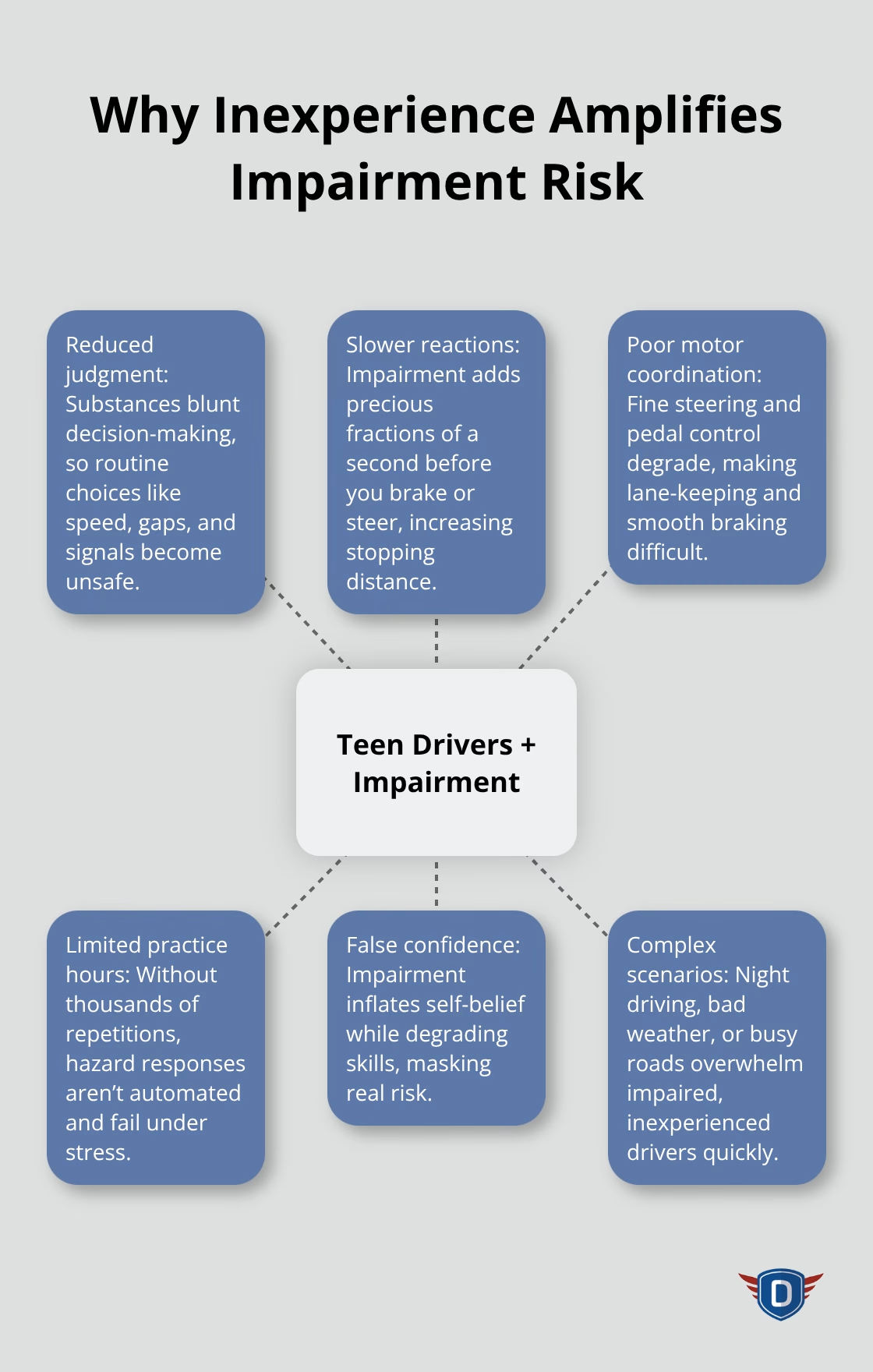
This false confidence is dangerous because it removes natural caution. A teen driver already has lower crash rates than adults only when sober, according to the CDC. Add impairment to inexperience, and the risk skyrockets. Even a small amount of alcohol or cannabis reduces your ability to steer smoothly, brake accurately, and judge distances.
Why Inexperience Makes It Worse
The combination of impaired judgment plus reduced motor skills (along with limited driving experience) equals a crash waiting to happen. Teen drivers lack the thousands of hours that adult drivers accumulate, so their brains haven’t yet automated the quick decisions that keep vehicles safe. Impairment strips away what little experience you do have, leaving you vulnerable on the road.
Understanding how substances affect your driving is only half the battle. The legal and financial consequences that follow an impaired driving incident can reshape your entire future.
The Real Consequences Teens Face for Impaired Driving
One impaired driving conviction costs $10,000 to $25,000 in direct expenses during the first year alone. Mothers Against Drunk Driving compiled this figure, which includes legal fees, court costs, and mandatory substance abuse programs. Most teens drastically underestimate this number when they get behind the wheel impaired. The financial damage extends far beyond that first year, creating a cascade of expenses that follow you into adulthood.
License Suspension Strips Away Your Independence
In Florida, a first DUI conviction results in a mandatory six-month to one-year license suspension under Florida Statute 322.2615. For drivers under twenty-one, the suspension period becomes even harsher. You lose the ability to drive to school, work, or social activities during the prime years when mobility matters most. Getting your license reinstated after suspension requires additional fees, completion of a DUI education program, and proof of insurance.
If you need to work or attend college in another city, a suspended license becomes a massive barrier. Your parents may need to drive you everywhere, which creates dependency and embarrassment at an age when independence matters intensely. The emotional toll of losing driving privileges often exceeds the financial penalty.
Insurance Rates Multiply and Stay Elevated for Years
Your insurance rates increase dramatically after an impaired driving conviction. A driver convicted of DUI can expect insurance rates increase by 300 to 400 percent immediately after conviction. A teen paying $1,200 annually for auto insurance might suddenly face $4,800 to $6,000 per year. Some insurers drop impaired drivers entirely, forcing you to seek high-risk insurance pools that charge even higher rates.
This penalty persists for at least three to five years on your driving record in Florida. Even after the conviction ages off your record, insurers can still see it and adjust rates accordingly. If you share a vehicle with your parents, their insurance rates also climb because you’re listed as a driver on their policy. This creates family financial tension and makes relatives directly responsible for the consequences of your choices.
A Criminal Record Blocks Career Paths You Haven’t Considered Yet
A DUI conviction becomes a permanent criminal record that appears on background checks. Colleges review criminal records during admissions, and many scholarship programs disqualify applicants with convictions. Employers conducting background checks see the conviction immediately, and many industries refuse to hire drivers with DUI records.
Teaching, nursing, law enforcement, and finance all have strict policies against hiring candidates with impaired driving convictions. Even internships and entry-level positions at reputable companies often require a clean record. Your conviction doesn’t disappear after a few years-future landlords, loan officers, and professional licensing boards all have access to this information. A decision made in one night at seventeen can eliminate career paths you might have pursued at twenty-five.
The financial and legal consequences pile up quickly, but they’re only part of the story. What happens when you’re actually on the road with an impaired driver-someone else’s poor choice-puts your life at immediate risk.
How to Recognize and Avoid Impaired Drivers on the Road
Spot the Twelve Warning Signs
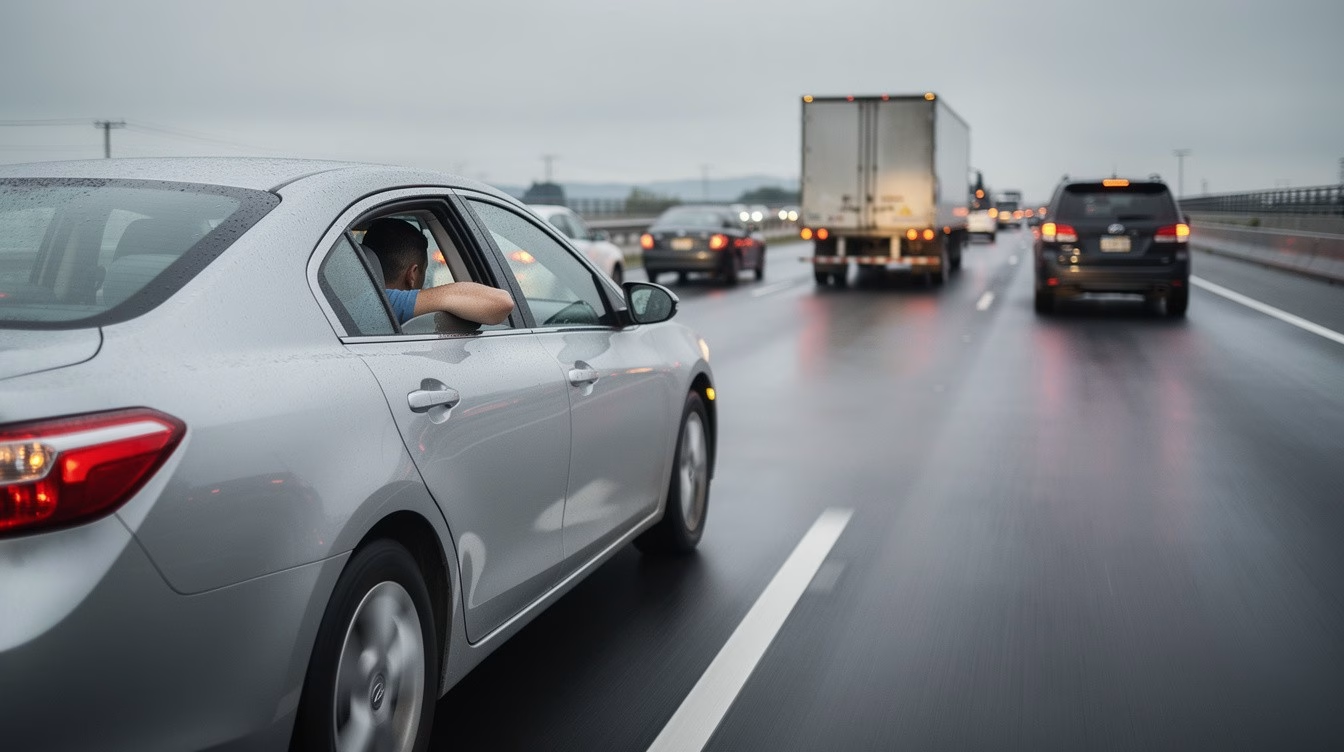
Impaired drivers display specific, recognizable behaviors that signal danger long before a crash occurs. The National Highway Traffic Safety Administration identified twelve key warning signs that correlate with impaired driving: weaving between lanes, straddling the center line, appearing overly cautious, braking erratically, accelerating or decelerating without reason, turning with an unusually wide radius, nearly striking other vehicles or objects, driving at inconsistent speeds, tailgating, failing to dim headlights, and swerving abruptly. When you spot a vehicle exhibiting two or more of these behaviors, the driver is likely impaired.
A weaving pattern combined with inconsistent speed indicates the driver has lost control of basic steering and throttle management. If you notice a car doing this during your commute, increase your following distance immediately and contact the local police non-emergency line with the vehicle’s license plate, location, and direction of travel. Law enforcement can intercept the driver before an accident occurs.
Position Your Vehicle for Maximum Safety
Your defensive driving strategy against impaired drivers requires specific tactical positioning. Never position your vehicle directly in front of an erratically driving car because impaired drivers often brake suddenly without warning, and rear-end collisions cause severe injuries.
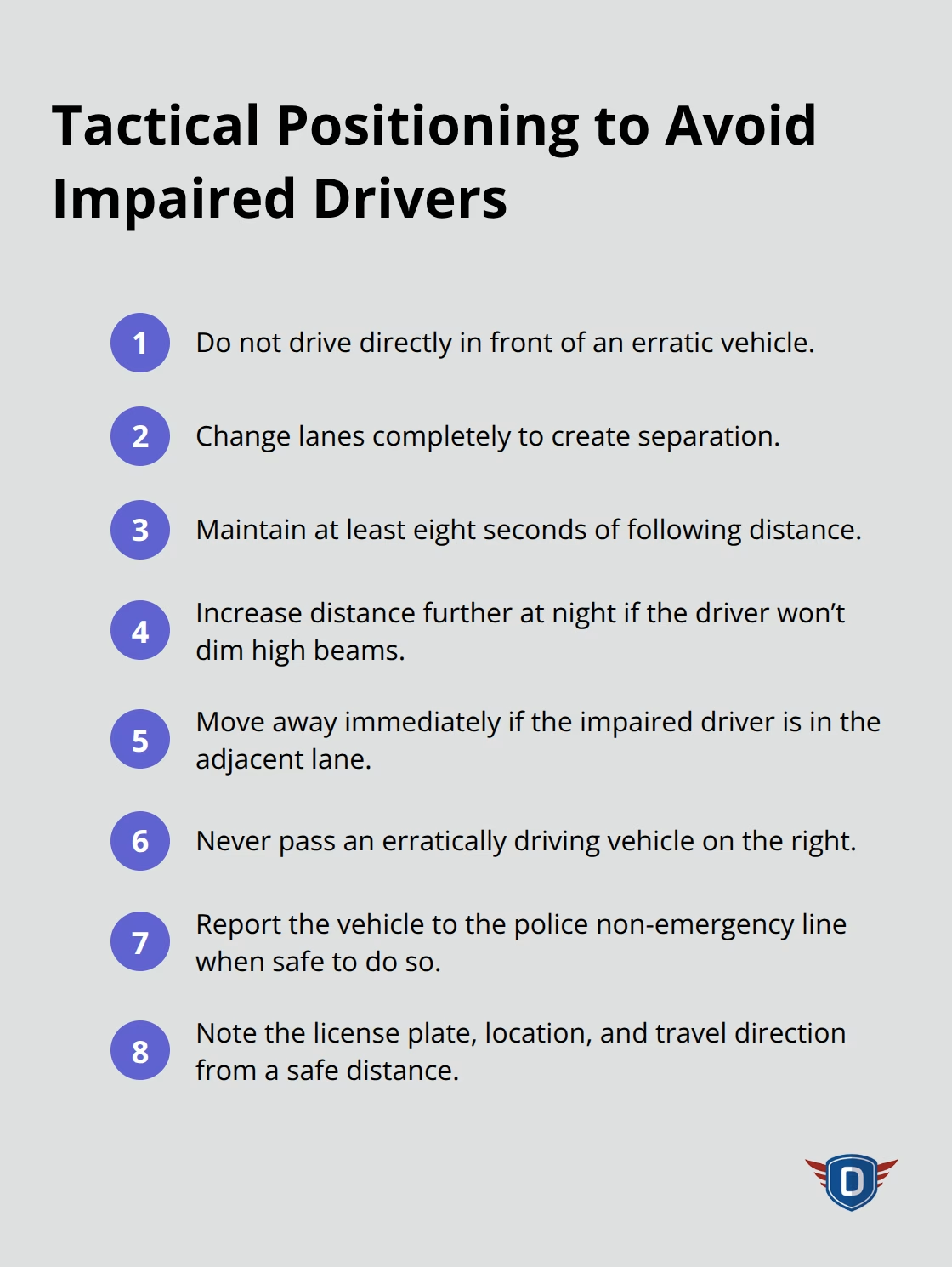
Instead, shift to a different lane entirely and maintain at least eight seconds of following distance rather than the standard three-second rule.
If the impaired driver is in the lane next to you, move away immediately rather than maintaining speed. At night, impaired drivers often fail to dim their high beams, so if headlights are blinding you and the driver won’t respond to your flash, assume impairment and create maximum distance. Never attempt to pass an erratically driving vehicle on the right side because impaired drivers make unpredictable right turns.
Speak Up When Someone You Know Plans to Drive Impaired
When you’re the passenger in someone else’s vehicle and the driver shows signs of impairment, speak up directly and offer to drive, call a rideshare service, or contact a trusted adult. Silence makes you complicit in the risk. If impaired driving is happening in your social circle, the honest choice is confrontation, not loyalty.
When you need transportation but cannot drive safely, rideshare apps like Uber and Lyft provide immediate alternatives that cost far less than the financial destruction of an impaired driving conviction. A fifteen-dollar Uber ride home beats a ten-thousand-dollar legal bill by an enormous margin.
Final Thoughts
Substance abuse risks behind the wheel destroy reaction time, distort judgment, and create false confidence that leads directly to crashes. One night of poor choices costs you ten thousand dollars, your license, your college opportunities, and your career prospects. You control this outcome through the decisions you make every time you sit behind the wheel.
You can refuse to drive impaired, speak up when someone else plans to drive under the influence, and call a rideshare service instead of risking everything. You can recognize impaired drivers on the road and position yourself safely away from them. These actions protect your life and the lives of everyone sharing the road with you.
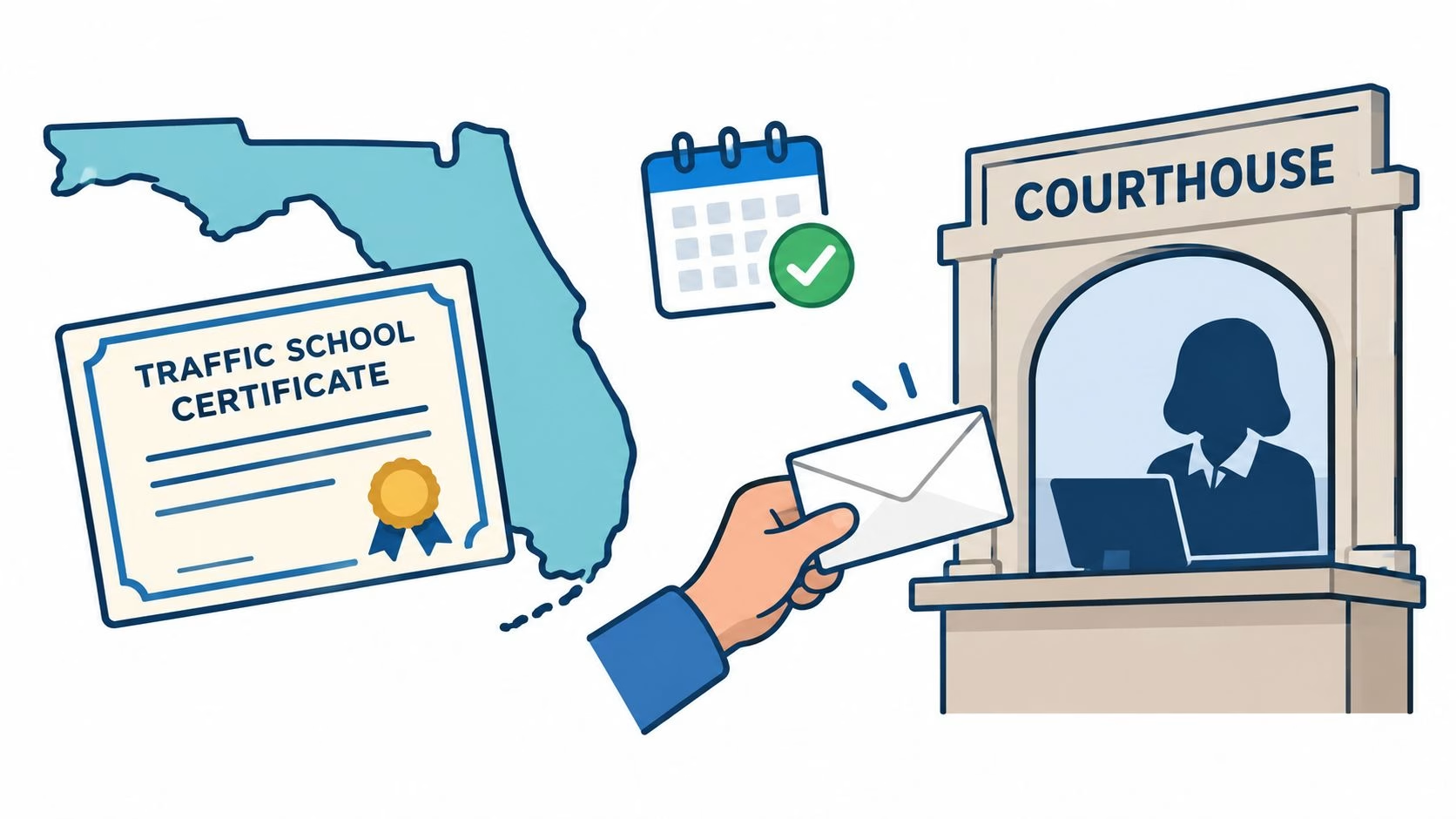
At DriverEducators.com, we offer Florida-approved traffic school programs that teach defensive driving techniques and safe decision-making. Whether you complete a court requirement or simply want to become a better driver, our courses provide the practical skills you need to stay safe behind the wheel.