You’re driving on a busy Florida road after work. The light ahead has been green for a while, traffic is moving, and you’re thinking about the next turn, the car behind you, and whether you’ll make it through before the signal changes. Then it happens. Green turns yellow.
That moment feels simple until you’re in it. Do you brake? Do you keep going? Did you have enough room to stop, or would stopping hard create a bigger danger? Most drivers know that split-second tension, and many get the yellow light means question only partly right.
That matters because intersections are where small mistakes become expensive and painful. In 2012, over 2.5 million cars were involved in crashes at intersections with traffic signals, resulting in 859,000 fatalities or injuries, and about 33 percent of all traffic accidents occur at intersections, including many at red and yellow lights, according to Psychological Science on the yellow light dilemma zone. Those numbers explain why yellow-light decisions deserve more attention than they usually get.
As a driving instructor, I’ve seen the same confusion again and again. Drivers often know that yellow is a warning, but they don’t always know what that warning requires under Florida law, what changes with flashing yellow signals, or how a ticket can affect points and insurance. Clear answers make drivers calmer, and calmer drivers make better choices.
The Yellow Light Dilemma Every Driver Knows
You’re approaching an intersection at a normal speed. You’re not distracted. You’re not trying to beat the light. Then the signal flips to yellow just as you reach that awkward distance where neither choice feels comfortable.
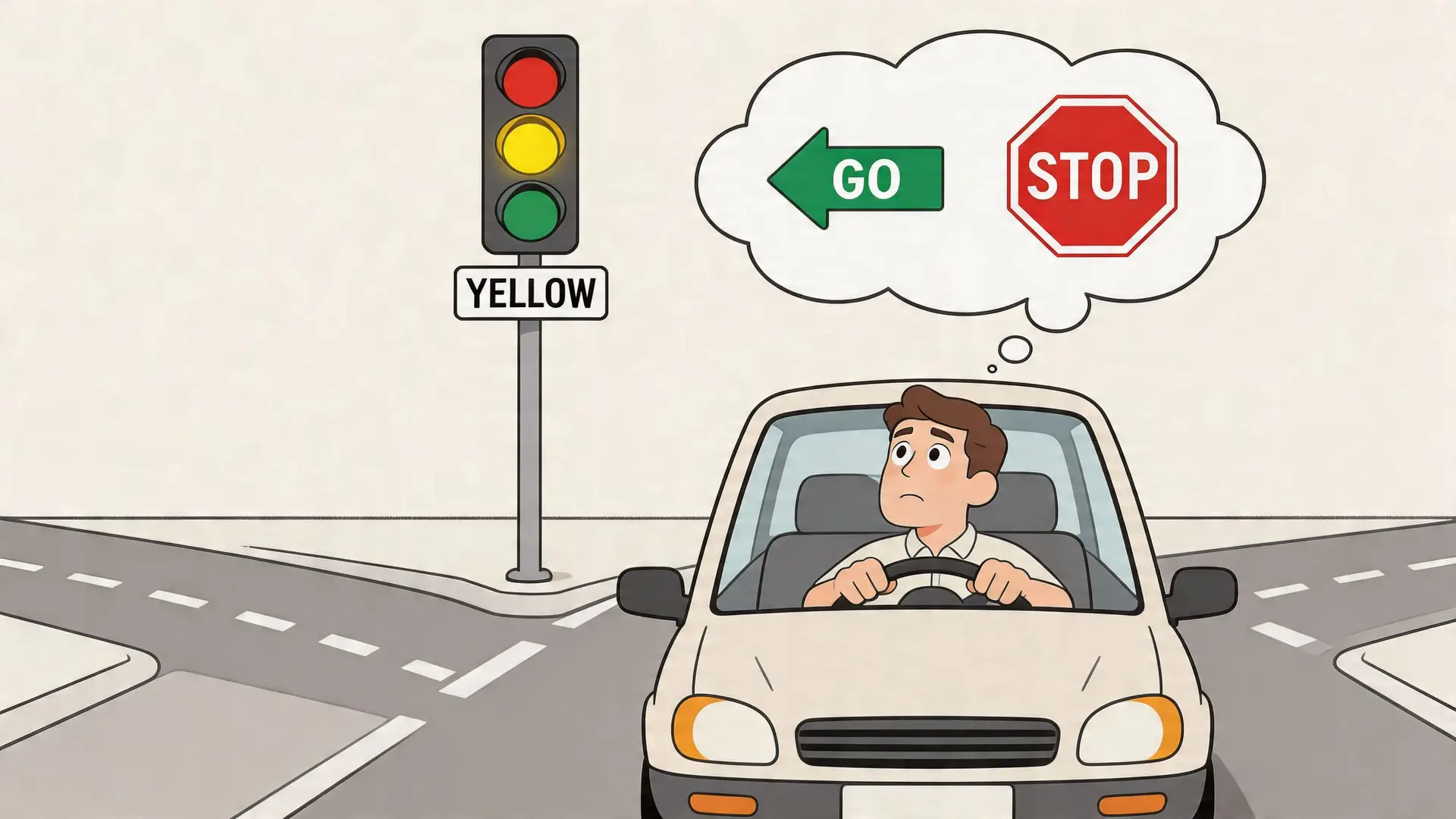
One driver taps the brakes too late and stops abruptly. Another decides to continue and enters the intersection with a burst of speed. A third hesitates, then changes their mind halfway through the decision. That hesitation is exactly why yellow lights create trouble. Drivers have very little time, and they often have incomplete information about cross traffic, stopping distance, and what the driver behind them will do.
The risk isn’t abstract. Intersections already demand more attention than almost any other part of daily driving because so many movements happen at once. Cars go straight, people turn left, pedestrians step into crosswalks, and visibility changes fast when rain or glare gets involved.
Practical rule: A yellow light isn’t a command to rush. It’s a warning that your next move has to be deliberate.
Many Florida drivers were taught a simplified version as teenagers: “yellow means speed up if you can make it.” That habit stays with people for years, even though it’s one of the least safe ways to read a signal. The better way to think about it is this: yellow light means the green phase has ended, and you now have one job, make the safest legal choice based on where you are and whether stopping is safe.
That’s the skill real driver improvement courses try to build. Not panic. Not guessing. Judgment.
Decoding The Three Types of Yellow Traffic Lights
A lot of confusion starts because drivers use the phrase “yellow light” as if it means only one thing. In Florida, you’ll usually deal with three different yellow signals, and each asks you to do something a little different.
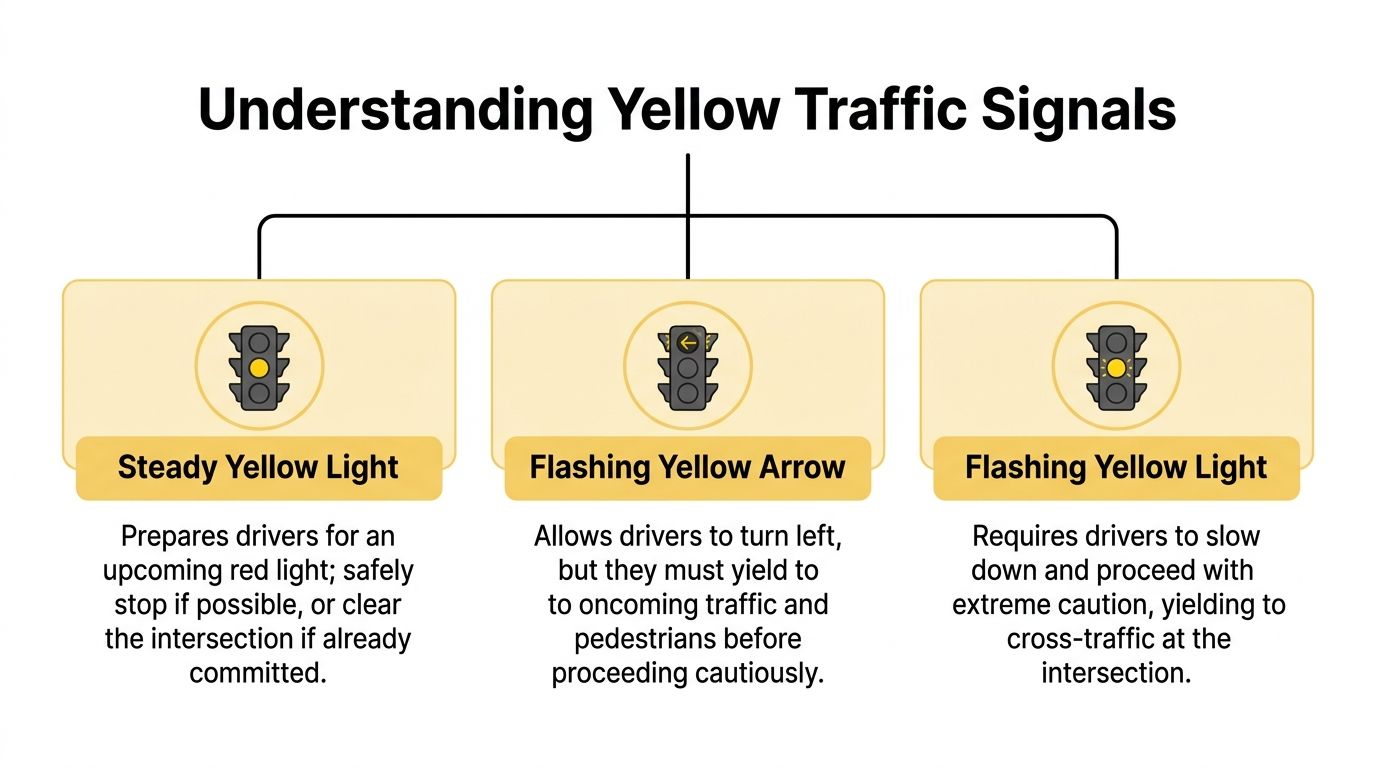
Steady yellow light
Think of a steady yellow light as the road’s final warning. The green has ended. Red is next. Your default response should be to prepare to stop if you can do so safely.
This doesn’t mean slam on the brakes every time the signal changes. It means judge whether you have enough distance and control to stop smoothly. If you don’t, continue through without accelerating aggressively.
Flashing yellow light
A flashing yellow light means something different. It does not mean the signal is about to turn red. It means proceed with caution, and be ready to yield.
Many drivers struggle with the interpretation of yellow lights. According to guidance on steady and flashing yellow signals, flashing yellow lights are present at 30% of Florida’s low-traffic intersections, confusion contributes to 22% of pedestrian near-misses, and drivers are 2.5x more likely to ignore flashing yellows at speeds over 40 mph. That tells you why slowing down matters so much. A flashing yellow asks for alertness, not confidence.
A flashing yellow should feel less like “I have the right of way” and more like “I need to check everything before I move.”
Flashing yellow arrow
A flashing yellow arrow usually appears in a turn lane, most often for left turns. It allows you to turn, but it does not protect you from oncoming traffic. You must yield to vehicles coming straight through and to pedestrians in the crosswalk before you turn.
Drivers often mistake the arrow for permission without conditions. It isn’t. It’s permission with responsibility.
Florida Yellow Light Signals at a Glance
| Signal Type | What It Means | Your Required Action |
|---|---|---|
| Steady yellow light | The green phase is ending and red is coming | Stop if you can do so safely. If you’re too close to stop safely, continue through calmly |
| Flashing yellow arrow | A turn is allowed, but not protected | Yield to oncoming traffic and pedestrians, then turn only when clear |
| Flashing yellow light | Proceed cautiously through a potentially hazardous or lightly controlled intersection | Slow down, scan for hazards, and yield as needed before continuing |
Here’s the simplest way to remember it:
- Steady yellow: Prepare to stop.
- Flashing yellow: Slow down and proceed carefully.
- Flashing yellow arrow: You may turn, but only after yielding.
Once drivers separate those three meanings, intersections start to feel much less confusing.
Florida Law and Yellow Light Violations
Florida drivers often ask the same question in different words: “Is it illegal to go through a yellow light?” The honest answer is more precise than expected.
What Florida expects from you
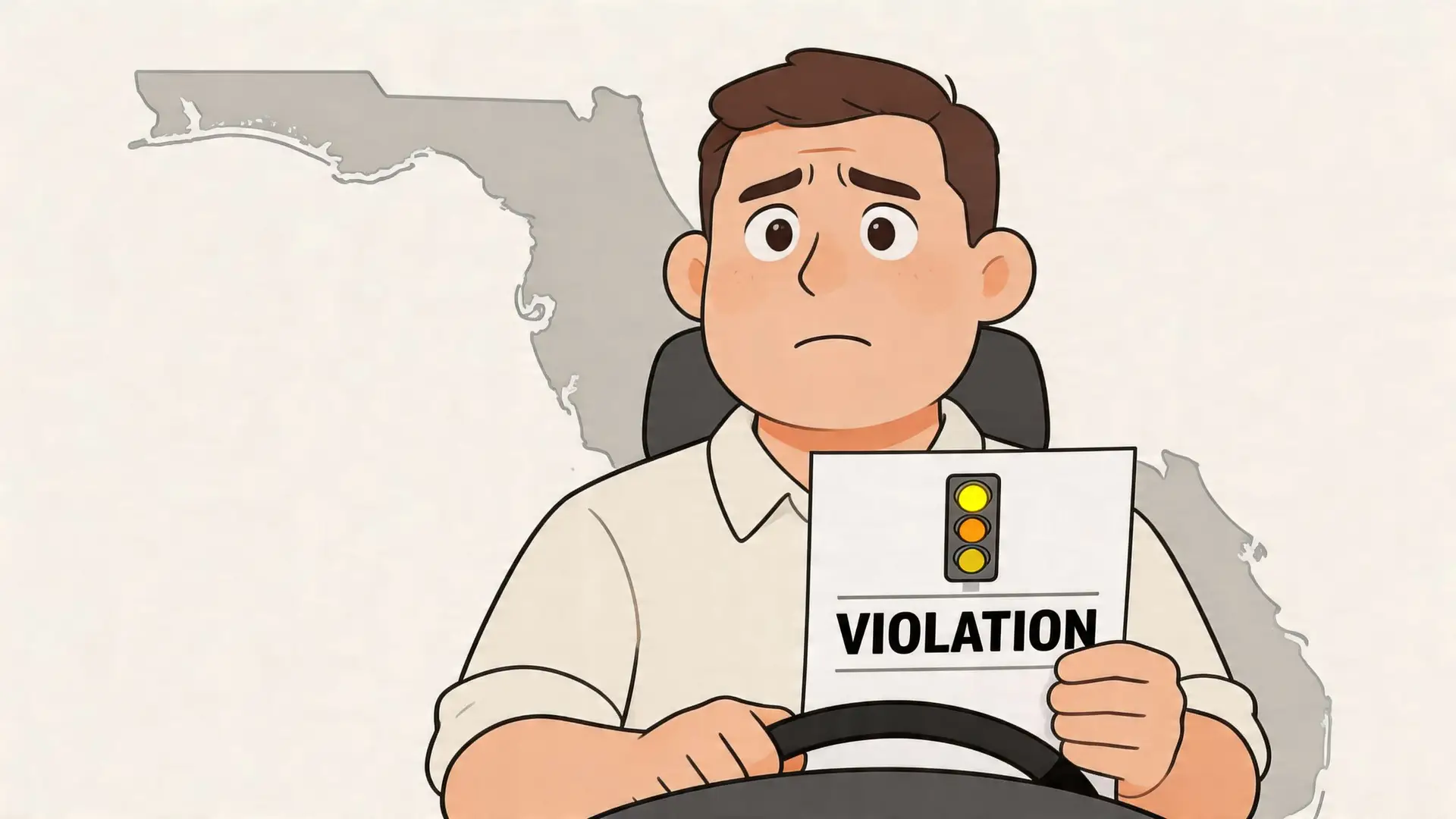
Under Florida Statute 316.075, a steady yellow light is a warning to stop unless stopping would be unsafe. That means the law does not treat yellow as a free pass, and it also does not demand an unsafe panic stop. It expects judgment.
That distinction matters after a traffic stop or crash. An officer may look at whether you accelerated, whether you entered too late, whether your movement endangered other people, and whether your driving looked careless under the conditions.
What a violation can cost
According to this discussion of yellow light tickets and intersection risk, failure to respond properly can lead to a careless driving ticket, with a fine up to $60 and 3 license points. The same source also states that yellow light tickets in Florida surged 12% in 2025 after LED traffic light upgrades, and affected drivers saw insurance hikes of 15-20%.
Those consequences change the way a yellow-light decision should feel. It’s not just about one moment at one intersection. It can follow you into your driving record and your monthly costs.
If you’re also trying to understand how camera enforcement fits into this bigger picture, Florida drivers often benefit from reviewing how red-light camera enforcement works in Florida. It helps connect signal timing, citations, and what evidence may matter.
When fault becomes complicated
A yellow-light crash can turn into an argument very quickly. One driver says they were already committed. The other says they had the right of way. Investigators and insurers then look at timing, movement, and whether someone acted reasonably.
For a broader legal perspective on how attorneys analyze fault in a yellow light accident, that resource shows why these cases rarely come down to the light color alone.
A quick visual explanation can make these legal distinctions easier to grasp:
The key lesson is simple. A yellow signal doesn’t excuse careless driving, and the financial consequences can last longer than the ticket itself.
Mastering the Point of No Return
Most safe yellow-light decisions happen before the light turns yellow. They come from your speed, your following distance, your attention, and whether you’ve left yourself room to react.
What the point of no return really is
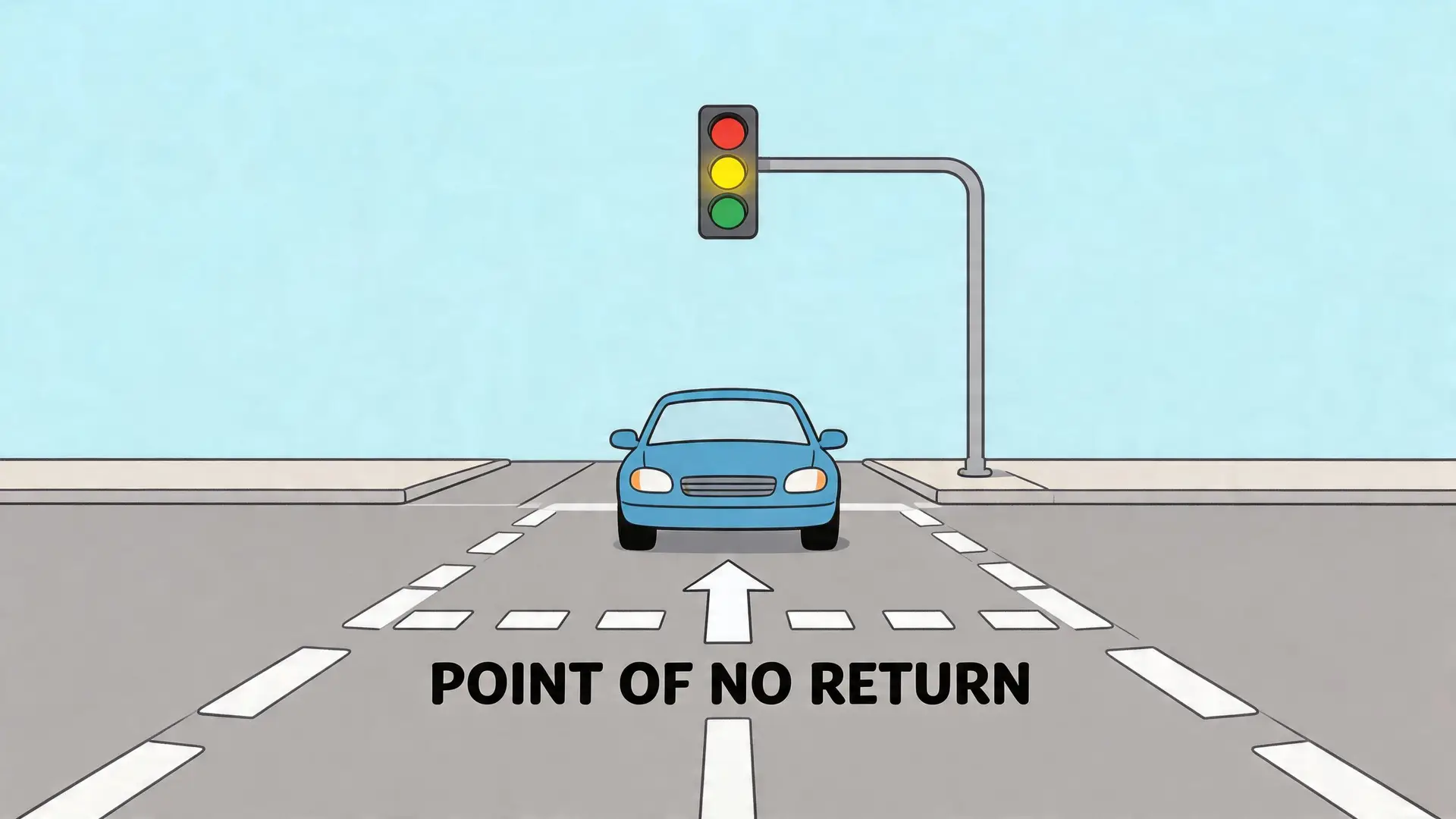
Drivers use the phrase point of no return to describe the place where stopping safely is no longer realistic. Once you’re there, the safer move is to continue through the intersection rather than brake hard and create a new hazard.
That’s why yellow timing exists in the first place. The yellow change interval is typically around 4.3 seconds, and it’s engineered to give a driver who can’t safely stop enough time to clear the intersection, according to research on yellow interval timing and driver behavior. The same source notes a 37.5% probability of running a yellow light for male drivers in daytime driving, often because drivers misjudge that interval.
How to make the decision in real time
When the signal changes, run through a quick mental check:
Check your distance to the stop line
If you’re far enough back to brake smoothly, stop. If you’re already close and would need a harsh stop, continuing may be safer.Notice your speed before the light changes
If you’ve been driving at a steady, legal pace, your choice is clearer. If you were already moving too fast, the yellow will feel shorter than it really is.Look at road conditions
Wet pavement, loose gravel, worn tires, and low visibility all lengthen stopping distance.Think about traffic behind you
A tailgater doesn’t give you permission to run the light, but it does affect how abruptly you can stop.
Driving coach advice: Your goal isn’t to “beat the red.” Your goal is to avoid a hard, late, risky decision.
The myth that gets drivers in trouble
Many drivers still believe the safest move is to accelerate through yellow. Usually, that choice makes the situation worse. Speed reduces your margin for error, increases the force of any collision, and can turn a legal gray area into obvious carelessness.
If you want a practical refresher on judging space and braking room, this guide to calculate stopping distance helps connect speed, road conditions, and reaction time in a way that’s useful on real Florida roads.
The best yellow-light habit is boring in the best possible way. Approach intersections prepared for change, keep your speed reasonable, and avoid putting yourself in a position where every yellow feels like a gamble.
Navigating Real-World Yellow Light Scenarios
Rules matter, but drivers usually struggle with yellow lights in messy situations, not clean textbook ones. Let’s walk through a few that come up all the time in Florida.
A truck is riding your bumper
You’re approaching a signal on a multi-lane road. The light turns yellow, and a large pickup or delivery truck is close behind you. Your first instinct might be to keep going because you don’t trust the driver behind you to stop.
The safer response depends on distance, not fear. If you have enough room to stop smoothly, brake early and steadily so your brake lights give the driver behind you clear warning. Don’t stomp the brakes at the last second. If you’re already too close to the intersection for a controlled stop, continue through and clear it without speeding up sharply.
A Florida downpour starts
Rain changes everything about a yellow light. The road gets slick, visibility drops, and your usual stopping feel can become unreliable. In that situation, a yellow that would have been an easy stop on dry pavement may no longer be one.
That’s why defensive drivers don’t wait for the yellow to start planning. They reduce speed earlier in rain, increase following distance, and approach intersections with less commitment. If the signal changes, they have options.
On a wet road, your safest yellow-light choice often comes from what you did five seconds earlier, not what you do at the line.
You’re turning left on a flashing yellow arrow
You’re in the left-turn lane. The arrow is flashing yellow. Oncoming traffic keeps coming, and pedestrians are stepping into the crosswalk. The mistake here is impatience.
Wait. Yield. Recheck. A flashing yellow arrow means the turn is allowed only when the path is clear. If the arrow changes and your opening never appears, you don’t force the turn.
You see another driver accelerate toward the intersection
This one catches experienced drivers too. You have a green that’s about to change in your favor, or you’re waiting to move once cross traffic stops. Then you notice another driver trying to squeeze through late.
Give them the space to make their mistake without dragging you into it. Don’t launch the instant your signal changes. Pause, scan, and confirm the intersection is clearing.
For drivers who want a broader look at the leading cause of intersection accidents, that overview is helpful because it shows how often crashes come from judgment failures, not just signal color.
If you’re trying to build habits that reduce risk in all of these situations, practical refreshers on how to avoid car accidents can help you think beyond one signal and focus on the full traffic picture.
Drive with Confidence Through Any Intersection
The phrase yellow light means should no longer feel vague. In Florida, it means a warning that calls for judgment, not panic. A steady yellow asks whether you can stop safely. A flashing yellow asks you to slow down and proceed carefully. A flashing yellow arrow allows a turn only after you yield.
Confidence comes from reading the signal correctly and staying ready before it changes. That includes managing speed, leaving room to brake, watching the traffic behind you, and accepting that sometimes the safest choice is to stop, while other times the safest choice is to continue through without sudden moves.
Drivers who want to sharpen those habits often review core intersection skills alongside related vehicle warnings and maintenance issues. For example, understanding a dashboard alert like a brake fluid warning light matters because braking performance and stopping confidence are closely connected.
Florida drivers also benefit from refreshing the rules that work together at intersections, especially right-of-way rules at intersections. Yellow-light decisions become much easier when you also know who must yield, when, and why.
If you received a moving violation and want a practical next step, BDISchool offers Florida-approved online courses including BDI, IDI, Aggressive Driver, and Mature Driver programs. Those courses are designed to help drivers understand current traffic laws, address court or point-related needs, and study in English, Spanish, or Portuguese on a flexible schedule.
Good drivers aren’t the ones who never face a yellow-light dilemma. They’re the ones who know how to handle it calmly.
Frequently Asked Questions About Yellow Lights
Can I enter an intersection on yellow if it turns red while I’m already in it
If you entered legally while the signal was yellow and it wasn’t safe to stop before the line, the key issue is usually whether your decision was reasonable and controlled. Problems start when drivers accelerate late, enter too aggressively, or create a hazard for others.
Does a yellow light always mean stop
Not always. It means prepare to stop, and stop if you can do so safely. If a safe stop isn’t realistic because of your position, speed, road condition, or surrounding traffic, continuing through may be the safer move.
Is a flashing yellow the same as a steady yellow
No. A steady yellow warns that red is coming. A flashing yellow tells you to proceed cautiously and yield as needed. Mixing those up is one of the most common sources of driver error at intersections.
What should I do if the light changes while I’m in a left-turn lane
If you’re facing a flashing yellow arrow, yield to oncoming traffic and pedestrians before turning. Don’t assume the arrow protects you. If traffic doesn’t open up, wait.
Can a course help if I got a yellow-light-related ticket
In many cases, yes, depending on your situation and what the court allows. Drivers often take a Basic Driver Improvement course to address a moving violation and help avoid points being added to the license. The right option depends on the citation and your driving history.
Do online traffic school courses have to be taken in English
No. Many Florida drivers prefer to study in their strongest language, especially when learning technical traffic rules. Online options are available in English, Spanish, and Portuguese, which can make the material clearer and easier to finish accurately.
Why do yellow lights feel shorter than I expect
Because drivers often notice them late. If you approach an intersection too fast, follow too closely, or assume the green will hold, the yellow feels abrupt. Better scanning and earlier speed control make that decision window feel more manageable.
If you want a flexible way to refresh Florida traffic laws, handle a citation requirement, or study safer intersection habits at your own pace, BDISchool offers state-approved online courses in English, Spanish, and Portuguese. That gives you a practical path to protect your record, improve your judgment at yellow lights, and drive with more confidence every day.