You’ve just paid a Florida traffic citation, finished a driving course, or found an older completion certificate in your email. The question usually sounds simple: is this certificate still valid? The answer depends on the course, the date it was completed, the receiving agency, and the deadline attached to your citation or licensing step.
A certificate can remain visible in your account long after its useful acceptance window has closed. Understanding the certificate validity period before you contact the clerk, insurer, or FLHSMV can prevent a rejected submission and help you choose the correct course while there’s still time.
What a Certificate Validity Period Means
Suppose you finish a Florida driving course and save the certificate PDF. The document may be complete, yet its usefulness still depends on whether the right authority will accept it within the required timeframe. A certificate validity period is the span during which a court, insurer, or the Florida Department of Highway Safety and Motor Vehicles, commonly called FLHSMV, recognizes that certificate for its intended purpose.
The clock often starts with the course completion or certificate issue date. The operative deadline may instead come from the citation, the court election, or a licensing requirement. Before submitting, confirm the acceptance deadline with the clerk, insurer, or licensing office.
The date matters more than the file
Check these details before relying on an older document:
- Completion or issue date: This identifies when the certificate was produced.
- Course identity: The receiving party must confirm that the course matches its requirement.
- Acceptance deadline: The clerk, insurer, or licensing office may set a separate submission rule.
A certificate can look finished and still be rejected after the applicable window closes. The document is like a ticket: having it in your account does not guarantee entry if the venue’s deadline has passed. Check the timing before enrolling, then verify the receiving party’s instructions after completion.
Practical rule: The course, any required election, the reporting record, and the receiving party’s deadline must line up.
For a Florida course certificate, download the PDF and record the submission date so you have a timestamp if the clerk requests proof. If you are checking how a driving offense may remain relevant to employment screening, use this guide to conviction disclosure for employers for background. You can also review BDISchool’s online driving certificate process to understand how delivery and course reporting fit into the submission process.
Why the Validity Window Matters for Florida Drivers
The validity window determines whether your completed course produces the result you need. A court may be deciding whether a citation can receive traffic-school treatment, an insurer may be reviewing whether a certificate supports a discount, and FLHSMV may be checking whether education appears correctly on your driving record.
Florida’s official FAQ says a driver with a non-criminal moving violation and no commercial driver license may elect a Basic Driver Improvement school once in any 12-month period and no more than eight times in a lifetime. The Florida driver-improvement FAQ confirms those limits. The election restriction is separate from taking a course, so completing training doesn’t erase the need to make the election correctly and on time.
Three parties can evaluate the same document differently
The court focuses on the citation and the election deadline. If you complete the wrong course or fail to elect traffic school within the allowed period, the certificate may not deliver point-related relief.
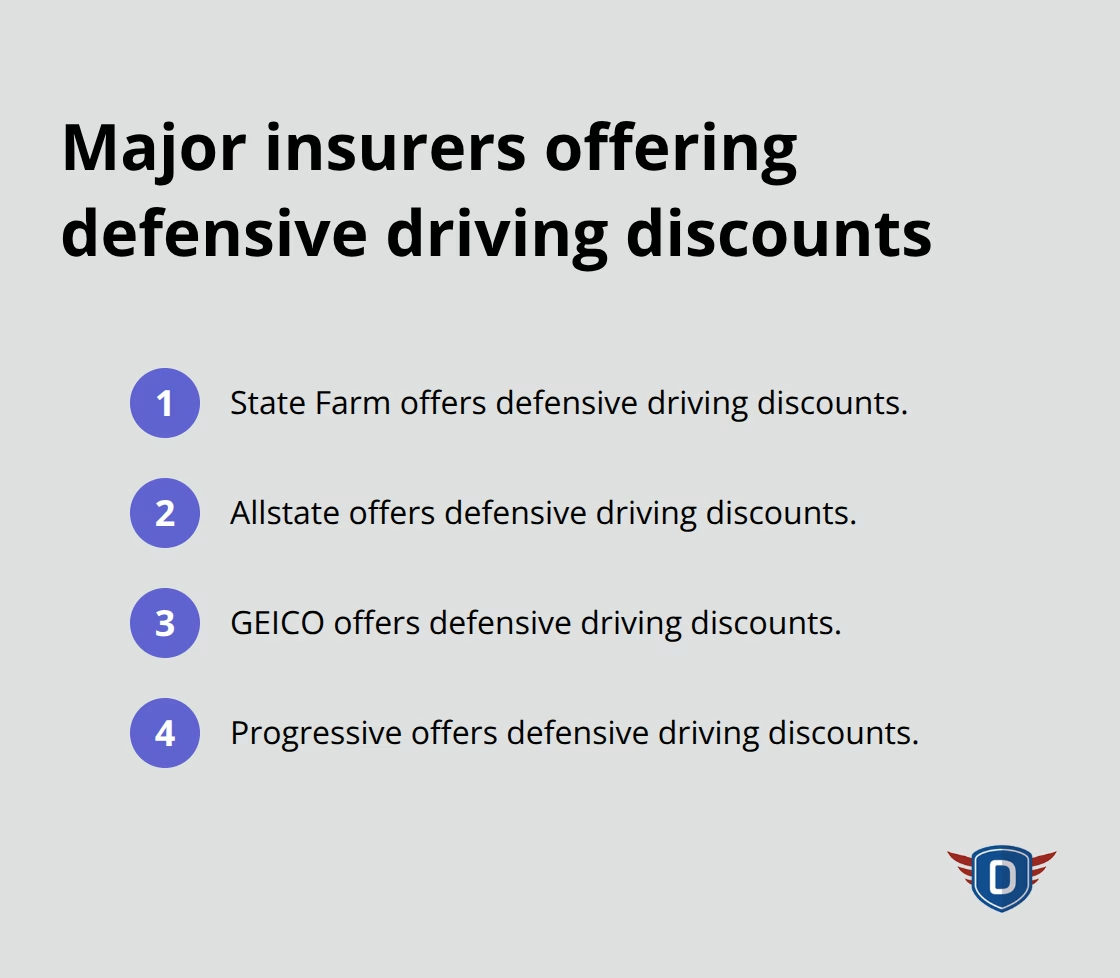
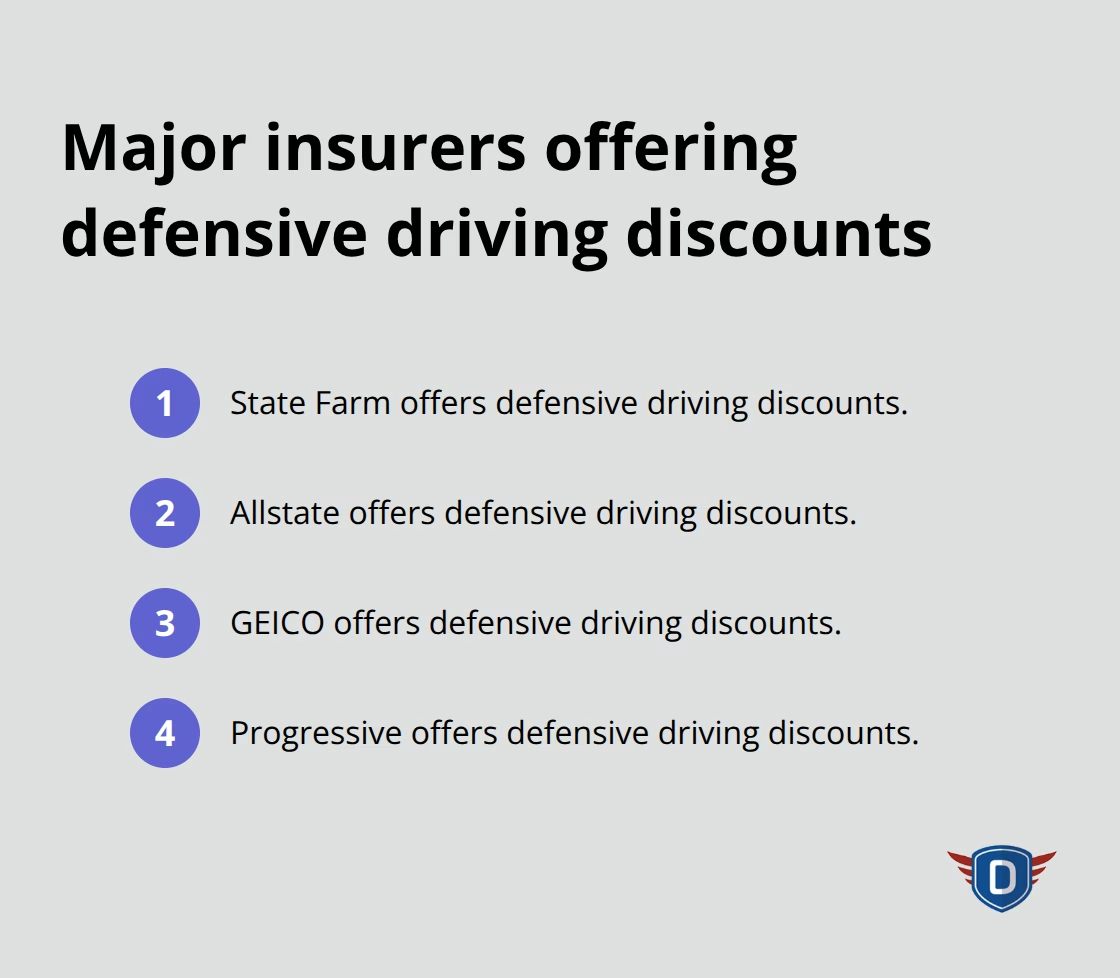
The insurer decides whether the course supports a discount under its policy rules. BDISchool’s insurance course information describes the discount certificate as generally valid for a limited period, but you should confirm the exact acceptance requirements with your carrier before enrolling.
FLHSMV relies on the official record and submitted course information. A certificate that isn’t reported correctly, or that doesn’t match the required course, may fail to provide the intended record or licensing credit.
A driver who’s handling renewal paperwork may also need to prepare for Florida’s driver renewal vision check, since licensing requirements can involve more than course completion. For citation-related insurance concerns, review the insurance rate increase after a ticket before assuming a course will change your premium.
Florida Trafffic School
Florida courses serve different purposes, so their certificates shouldn’t be treated as interchangeable. Match the course to the citation, court order, insurance request, or licensing step first. Then verify the deadline that applies to your situation.
A four-hour Basic Driver Improvement course is commonly used after an eligible moving violation. The important state timing rule is the 12-month election period, measured from the citation date, with the separate lifetime limit described above. The court’s deadline may control your practical submission date, so don’t wait until the final day.
An Insurance Discount Course may also be called a Mature Driver or Aggressive Driver course, depending on the program and the driver’s situation. BDISchool identifies the Mature Driver course as a six-hour refresher and the Aggressive Driver course as an eight-hour program. Insurance carriers commonly request a certificate issued within the insurer’s accepted recent period, and the carrier should confirm whether the certificate needs renewal before the current discount ends.
The eight-hour Intermediate Driver Improvement course is used for certain court-ordered situations, including some out-of-state citations. It isn’t a substitute for a four-hour BDI course when the court specifies a different course code.
Teen licensing adds another timing layer. Florida DETS guidance says grandfathered first-time drivers under 18 who completed the newer Driver Education Traffic Safety course may use their TLSAE completion certificate for one year after the completion date. The FLHSMV DETS FAQ explains that treatment for the grandfathered group. Later applicants may fall under the newer DETS framework, so age, course version, and applicant status matter.
| Course | Typical Validity Window | Receiving Party |
|---|---|---|
| Basic Driver Improvement | 12-month election period from the citation date, subject to court deadlines | Court and FLHSMV |
| Insurance Discount Course | Often accepted for the insurer’s stated discount period, commonly three years | Auto insurer |
| Mature Driver Course | Certificate period depends on the insurer’s acceptance rules | Auto insurer |
| Aggressive Driver Course | Course-specific and court or insurer dependent | Court or auto insurer |
| Intermediate Driver Improvement | Deadline set by the court or citation requirement | Court and FLHSMV |
| TLSAE completion for the grandfathered group | One year after completion | FLHSMV and licensing office |
| DETS | Depends on the applicant’s course version and licensing status | FLHSMV and licensing office |
Before registering, compare the requirement with the course description in the Florida online traffic school catalog. Choosing the correct course is the first way to protect the value of its certificate.
How to Check the Status of Your Certificate
Start with the official record, then check the issuing school’s file, and finally keep the certificate number available. This three-part check helps you catch a date, name, or course-code mismatch before it becomes a denial at the clerk’s window.
Start with the FLHSMV record
Log in to the FLHSMV portal using the identifying information the system requests. Open your driver record and look for the BDI election or course entry. Confirm the completion date, course code, and name shown on the record.
The course code should match the requirement attached to your citation. Your name should match your driver license exactly, including the order and spelling of names where applicable. If the official record doesn’t show the expected submission, contact the issuing school before assuming the certificate was accepted.
Check your school account
Review the completion email and PDF in your BDISchool student account. Confirm that the document’s completion date matches the date shown in the official record and that the electronic submission confirmation identifies the same course.
Then locate the certificate number. Clerks and insurance representatives may ask for it when they verify your completion by phone, so having it ready can shorten the conversation. If you’re checking broader record information, use the Florida driving record check as part of your preparation.
What to Do When a Certificate Expires or Goes Missing
An expired or missing certificate doesn’t always mean you’ve lost your path forward. First identify what expired, then separate that issue from simple document retrieval.
For an expired certificate, check whether the closed window involved the BDI election, the one-year TLSAE grandfather period, or a court-imposed deadline. If the applicable deadline has passed, a new course completion may be required, and retaking a course doesn’t automatically restore a missed court election or bypass Florida’s lifetime BDI-use limit.
Retrieval is different from expiration
If the certificate is merely missing, sign in to your student account and download the PDF again. Forward the completion confirmation to the clerk or insurance representative when the receiving party needs proof of electronic submission.
If you enrolled through BDISchool, contact the school when you can’t access the record or need help confirming the submission. Re-enrolling in a self-paced course can be a practical solution when the original completion no longer satisfies the applicable rule, but confirm eligibility first. The point is to fix the exact failure, not repeat a course unnecessarily.
Common Certificate Validity Mistakes Florida Drivers Make
Most certificate problems come from a mismatch, not from the course material itself. Drivers often complete a course that sounds appropriate without checking the exact requirement attached to the citation or license application.
| Mistake | What Triggers It | Guardrail |
|---|---|---|
| Choosing the wrong course | A driver completes BDI when the court ordered IDI, or submits TLSAE when a different rider or licensing course was required | Confirm the course name and code before enrollment |
| Missing the BDI election window | The driver waits beyond the applicable period from the citation date | Contact the clerk promptly and calendar the deadline |
| Ignoring the submission cutoff | The completion report reaches the receiving office after its stated deadline | Finish early and confirm electronic reporting |
| Relying only on a printed certificate | The official record doesn’t show the expected completion | Treat the FLHSMV entry as the record to verify |
| Forgetting the lifetime limit | Earlier BDI elections have already used available eligibility | Check prior elections before registering |
The BDI rule allows the election once in a 12-month period and no more than eight times in a lifetime. That limit is easy to overlook when violations are separated by years, so keep your own completion records even after the immediate citation is resolved.
Before you submit: Check the course code, the citation date, the receiving deadline, and the FLHSMV record. A clear match across all four is stronger than a certificate PDF by itself.
Keeping Your Certificate Valid and Your Record Clean
Use a short checklist whenever you complete a course. Write down the completion date, certificate number, course type, court or insurance deadline, and the date you confirmed the official record.
For BDI, remember the 12-month election period and the eight-use lifetime cap. Thinking for insurance courses, confirm the carrier’s accepted renewal period before the current certificate expires. Also for grandfathered TLSAE completion certificates, the usable period is one year after completion, as described in the Florida DETS guidance.
Florida also applies validity rules to related driving documents. A Florida driver license for an applicant under 80 generally follows an eight-year issuance cycle, and the statute provides a next-working-day rule when expiration falls on a weekend or legal holiday. A learner permit typically follows a one-year period, can be affected by a moving violation, and expires at age 18 under the rules described in the Florida learner-permit timing guidance.
BDISchool’s course catalog offers online, self-paced options for BDI, IDI, insurance-related education, and first-time driver needs. Review the requirement, choose the matching course, and register before a pending court, licensing, or insurance deadline leaves you with fewer options.
Certificate Validity Period FAQs
When does the validity clock start?
The clock usually begins on the course completion or certificate issue date shown on the document. Check that date separately from the deadline set by the court, insurer, or FLHSMV. A later election date may follow different timing rules.
Does retaking a course reset the BDI lifetime limit?
No. Retaking the course does not erase earlier BDI elections or restart Florida’s lifetime limit. Eligible BDI use remains limited to eight times in a lifetime, with no more than one election during a 12-month period.
How long can I download a digital certificate?
A student portal may keep a file available after its acceptance window closes. A downloadable PDF file does not guarantee the court, insurer, or FLHSMV will still accept the certificate. Verify both the file and the applicable deadline before submitting.
Does an FLHSMV report mean I must mail the certificate to court?
Not necessarily. If the court accepts electronic reporting, the submitted report may satisfy its requirement, but the clerk’s instructions control. Ask whether the electronic report was received, and save the confirmation, certificate number, and PDF for your records.
Choose the Florida course that matches your citation, insurance request, or licensing step. Visit BDISchool to review self-paced options and register while your deadline remains open.