Your first solo drive is coming, and the anxiety is real. Teen anxiety driving is one of the most common concerns we hear from new drivers at DriverEducators.com.
The good news? Nervousness before flying solo doesn’t have to control you. This guide walks you through proven techniques to manage your nerves and build genuine confidence behind the wheel.
Why Your Brain Resists Solo Driving
The Safety Anchor Disappears
Your nervousness before that first solo drive isn’t weakness or overreaction. It’s your brain doing exactly what it evolved to do: protect you from unfamiliar situations. When you’ve spent weeks or months driving with an instructor sitting beside you, that person becomes a safety anchor.
Your instructor corrected your mistakes in real time, handled unexpected situations, and provided immediate reassurance. Once they’re gone, your brain registers a genuine threat because the familiar safety net vanishes. This shift from dual control to solo responsibility triggers a measurable spike in anxiety.
Research on driving anxiety shows that new drivers experience elevated cortisol levels during their first independent drives, which physically affects reaction time and decision-making clarity. The fear isn’t about the road itself-it’s about the loss of immediate backup. Your instructor represented a buffer between you and consequences, and now that buffer is gone.
The Skills You Haven’t Fully Internalized
Your dependency on your instructor also means you relied on their experience to navigate decisions you haven’t yet internalized. When they pointed out a hazard, you learned what to look for. When they guided you through a complex intersection, you didn’t have to fully problem-solve it yourself.
Solo driving demands that you do both simultaneously: notice hazards and decide how to respond, all without external validation. Your anxiety spikes because these skills feel incomplete when you perform them alone for the first time. This is compounded by a real phenomenon called performance anxiety, where familiar tasks become harder when someone stops monitoring them.
How Anxiety Hijacks Your Performance
Anxiety physically impairs driving performance through tunnel vision, slower processing speed, and reduced peripheral awareness. This creates a vicious cycle where poor performance increases anxiety, which then worsens your driving further. The goal isn’t to eliminate nervousness entirely but to recognize it as a normal transition signal and manage it strategically so it doesn’t hijack your performance on the road.
Understanding these biological and psychological responses is the first step toward managing them. Once you know why your brain reacts this way, you can apply specific techniques to calm your nervous system before you turn that key in the ignition.
Calm Your Mind and Body Before Solo Driving
Mental Preparation Lowers Your Error Rate
Your mental state in the minutes before your first solo drive determines how you perform on the road. Research shows that drivers who use structured pre-drive routines report improvements in performance during their first solo trips compared to those who skip preparation. The routine itself matters less than consistency-your nervous system needs to recognize a familiar pattern that signals safety.
Start this routine 10 to 15 minutes before you drive, not hours earlier, since anxiety can rebuild if you wait too long. Mental preparation that reframes the drive as manageable works best when combined with physical techniques that lower your cortisol levels before you start.
Box Breathing Activates Your Calming Response
Box breathing is the most reliable physical technique available. You breathe in for four counts, hold for four, exhale for four, then hold for four, and repeat this cycle five times. Box breathing activates your parasympathetic nervous system, which directly counteracts the stress response your brain triggered when your instructor left.
Avoid caffeine for at least two hours before driving, since it amplifies anxiety and sharpens your perception of threat. Some new drivers report that chewing gum or holding an ice cube provides grounding-what matters is that you find a tactile focus that interrupts anxious thoughts.
Choose Low-Traffic Routes and Times
Your route selection during these early solo drives matters far more than most new drivers realize. Choose roads where you’ve already practiced with your instructor, ideally during low-traffic windows: early morning between 6 and 9 AM or late afternoon between 2 and 4 PM, not rush hour. Traffic volume directly correlates with anxiety severity, and starting on roads with predictable patterns reduces the number of decisions you must make simultaneously.
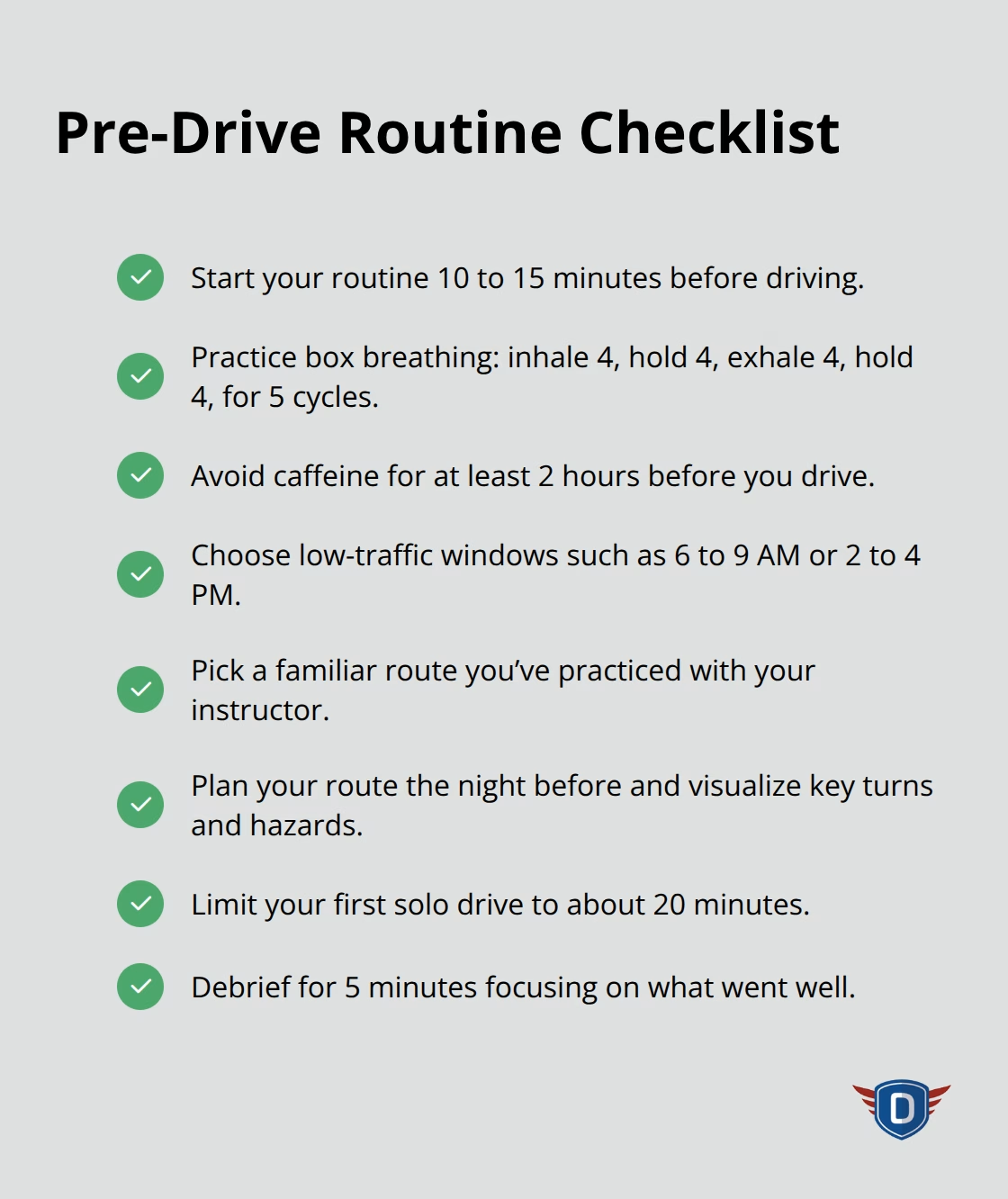
A 15-minute drive on a quiet, familiar route builds more genuine confidence than a 30-minute drive on busier streets where you’re overwhelmed by variables. Plan your exact route the night before and drive it mentally without the car-visualize specific turns, intersections, and potential hazards. This primes your brain to recognize landmarks and reduces the cognitive load when you’re actually driving.
Limit Your First Solo Drive Duration
Try 20 minutes of actual driving time on your first solo outing; your nervous system fatigues quickly, and pushing past that point triggers worse decision-making. After you complete your route, spend five minutes reflecting on what went well rather than fixating on minor mistakes-this trains your brain to build confidence incrementally rather than catastrophize single errors.
These preparation techniques work because they address both the physical and psychological components of pre-drive anxiety. Once you’ve calmed your nervous system and selected a manageable route, you’re ready to move from mental preparation into the actual experience of solo driving, where gradual exposure to more complex situations will transform your confidence from fragile to genuine.
How to Build Real Confidence on Your Own Schedule
Start with Incremental Route Progression
Your first solo drives should follow a deliberate progression that mirrors how your brain actually learns to trust itself behind the wheel. Start with roads you’ve already practiced with your instructor during those low-traffic windows, but add one new variable per drive rather than overwhelming yourself with multiple unfamiliar elements simultaneously. If your first solo route was a 15-minute loop through residential streets at 8 AM, your second drive might extend that same route by five minutes to include one busier intersection you’ve practiced before. Your third drive could happen at a slightly busier time, like 9:30 AM instead of 8 AM.
This incremental approach works because neuroscience shows that gradual exposure to manageable stress actually rewires your threat response more effectively than avoidance does. After completing each drive, write down three specific things you handled correctly, not mistakes. This trains your brain’s threat-detection system to recognize competence rather than fixate on minor errors.
Resist the Urge to Rush Into Complex Situations
Most new drivers make the mistake of jumping to highway driving or rush-hour traffic within their first week, which resets their anxiety and undermines the confidence they built on easier routes. Resist that urge completely. Your nervous system needs consistent evidence of success on progressively harder challenges, not sudden shocks that prove you can’t handle complexity yet.
Document Your Progress with Concrete Metrics
Track your improvements with specific metrics rather than vague feelings of confidence. Write down the date, time of day, route, traffic conditions, and one challenge you overcame on each drive. After ten solo drives, you’ll have concrete data showing that you handled left turns safely, navigated merging correctly, or managed unexpected pedestrians. Research from the Insurance Institute for Highway Safety indicates that new drivers who track their own performance improvements show measurably better hazard perception within four weeks compared to those who don’t monitor progress.
Follow a Structured Four-Week Timeline
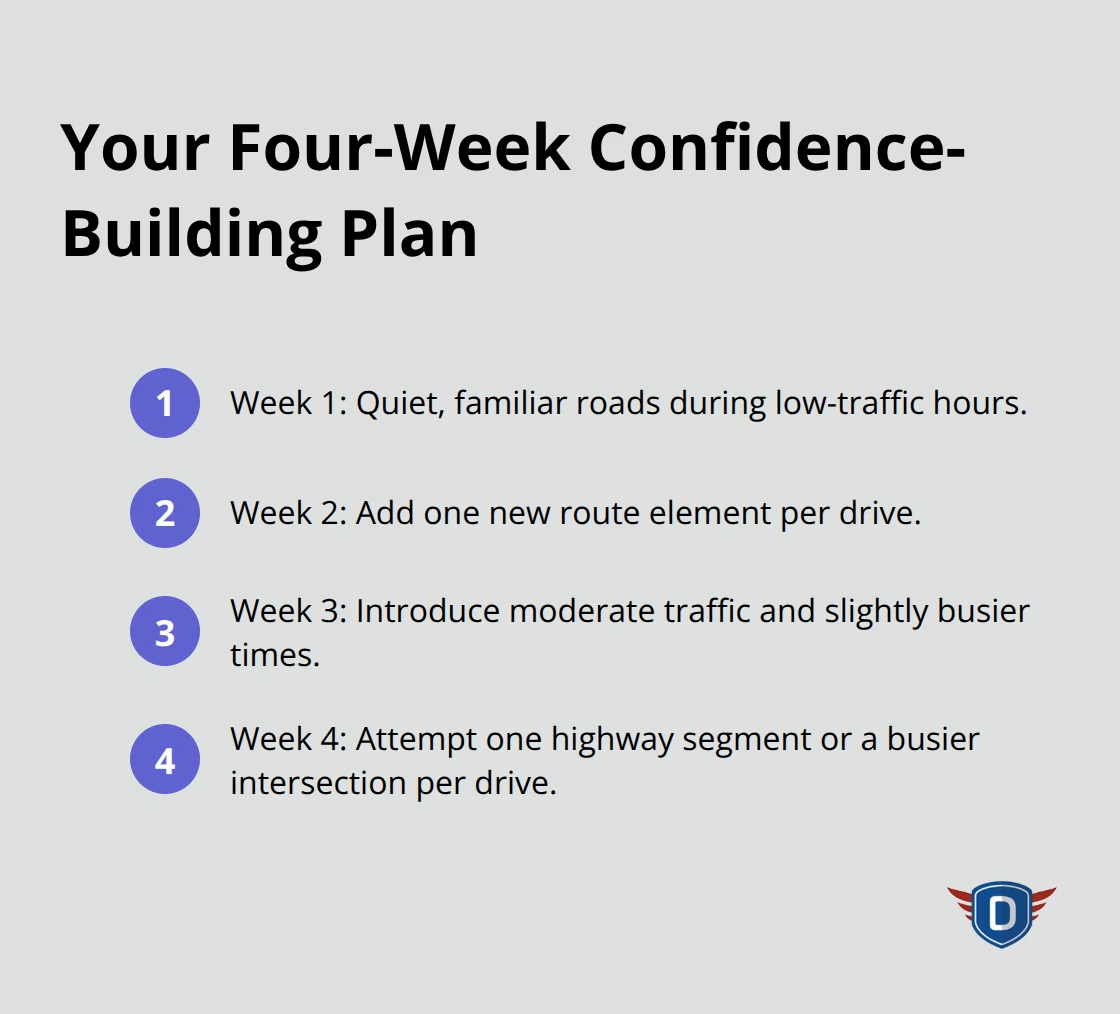
Set a clear progression timeline: spend your first week on familiar quiet roads during low-traffic hours, your second week adding one new route element per drive, your third week introducing moderate traffic, and your fourth week attempting one highway segment or busier intersection per drive. This structured approach removes the guesswork from when you’re ready for the next challenge. Your confidence becomes evidence-based rather than hope-based, which means it actually holds up when you encounter real pressure on the road.
Final Thoughts
Your first solo drive marks a real transition, not just a milestone. The nervousness you feel isn’t a sign you’re unprepared-it’s your brain adjusting to genuine independence behind the wheel. Teen anxiety driving is common because the shift from instructor-guided practice to solo responsibility is neurologically significant, and you’ve learned the mechanics of driving but now must learn to trust yourself.
The techniques in this guide work because they address both the physical and psychological sides of pre-drive anxiety. Box breathing calms your nervous system, route planning removes unnecessary variables, and gradual progression builds evidence-based confidence rather than false reassurance. When you combine these approaches with a structured timeline, your anxiety transforms from something that controls you into something you manage strategically.
Your progress won’t be linear-some drives will feel harder than others, and that’s normal. What matters is that you move forward incrementally, document what you handle well, and resist the urge to jump into situations you’re not ready for yet. We at DriverEducators.com offer comprehensive driver education programs designed to help you develop lifelong safe driving habits and master the skills needed to navigate roads confidently, whether you’re working through your first solo drives or looking to strengthen your defensive driving knowledge.