A state-approved online driving course is now the mandatory path for Florida teens under 18 who want a learner’s permit, and students must pass the final exam with at least 80% to move forward. For most families, that’s the simplest, most convenient way to meet the legal requirement and start the licensing process without adding another scheduling headache.
If you’re reading this, you’re probably in one of two places.
Your teen is asking when they can start driving, or you’re the teen asking why getting a permit suddenly sounds more complicated than it used to. Both reactions make sense. Driving means freedom for a teenager, but for a parent it also means responsibility, paperwork, safety concerns, and a lot of questions.
The good news is that the first step is clearer now. Florida’s updated rules have made the process more structured, and that helps families. A solid online driving course for teens gives parents peace of mind and gives teens a practical way to move forward on their own schedule.
The Path to Your Teen’s Driver License Starts Here
A lot of families hit the same moment at almost the same time.
A teen turns to a parent and says, “I’m ready to get my permit.” The parent hears something different. They hear, “Can you help me figure out the law, choose the right course, manage the schedule, and make sure I don’t miss anything important?”
That mix of excitement and stress is normal.
Why this milestone feels bigger than it used to
For teens, driving means independence. It means not waiting for rides, not planning every outing around someone else’s work schedule, and not feeling stuck. For parents, it means a new layer of trust. You’re not just helping your child pass a test. You’re helping them build habits that affect every trip they take.
That’s why the first step matters.
An online driving course for teens works well because it fits real life. Your teen can log in from home, study when they’re focused, and move through the lessons without sitting in a classroom after school. You don’t have to spend evenings driving across town for a lecture-style class.
Practical rule: Start with the legal requirement, then build real skill on top of it. Families who reverse that order usually create more confusion than progress.
What parents usually want
Most parents don’t want something flashy. They want something approved, simple, and reliable.
They want to know:
- Is this course accepted by the state? It has to count toward the permit process.
- Can my teen complete it without constant supervision? It should be manageable, not a second full-time job for the parent.
- Will it teach safe-driving habits? A course shouldn’t feel like empty box-checking.
Teens usually want something different.
- They want flexibility. Late evening, weekends, between activities. That’s when they’ll do it.
- They want a clear finish line. Start the course, complete the lessons, pass the exam, move on.
- They want momentum. Nothing kills motivation faster than a confusing process.
That’s why online learning makes sense as the first move. It gives the family structure without creating unnecessary friction, and it puts everyone on the same page from day one.
What Is an Online Teen Driving Course
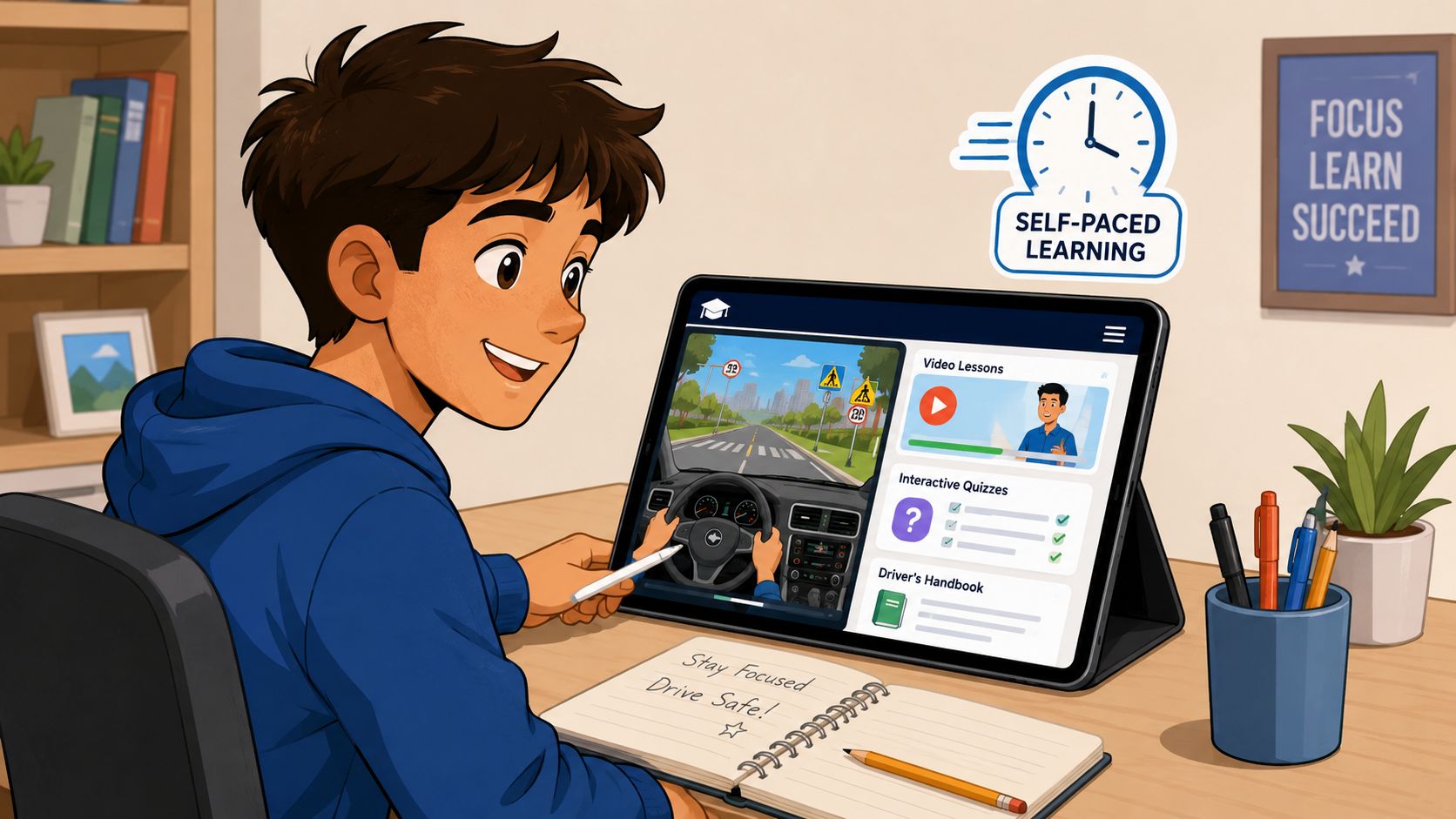
An online teen driving course is a state-approved digital class that teaches the knowledge side of driving before a teen gets behind the wheel for licensing purposes. Think of it as the classroom portion of driver education, just built for a phone, tablet, or computer instead of a school desk.
What the course usually looks like
Most online courses are broken into short modules. A teen logs in, works through lessons, answers quizzes, and keeps progressing at a steady pace.
A good course usually includes:
- Short reading sections that explain road rules in plain language
- Videos and visuals that make traffic situations easier to understand
- Knowledge checks so students know whether they understood the lesson
- A final exam that confirms they’re ready for the next step
That format matters. Teens don’t learn well from endless text dumps. They learn better when the material is broken into manageable chunks and tied to real driving situations.
Why this isn’t the old TLSAE approach
Florida families who remember the older permit process often think this is just a new name for the same thing. It isn’t.
The old Traffic Law and Substance Abuse Education (TLSAE) requirement was narrower. It introduced some key legal and substance-related topics, but it wasn’t the same as a fuller driver education course built to cover driving knowledge more broadly.
A proper online driving course for teens goes further. It should teach:
- Road awareness and how to read developing traffic situations
- Defensive driving habits so teens don’t just react late
- Safe decision-making when conditions change quickly
- Driving mindset that treats safety as a habit, not a memorized answer
An online course should do more than help a teen pass a permit test. It should help them think like a beginner driver who understands risk before they create it.
Why parents should care about the format
The online format isn’t just convenient. It’s often better for nervous or busy students.
A teen can pause a lesson, replay it, and return when they’re focused. That’s a major advantage over a classroom where the instructor moves on whether the student is ready or not. Parents also get a simpler process because the course can fit around school, sports, part-time work, and family life.
When families choose the right course, the result is simple. The teen gets a flexible path forward, and the parent gets confidence that the process started the right way.
Meeting Florida’s New Licensing Requirements
Your teen is ready to start driving, and you want two things right away. A legal path that does not create delays, and a safer start that gives you some peace of mind.
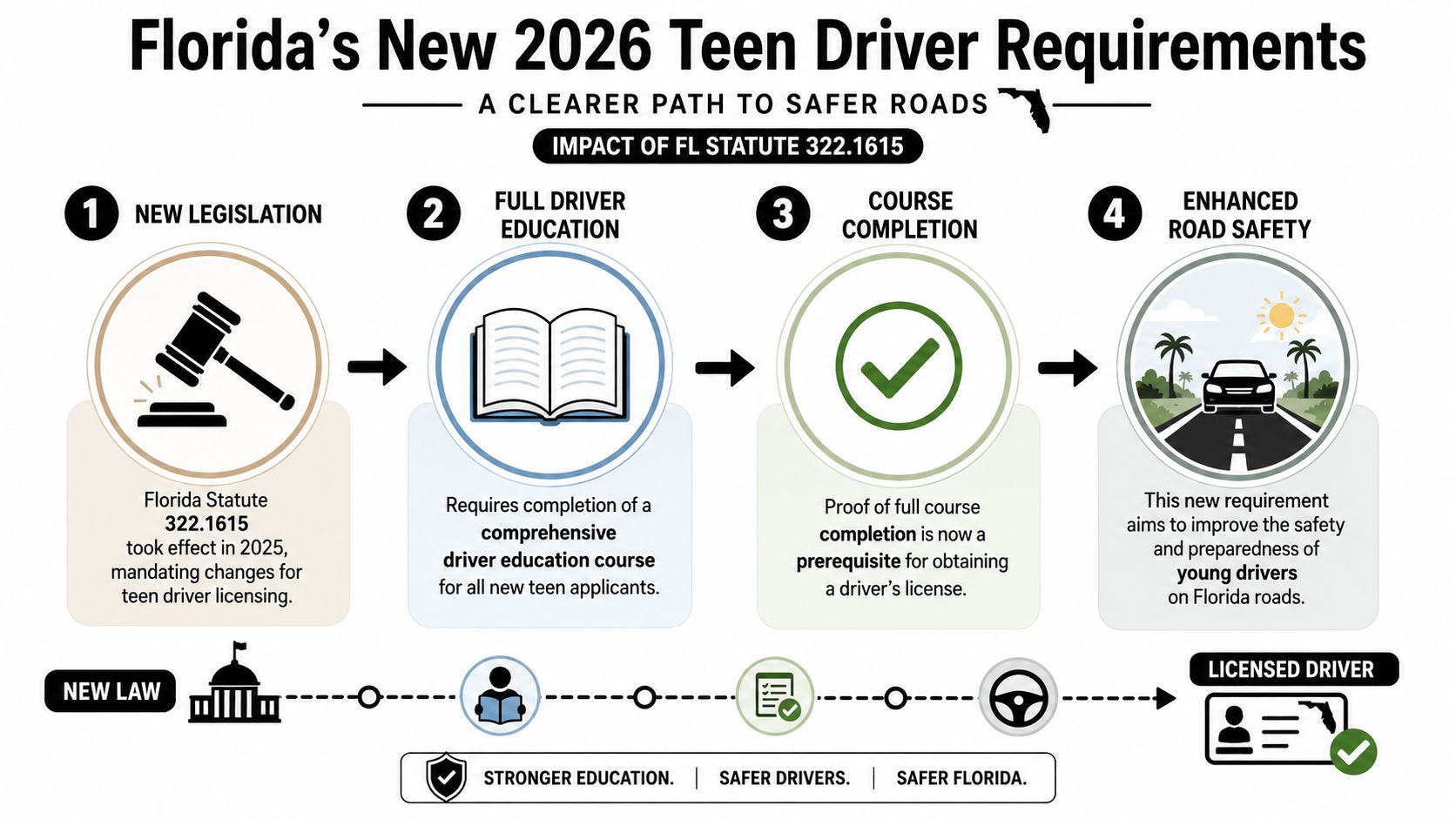
Florida’s new rules make that first decision much simpler. For teens under 18, a state-approved driver education course is now part of the learner’s license process under Florida law.
What changed for Florida teens
Parents should treat this as a clear reset. The older permit approach is no longer the standard for teens who fall under the new rule. Florida now expects a full, state-approved driver education course before a teen moves ahead with the learner’s license path.
That is good news for families who want clarity.
You no longer have to guess whether a basic entry-level course will count. If the course is state-approved and built for Florida teens, it puts your student on the right track from day one. If it is not, you risk wasted time, frustration, and a permit timeline that stalls for no good reason.
What families should do now
Keep it simple and do this in order:
- Confirm your teen is under 18 and applying for a Florida learner’s license
- Choose a Florida state-approved online driver education course
- Finish the course completely and keep the completion record
- Move ahead with the rest of the permit steps once that requirement is met
If you want the full checklist, review these Florida learner’s permit requirements. It shows parents exactly where the course fits and what comes after it.
If a teen under 18 has not completed the required driver education course, the licensing process stops there.
Why this requirement helps parents and teens
I support this change. It gives parents more confidence and gives teens a smarter start.
Parents get a clearer process and fewer surprises. Teens get the freedom to work through the course online, on a schedule that fits school, sports, and family life, while still meeting Florida’s legal standard. That combination matters. It is convenient, it is safer, and it sets the right tone before a new driver gets behind the wheel.
For Florida families, the message is straightforward. A state-approved online driving course for teens is not just a convenient option now. It is the smart first step, and for many teens under the 2026 rule, it is the required one.
Online Versus In-Person Driving School for Teens
It is 7:30 p.m. Your teen still has homework, you still have work emails, and nobody wants to sit in traffic just to make a classroom session across town. For Florida families, that is usually the moment the answer becomes obvious. Choose the online course.
That choice gives parents more control and gives teens more freedom. It also fits the reality of the new licensing process. A state-approved online course handles the education requirement in a way that is practical, safe, and far easier to complete without delays.
Where online usually wins
Online driver education works better for the schedule your family already has.
Your teen can log in after practice, on a weekend morning, or during a quiet gap between schoolwork and dinner. You can check progress at home instead of hoping they stayed focused in a classroom after a long day. That kind of visibility matters to parents, and it keeps the course from turning into one more scheduling problem.
It also makes follow-through easier. A teen who can pause, review, and return to the lesson is more likely to finish the course and absorb the material.
If you want a simple next step after comparing options, review the online driving course completion certificate process so you know exactly what your family will need at the end.
Side-by-side comparison
| Feature | Online Course (BDISchool) | Traditional In-Person School |
|---|---|---|
| Schedule | Flexible, self-paced access from home | Fixed class times |
| Location | Learn anywhere with internet access | Requires travel to a classroom |
| Learning pace | Easier to pause, review, and repeat lessons | Group pace set by instructor |
| Parent involvement | Easier to monitor progress and discuss lessons at home | Often limited to drop-off and pickup |
| Convenience | Strong fit for school, sports, and family routines | Can create scheduling conflicts |
Where in-person can still help
Some teens focus better in a classroom. Some families want face-to-face structure. That is a valid preference.
Even then, I still recommend online for the academic portion in most cases. Save your time and energy for the part that shapes real driving habits. Supervised practice, calm coaching, and repeated exposure to real traffic situations matter more than sitting in a chair at a set hour.
Use the online course to cover rules, signs, risk awareness, and decision-making basics. Then put serious attention on practice drives with a parent or instructor who can correct mistakes in real time.
Teens become safer drivers through steady instruction and guided practice, not through a harder commute to the classroom.
That is why online is the better first move for most Florida families. Parents get peace of mind. Teens get flexibility. And both of you get a smoother start on the road to a license.
Enrolling and Completing Your Online Course
It’s Tuesday night. Your teen has homework, practice, and a phone full of distractions. You want progress toward a license without turning the house into a daily argument. That is exactly why the enrollment process should be simple and the course should fit real family life.
A good online course gets you started fast and keeps your teen moving toward Florida’s 2026 requirements without adding another rigid commitment to the week.
How to get started
Enroll with a state-approved provider and keep the setup clean from the beginning.
- Go to the provider’s website and choose the teen driver education course.
- Create the student account using the teen’s full legal name and correct personal details.
- Sign in on a computer or tablet and begin the lessons.
- Set a realistic pace and finish the course in steady sessions.
Parents should pay attention to the registration details. If the student information is wrong, fixing the completion record later can waste time and delay the next step.
How to finish the course without dragging it out
The best plan is simple. Put the course on the calendar and treat it like any other school responsibility.
Short, focused sessions work better than a last-minute cram. Teens remember more, parents can monitor progress more easily, and the course feels manageable instead of annoying.
Use this approach:
- Choose set study times each week. Consistency beats motivation.
- Use a tablet or computer when possible. Larger screens make reading and review easier.
- Repeat lessons that need a second look. Online learning gives teens that advantage.
- Finish the course before scheduling the next licensing step. That keeps the process orderly and reduces preventable delays.
Parents should also use the course as a conversation starter. If a lesson covers texting, reaction time, or risky decisions, talk about it that day. Spivak & Sakellariou’s guide to distracted driving is a useful reminder of why these habits matter before your teen ever drives alone.
Course completion and what comes next
Your teen will need to complete the lessons and pass the required final assessment before moving on. As noted earlier, Florida sets the completion standards, so families should follow the provider’s instructions closely and avoid guessing.
After that, the next step is making sure you understand the proof of completion and how it fits into the permit process. This guide to the online driving certificate process shows families what to expect.
Keep this part simple. Enroll in the right course, make steady progress, finish it properly, and keep your teen on track for more freedom with less stress for you.
Choosing the Right Course and Preparing for the Road
Your teen is excited about the freedom. You want proof they are starting the right way. That is why course choice matters more than many families realize.
Pick a provider that does more than check a legal box. Florida’s 2026 rules raise the stakes, and the right online course should give parents confidence while giving teens a clear, manageable path toward driving on their own.
What to look for in a provider
Start with quality, not hype. A good provider makes the process clear, keeps teens engaged, and gives your family fewer headaches from day one.
- State approval: Only choose a properly approved Florida course.
- Clear lesson structure: Teens should understand exactly what they need to complete and what happens after they pass.
- Easy course access: The platform should work well on common devices and avoid technical frustration.
- A provider families can trust: Look for a school with real student focus, not a site built to chase clicks.
If you want a reliable place to compare options, review these Florida driver education courses for teens.
What parents should do after the course
Course completion is the starting point. Safe driving comes from practice, correction, and repetition with an adult in the car.
The National Highway Traffic Safety Administration says parents should spend at least 50 hours supervising practice driving, including 10 hours at night, before a teen drives independently. Review NHTSA’s guidance for supervised driving practice for teens. That standard is worth following because it builds judgment, not just test readiness.
Make those practice hours count.
- Start with low-pressure roads: Focus on braking, turns, scanning, and lane position.
- Add difficulty in stages: Move to busier streets, parking lots, and multi-lane traffic after the basics are steady.
- Practice at night and in different conditions: Teens need experience beyond sunny afternoon drives.
- Set strict distraction rules early: No phone use. No casual exceptions.
Spivak & Sakellariou’s guide to distracted driving is a smart resource to review together before solo driving becomes a real possibility.
Parents who treat practice seriously usually see the difference quickly. Their teens stay calmer, make fewer rushed choices, and build skill the right way.
Choose the course carefully. Then back it up with serious supervised practice. That combination gives teens real freedom and gives parents the peace of mind they should expect.
Frequently Asked Questions About Teen Driving Courses
How long does the Florida teen course take?
Florida’s required Driver Education Teen Startup course is a 6-hour online program for eligible teens under the updated requirement. The time is manageable, which is one reason online learning works well for families.
Do I need a computer, or can I use a tablet?
A tablet usually works well. A computer is also a good choice. The main goal is using a device that’s comfortable for reading lessons, viewing visuals, and finishing quizzes without frustration.
Does the course replace the learner’s permit test?
No. The course is a prerequisite step. The student still needs to complete the permit-related testing process after finishing the required education.
What score does a teen need to pass?
A student must earn at least 80% on the final exam to complete the course requirement successfully.
What happens right after passing?
The next move is handling the permit process cleanly and on time. Families should keep records organized, confirm completion details, and then move into the remaining permit steps.
Can permit drivers be on the road at night?
Parents ask this constantly, and they should. Night driving rules matter early. This guide on whether you can drive at night with a permit is worth reviewing before practice schedules start getting ambitious.
Is an online driving course for teens actually a good first step?
Yes. For most families, it’s the best first step because it satisfies the legal requirement, fits around real schedules, and gives teens a structured way to begin learning before road practice starts.
If you’re ready to stop guessing and start the permit process the right way, BDISchool is a practical place to begin. You can review the available courses, choose the right state-approved option for your teen, and get started with a format that works for both parents and new drivers.