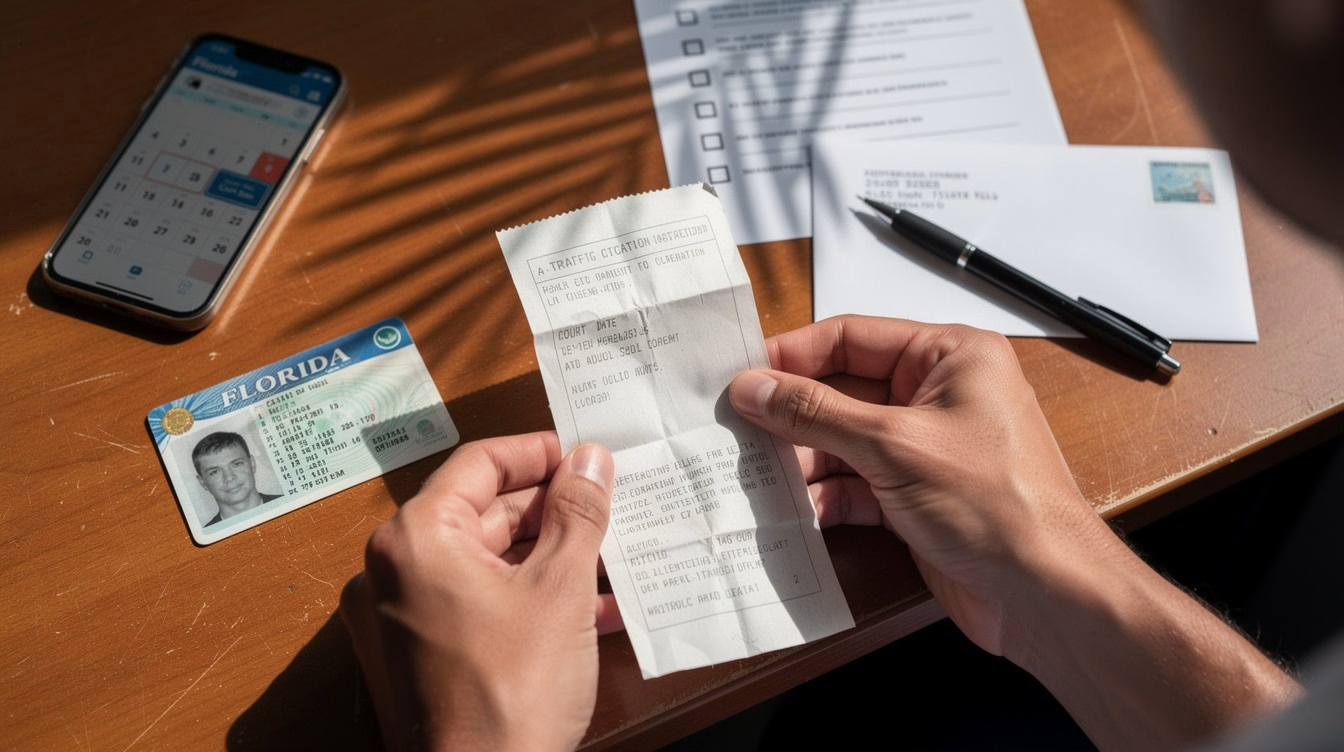
A course can be convenient, affordable, and available on your phone – but none of that helps if the court, DMV, insurer, or licensing agency will not accept it. This course approval checklist helps you verify the details before you spend time and money on an online driver education or traffic safety course.
Approval is not one-size-fits-all. A course may be approved for one state, county, court program, age group, or requirement but not another. Taking a few minutes to confirm the right details can prevent missed deadlines, rejected completion certificates, and the need to repeat a course.
Start With the Requirement You Must Meet
Before comparing course providers, identify exactly why you need the course. Your citation, court order, DMV notice, insurance carrier, or licensing checklist should state the required course name, number of hours, completion deadline, and any special conditions.
For example, a first-time Florida driver may need a Traffic Law and Substance Abuse Education course, while another driver may need Basic Driver Improvement after a traffic citation. A mature driver looking for an insurance discount may need a course specifically recognized by their insurance company. These programs may all involve driver safety, but they are not interchangeable.
If your paperwork is unclear, contact the agency or organization that issued it before enrolling. Ask for the precise course title, approved provider criteria, required completion date, and how proof of completion must be submitted.
Course Approval Checklist: What to Verify Before Enrolling
Use the following checks before starting any online course. Keep a copy of your confirmation email, course receipt, and completion certificate for your records.
- Correct state approval: Confirm the provider is approved for your state and for the specific course you need. A provider’s approval in another state does not automatically apply where you live or where your violation occurred.
- Correct course type: Match the course name and purpose to your notice. Check whether you need driver education, defensive driving, basic driver improvement, intermediate driver improvement, traffic school, substance abuse education, aggressive driver training, or another program.
- Required course length: Verify the required number of instructional hours. Some requirements call for four, six, eight, or more hours, and a shorter course may not be accepted.
- Acceptance by the requesting organization: If a court, employer, insurance company, or county program assigned the course, confirm that it accepts the provider and format you choose.
- Online course eligibility: Make sure an online, self-paced course is permitted. Certain situations require an in-person class, proctored exam, live instruction, or a specific local provider.
- Deadline and reporting process: Check when you must finish and whether the provider reports completion electronically, mails a certificate, or requires you to submit proof yourself.
- Identity verification requirements: Some approved programs require identity checks, security questions, timers, final exams, or monitored testing. Know these requirements before you begin.
- Total price and refund terms: Review the full price, including any certificate delivery or processing costs. Clear pricing and a stated refund policy help you make an informed choice.
Check the Approval Source, Not Just a Marketing Claim
The words “state approved” are meaningful only when they apply to your exact requirement. Look for clear information about the approving authority, the states served, and the course categories covered. A dependable provider should make it easy to understand what its course is designed to satisfy.
Do not assume that a general defensive driving course will dismiss a ticket or reduce points. Ticket dismissal rules are set by the court or jurisdiction handling the citation. Likewise, insurance discounts depend on the carrier and policy, even when a mature driver course is approved in the state.
When you call a court clerk, DMV office, or insurer, document the conversation. Record the date, the representative’s name if available, and the guidance you received. This is especially helpful when your deadline is close or your requirement includes unusual conditions.
Questions to Ask the Court, DMV, or Insurer
Ask direct questions that lead to a clear answer. For a court requirement, ask: “Will you accept this specific online course provider for my case?” For an insurance discount, ask: “Which approved course types qualify under my policy, and what certificate do you need?”
For licensing requirements, ask whether the course must be completed before a permit, road test, license application, or reinstatement. Also ask whether the agency receives electronic completion records or expects you to bring or upload a certificate.
Confirm That the Course Fits Your Situation
Approval comes first, but practical fit matters too. A course that meets the requirement should also be manageable within your schedule and accessible on the devices you use.
Self-paced online learning can be a good option for drivers balancing work, school, family obligations, or a court deadline. Check whether you can log in 24/7, save your progress, and complete lessons from a phone, tablet, or computer. These details can make the difference between finishing comfortably and rushing at the deadline.
Language options may matter as well. If you or a family member is more comfortable learning in another language, verify that the available version is approved for the required program. Do not assume every translated course version has the same approval status.
Consider support availability. If you cannot access your course, have a question about a certificate, or need help understanding a completion step, responsive customer support can protect valuable time. This is particularly important when a court date, insurance renewal, or licensing appointment is approaching.
Understand Completion Certificates and Reporting
Finishing the last lesson is not always the final step. Your requirement may be complete only after the provider issues a certificate, reports your completion, or the court or agency records it.
Read the provider’s completion instructions before enrollment. Find out whether your certificate is available immediately, delivered digitally, mailed, or sent directly to the requesting organization. If mailing is required, allow enough time for processing and delivery.
Electronic reporting is convenient, but it does not remove your responsibility to verify that the record was received when a deadline is involved. Save confirmation messages and check with the court, DMV, or insurer if your status does not update as expected.
For court-directed courses, submit proof exactly as instructed. Sending a certificate to the wrong email address, missing a case number, or submitting after the deadline can create avoidable problems even when you completed an approved course.
Common Mistakes That Can Affect Acceptance
The most common mistake is choosing a course based only on price or speed. An inexpensive course that does not satisfy your requirement is not a savings. The better choice is a course that is clearly approved, fits your deadline, and provides the documentation you need.
Another mistake is enrolling under the wrong state. Requirements are usually based on the state or jurisdiction that issued the citation or licensing requirement, not necessarily the state where you currently live.
Drivers also run into trouble when they wait until the final day. Identity verification, final exam requirements, certificate processing, and reporting delays can take longer than expected. Start early enough to address a technical issue or request help without risking noncompliance.
FAQ About Course Approval
How do I know whether an online driver course is approved?
Check the provider’s stated approvals and confirm acceptance with the court, DMV, insurer, or licensing agency requiring the course. Approval must match your state and course type.
Can I take any online traffic school for a ticket?
No. Ticket dismissal or point reduction depends on the court and jurisdiction handling your citation. Confirm the approved provider, course length, and submission deadline before enrolling.
Will my insurance company accept a mature driver course?
It depends on your insurer and policy. Ask your insurance company which course qualifies for a discount and what certificate it requires.
Does an approved course report completion automatically?
Sometimes. Providers may report electronically, issue a certificate for you to submit, or use both methods. Check the reporting process before starting.
What should I do if I enrolled in the wrong course?
Contact the provider promptly and review its refund or transfer policy. Then verify the correct course with the organization that assigned the requirement.
A driver course should remove uncertainty, not add to it. Confirm the approval details first, choose a course you can realistically complete on time, and keep your completion records until your requirement is fully cleared.