A sudden brake light is not the moment to decide whether you left enough room. The safest following distances give you time to recognize a hazard, react calmly, and brake without turning a routine slowdown into a rear-end crash. This simple driving habit matters on every trip, from a short neighborhood errand to a high-speed freeway commute.
Following distance is the open space between the front of your vehicle and the rear of the vehicle ahead. It is not one fixed number of car lengths. A safe gap changes with your speed, road surface, visibility, traffic flow, vehicle condition, and your ability to stay focused.
What Is a Safe Following Distance?
For normal daytime driving on dry roads, use at least a three-second following distance. Choose a fixed object ahead, such as a sign, pole, or bridge support. When the vehicle in front passes it, begin counting: “one thousand one, one thousand two, one thousand three.” If you reach the object before finishing the count, increase your space.
The three-second rule is a starting point, not a guarantee. It helps account for the time needed to see a problem, move your foot to the brake, and begin slowing down. At higher speeds, three seconds represents more physical distance, which is why a time-based method works better than guessing by car lengths.
Do not confuse a safe following gap with an invitation for another driver to merge. If someone enters the space, ease off the accelerator and rebuild your cushion. Protecting space ahead is safer than competing for it.
Why car lengths are less reliable
A “one car length for every 10 mph” guideline is easy to remember, but it can be difficult to judge accurately while moving. Vehicle lengths vary, and drivers often underestimate distance at freeway speeds. Counting seconds provides a more consistent real-world check.
When to Increase Your Following Distance
Three seconds may be reasonable only when conditions are favorable. Add more time whenever stopping, steering, or seeing the road becomes harder. In many situations, a four- to six-second gap is a better choice.
Increase your following distance when roads are wet. Rain reduces tire grip and can create standing water, especially near intersections, wheel tracks, and poorly drained lanes. A four-second minimum is often appropriate in light rain, while heavier rain may require even more room and a lower speed.
At night, leave extra space because visibility is limited. Your headlights may not reveal a stopped vehicle, debris, an animal, or a sharp curve until it is much closer than it would be during the day. Slow down enough to stop within the distance you can clearly see.
Use a larger cushion behind motorcycles, large trucks, buses, school buses, and vehicles towing trailers. Motorcycles can stop more quickly than many drivers expect, and you need room to see around larger vehicles. Trucks and buses can block your view of traffic changes ahead, so increasing space gives you more time to respond.
Other situations call for more distance as well:
- Heavy traffic with frequent braking or merging
- Construction zones, narrow lanes, and unfamiliar roads
- Fog, glare, snow, ice, smoke, or blowing dust
- A heavy vehicle load, trailer, worn tires, or brake concerns
- Fatigue, stress, distraction, or a new driver still building experience
On icy or snow-covered roads, dramatically increase your gap. Stopping distances can rise sharply, and sudden braking may cause a skid. If conditions are severe, the safest choice may be to delay travel rather than relying on any specific following-distance rule.
Safest Following Distances at Highway Speeds
Highway driving creates a common mistake: drivers feel comfortable because traffic is moving smoothly, then follow too closely because the vehicle ahead appears steady. At 65 mph, your vehicle covers about 95 feet every second. A three-second gap is therefore roughly 285 feet, and that space can disappear quickly when traffic stops unexpectedly.
Keep your eyes moving well beyond the vehicle directly ahead. Look 12 to 15 seconds down the road when possible, checking for brake lights, lane closures, congestion, and vehicles entering from ramps. Early information allows you to slow gradually instead of braking hard.
Avoid pacing another vehicle in its blind spot or traveling side-by-side for long periods. If traffic compresses, lift off the accelerator early and let your following distance grow. This approach reduces abrupt braking, saves fuel, and makes your driving more predictable to people behind you.
How to handle tailgaters
A tailgater reduces your margin for error, but braking suddenly to send a message is unsafe and may create a crash. Keep your attention ahead, increase the space in front of you, and change lanes when it is safe and legal so the driver can pass.
If changing lanes is not practical, maintain a steady, legal speed. The extra gap ahead gives you room to slow gradually if traffic changes, which also gives the tailgater more time to react.
Following Distance in Stop-and-Go Traffic
Congested traffic calls for patience more than precision. Leave enough room to see the rear tires of the vehicle ahead touching the pavement when you are stopped. This helps prevent a low-speed collision if you are bumped from behind and gives you an exit path if the vehicle ahead breaks down.
When traffic starts moving, avoid accelerating immediately to close every opening. Roll forward smoothly and preserve a cushion when possible. Constantly rushing forward and braking hard contributes to the stop-and-go waves that make traffic more stressful and less safe.
At intersections, stay alert for drivers who stop suddenly to turn, pedestrians entering a crosswalk, and vehicles that run a red light. A safe gap cannot replace attention, but it gives attention time to work.
Braking Distance Is Only Part of the Picture
Drivers sometimes focus only on how far a vehicle needs to stop after the brakes are applied. Total stopping distance also includes perception distance and reaction distance. Perception is the time needed to notice the danger. Reaction is the time needed to decide what to do and begin braking.
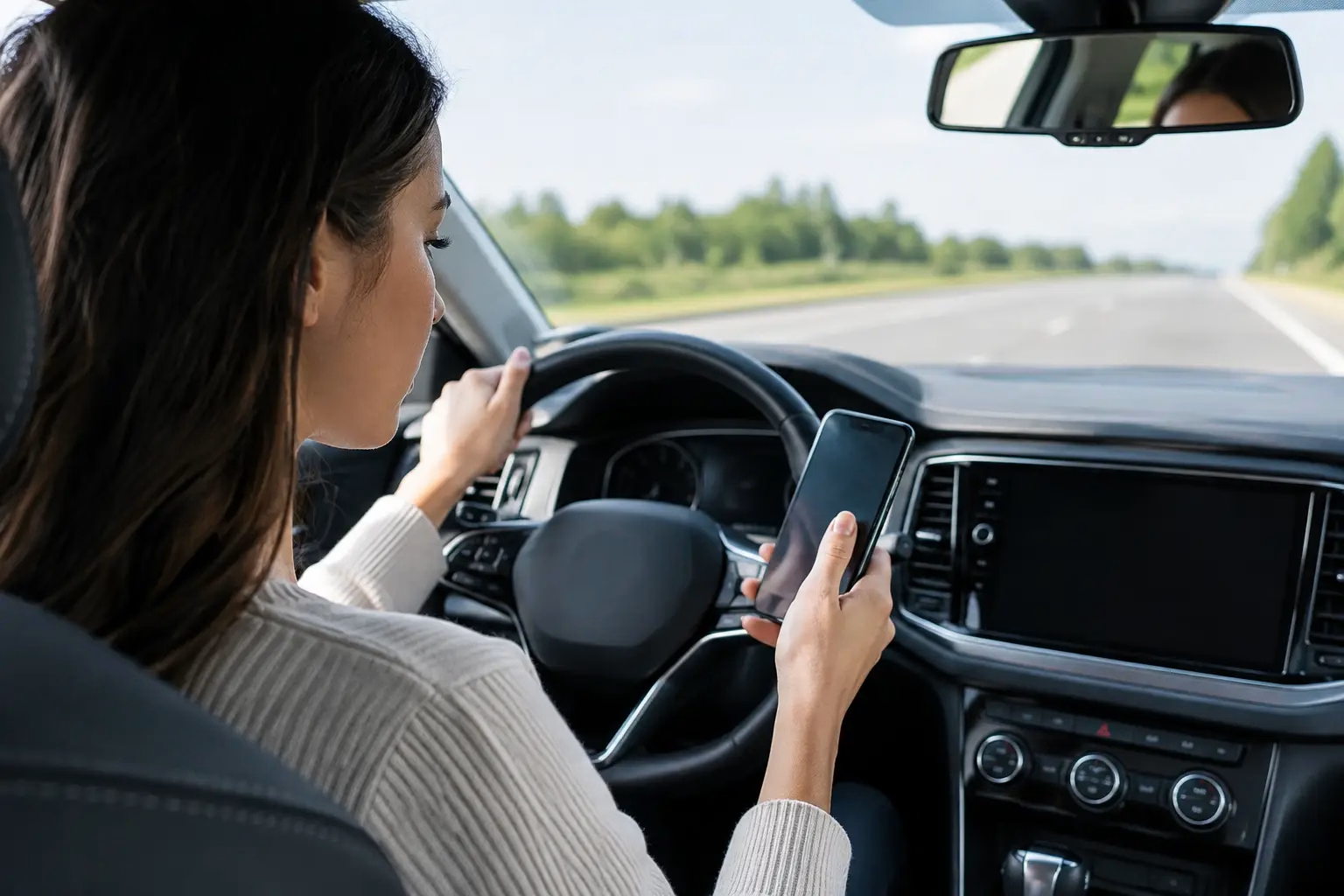
Distraction makes both parts longer. Looking at a phone, adjusting navigation, eating, or turning around to speak with a passenger can use up the distance that a safe following gap was meant to provide. Keep your phone out of your hand, set navigation before moving, and pull over if a task requires more attention.
Your vehicle also affects stopping ability. Tires with poor tread, underinflated tires, worn brakes, excessive cargo, and towing loads can all require more space. Routine maintenance supports safe driving, but it does not eliminate the need to adjust for weather and traffic.
Build the Habit Before You Need It
Use the three-second check several times during each drive, especially after changing roads or weather conditions. It takes only a moment to pick a roadside object and count. If the gap is short, ease off the accelerator instead of waiting until you need to brake.
This habit is especially useful for new drivers completing driver education or for drivers taking a court-ordered improvement course. Safe spacing is not just a test answer. It is a practical way to reduce sudden decisions and create more control behind the wheel.
DriverEducators.com courses reinforce the defensive-driving habits that help drivers meet course requirements while making safer choices on the road. The goal is not to drive timidly or hold up traffic. It is to leave enough room to respond safely when another road user makes an unexpected move.
Frequently Asked Questions
Is the three-second rule always enough?
No. Three seconds is a dry-road, daylight starting point. Use four seconds or more in rain, darkness, heavy traffic, or whenever visibility and traction are reduced.
What is the safest following distance in rain?
At least four seconds is a practical minimum in light rain. Increase it further in heavy rain, standing water, or when your tires have reduced traction.
Should I leave more space behind a motorcycle?
Yes. Leave at least three to four seconds behind a motorcycle in good conditions, and more when roads are wet or visibility is limited. Extra space improves your view and gives you time to respond to quick stops or road hazards.
What should I do if someone cuts into my following distance?
Ease off the accelerator and recreate the gap. Do not speed up, tailgate, or brake sharply to prevent the merge.
Does cruise control affect following distance?
It can. Standard cruise control does not react to slowing traffic, so you must stay alert and disengage it when conditions change. Adaptive cruise control may help maintain a selected gap, but it does not replace driver attention.
The safest space is the space that lets you see a problem early and respond without panic. Make room part of every drive, then add more whenever the road gives you a reason to be cautious.