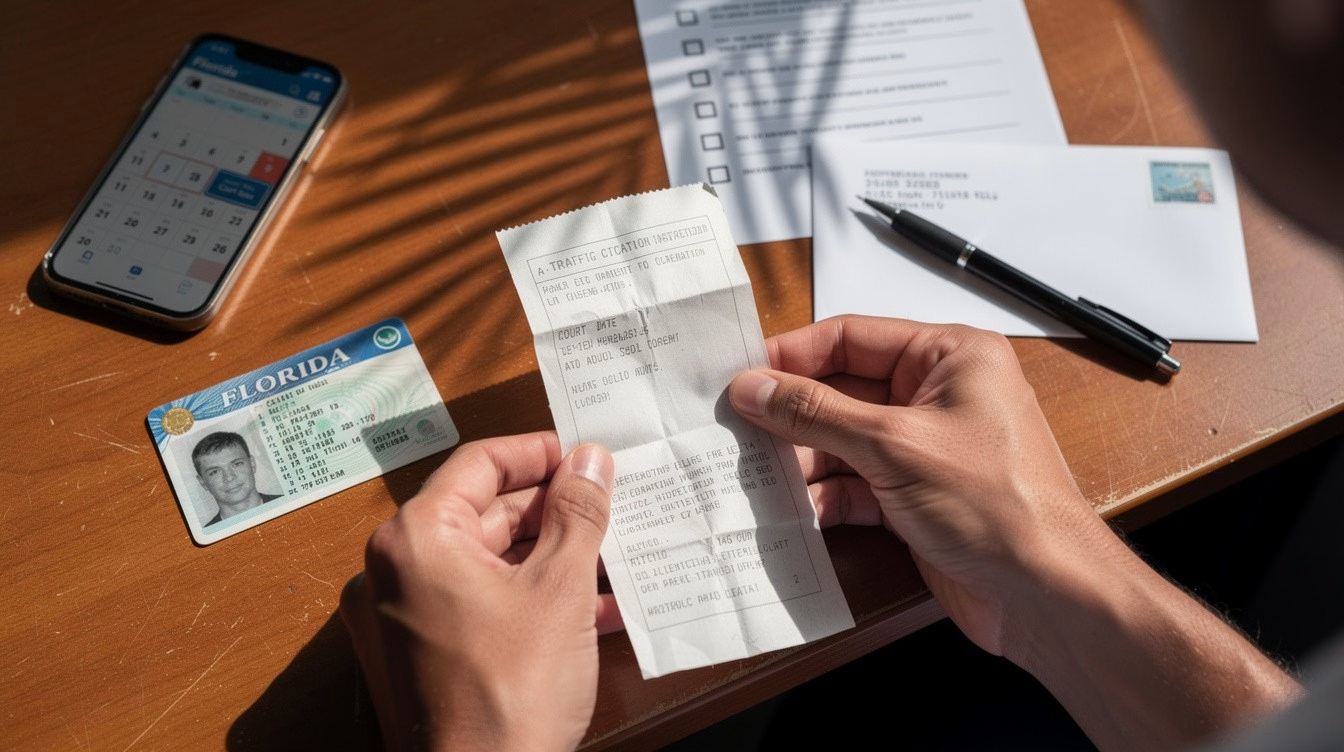
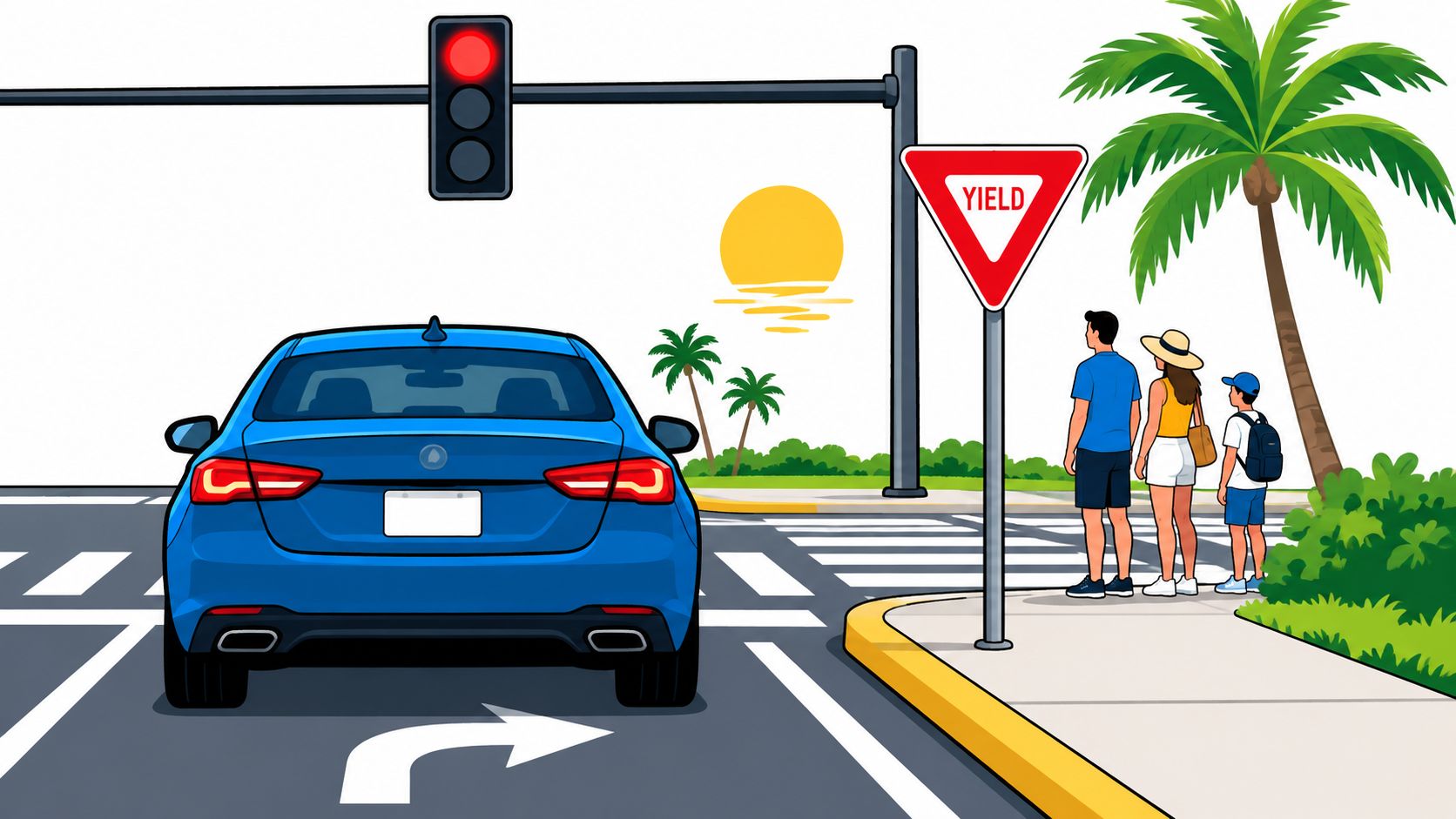
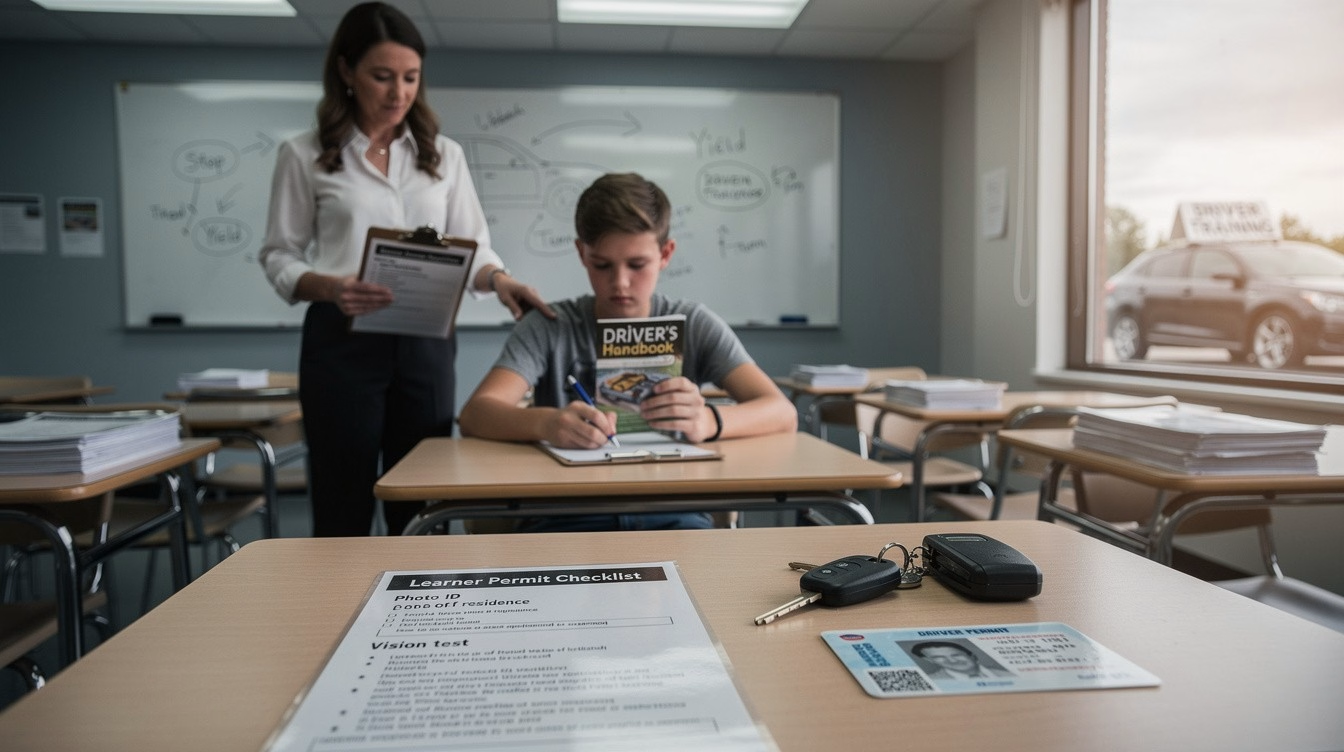
You got pulled over, got the ticket, and now you’re staring at a citation that feels more annoying than serious. Don’t make that mistake. In Florida, a moving violation can turn into points, insurance trouble, and, if you keep stacking offenses, a licensing problem that follows you far longer than the stop itself.
Florida traffic laws are not just about paying a fine and moving on. They’re built around record protection, and once points start landing on your license, the clock starts on bigger consequences.
What a Florida Moving Violation Actually Costs You
The flashing lights are immediate. The lasting consequences begin after the citation is recorded, when one traffic stop starts affecting your insurance and future licensing decisions.
A moving violation can cost more than the fine printed on the ticket. It may raise your insurance premium and keep affecting your record after the stop is forgotten. Review why one ticket can push your insurance up to see how quickly that financial impact can begin.
One stop can create a long record
A citation starts a paper trail. That record can influence your license status, insurance file, and options after another violation. Florida’s recent 2026 habitual offender expansions and distracted-driving crackdowns make repeated conduct harder to dismiss as a minor inconvenience. Protecting your record after one ticket matters before another citation adds to it.
Florida’s traffic enforcement system has deep roots. The state’s first automobile law dates to 1905. By 1939, Florida had established a statewide driver’s license and the Florida Highway Patrol (Florida Department of Highway Safety and Motor Vehicles history). That enforcement structure is why a single citation today feeds a permanent, searchable record.
Practical rule: Treat a moving violation as a licensing risk, not a parking ticket. It can affect both your driving privileges and insurance file.
Act promptly. Read the citation, protect every deadline, and choose whether to contest it, pay it, or complete a state-approved traffic school course when eligible. A course is not just a ticket fix. It can be part of protecting your record as enforcement expands. Waiting gives the system more control over the outcome.
Decoding the Florida Point System and Suspensions
A ticket is not just a fine. In Florida, it starts a point trail that can threaten your license if you keep stacking violations.
The state’s point schedule is straightforward. Reckless driving carries 4 points, leaving the scene of a crash with more than $50 in damage carries 6 points, careless driving carries 3 points, speeding carries 3 points, and speeding in excess of 50 mph carries 4 points. Florida’s point and suspension rules spell that out clearly, and you should treat every moving violation as part of the same record (Florida point and suspension rules).
The suspension math is what drivers miss
Here is the part that hurts people. 12 points in 12 months brings a 30-day suspension, 18 points in 18 months brings a three-month suspension, and 24 points in 36 months brings a one-year suspension. That is how a few bad decisions turn into a license problem (Florida point and suspension rules).
Teen drivers have less room to make mistakes. A teen driver can face a Business Purposes Only restriction after six or more points within 12 months, and drivers under 21 with a blood alcohol concentration of 0.02% or more face a six-month suspension. Those rules belong in your head before you pick up another ticket.
| Violation Type | Points Assessed | Related rule |
|---|---|---|
| Reckless driving | 4 | Suspension at 12 points in 12 months |
| Leaving the scene with more than $50 in damage | 6 | Suspension at 18 points in 18 months |
| Careless driving | 3 | Suspension at 24 points in 36 months |
| Speeding | 3 | Point total can still push you toward suspension |
If you want the cleanest plain-English breakdown of how the point totals lead to suspension, read when Florida points trigger suspension. The point is simple. Repeated violations do not stay small for long.
The Hidden Dangers of Distracted Driving
You glance down for a text, and that split second can cost your license record, not just your bumper.
Florida’s distracted-driving problem is bigger than many drivers admit. Coverage citing 2025 data reports more than 52,900 distracted-driving crashes, 304 deaths, and 2,126 serious injuries, with distracted-driving deaths at a three-year high (Florida distracted-driving coverage). State crash reporting also shows the scale of the problem across Florida roads, with distraction sitting inside a much larger crash total (A chart detailing distracted driving crash statistics in Florida, categorized by various types of driver distractions.).
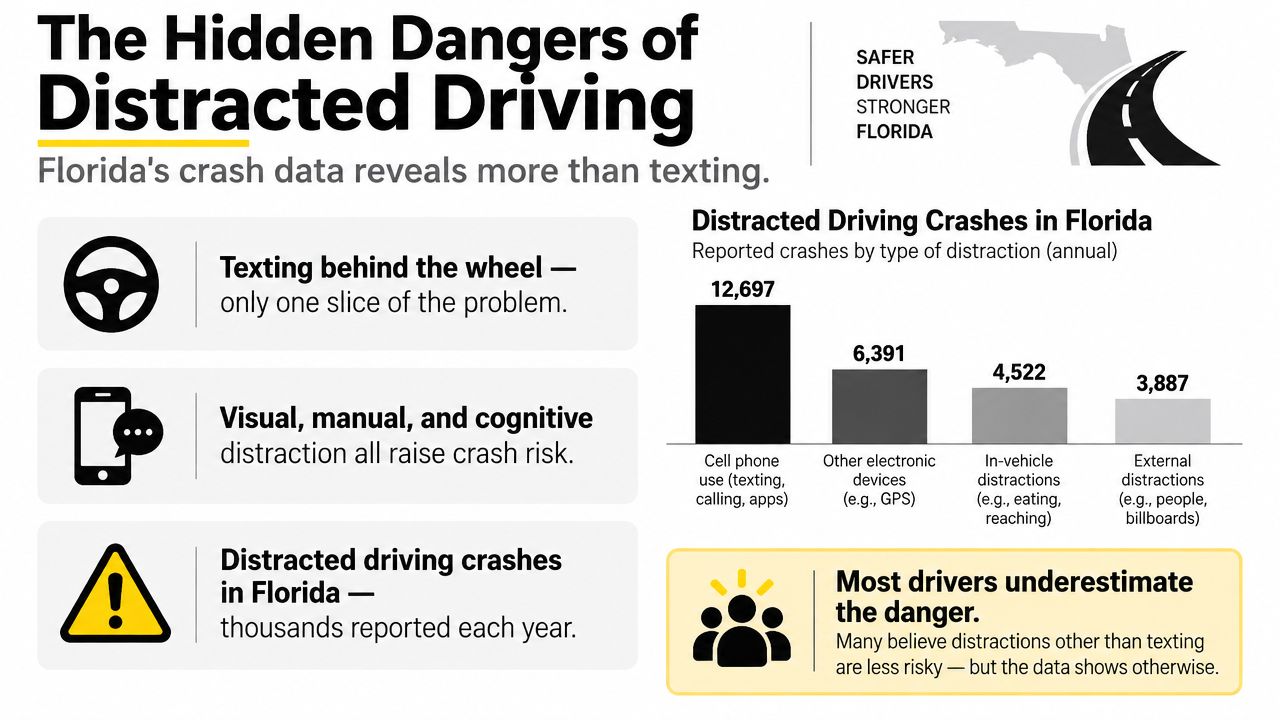
Distraction is broader than the phone
Eating, changing navigation, answering a passenger, or reaching for something in the cabin all pull your focus away from the road. Phones get the attention, but they are only one part of the problem.
Florida is cracking down on careless habits, and drivers who treat distraction as harmless are making a bad bet. The fine may be the first pain point. The long-term risk is worse, because repeat violations can stack against your record and make later licensing problems harder to avoid.
Direct advice: If you need to touch the screen, handle a message, or set up your route, pull over. Do it before you drive, or do it after you stop.
If you want a clear breakdown of why texting is so dangerous, read the dangers of texting and distraction while driving. The lesson is simple. Small distractions turn into large consequences fast, and Florida drivers should protect their records before they become problem drivers.
Navigating Recent Updates to Crash and Safety Rules
A ticket is annoying. Ignoring recent Florida rule changes is how a minor stop turns into a record problem.
Florida’s Move Over rule now reaches more than emergency vehicles. Drivers must slow down or move over for any disabled vehicle showing hazard lights, flares, or signage (Florida driving law overview). Treat the shoulder like a live work zone, because that is what it is.
What to do when you see a disabled car
Slow early. Check the lane beside you before moving. If the lane is not clear, reduce speed and pass with room, without crowding the shoulder.
That matters because shoulder crashes happen fast. A stranded vehicle puts a driver, a passenger, or a tow worker close to moving traffic.
Florida also changed crash-reporting rules. Effective Oct. 1, 2026, the state raised the apparent-damage threshold for required crash reports from $500 to $2,000. If you’re in a minor collision, don’t guess about whether a report is needed.
What to do after a minor fender-bender
Stop. Exchange information. Document the scene. If there is any doubt about injury, hit-and-run exposure, or whether a report is required, call law enforcement.
Guessing after a crash creates bigger legal problems. Report what needs reporting, and do not leave the scene half-documented.
The drivers who stay clean on paper pay attention to current rules, especially the ones tied to disabled vehicles and crash reporting. Old habits do not protect your record. Current compliance does.
Protecting Your Record with State-Approved Courses
A moving violation can do more than add a fine. It can put your driving record on a path toward points, higher insurance costs, and, for drivers who keep collecting offenses, a longer-term licensing problem. Traffic school is a tool. Use it early and use it correctly.
Florida lets a driver with a non-criminal moving violation and no commercial driver license elect to attend a FLHSMV-approved basic driver improvement school once every 12 months and no more than eight times in a lifetime, as long as the election is made within 30 days of the citation (FLHSMV driver improvement school rules). Miss that window and you lose a clean chance to protect the record. Not sure how the election process works end to end? See how traffic school works in Florida.
The right course depends on the problem you’re trying to solve
The 4-hour Basic Driver Improvement course is the state-approved option that helps prevent points on an eligible license and can also be court ordered (Florida Safety Council course info). If you just got a qualifying ticket, start here.
The 6-hour Mature Driver course serves a different purpose. Florida guidance says the discount can stay effective for three years if the driver is not at fault in an accident and is not convicted of, or does not plead guilty or nolo contendere to, a moving violation during that period (mature driver course guidance).
| Course Type | Main Purpose | Why It Matters |
|---|---|---|
| Basic Driver Improvement | Prevent points on an eligible moving violation | Protects the record after a ticket |
| Mature Driver | Insurance discount maintenance | Helps older drivers keep savings in place |
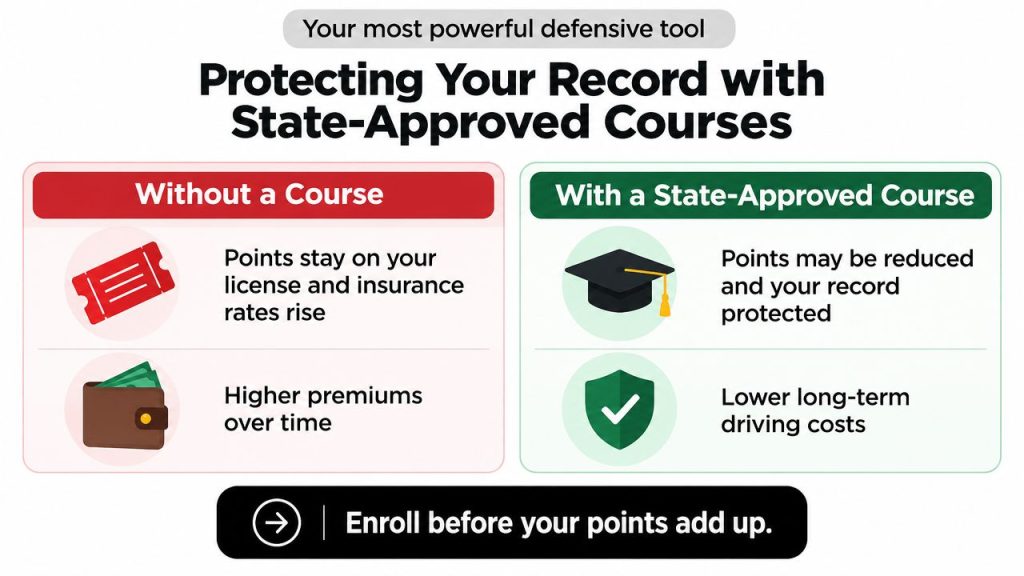
Register fast, finish the course, and keep the citation from growing into something harder to fix. BDISchool lists Florida-approved course choices on its course pages, including online traffic school formats for drivers who need to act quickly.
Building Lifelong Safe Driving Habits
A ticket is often the warning shot. What matters next is whether you change the habit or keep feeding the record.
Good driving is simple: stay alert, leave space, follow lane and speed rules, and treat small mistakes as the start of bigger trouble. Florida’s child-restraint rules prove that details matter. Drivers and front-seat passengers must buckle up, passengers under 18 must be restrained in either seat, and children 5 years old and younger must use a federally approved child restraint device. Children through age 3 need a separate carrier or integrated child seat, and children ages 4 to 5 may use a separate carrier, integrated child seat, or booster seat, with narrow exceptions (Florida buckle-up guidance). That is a technical rule, not a suggestion.
Quick compliance checks
- Child seats: Match the restraint to the child’s age and seat position, don’t guess.
- Teen drivers: Watch point accumulation closely, because the rules tighten faster for younger drivers.
- Repeat offenders: Do not brush off a license problem as temporary, especially after Florida expanded habitual traffic offender treatment in 2026 to include driving without a valid license as a qualifying offense (2026 Senate committee summary).
The original citation is rarely what costs drivers their license. It is what the citation becomes when careless driving continues or deadlines get ignored. State-approved education gives you a way to stop that chain before it turns into a licensing problem.
You do not need to be perfect. You do need to be disciplined.