You’re probably in one of two spots right now.
Either your teen is finally asking about a permit, or you’re an adult getting a Florida license for the first time and trying to figure out what’s required, what’s optional, and what you can finish online without wasting a weekend.
Good. Keep it simple.
A first time driver course in Florida isn’t just another box to check. It’s the step that gets the process moving, helps you avoid beginner mistakes, and gives you a cleaner path to the permit or license you’re after. If you understand the order of steps, Florida’s licensing process becomes much less intimidating.
Understanding the Florida First Time Driver Course
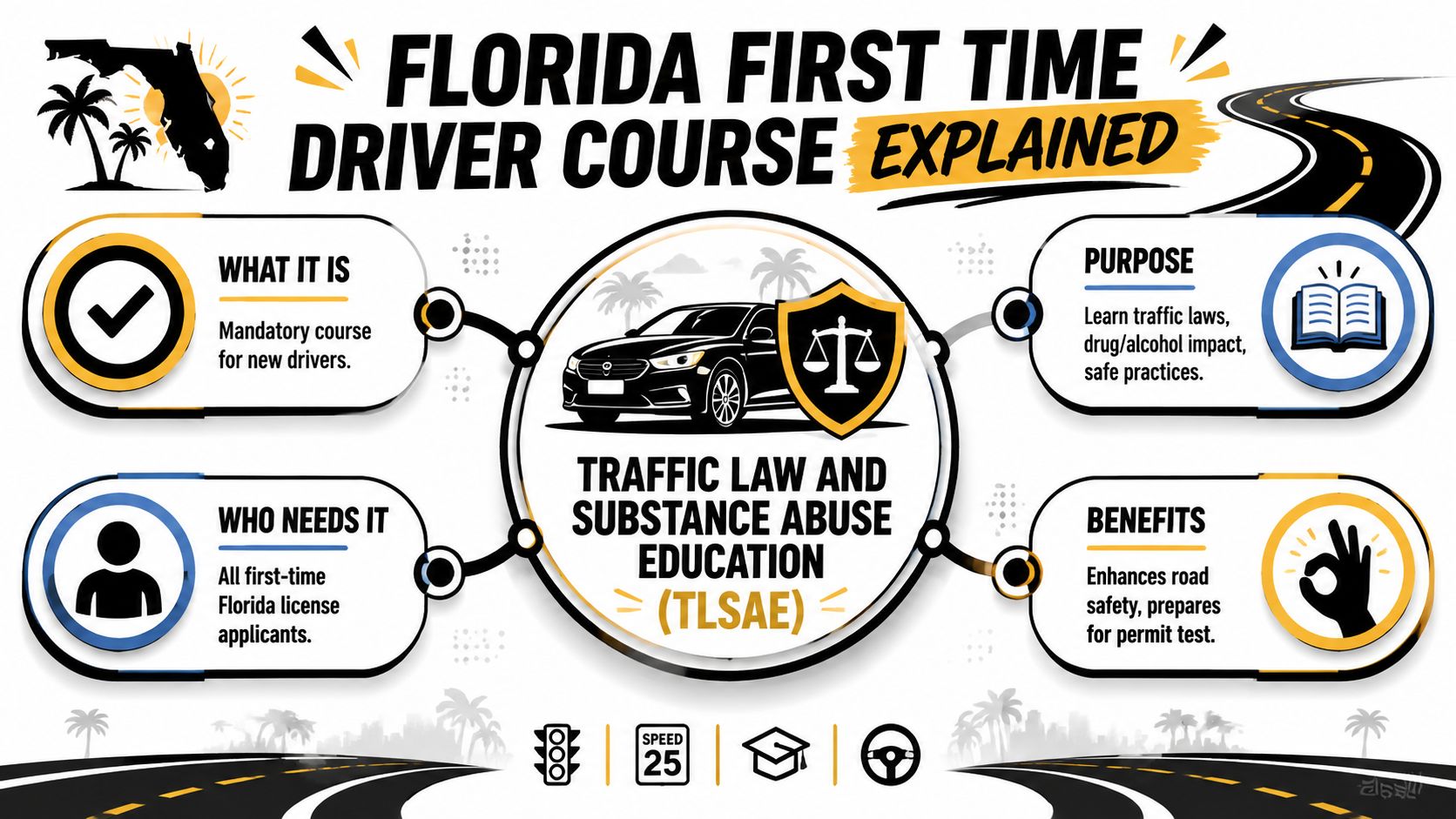
In Florida, the phrase first time driver course usually refers to the Traffic Law and Substance Abuse Education course, also called TLSAE or DATA.
For adults getting their first Florida license, that course is still the classic starting point. Florida’s approved guidance explains that adult first-time drivers use the 4-hour TLSAE/DATA course, while a major policy change tied to August 1, 2025 requires teens under 18 to complete a state-approved driver education course for a learner’s license instead of the older TLSAE-only path.
Who needs it in Florida
The short answer is this:
- Adults getting licensed for the first time: You’ll usually start with the TLSAE course.
- Teens under 18: Florida now expects a state-approved driver education course for the learner’s license path.
- Parents helping a teen: Don’t assume old advice still applies. The teen process changed.
That’s where a lot of people get tripped up. They hear “first time driver course” and assume everyone takes the same thing. In practice, Florida separates the teen path and the adult path.
If you want the Florida-specific breakdown in plain English, use this guide to drivers education in Florida.
What the course is really for
This course exists for a reason. New drivers don’t just need facts. They need a controlled introduction to rules, risk, and judgment.
Practical rule: Treat the first time driver course as the foundation, not the finish line.
A solid course teaches the legal side of driving, but it also starts building the mental habits that matter later. You learn how Florida expects drivers to behave, what substance use does to decision-making, and why “I know how to steer” is nowhere near the same as being ready for traffic.
Why online makes sense
Online is often the smart choice.
You can move at your own pace, stop when life gets busy, and complete the course from home instead of forcing your schedule around a classroom. That matters for teens with school schedules and for adults juggling work, childcare, or a move to Florida.
The course is required. The stress doesn’t have to be.
Your Simple Path to Enrollment and Completion
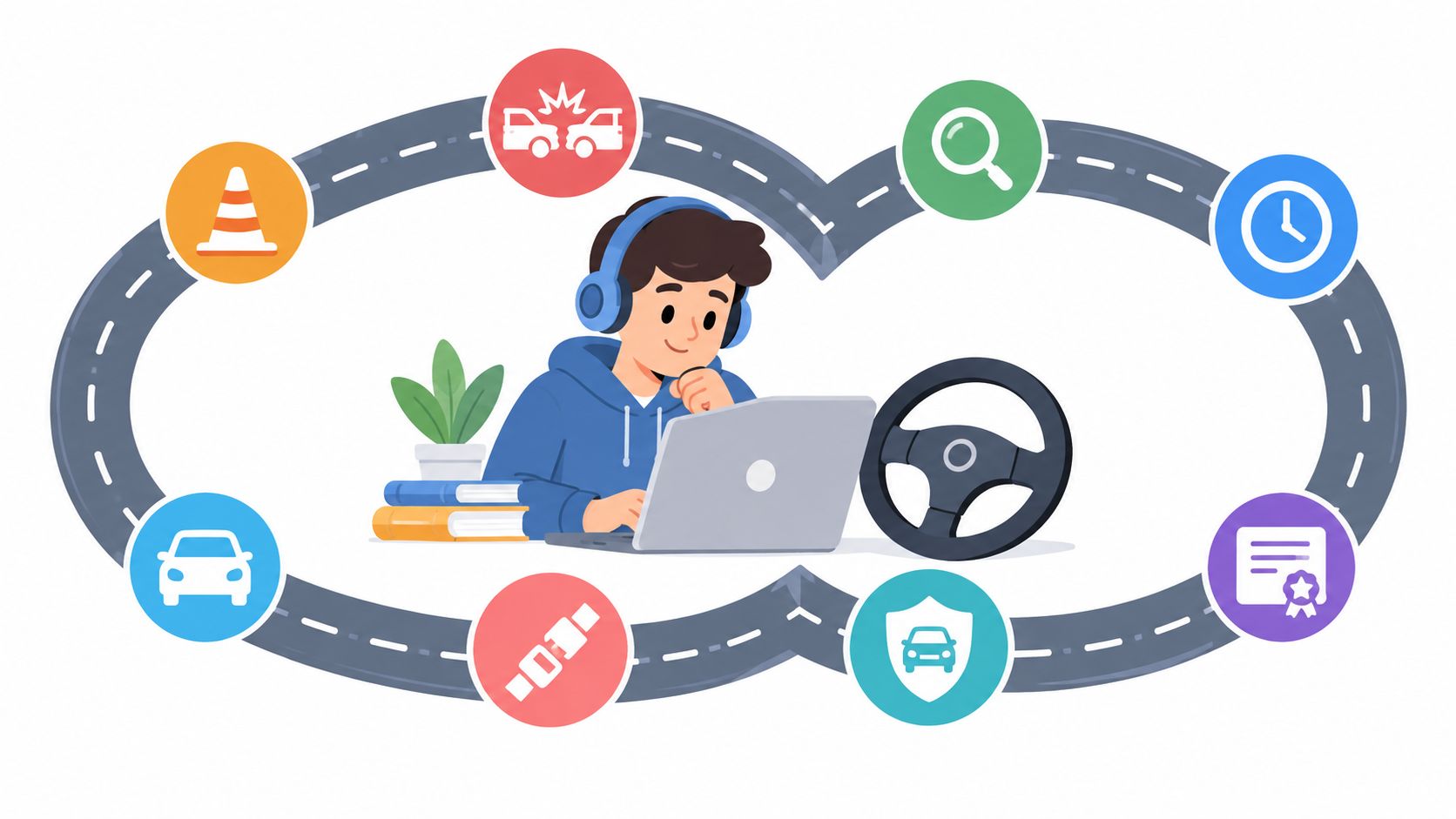
The easiest way to think about this is in three parts. Register. Learn. Finish.
That’s it.
Step one is choosing convenience on purpose
A lot of new drivers make this harder than it needs to be. They delay enrollment because they assume the process will be confusing or full of paperwork.
It doesn’t have to be. If you’re starting online, pick a state-approved option, create your account, and begin. That’s the whole play.
For a direct Florida permit roadmap, this page on how to get a permit helps you line up the next step without bouncing between tabs.
What a smooth online course should feel like
A good online first time driver course should fit your life, not hijack it.
Look for these basics:
- Self-paced access: You should be able to stop and restart without losing progress.
- Mobile-friendly study: If it doesn’t work well on your phone, tablet, or laptop, it’s already annoying.
- Clear lesson flow: New drivers need straightforward language, not legal jargon dumped on a screen.
- Language options: English, Spanish, and Portuguese matter for real households in Florida.
One practical option is BDISchool, which offers online traffic school and driver education access in multiple languages with self-paced study. That setup is useful for students who need flexibility rather than fixed class times.
Don’t wait until you “have more time”
Individuals don’t suddenly get a free week to handle licensing. They start because they decide to start.
The fastest path is usually the one you begin today, then finish in short blocks.
That’s especially true for nervous students. Momentum matters. If you can log in tonight, complete a lesson, and come back tomorrow, the process stops feeling big.
The best enrollment decision is the least complicated one
Don’t over-research yourself into paralysis.
Pick the approved course that’s easy to access, easy to understand, and easy to complete on your schedule. For first-time drivers, simplicity is not a luxury. It’s the difference between getting licensed soon and putting the whole thing off for another month.
What You Will Learn in the TLSAE Course
Most new drivers think the course is about passing a test.
That’s too small a goal.
Its purpose is to help you make fewer bad decisions once you’re alone in the car. The online portion gives you the mental framework first, then your behind-the-wheel practice turns that knowledge into behavior. That structure matters because major state programs commonly pair classroom learning with about 30 hours of instruction and 8 to 18 hours of in-car training, according to Connecticut’s teen driver training requirements.
Traffic laws stop being abstract fast
A beginner usually starts with the same thought. “I’ll remember the signs and basic rules.”
Then they hit a real intersection, another car turns unexpectedly, a pedestrian steps off the curb, and the brain gets busy.
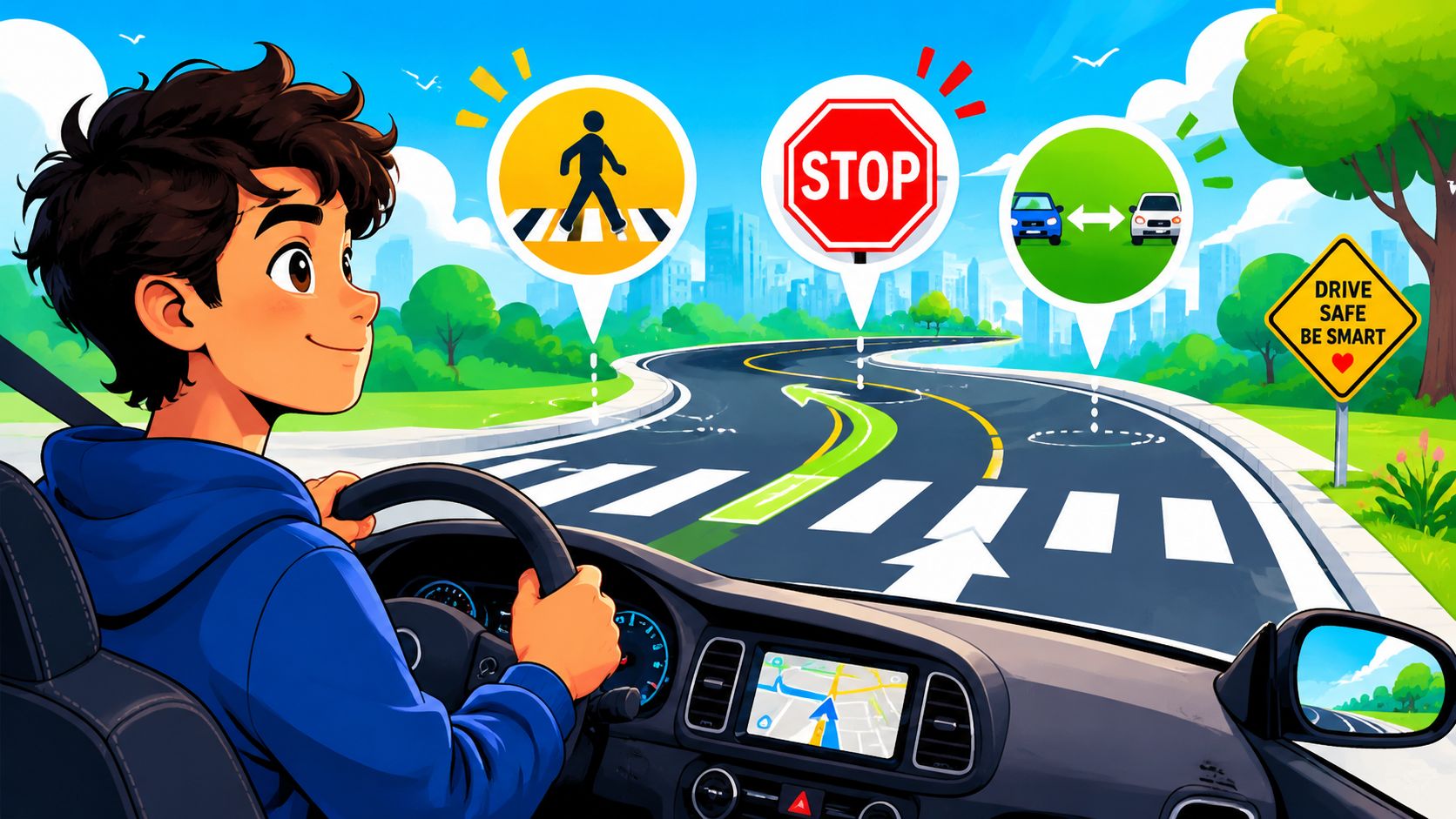
That’s why the course starts with rules. Right-of-way, lane use, signs, signals, spacing, and scanning aren’t trivia. They reduce hesitation. A driver who knows what to expect reacts sooner and with less panic.
The substance abuse part isn’t filler
This part is often the most underestimated.
Impaired driving lessons aren’t there to lecture you. They’re there because judgment falls apart before many people realize it has. The same goes for distraction. A new driver doesn’t need false confidence. They need a clear understanding that attention, reaction time, and decision-making are fragile.
What that looks like in real driving
Think about a basic left turn at a busy light.
A weak driver looks at one thing. Usually the oncoming car. A trained beginner is taught to check more than one risk at once, including signal phase, speed of approaching traffic, lane position, and whether a pedestrian is entering the crosswalk. That’s what course knowledge is supposed to do. It helps organize your attention.
Instructor mindset: Learn the rule, then attach it to a real road situation you’ll face in the first month of driving.
Skills the course should reinforce
Some topics are academic. Others should become automatic.
| Skill area | Why it matters on the road |
|---|---|
| Road signs and signals | You need instant recognition, not slow guessing |
| Following distance | It gives you time when traffic compresses suddenly |
| Blind-spot checks | Mirrors don’t show everything |
| Defensive awareness | Other drivers will make mistakes, and you must be ready |
| Impaired and distracted driving risks | Good intentions don’t prevent bad decisions |
If you’re looking for the Florida-approved course built around these basics, review the Traffic Law and Substance Abuse Education course.
After the Course What Comes Next
The biggest mistake after course completion is assuming you’re done.
You’re not done. You’re just positioned correctly for the next licensing step.
First, make sure your completion is handled properly
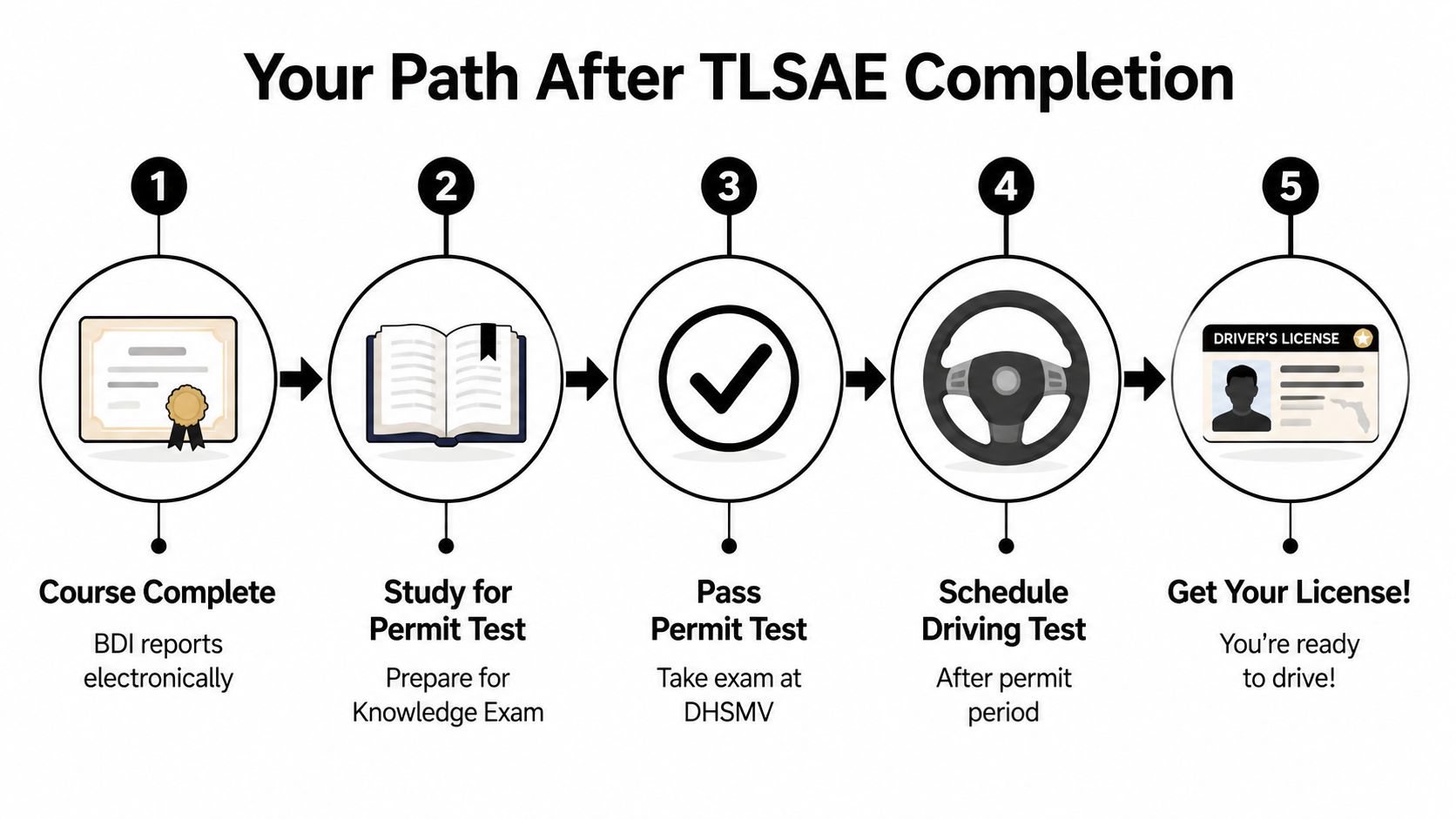
When your course provider reports completion electronically to the state, that removes a lot of friction. You shouldn’t be chasing paperwork, wondering if a certificate was sent, or guessing whether Florida can see your record.
That matters because the next step usually depends on your course record being visible in the system. If reporting is automatic, your path is cleaner and you can focus on studying for the official exam instead of troubleshooting admin problems.
Next, shift to test readiness
A first time driver course should prepare you for more than attendance. Licensing is based on minimum competence.
That’s why I tell students to stop asking, “Did I finish the course?” and start asking, “Can I answer correctly under pressure?” A useful reference point comes from Louisiana’s adult licensing materials, which require an 80% minimum score on the knowledge test before licensing can move forward.
Don’t cram the night before the permit exam. Review in short rounds until the routine answers become automatic.
What to do after completion
Use this sequence:
- Confirm the course is complete and any required reporting has gone through.
- Study for the knowledge exam using the same mindset you’d use for a real driving lesson. Accuracy first, speed second.
- Take the permit or knowledge test when you’re ready, not when you’re just impatient.
- Move into supervised practice or the next required stage for your age and license path.
- Keep the bigger picture in mind, because passing a written exam is only one piece of becoming a safe driver.
Learn one insurance term before you start driving
Once you’re close to getting on the road, start learning the basics of insurance too. Florida drivers hear terms like PIP early, and many don’t know what they mean until after a crash.
For a plain-language explanation, Haddad & Associates P.A. on PIP is a useful resource for understanding how Personal Injury Protection works in Florida.
Unlock Benefits Beyond Just Getting a License
A first time driver course isn’t valuable only because Florida says you need one.
It’s valuable because beginners need structure, and structured training changes behavior. That’s the whole point.
Better habits show up in real outcomes
One of the clearest safety comparisons available comes from the research summary hosted by PMC/NIH. A U.S. traffic-safety fact sheet reported that 10% of students who took driver’s education were ticketed for moving violations, compared with 18% of students who did not take driver’s education, as noted in this PMC/NIH article on early driver outcomes.
That gap matters.
Tickets don’t happen because someone failed to memorize a chapter title. They happen because a driver makes a bad judgment call, misses a sign, follows too closely, or reacts late. Formal instruction won’t make anyone perfect, but it gives beginners more structure before they’re making those choices alone.
Safety is the real return
Parents often focus on the permit because it feels urgent.
I’d focus on what happens after the permit. That’s when habits start showing up in traffic, in parking lots, in rain, at night, and under pressure. If a course helps a student think clearly about spacing, scanning, and impairment risk, that benefit lasts longer than the login session.
A new driver doesn’t need hype. They need repetition, clear rules, and fewer unforced errors.
There may be financial upside too
Driver education and defensive driving can also matter outside the licensing process. Some drivers look into approved courses for insurance-related reasons after they’re already licensed.
If that’s on your radar later, this overview of the defensive driving insurance discount is a practical place to start. Just don’t confuse that with the first-time licensing course. They solve different problems.
Why this matters for beginners
Here’s the blunt version.
A first time driver course is cheaper than bad habits. It’s cheaper than citations, cheaper than avoidable mistakes, and cheaper than the stress of trying to learn everything on the fly with no framework.
That’s why I’m opinionated about it. If you’re brand new to driving, don’t aim for bare minimum effort. Aim for a clean start.
Guidance For Parents and Adult First Time Drivers
Parents and adult beginners usually have different worries, but they need the same thing. A process that feels manageable.
If you’re a parent
Your job isn’t just to help your teen pass a test. Your job is to help them build judgment.
That starts with picking a course that gives them a structured introduction to rules and risk. After that, your role shifts. You become the practice partner, the calm passenger, and the example they watch every day whether you mean to teach or not.
A few rules help:
- Keep practice boring at first: Quiet neighborhoods and simple turns beat chaotic traffic.
- Correct one habit at a time: If you fix everything at once, they’ll remember nothing.
- Model the standard you expect: If you roll stops or drive distracted, they notice.
If you’re an adult getting licensed later
You are not behind. You are just starting now.
Many adults put this off because work gets busy, relocation happens, or driving anxiety builds over time. That’s exactly why flexible online learning matters. Public-facing state guidance shows adult first-time driver rules vary widely. For example, Ohio’s adult driver training page highlights that some states require specific adult coursework, and it also notes examples like Texas requiring a 6-hour adult course for ages 18 to 24.
The lesson is simple. Don’t assume your last state and Florida work the same way. Check the rules that apply to your age and situation, then complete the required course in the format that fits your schedule.
The common mistake both groups make
They confuse completion with readiness.
A teen can finish a lesson and still need patient coaching in traffic. An adult can pass the online material and still need extra repetition before feeling calm behind the wheel. That’s normal.
Confidence should come from practice and understanding, not from rushing to the finish.
What I recommend
If you’re a parent, stay involved longer than you think you need to.
If you’re an adult, don’t apologize for learning at your own speed. Take the course, review the rules, and build skill step by step. Steady drivers last longer than hurried ones.
Florida First Time Driver Course FAQs
Is the first time driver course the same as TLSAE
For adult first-time drivers in Florida, yes. The first time driver course usually means the TLSAE/DATA course.
For teens under 18, Florida’s newer learner path uses a state-approved driver education course instead of the older teen TLSAE-only approach.
Can I take the course online
Yes, that’s the simplest option for most students.
Online study works well because you can pause, restart, and complete lessons around school, work, and family responsibilities.
Does finishing the course mean I’m ready to drive alone
Not by itself.
The course teaches the rules, risk factors, and core habits. Real readiness comes from combining that knowledge with supervised practice and repeated exposure to normal driving situations.
Is this course the same as traffic school for a ticket
No.
A first time driver course is for people entering the licensing process. Ticket-related traffic school is for a different situation and serves a different purpose.
What should I do right after I complete the course
Move straight into preparation for the permit or knowledge exam and confirm that your course completion has been properly reported if your provider handles that electronically.
Then focus on the next stage, not just the completed course screen.
I’m an adult and nervous about starting late. Does that matter
Not at all.
Adult beginners are common. The smart move is to stop delaying, complete the required course, and build confidence through steady practice instead of waiting for the “perfect” time.
What’s the smartest way to choose a course
Keep your filter simple:
- State approval: Don’t skip this.
- Online access: You’re more likely to finish.
- Clear lessons: Beginners need plain language.
- Flexible pacing: That’s what helps busy people complete the process.
If your goal is to get moving without confusion, pick the approved option you can start today and finish.
If you’re ready to stop researching and start driving, BDISchool is a practical place to begin. You can choose the Florida course that fits your licensing step, study online at your own pace, and move forward with a clearer plan instead of more guesswork.