Florida drivers face complex traffic laws that change frequently, and understanding them is the first step toward safer roads.
At DriverEducators.com, we’ve helped thousands of drivers master road laws education in Florida through practical, real-world training that goes beyond memorizing rules.
What Florida Traffic Laws Actually Cost You
Violations Carry Real Financial Consequences
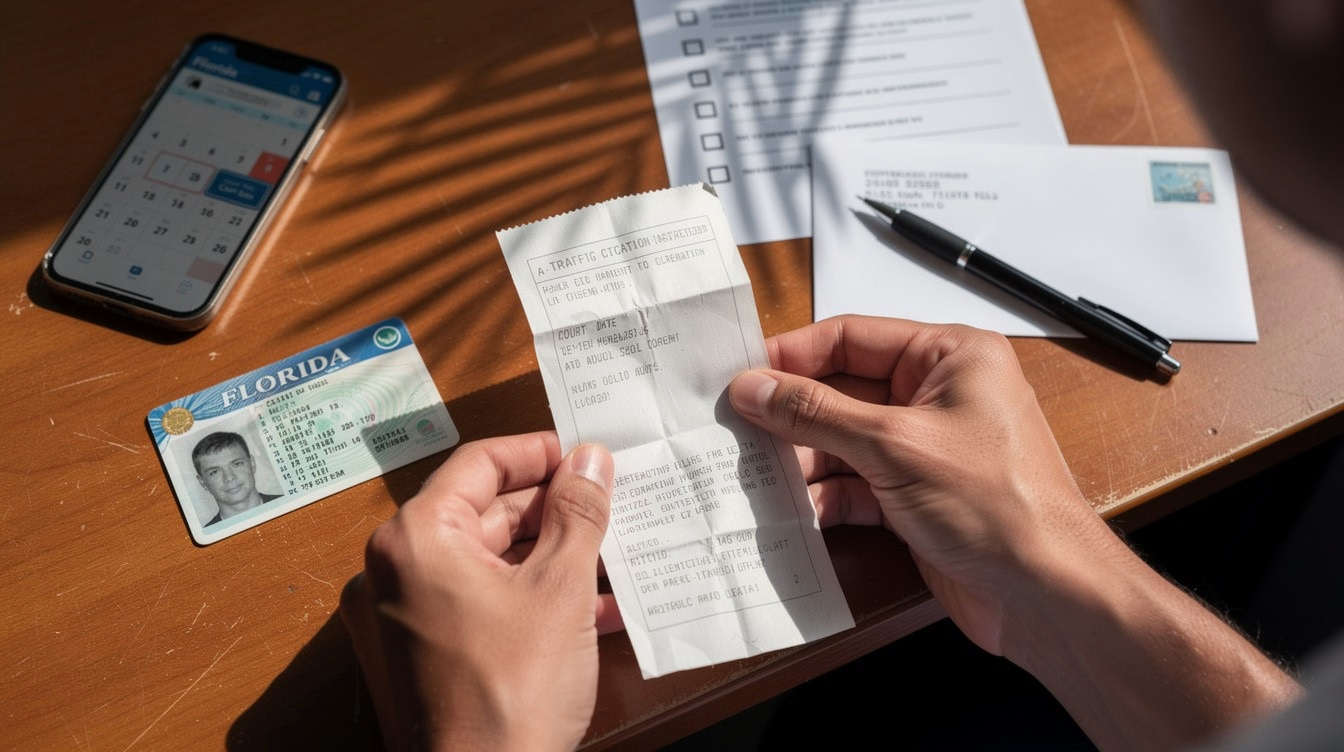
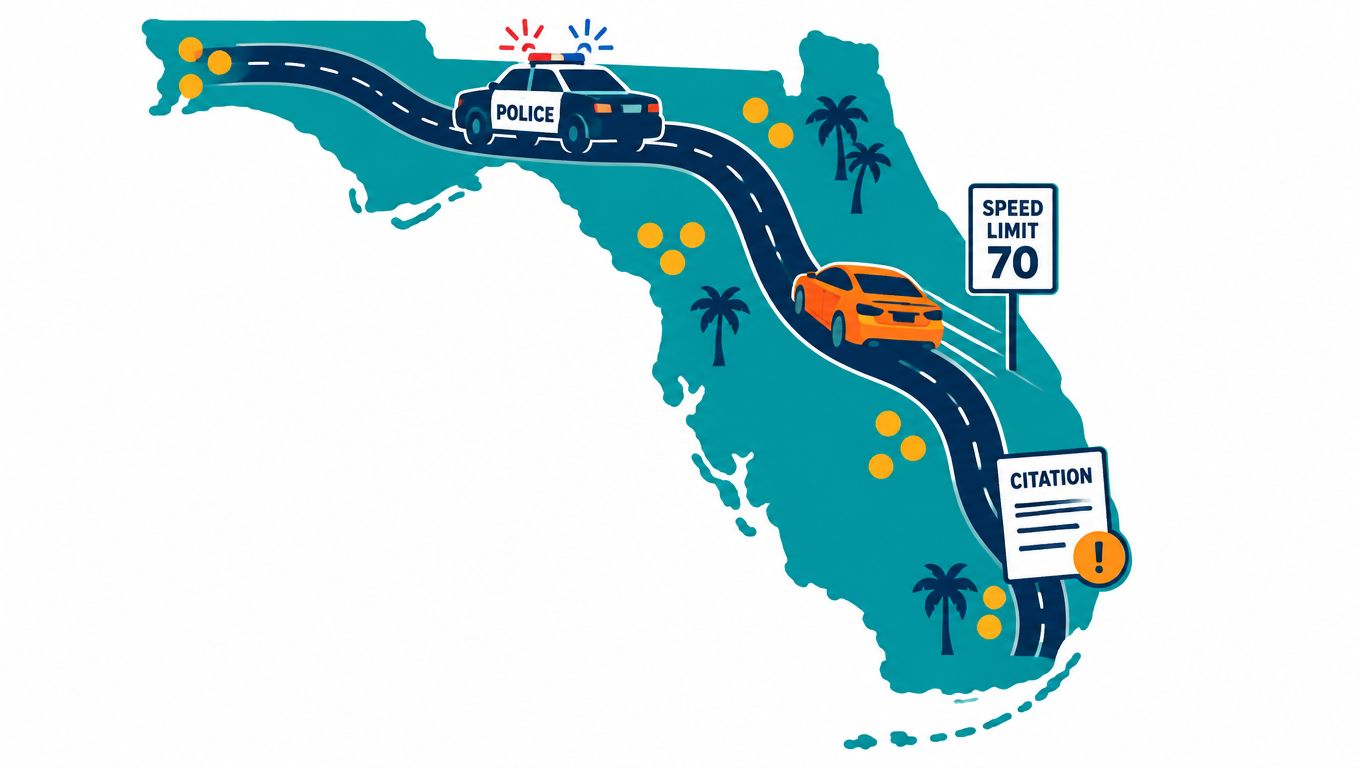
Speeding in a school zone costs between $150 to $500, while running a red light ranges from $158 to $262. The real damage comes from points added to your license. Three points within 12 months triggers a mandatory driver improvement course, and 12 points in 12 months leads to license suspension.
Right-of-way violations cause roughly 20 percent of all traffic crashes in Florida. Many drivers ignore these rules because they underestimate the consequences. The Move Over law requires you to shift lanes or reduce speed when approaching emergency vehicles or disabled cars-violations cost up to $500 and carry three points on your license.
Safe Following Distance Prevents Collisions
Failing to maintain safe following distance results in citations that stack points fast. Florida law defines safe distance as at least one vehicle length per 10 miles per hour of speed. If you travel 60 miles per hour, you need at least six vehicle lengths between you and the car ahead; most drivers maintain only two or three.
Speeding contributed to 33 percent of teen fatal crashes in 2024. Florida drivers consistently exceed posted limits without understanding the relationship between speed and stopping distance. Hydroplaning occurs when your tires lose grip on wet roads, and it happens faster than most drivers realize-reducing speed by just 10 miles per hour in heavy rain dramatically improves traction and control.
Right-of-Way Rules Determine Intersection Priority
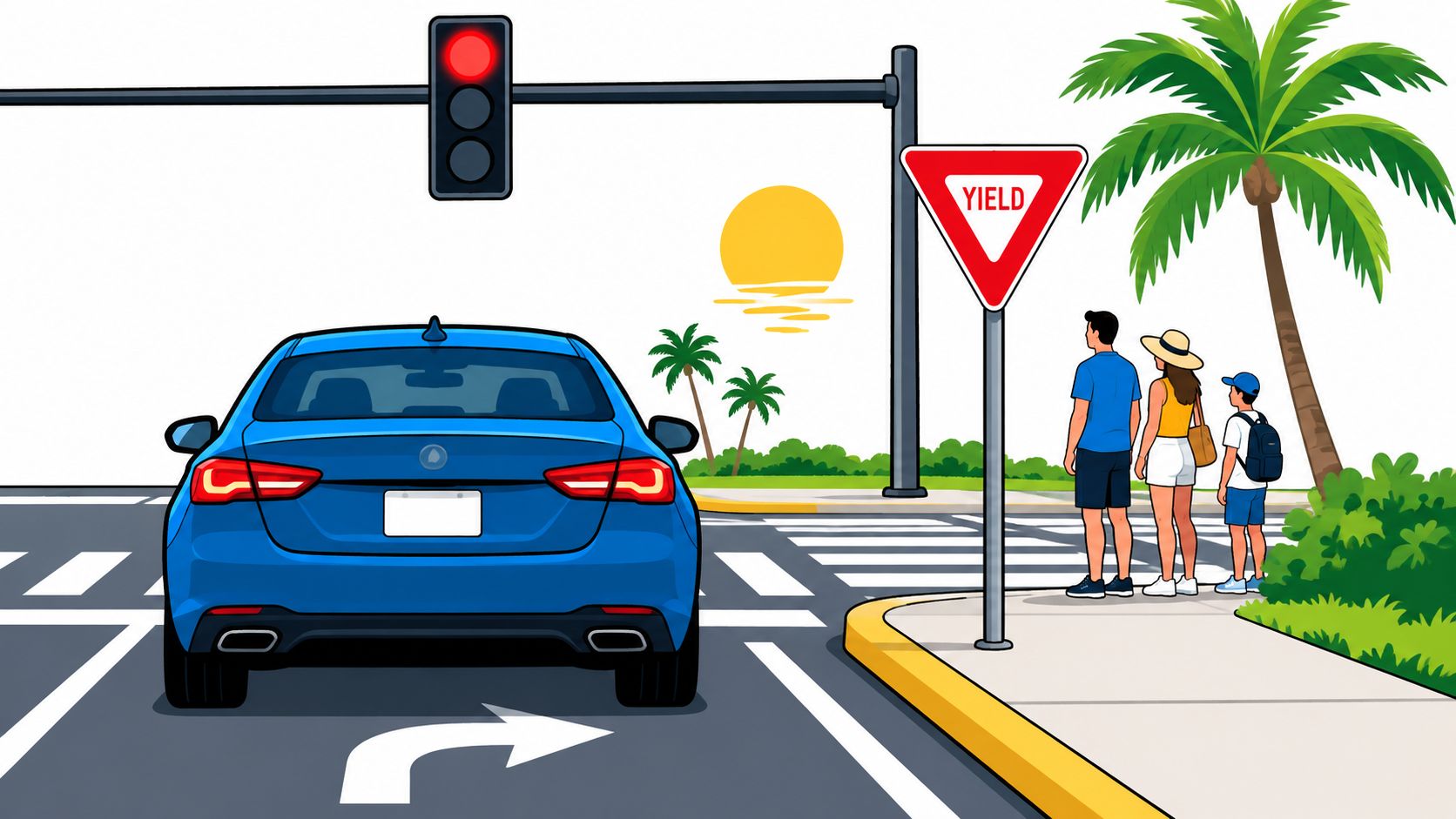
Right-of-way rules govern who has priority at intersections, and Florida law is unforgiving when you get this wrong. At four-way stops, the first vehicle to arrive has priority; if two vehicles arrive simultaneously, the one on the right proceeds first. Yellow traffic signals mean prepare to stop, not accelerate through the intersection-proceeding on yellow puts you at fault if a crash occurs.
Pedestrians have absolute right-of-way in marked crosswalks and unmarked crossings at intersections. Hitting a pedestrian carries criminal charges if they’re injured. Florida’s RIGHT Lane law requires driving in the right lane on multi-lane highways and using the left lane only for passing; violating this causes aggressive driving citations and contributes to dangerous lane-weaving patterns.
Heavy Traffic Demands Constant Awareness
With approximately 1.8 million visitors on Florida roads daily during peak seasons, maintaining proper distance prevents cascade collisions. Florida’s heavy traffic requires more attention to right-of-way rules than most states. Understanding these specific scenarios before they become violations or crashes protects your record and your safety.
FAQ
What happens if I accumulate 12 points on my Florida license?
Your license gets suspended. You’ll need to complete a driver improvement course and meet other requirements to restore driving privileges.
How much does a Move Over law violation cost?
Violations cost up to $500 and add three points to your license.
What is the correct following distance at 60 mph?
You need at least six vehicle lengths between your vehicle and the car ahead (one vehicle length per 10 mph of speed).
Can I proceed through a yellow light in Florida?
No. Yellow means prepare to stop. If you proceed and a crash occurs, you’re at fault.
Who has right-of-way at a four-way stop?
The first vehicle to arrive has priority. If two vehicles arrive simultaneously, the one on the right proceeds first.
How Distractions and Poor Decisions Sabotage Your Safety
Scanning Ahead Stops Crashes Before They Happen
Looking 12 seconds down the road gives you time to slow down, change lanes, or avoid hazards entirely. Most drivers focus only on the car directly in front of them, missing pedestrians stepping into crosswalks, cyclists in blind spots, and debris on the highway.
Florida’s diverse road types-dense urban streets, long highways like I-95 and I-75, and residential areas with frequent pedestrian traffic-demand constant environmental awareness. Wet roads during Florida’s sudden rain showers reduce traction instantly, and hydroplaning happens faster than most drivers expect. Reducing speed by just 10 miles per hour in heavy rain restores grip and control.
Phone Use and Distraction Multiply Crash Risk
About one in three teens who text have texted while driving, and texting increases crash risk according to NHTSA data. Dialing a phone increases crash risk by 6 times. These aren’t theoretical numbers-they reflect real drivers losing control because their attention shifted for seconds.
Phone use during driving transforms a manageable situation into a collision faster than any other distraction. Setting navigation before you leave, silencing notifications, and pulling over to handle calls eliminates this risk entirely. Florida’s busy roads with 1.8 million daily visitors during peak seasons mean distractions cost lives.
Impairment and Fatigue Remove Your Ability to React
Driving impaired or exhausted removes your ability to recognize hazards, which is the foundation of safe driving. Alcohol reduces reaction time and coordination, making you unable to recognize hazards at all. Drowsy driving killed 644 people in 2024, with higher risk for drivers aged 17 to 23 who sleep less than six hours.
Designate a sober driver or use alternative transportation if you’ve consumed alcohol. If you’re too tired to keep your eyes open, you’re too tired to drive safely. Pulling over for a 20-minute nap or stopping at a rest area prevents crashes that kill people in your car and others on the road.
Establishing regular sleep routines and limiting evening electronic use directly improves alertness on the road. These habits cost nothing and save lives.
Your Attitude Determines Your Actions on the Road
Drivers who speed, tailgate, and ignore traffic signals believe they’re exceptional or that rules don’t apply to them. This belief system leads directly to violations, points, and crashes. Accepting that traffic laws exist for your protection and everyone else’s protection changes how you drive.
Respecting right-of-way rules, maintaining safe following distance, and obeying speed limits aren’t inconveniences-they’re the difference between arriving safely and not arriving at all. Aggressive driving (speeding, tailgating, sudden lane changes) multiplies crash risk because you eliminate reaction time for yourself and other drivers.
Defensive driving means anticipating what other drivers will do incorrectly and positioning yourself to avoid their mistakes. Maintaining proper following distance, staying in the right lane, and reducing speed in heavy rain are defensive actions that prevent you from becoming involved in someone else’s crash.
Breaking the Cycle of Violations and Points
Your decisions compound over time: one violation leads to points, points trigger mandatory courses, and courses delay your license restoration. Breaking the cycle requires honest assessment of your driving habits and willingness to change them before the law forces change upon you.
Understanding how attitude, distraction, and impairment sabotage safety is the first step. The next step involves learning the specific defensive driving techniques that transform this knowledge into safer actions on Florida’s complex roads.
FAQ
What is the 12-second rule in defensive driving?
Look 12 seconds ahead on the road to identify hazards early and react before they become emergencies.
How much does texting while driving increase crash risk?
Texting increases crash risk according to NHTSA data on distracted driving.
How much does dialing a phone increase crash risk?
Dialing increases crash risk by 6 times.
What should I do if I’m too tired to drive?
Pull over and take a 20-minute nap or stop at a rest area until you’re alert.
How much should I reduce speed in heavy rain?
Reduce speed by at least 10 miles per hour to restore traction and prevent hydroplaning.
What is the best way to avoid impaired driving crashes?
Designate a sober driver or use alternative transportation if you’ve consumed alcohol.
How Our Courses Turn Knowledge Into Safer Driving
Real Scenarios Replace Abstract Rules
Understanding Florida traffic laws and defensive driving techniques means nothing if you don’t apply them consistently on the road. We at DriverEducators.com built our traffic school programs specifically to bridge this gap between knowing the rules and actually changing how you drive. Our Florida-approved Basic Driver Improvement and Intermediate Driver Improvement courses connect real driving scenarios directly to the decisions that keep you safe.
When you complete a BDI course, you satisfy a court requirement or reduce points on your license. More importantly, you learn why speeding in school zones costs $150 to $500 and why three points within 12 months triggers a mandatory driver improvement course. You understand that the Move Over law exists because emergency responders and disabled drivers die when motorists ignore it.
Connecting Behavior to Consequences
Generic instruction fails drivers who need it most. Instead of abstract rules about following distance, our curriculum shows you exactly why maintaining six vehicle lengths at 60 miles per hour prevents the cascade collisions that happen daily on Florida highways during peak seasons (when 1.8 million visitors are on the road). We don’t just warn you that texting increases crash risk by 23 times-we walk through the specific moment when you reach for your phone at a red light and miss a pedestrian stepping into the crosswalk.
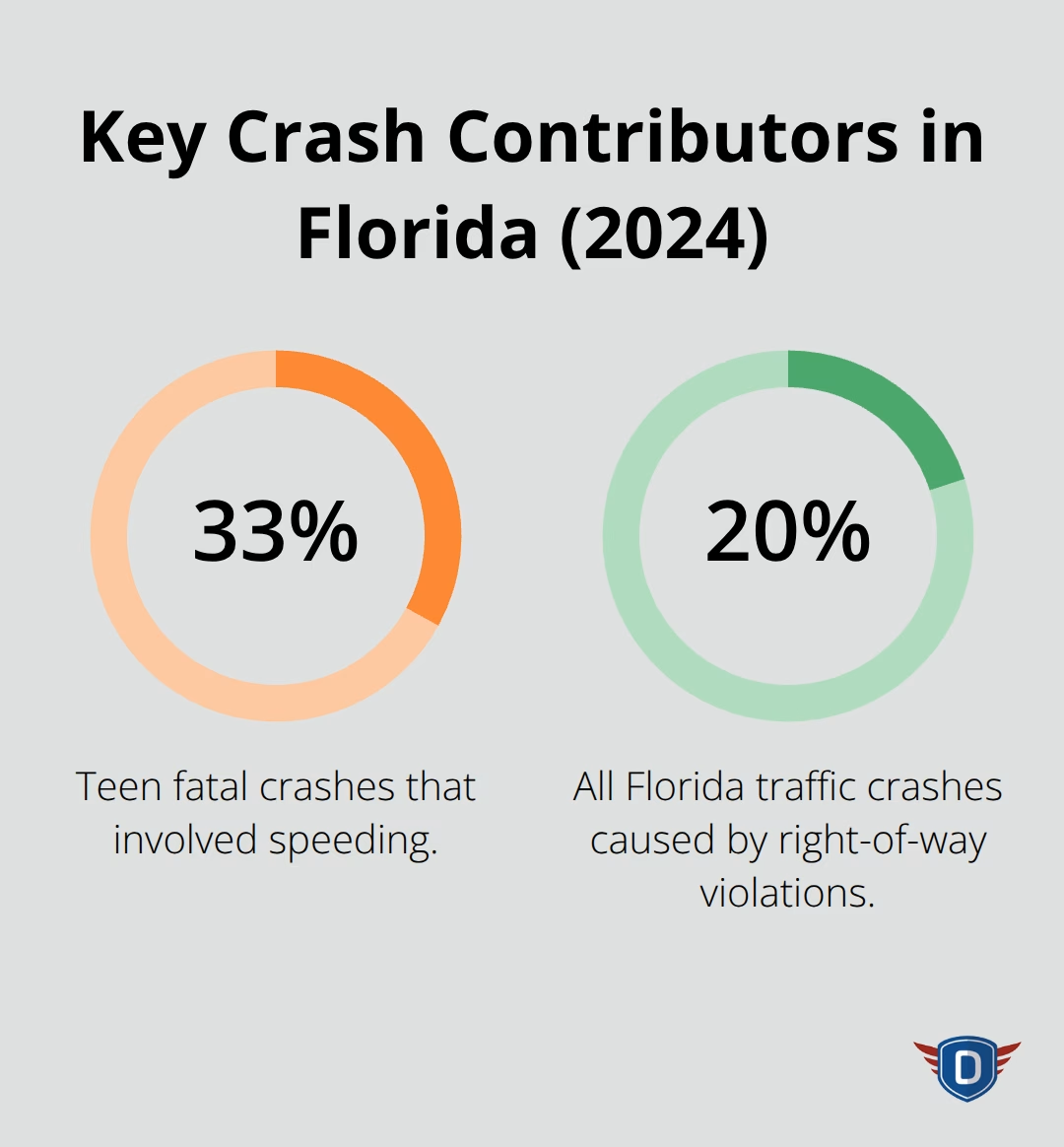
We address why dialing increases crash risk by 6 times and teach you to set navigation before leaving, silence notifications, and pull over for calls. The Aggressive Driver Course specifically targets drivers who speed, tailgate, and ignore right-of-way rules, connecting their behavior directly to the 33 percent of teen fatal crashes in 2024 that involved speeding and the roughly 20 percent of all Florida traffic crashes caused by right-of-way violations.
Current Data Shapes Every Lesson
Our Mature Driver Course reinforces that insurance discounts aren’t handouts-they’re recognition that drivers who complete structured refresher training reduce their crash risk measurably. Every course we offer is updated regularly to reflect new Florida statutes and current safety data, so you learn what actually happens on today’s roads. The curriculum blends clear explanations, engaging visuals, and real-life scenarios to make learning simple and effective.
Instant Compliance and Flexible Access
Upon completion, your certificate is issued electronically and reported directly to the Florida Department of Highway Safety and Motor Vehicles, eliminating paperwork delays and confirming your compliance immediately. The entire experience is self-paced, available on any device (phones, tablets, or computers), and available in English, Spanish, and Portuguese. Completing the course changes how you drive tomorrow, not just how you answer a test today.
FAQ
What is the difference between BDI and IDI courses?
BDI is a 4-hour course for drivers with moving violations seeking to avoid points and insurance increases. IDI is an 8-hour program for court-ordered drivers or those wanting deeper understanding of safe driving habits.
Do I need to print and mail my completion certificate?
No. Certificates are issued electronically and reported directly to the Florida Department of Highway Safety and Motor Vehicles automatically.
Can I take the course on my phone?
Yes. All courses are fully online, self-paced, and available on any device including phones, tablets, and computers.
How often are the courses updated?
Curricula are updated regularly to reflect new Florida statutes, roadway technologies, and current safety campaigns.
What languages are the courses available in?
Courses are available in English, Spanish, and Portuguese.
Does completing a course guarantee an insurance discount?
Completion qualifies you to request an insurance discount, but availability and amounts depend on your state law and insurer.
Final Thoughts
Florida’s roads demand more than following posted speed limits and stopping at red lights. Road laws education in Florida teaches you why these rules exist and how your decisions directly affect whether you arrive safely or become part of crash statistics. The 33 percent of teen fatal crashes involving speeding, the roughly 20 percent caused by right-of-way violations, and the 644 lives lost to drowsy driving in 2024 aren’t abstract numbers-they’re preventable outcomes that depend on driver knowledge and behavior.
Defensive driving techniques transform knowledge into consistent safe actions on the road. Maintaining six vehicle lengths at 60 miles per hour, recognizing hazards 12 seconds ahead, and refusing to drive impaired or exhausted are habits that compound over time. Each safe decision reduces your crash risk and protects everyone sharing Florida’s busy roads with 1.8 million daily visitors during peak seasons.
We at DriverEducators.com built our traffic school programs specifically to bridge the gap between knowing the rules and actually changing how you drive. Our Florida-approved Basic Driver Improvement and Intermediate Driver Improvement courses connect real driving scenarios to the decisions that keep you safe, and certificates issue electronically with no paperwork delays. Your next step is completing a course that fits your situation-whether you’re reducing points, meeting a court requirement, or simply committing to safer driving.
FAQ
How do I know which DriverEducators.com course I need?
If you received a moving violation, take the 4-hour BDI course. If court-ordered or seeking deeper understanding, take the 8-hour IDI course. Contact us for guidance based on your specific situation.
How long does it take to complete a course?
BDI courses take 4 hours, IDI courses take 8 hours. You control the pace and can complete over multiple sessions.
When will my certificate be reported to the FLHSMV?
Certificates issue electronically and report automatically upon completion-no mailing required.
Can I take the course while traveling?
Yes. Courses are fully online and available on phones, tablets, and computers, so you can study anywhere.
Will completing a course lower my insurance rates?
Completion qualifies you to request an insurance discount, but availability depends on your insurer and state law.