Teen drivers cause about 1 in 5 fatal crashes in the United States, according to the CDC. Parent teen driving tips work because they give you concrete strategies to reduce this risk before your teen hits the road alone.
We at DriverEducators.com know that what you do as a parent during the learning phase shapes your teen’s driving habits for life. This guide walks you through three proven approaches: setting clear rules, modeling safe behavior, and tracking progress.
Set Clear Expectations and Rules
Vague expectations fail. Your teen needs to see exactly what you expect, what happens if rules break, and why traffic laws exist. Write a driving agreement together and post it somewhere visible, like the refrigerator or their bedroom. This agreement should cover phone use, passenger limits, speed, time-of-day restrictions, and weather conditions they cannot drive in. Research shows that teens with written agreements from parents follow safety rules more consistently than those without them. The agreement works because it removes argument later-your teen signed it, so enforcement becomes about holding them to their own commitment, not you imposing rules arbitrarily.
Establish a Written Driving Agreement
Your agreement needs specific numbers and behaviors, not general statements. Instead of saying no speeding, write that they drive 5 miles per hour below the speed limit until they have six months of solo driving experience. Instead of limiting passengers vaguely, state they can only transport one peer until month four of driving. This level of detail prevents misunderstandings and makes your teen accountable.
Define Consequences for Rule Violations
Weak consequences teach nothing. If your teen runs a red light, a stern lecture changes nothing-but losing driving privileges for two weeks does. Tie every consequence directly to the broken rule so your teen understands the connection between their choice and the outcome. Your agreement should specify that the phone stays in the trunk while driving, not just in a pocket or cupholder. Include phone rules with concrete consequences: first violation means one week without driving; second violation means two weeks.
Make consequences immediate when possible. If they text while driving, they lose the car that day. Delayed consequences blur the cause-and-effect relationship your teen needs to build safer instincts. Rear-end collisions (which account for 29% of all crashes according to NHTSA data) often involve speed or distraction. If your teen tailgates during practice, the consequence is extra supervised driving sessions specifically focused on following distance, not just general punishment.
Review Traffic Laws and Safe Driving Standards
Your teen cannot follow rules they don’t understand. Walk through your state’s traffic laws together and explain the reasoning behind each one. Speed limits exist because stopping distance increases dramatically at higher speeds-a car traveling at 45 mph needs 128 feet to stop, while one at 55 mph needs 180 feet. Right-of-way rules prevent intersection collisions. When your teen grasps why these laws exist, they stop viewing them as arbitrary restrictions and start seeing them as protection.
Your written agreement and clear consequences create the foundation for what comes next: your own behavior behind the wheel.
Model Safe Driving Behavior and Coach Behind the Wheel
Your teen watches everything you do while driving, and that observation shapes their habits far more than any lecture ever will. If you tailgate, they will tailgate. If you check your phone at red lights, they will check theirs while moving. Model safe driving behavior by setting clear rules and reinforcing seat belt use, which helps teens develop lifelong safe driving habits.
Stop lecturing about following distance and instead show it. When you maintain at least a three-second gap behind the vehicle ahead (roughly one car length per 10 miles per hour of speed), your teen internalizes this practice as normal, not as a restriction. When you keep both hands on the wheel and your eyes on the road, you communicate that distraction is unacceptable without saying a word.
Point out specific things you notice while driving. Explain why you’re slowing down before a curve, why you’re moving to the left lane earlier than necessary, or why you’re adjusting your speed when the road is wet. This narration reveals your decision-making process and helps your teen understand that safe driving involves constant, small adjustments based on conditions.
Provide Constructive Feedback During Practice Sessions
Generic praise or criticism wastes practice time. Instead of saying “good job” or “you need to be more careful,” describe exactly what you observed and why it matters. If your teen drifts slightly toward the center line, point it out immediately: “You’re drifting left; the center line is your boundary; adjust right now.” If they maintain proper distance from a vehicle ahead through traffic, tell them specifically: “You kept a three-second gap even when that car slowed suddenly; that distance gave you time to react.”
Teens who practiced consistently and had lower abrupt maneuvering rates during the learner period had significantly fewer crashes during independent driving. Specific corrective feedback during supervised driving improves outcomes. Focus on one or two behaviors per session rather than overwhelming them with ten corrections. If you’re working on smooth braking, ignore minor steering imperfections that day.
Avoid vague statements like “you’re going too fast in that curve” or “you need to be more alert.” Instead say “I want you to reduce speed to 25 miles per hour before that curve because the posted limit is 30 and we’re in a residential area” or “I need you to scan your mirrors every five to seven seconds because that’s how you spot vehicles in your blind spots.”
Practice in Varied Conditions and Traffic Scenarios
Rain, night driving, and heavy traffic separate capable drivers from dangerous ones, yet many teens get licensed after practicing mostly in clear daylight on quiet roads. Schedule practice sessions deliberately across different conditions rather than waiting for them to happen randomly.
Night driving requires different techniques. Headlights reduce your visible range to roughly 250 feet at 55 miles per hour, so speed must decrease and following distance must increase. Have your teen practice night driving on familiar roads first, then gradually introduce unfamiliar routes.
Wet pavement doubles stopping distance compared to dry conditions, so practice braking and turning on wet roads in empty parking lots before moving to actual traffic. Heavy traffic teaches patience and positioning; practicing during rush hour on busier roads shows your teen how to merge safely, maintain awareness of surrounding vehicles, and handle congestion without frustration.
Include construction zones, school zones with active crossing guards, and roads with multiple lanes. Fog reduces visibility to perhaps 100 feet, requiring reduced speed and increased following distance. Gravel or unpaved surfaces have different traction than asphalt. Icy conditions demand completely different braking and acceleration techniques. Your teen cannot develop genuine competence by practicing only ideal conditions.
These supervised practice sessions build the foundation for tracking real progress. Once your teen drives independently, you’ll need concrete ways to monitor their habits and address any problems that emerge.
Monitor Progress and Address Problem Areas
Track Driving Habits with Telematics Data
Supervision doesn’t end when your teen gets their license. What changes is how you gather information about their driving. Telematics devices like Verizon’s Hum or Life360 track speed, hard braking, and rapid acceleration, giving you concrete data instead of guessing whether your teen drives safely when you’re not in the car.
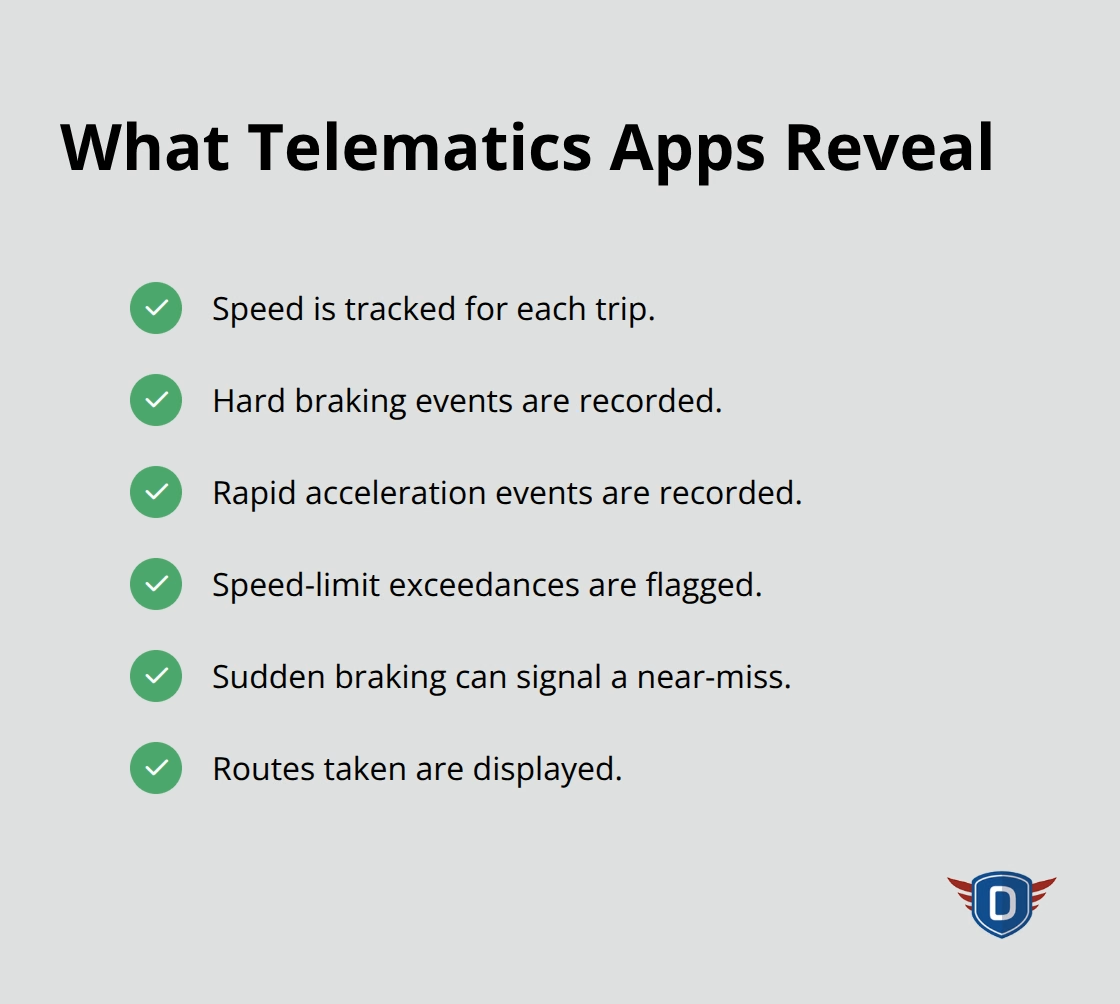
These apps show you when your teen exceeded the speed limit, when they braked suddenly (which often indicates a near-miss warning before crash), and which routes they take.
Insurance companies recognize this monitoring reduces teen crash risk according to studies tracking device-equipped drivers. Install the app and review the data weekly, not to spy but to identify problem areas that need addressing. If the data shows your teen brakes hard three times on their commute to school, that’s a sign they’re following too closely or not anticipating traffic flow. That’s actionable information you can discuss and practice.
Discuss Near-Misses and Mistakes Without Punishment
Start conversations about what the data reveals without accusation. Say “I noticed you braked hard twice on Tuesday; what happened in those moments?” This approach keeps your teen honest because they know you have objective evidence, not just suspicion. A near-miss is a warning that your teen’s decision-making or awareness needs work before a real crash happens.
Ask your teen to report close calls themselves, and reward honesty by treating these conversations as teaching opportunities, not punishment opportunities. If they admit they almost ran a red light, that’s the moment to practice intersection scanning and decision-making at intersections, not the moment to revoke their keys. Teens who hide mistakes from parents never learn from them.
Adjust Training Based on Specific Skill Gaps
Your teen’s skill develops unevenly, so adjust what they practice based on what the data and conversations reveal. If they’re speeding consistently on one particular road, practice that road repeatedly until speed control becomes automatic. If they’re making poor lane-change decisions, spend multiple sessions on highway merging and mirror checking (this targeted approach works far better than general practice).
Skill doesn’t develop uniformly across all driving scenarios, so your monitoring and adjustment must be equally specific. A teen who handles city traffic well might struggle with highway speeds or rural roads with poor visibility. Focus your practice sessions on the exact scenarios where the data shows weakness, not on areas where your teen already performs safely.
Final Thoughts
Your role as a parent continues long after your teen receives their license. The three strategies in this guide-setting clear expectations, modeling safe behavior, and monitoring progress-work together to build driving habits that last a lifetime. Parent teen driving tips succeed because they address the root cause of teen crashes: inexperience combined with poor decision-making.
The written agreement removes ambiguity about what you expect, your own safe driving behavior shows your teen that these rules matter because you follow them too, and the telematics data gives you real information about where your teen struggles so you can practice the exact skills that need work. This combination proves far more effective than hoping your teen figures it out independently. Every practice session, every conversation about near-misses, and every consequence you enforce teaches your teen that driving safely is non-negotiable.
If you want professional support beyond what you can provide at home, DriverEducators.com offers comprehensive driver education programs designed to reinforce safe driving habits and help your teen develop the skills and confidence needed to navigate roads safely.