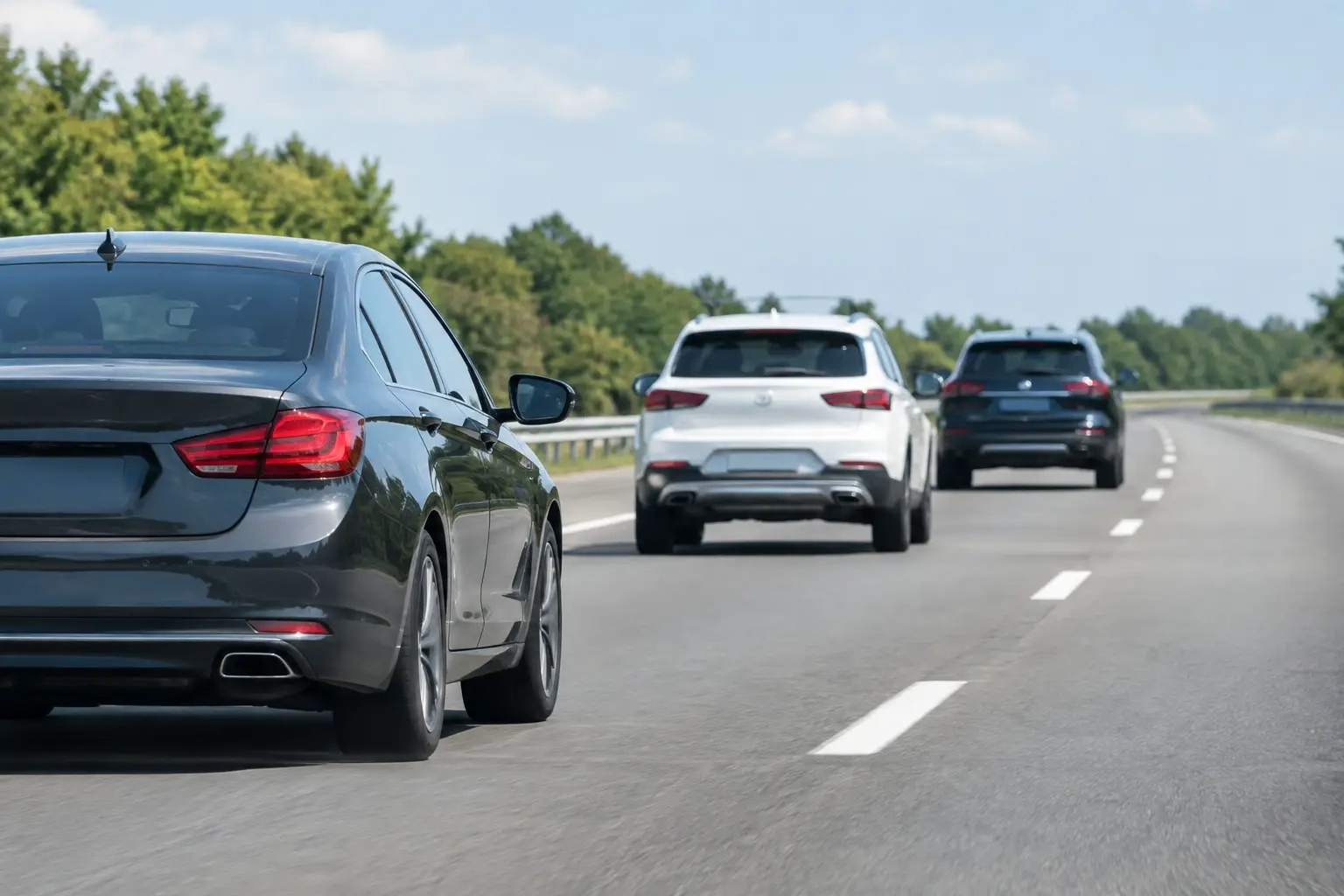
Driving south on I-4 through Orlando at 5 p.m., you close a gap to two seconds behind a pickup so nobody can cut in. Three miles later, a storm rolls through and that same gap no longer feels large enough. The road did not change; your stopping distance did. That gap between your hood and the bumper ahead is a buffer, and its job is to give you time to react before a problem becomes a collision.
The three-second rule is the starting point. Pick a fixed object at the side of the road, a sign or an overpass pillar. When the car ahead passes it, start counting: one thousand one, one thousand two, one thousand three. If you reach the object before you finish, you are too close. The beauty of measuring in seconds rather than car lengths is that the gap scales with your speed on its own.
Seconds are a baseline, not a guarantee. The count you need shifts with road surface, weather, load, and the vehicle you are driving. A loaded pickup needs longer to stop than an empty sedan. Rain on Florida asphalt can double the distance before the tires even begin to complain. Gravel, heat-softened pavement, and worn tires all push in the same direction.
Traffic density complicates the picture. In heavy congestion on I-4, drivers compress gaps to one second or less because the flow feels slow. The risk rises as speed drops less than people expect, since the reaction time stays constant while the space shrinks. A tailgating driver is not just following too closely; they have removed their own margin for error.
Adaptive cruise control changes how you apply the rule. Systems from most manufacturers hold a set gap you can usually adjust across several bars or distances. Read the manual, set the longest gap in rain or traffic, and watch for one behavior: adaptive systems brake later and harder than a prepared human driver. Keep your following distance where you can see the road surface under the car ahead, and treat the system as a helper rather than a replacement for your own spacing.
The habit worth building is a simple one. Every time traffic speeds up or the sky darkens, glance at the gap and count. Adjust early rather than late. A driver who builds this routine, alongside habits like checking an anti-theft GPS tracker before leaving, is making a small practice of thinking ahead instead of reacting.