A routine winter drive can change in minutes. You leave with clear pavement, then snowfall reduces visibility, a bridge develops a thin layer of ice, and the car ahead brakes sooner than expected. Your vehicle needs more distance to stop, your tires have less grip, and a familiar route suddenly demands deliberate decisions.
The safest response starts before you leave the driveway. These safety driving tips in winter weather follow a practical sequence: prepare the vehicle, create more space, protect visibility, understand skids, control speed manually, carry recovery supplies, check the route, and drive with patience. The Federal Highway Administration links a substantial share of weather-related crashes to snowy, slushy, or icy pavement, so winter preparation deserves more than a quick scrape of the windshield. Freeze protection tips can also help you prepare for cold conditions around the vehicle.
BDISchool courses turn these habits into structured defensive-driving knowledge. Students build better judgment, learn how vehicle control affects crash avoidance, and practice habits that remain useful after the snow melts. Start with the checklist below, then use BDISchool course options to strengthen your skills through flexible online driver education.
1. Maintain Proper Tire Tread and Use Winter Tires
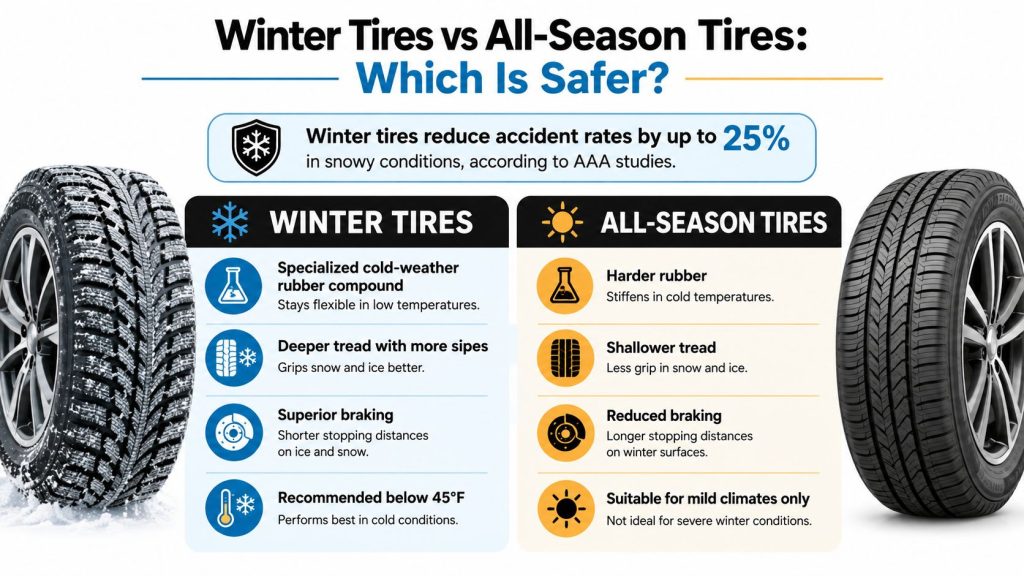
Tires are your only direct contact with the road, and winter conditions expose weak tread or unsuitable rubber quickly. Dedicated winter tires use compounds and tread designs intended to remain more effective in cold conditions, while all-season tires may provide less traction as temperatures fall and pavement becomes snowy or icy.
The University of Michigan Transportation Research Institute reports that, below freezing, winter tires can produce stopping distances up to 30% shorter than all-season tires in winter testing conditions. The same material describes winter tires providing better traction on ice- or snow-covered roads at -30 °C than all-season tires at 4 °C. Read the winter-tire research summary from the University of Michigan before choosing tires for a region with recurring snow or ice.
Check condition, pressure, and fit
Inspect the tread, sidewalls, and inflation pressure before a storm. Cold weather can lower pressure, so use the vehicle manufacturer’s recommended pressure and check it regularly with a reliable gauge. Rotate tires according to the vehicle maker’s maintenance schedule, and replace tires when tread or damage makes them unsuitable.
All-wheel drive can help a vehicle accelerate, but it doesn’t eliminate the need for suitable tires or shorten every stop. A defensive driver treats tire selection as part of the vehicle-control plan, not as a substitute for slower speeds and earlier braking.
For related maintenance habits, review Florida vehicle maintenance guidance. Even drivers in warmer states benefit from checking pressure, wipers, lights, and fluid levels before cold or wet travel.
Practical rule: If your route regularly includes snow or ice, choose tires designed for those conditions and adjust your driving to the grip available.
2. Increase Following Distance and Reduce Speed
Normal driving habits fail when pavement becomes slippery. The National Weather Service says stopping distances can increase two to six times on snow and ice. Review the National Weather Service winter-driving guidance to understand why a familiar following gap may leave no recovery time.
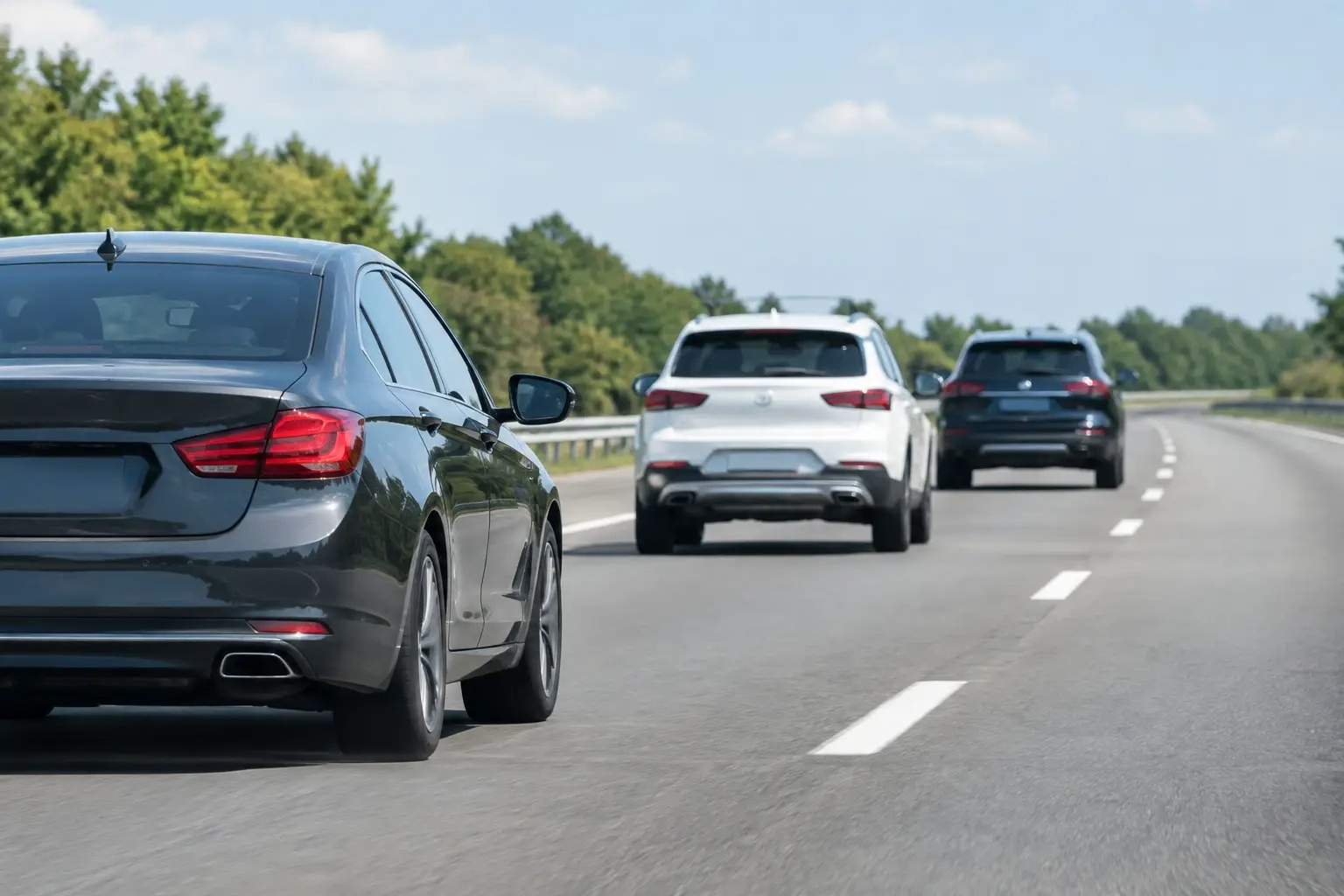
AAA recommends increasing following distance to five or six seconds in winter conditions, while U.S. Air Force safety guidance recommends eight to ten seconds rather than the usual three to four seconds. These are not targets for racing between vehicles. They’re reminders that the correct gap depends on visibility, surface condition, traffic, and your ability to stop.
Measure the gap without guessing
Choose a fixed object, such as a sign or light pole. When the vehicle ahead passes it, begin counting. If you reach the object before your count is complete, ease off the accelerator and rebuild space.
The AAA winter-driving advice supports a longer following interval, especially when snow, ice, or poor visibility affects braking. Leave even more room behind a snowplow or a vehicle carrying loose snow, because spray can obscure your view.
- Brake early: Look farther ahead and begin slowing before intersections, curves, ramps, and stopped traffic.
- Reduce speed smoothly: Lift off the accelerator gradually instead of making abrupt inputs.
- Avoid cruise control: Keep direct control of speed when traction can change without warning.
- Let tailgaters pass: Increase your own space and allow an aggressive driver to move ahead when it’s safe.
BDISchool’s guidance on safe following distance connects spacing with defensive driving. The skill is simple, but it requires a deliberate decision every time conditions change.
3. Clear All Snow, Ice, and Debris from Windows and Lights
Before starting the engine, clear every surface that affects what you see or how others see you. Snow on the roof can slide onto the windshield during braking, fall onto another vehicle, or cover the rear window. Ice on mirrors, lights, or glass removes information you need for defensive decisions.
Start the defroster, then work around the vehicle with an ice scraper or plastic snow brush. Remove snow and ice from the roof, hood, trunk, mirrors, windows, headlights, taillights, and license plate. Wipers cannot safely remove hardened buildup, and forcing them across frozen glass can damage the blades.
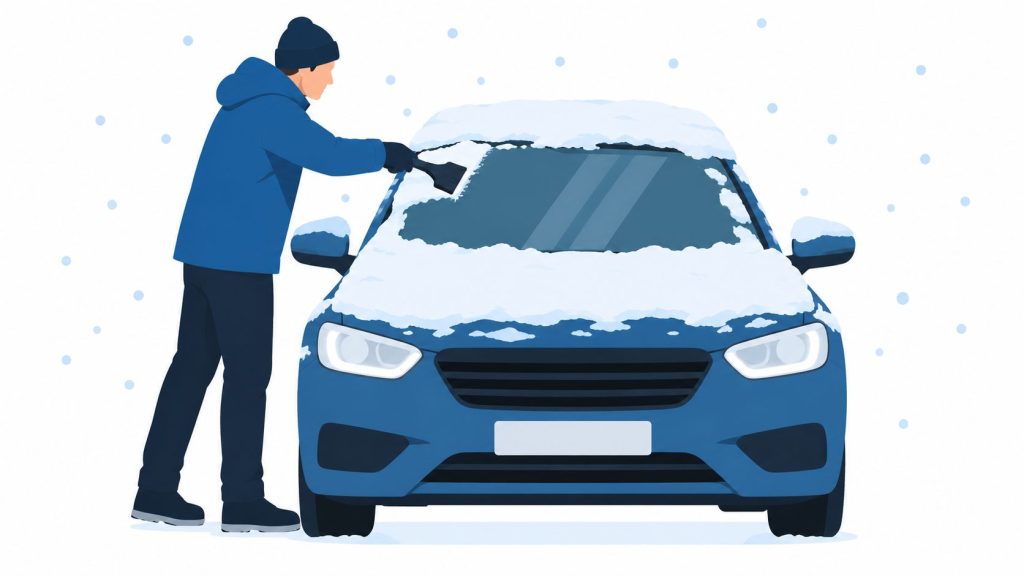
Use winter-rated washer fluid and inspect the wiper blades before leaving. Confirm that every exterior light works. Turn on headlights when visibility drops, and use low beams when high beams reflect glare from falling snow or moisture.
A narrow cleared area is not enough. Frost can spread, and wind can push snow across the glass while you drive. Clear sightlines give you more time to identify pedestrians, stopped vehicles, lane changes, and changing road conditions.
Use this departure check:
- Warm the glass: Run the defroster while removing exterior accumulation.
- Choose proper tools: Use an automotive ice scraper or plastic snow brush.
- Clear the roof fully: Loose snow can cover your windshield or another driver’s view.
- Clean every lamp: Headlights and taillights help you see and communicate.
- Check all sightlines: Verify that mirrors, side windows, and the rear window remain usable.
BDISchool’s defensive-driving courses reinforce the same habit: inspect first, then move. At intersections and lane changes, give visibility another check. If snow or moisture still limits your view, slow down and leave more space rather than relying on hurried glances.
4. Practice Emergency Maneuvers and Understand Vehicle Skids
A skid can turn a routine winter trip into a rapid test of judgment. Panic braking and sharp steering often make traction loss worse. Build the response before you need it through emergency maneuver training in a supervised defensive-driving setting.
Identify what the vehicle is doing first:
- Front-wheel skid: The vehicle keeps moving straighter than intended, and steering feels ineffective. Ease off the accelerator, keep the wheels aimed along your intended path, and wait for the front tires to regain grip before making a measured correction.
- Rear-wheel skid: The rear of the vehicle moves outward. Steer toward the direction you want the rear to travel, then straighten the wheel as control returns. This reaction feels unnatural without practice.
The sequence matters. Look toward the open path, release the accelerator smoothly, and make small steering inputs. Avoid abrupt braking, acceleration, or wheel movements that can exceed the traction still available.
Practice only in a qualified training environment, never in traffic or on an icy public road. A defensive-driving instructor can demonstrate weight transfer, traction limits, steering control, and braking behavior while you learn how your vehicle responds. BDISchool courses can help turn these techniques into repeatable habits rather than panic reactions.
Keep this priority order in mind during a real skid:
- Look where you want to go. Your eyes guide your hands and help prevent overcorrection.
- Ease off the accelerator. Let the tires recover instead of adding power.
- Steer smoothly. Use controlled inputs and correct only as traction returns.
- Stay composed. Calm decisions preserve more control than frantic movements.
Training cannot remove every winter hazard. It can give you a practiced response, helping you handle sudden traction loss with better judgment and fewer unnecessary inputs.
5. Avoid Using Cruise Control on Winter Roads
Cruise control is designed to hold speed, not to interpret rapidly changing traction. If a tire reaches slush, black ice, or a wet patch on a bridge, maintaining speed can leave you with less time to respond. Manual control lets you ease off the accelerator immediately and adapt to the surface.
NHTSA’s winter-driving guidance advises against cruise control on slippery roads. See NHTSA’s winter driving recommendations, including the need to slow down and leave more room when snow or sleet is present.
Keep your right foot active
Deactivate cruise control before entering wet, snowy, or icy conditions. Don’t wait until the vehicle begins to slide. Maintain a steady speed with gentle accelerator movements, and avoid sudden acceleration that can overwhelm available traction.
Bridges and overpasses deserve particular attention because they can become icy while nearby pavement still appears merely wet. Approach them with reduced speed and extra space, and scan for changes in surface color or texture.
Adaptive cruise control doesn’t remove this responsibility. Sensors and cameras can be affected by snow, ice, spray, or poor visibility, and the system can’t guarantee traction between the tires and road.
Keep speed under your direct control whenever the road surface is wet, snowy, or icy.
Re-engage cruise control only after the road is fully clear and dry, visibility is good, and traffic conditions support a stable speed. A defensive driver uses technology when it helps, then switches it off when conditions demand closer human control.
6. Maintain a Full Emergency Kit and Keep Gas Tank Above Half
Check fuel and emergency supplies before leaving, not after a delay begins. Keep the tank above half during winter travel. Extra fuel gives you more options if traffic stops, roads close, or you must run the heater while waiting for help.
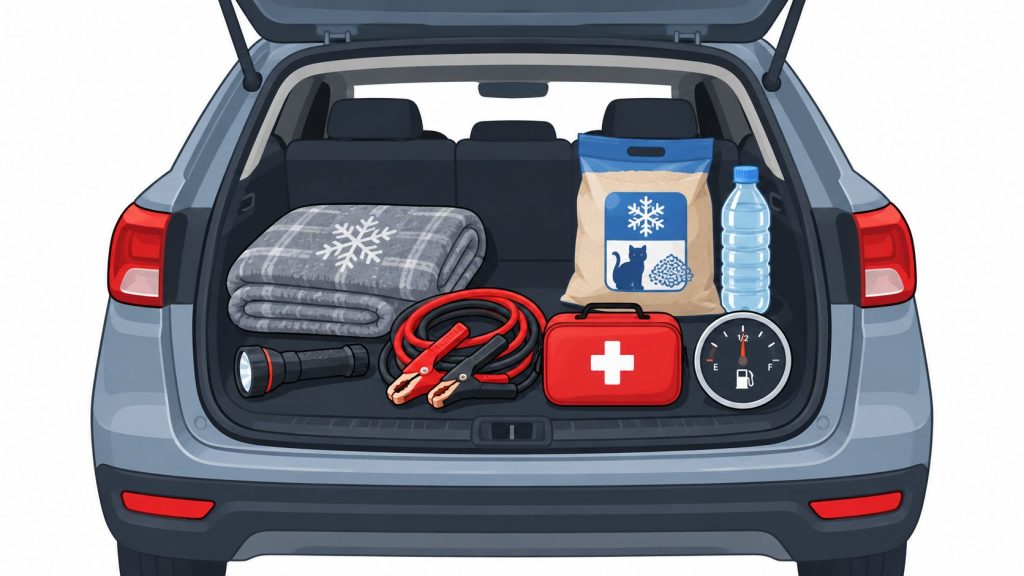
Keep the kit accessible without unloading the trunk. Pack a blanket, warm clothing, flashlight, first-aid supplies, jumper cables, phone charger, water, snacks, medications, hand warmers, and an ice scraper. Add sand or kitty litter for traction if the vehicle gets stuck. Protect important documents in a waterproof container.
Prepare for every regular passenger. Hats, gloves, heavy coats, and suitable footwear matter if you must leave the vehicle or wait in the cold. Before winter travel begins, replace used or expired supplies, test the flashlight, and confirm that the jumper cables suit your vehicle.
If you become stranded, remain with the vehicle unless emergency personnel tell you to leave. Clear snow from the exhaust area before running the engine for heat. Keep the vehicle visible, conserve supplies, and use your phone to report your location and condition.
Prioritize the checklist in this order:
- Fuel first: Refuel early when a storm or long delay may affect the route.
- Pack for delay: Carry enough basic supplies for an extended wait.
- Protect communications: Bring a charged phone and a backup charging method.
- Match the region: Add traction material, extra layers, or other supplies for local risks.
Preparation supports defensive-driving training by reducing pressure during a disruption. BDISchool courses can help drivers build the calm decision-making and emergency skills that make this preparation useful in practice. A driver who is not watching the fuel gauge or worrying about inadequate clothing has more attention available for safe choices.
7. Stay Informed About Weather and Road Conditions
Make the route decision before starting the engine. Check the forecast, road reports, departure point, destination, and likely return conditions. State transportation departments and 511 services can show closures, collisions, construction, and surface warnings that a general weather app may miss.
Use this sequence:
- Check before leaving: Review the state DOT website or app, the National Weather Service, and a navigation tool shortly before departure.
- Compare routes: Choose the route with safer terrain, fewer exposed stretches, and reliable places to stop, even if it is not the shortest.
- Set a stopping plan: Identify where you can pull off if visibility or traction deteriorates.
- Share the plan: Tell someone your route and expected arrival time, especially for rural travel or a long drive.
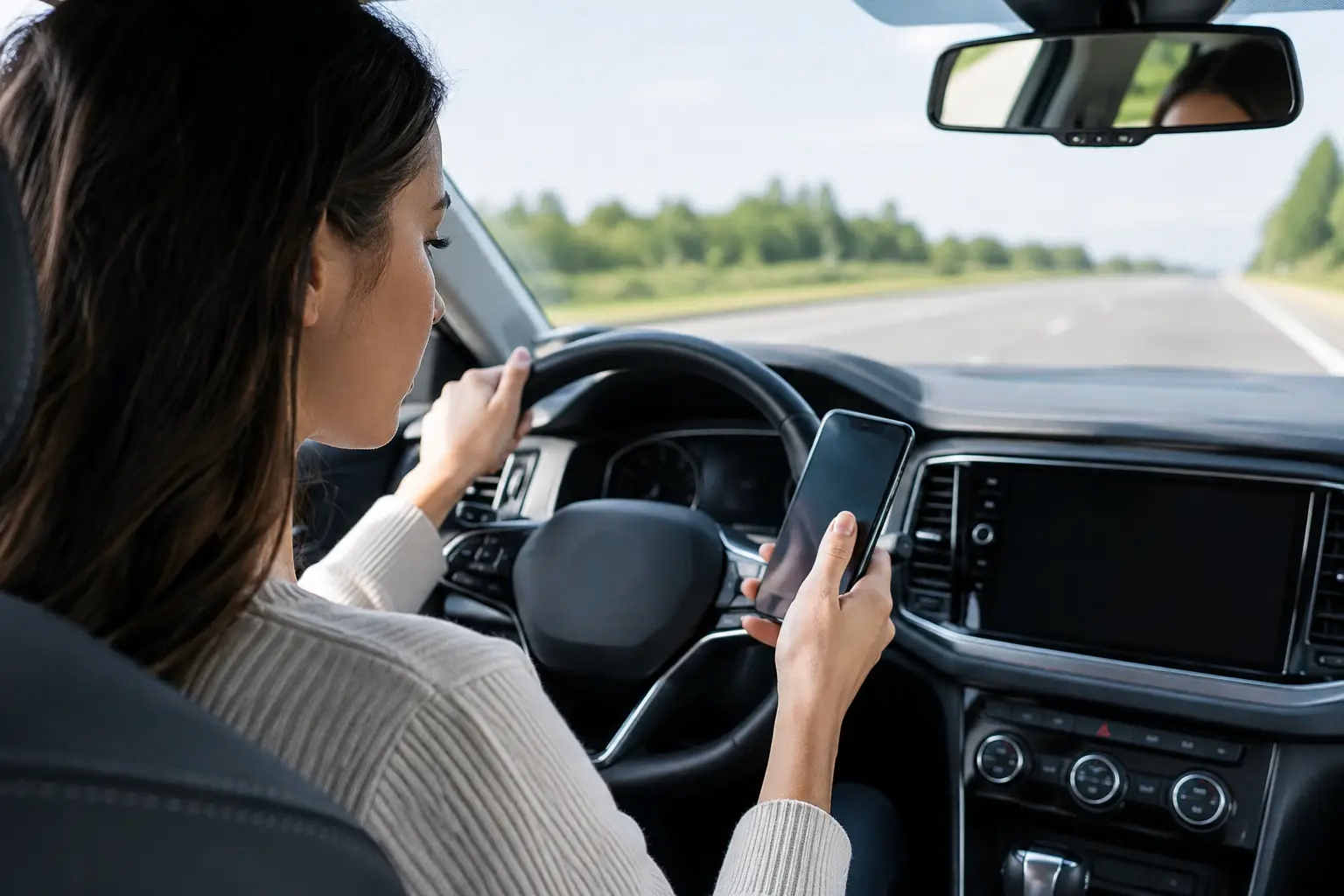
- Reassess during the trip: Stop safely before checking updates. Never handle a phone while moving.
For an example of how terrain and scenery can change driving demands along one journey, see the Blade Auto Keys travel guide. Its route-planning perspective helps when two routes have similar distances but different exposure, elevation, or stopping options.
Postpone nonessential travel when officials advise against driving, conditions are worsening, or you cannot identify a safe place to wait. Guidance on driving safely during severe weather supports the same priorities: allow more time, reduce sudden inputs, and adjust decisions as conditions change. These habits reinforce defensive-driving training, and BDISchool courses can help turn weather checks and route choices into repeatable skills.
Freezing precipitation demands extra caution at the beginning of a storm. NOAA-linked research found that 41% of fatalities during freezing precipitation occur near its onset. Read the atmospheric science research on freezing precipitation, then treat the first signs of icing as a reason to slow down, stop at a safe location, or remain off the road. Recheck conditions before continuing.
8. Avoid Aggressive Driving and Adapt Behavior to Conditions
Treat smooth control as your first winter-driving rule. Accelerate, brake, and steer progressively, because sudden inputs can overwhelm limited traction. Hold a steady, reduced speed and leave enough room to respond when pavement changes from wet to icy.
NHTSA reported 440 fatal crashes, about 33,000 injury crashes, and an estimated 182,000 police-reported crashes in wintry conditions in 2019. Its later update reported 320 fatal traffic crashes and an estimated 22,293 injury crashes in 2023 when snow or sleet was present. Review NHTSA’s winter-driving fact sheet. Use the practical lesson: reassess your speed and spacing whenever visibility, traction, or traffic changes.
Keep control when pressure rises
Leave earlier if delays are likely, and make safe arrival the priority. If a driver tailgates, increase the gap ahead so you can brake gradually. Let that driver pass when possible. Do not retaliate, block a lane, or copy aggressive behavior.
Colorado State Patrol’s winter crash review for 2021-2024 identified speed, lane violations, inattentive driving, and following too close among the leading contributing factors. Read the Colorado winter crash review. The clear takeaway is that equipment cannot compensate for poor decisions or unsuitable speed.
Use this sequence whenever conditions deteriorate:
- Scan farther ahead: Spot stopped traffic, untreated pavement, and vehicles beginning to slide.
- Choose a slower pace: Reduce speed before curves, hills, intersections, and shaded areas.
- Make one change at a time: Brake before steering, then accelerate only after the vehicle is settled.
- Stay emotionally neutral: Calm breathing helps prevent rushed decisions.
- Stop when needed: Take a safe break if fatigue, frustration, or pressure affects your judgment.
These habits support defensive-driving training by building hazard recognition, patience, and vehicle control. BDISchool courses can help turn them into repeatable skills before the next winter trip.
8-Point Winter Driving Safety Comparison
| Item | 🔄 Implementation Complexity | 💡 Resource Requirements / Tips | ⚡ Speed & Efficiency Impact | 📊 Expected Outcomes | ⭐ Ideal Use Cases / Key Advantages |
|---|---|---|---|---|---|
| Maintain Proper Tire Tread and Use Winter Tires | 🔄🔄 Seasonal tire changes, monitoring tread | 💡 Purchase winter tires; store off-season; rotate 5k–7k mi; check 6/32″ tread | ⚡ Slight ↓ fuel efficiency if used year-round | 📊 Superior snow/ice grip; shorter stopping distances (AAA ≈25% fewer accidents in snow) | ⭐⭐⭐ Best for cold/snowy regions; major reduction in winter crash risk |
| Increase Following Distance and Reduce Speed | 🔄 Low, behavioral change | 💡 Use landmarks to time 8–10s gap; avoid cruise; practice gentle braking | ⚡ Slower travel times but much safer | 📊 Fewer rear-end collisions (IIHS shows ~40% reduction) | ⭐⭐⭐ Low-cost, high-impact defensive driving for all winter conditions |
| Clear All Snow, Ice, and Debris from Windows and Lights | 🔄🔄 Low–moderate; pre-drive task each trip | 💡 Keep scraper, de-icer, use defrosters; allow 5–10 min pre-start | ⚡ Minimal driving impact; adds prep time | 📊 Greatly improved visibility; reduces visibility-related incidents (~10%) | ⭐⭐⭐ Quick, legal requirement in many states; high immediate safety payoff |
| Practice Emergency Maneuvers and Understand Vehicle Skids | 🔄🔄🔄 High, training and controlled practice needed | 💡 Take courses, use skid pads/empty lots, build muscle memory | ⚡ Neutral to negative for practice time; improves emergency response speed | 📊 Reduces accident severity; trained drivers ~30% fewer winter accidents | ⭐⭐⭐ Critical for frequent winter drivers, professionals, and high-risk scenarios |
| Avoid Using Cruise Control on Winter Roads | 🔄 Low, simple habit/setting change | 💡 Disable cruise in cold/wet; use manual control especially on bridges/overpasses | ⚡ Slight ↓ fuel efficiency vs. ideal cruise use; increases driver workload | 📊 Lowers skid risk; recommended by AAA & NHTSA for winter | ⭐⭐⭐ Universal recommendation for variable-traction conditions |
| Maintain a Full Emergency Kit and Keep Gas Tank Above Half | 🔄🔄 Moderate, assemble kit and routine checks | 💡 Kit ($50–150): blankets, jumper cables, sand/kitty litter, flashlight, water; check seasonally | ⚡ No effect on travel speed; small fuel/weight trade-off | 📊 Improves survival and self-recovery; reduces need for external rescue | ⭐⭐⭐ Essential for long trips, remote areas, and possible prolonged stranding |
| Stay Informed About Weather and Road Conditions | 🔄🔄 Low–moderate, pre-trip planning habit | 💡 Use 511/state DOT, Waze/Google Maps, check 15–30 min before departure; subscribe alerts | ⚡ Can avoid delays or cause postponement; enables safer routing | 📊 Fewer encounters with unexpected hazards; supports safe trip decisions | ⭐⭐⭐ Best for trip planning and avoiding severe weather exposure |
| Avoid Aggressive Driving and Adapt Behavior to Conditions | 🔄🔄 Moderate, requires discipline and mindset change | 💡 Leave earlier, practice calm techniques, consider behavior courses | ⚡ Slower travel but smoother, reduces emergency maneuvers | 📊 Dramatic accident reduction; calm drivers show substantially fewer winter crashes (studies vary) | ⭐⭐⭐ Universal, improves individual and community safety; insurance/legal benefits |
Make Safe Winter Decisions a Driving Habit
Winter safety becomes easier when you repeat the same decision pattern. First, prepare the vehicle. Check the tires, lights, wipers, washer fluid, fuel, visibility, and emergency kit before departure. Remove every layer of snow and ice, then decide whether the vehicle and route are suitable for the conditions.
Second, reassess the trip. Check weather and road reports before leaving, compare conditions at the destination, and remain willing to postpone nonessential travel. Freezing precipitation can become dangerous near its onset, and a route that looked manageable earlier may change while you’re on it. Keep your phone available for emergencies, but pull over before checking updates.
Third, control the vehicle smoothly. Reduce speed, create a longer following gap, brake earlier, and avoid cruise control on slippery roads. Keep your eyes moving, anticipate mistakes from other drivers, and treat bridges, ramps, intersections, curves, and shaded pavement as places where traction may differ from the surrounding road.
The Federal Highway Administration estimates that more than 1,300 deaths and over 116,800 injuries each year occur on snowy, slushy, or icy roads. Nearly 900 deaths and nearly 76,000 injuries occur during snowfall or sleet alone, according to the Federal Highway Administration’s winter-weather crash information. These figures explain why “slow down” and “leave more space” are core defensive-driving skills, not empty slogans.
BDISchool provides Florida-approved traffic education for drivers who want structured instruction and flexible access. Available options include Basic Driver Improvement, Intermediate Driver Improvement, Aggressive Driver, and Mature Driver courses. The programs address traffic laws, defensive driving, safe following distances, crash avoidance, and the effect of driver attitude on decisions.
Courses are online and self-paced, with study options in English, Spanish, and Portuguese. Certificates are issued electronically and reported directly to the FLHSMV according to the course requirements. If you’re responding to a moving violation, refreshing your knowledge, or working to replace rushed habits with safer judgment, a structured course can help you build skills that apply in every season.
Visit BDISchool to choose a Florida-approved BDI, IDI, Aggressive Driver, or Mature Driver course that fits your needs. Register today, complete the lessons at your pace, and turn these winter safety habits into lasting defensive-driving skills.